

1 week 4 days ago
There is no greater drama in human record than the sight of a few Christians, scorned or oppressed by a succession of emperors, bearing all trials with a fierce tenacity, multiplying quietly, building order while their enemies generated chaos, fighting the sword with the word, brutality with hope, and at last defeating the strongest state that history has known. Caesar and Christ had met in the arena, and Christ had won.
▼
Source
source
Chapter 30, part 1, p. 652

3 months 3 weeks ago
The weapon of criticism obviously cannot replace the criticism of weapons. Material force can only be overthrown by material force, but theory itself becomes a material force when it has gripped the masses. Theory is capable of gripping the masses when it demonstrates ad hominem, and it demonstrates ad hominem, when it becomes radical. To be radical is to grasp things by the root, but for man the root is man himself. The clear proof of the radicalism of German theory, and hence of its political energy, is that it proceeds from the decisive positive abolition of religion.
▼
Source
source
As quoted from David McLellan, Marx before Marxism, MacMillan, 1980, p. 150.

3 months 3 weeks ago
It is not enough to be industrious; so are the ants. What are you industrious about?
▼
Source
source
Letter to Harrison Blake, November 16, 1857


3 months 3 weeks ago
The difference between the most dissimilar characters, between a philosopher and a common street porter, for example, seems to arise not so much from nature, as from habit, custom, and education.
▼
Source
source
Chapter II, p. 17.
2 months 3 weeks ago
Every other art,-as poetry, music, painting,-may be practised without the process showing forth the rules according to which it is conducted ;-but in the self-cognizant art of the philosopher, no step can be taken without declaring the grounds upon which it proceeds.
▼
Source
source
p. 14
3 months 2 weeks ago
It has no sense and cannot just unless it comes to terms with death. Mine as (well as) that of the other. Between life and death, then, this is indeed the place of a sententious injunction that always feigns to speak the just.
▼
Source
source
Exordium
4 months 2 weeks ago
Science fiction offers its writers chances of embarrassment that no other form of fiction does.

2 months 5 days ago
The self-surmounter can never put up with the man who has ceased to be dissatisfied with himself.
▼
Source
source
p. 139

3 months 3 weeks ago
From the winter of 1821, when I first read Bentham, and especially from the commencement of the Westminster Review, I had what might truly be called an object in life; to be a reformer of the world. My conception of my own happiness was entirely identified with this object. The personal sympathies I wished for were those of fellow labourers in this enterprise. I endeavoured to pick up as many flowers as I could by the way; but as a serious and permanent personal satisfaction to rest upon, my whole reliance was placed on this...
▼
Source
source
(p. 132)

2 months 2 weeks ago
In a single second we do away with all seconds; God himself could not do as much.

1 month 2 weeks ago
Mysticism is just tomorrow's science dreamed today.

3 months 2 weeks ago
Listen to me: a family man is never a real family man. An assassin is never entirely assassin. They play a role, you understand. While a dead man, he is really dead. To be or not to be, right?
▼
Source
source
Hugo, Act 4, sc. 6

3 months 3 weeks ago
The past alone is truly real: the present is but a painful, struggling birth into the immutable being of what is no longer. Only the dead exist fully. The lives of the living are fragmentary, doubtful, and subject to change; but the lives of the dead are complete, free from the sway of Time, the all but omnipotent lord of the world. Their failures and successes, their hopes and fears, their joys and pains, have become eternal-our efforts cannot now abate one jot of them. Sorrows long buried in the grave, tragedies of which only a fading memory remains, loves immortalized by Death's hallowing touch these have a power, a magic, an untroubled calm, to which no present can attain. ...On the banks of the river of Time, the sad procession of human generations is marching slowly to the grave; in the quiet country of the Past, the march is ended, the tired wanderers rest, and the weeping is hushed.
▼
Source
source
On History, 1904
2 weeks 3 days ago
Nothing is more opposed to concord than the present condition of the domestic and salaried classes. By reducing this poor multitude to a condition very like slavery, civilization, on the rebound, imposes chains upon those who seem to dominate. Thus notables do not dare to amuse themselves openly at times when the people suffer from poverty. The rich are subject to individual as well as collective servitude. A wealthy man is often the slave of his valets. However in harmony the valet himself enjoys complete independence, while the rich are served with an assiduity and a devotion of which one sees not a trace in civilization.
▼
Source
source
Oeuvres completetes de Charles Fourier

3 months 4 weeks ago
They who have compared our lives to a dream were, perhaps, more in the right than they were aware of. When we dream, the soul lives, works, and exercises all its faculties, neither more nor less than when awake; but more largely and obscurely, yet not so much, neither, that the difference should be as great as betwixt night and the meridian brightness of the sun, but as betwixt night and shade; there she sleeps, here she slumbers; but, whether more or less, 'tis still dark, and Cimmerian darkness. We wake sleeping, and sleep waking.
▼
Source
source
tr. Cotton, rev. W. Carew Hazlitt, 1877
3 days ago
Just as no thing or organism exists on its own, it does not act on its own. Furthermore, every organism is a process: thus the organism is not other than its actions. To put it clumsily: it is what it does. More precisely, the organism, including its behavior, is a process which is to be understood only in relation to the larger and longer process of its environment. For what we mean by "understanding" or "comprehension" is seeing how parts fit into a whole, and then realizing that they don't compose the whole, as one assembles a jigsaw puzzle, but that the whole is a pattern, a complex wiggliness, which has no separate parts. Parts are fictions of language, of the calculus of looking at the world through a net which seems to chop it up into bits. Parts exist only for purposes of figuring and describing, and as we figure the world out we become confused if we do not remember this all the time.
▼
Source
source
p. 73
3 months 4 weeks ago
I care not so much what I am to others as what I am to myself. I will be rich by myself, and not by borrowing.
▼
Source
source
Book II, Ch. 16
2 months 3 weeks ago
The End of the Life of Mankind on Earth is this,-that in this Life they may order all their relations with FREEDOM according to REASON.
▼
Source
source
p. 5

2 months 2 weeks ago
Whoever blasphemes against the Father will be forgiven, and whoever blasphemes against the Son will be forgiven, but whoever blasphemes against the Holy Spirit will not be forgiven either on earth or in heaven.

2 months 1 week ago
Our life is a hope which is continually converting itself into memory and memory in its turn begets hope. Give us leave to live! The eternity that is like an eternal present, without memory and without hope, is death. Thus do ideas exist in the God-Idea, but not thus do men live in the living God, in the God-Man.

2 months 3 weeks ago
The power of the periodical press is second only to that of the people.
▼
Source
source
Chapter XI.

2 months 1 week ago
At the bottom of the heart of every human being, from earliest infancy until the tomb, there is something that goes on indomitably expecting, in the teeth of all experience of crimes committed, suffered, and witnessed, that good and not evil will be done to him. It is this above all that is sacred in every human being.The good is the only source of the sacred. There is nothing sacred except the good and what pertains to it.
▼
Source
source
p. 51

6 days ago
For what else are you busied with except improving yourself every day, laying aside some error, and coming to understand that the faults which you attribute to circumstances are in yourself?
3 months 3 weeks ago
People of the same trade seldom meet together, even for merriment and diversion, but the conversation ends in a conspiracy against the public, or in some contrivance to raise prices. It is impossible indeed to prevent such meetings, by any law which either could be executed, or would be consistent with liberty or justice. But though the law cannot hinder people of the same trade from sometimes assembling together, it ought to do nothing to facilitate such assemblies; much less to render them necessary.
▼
Source
source
Chapter X, Part II, p. 152.
4 months 1 week ago
Even then [at the time of Peter's speech in Acts 2] it was the last days; how much more so now, when there must still be as much time till the end of the world as has passed since the ascension of the Lord! We do not know the end of the world, because it is not for us to know the times or the seasons that the Father has set in his power; but we know that, like the apostles, we live in the last times, in the last days, in the last hour. Those who lived after the apostles and before us were more in what we call the last times, and we ourselves are in them even more than they; those who will come after us will be so much more, till one gets to those who will be, if one may say so, the last of the last, and finally till that day, the very last, of which the Lord means to speak when he said, "And I will raise him up on the last day". How far are we from that day? That is an impenetrable secret.

3 months 2 weeks ago
"Fare well!" "A whole world of pain is contained in these words." How can it be contained in them? - It is bound up in them. The words are like an acorn from which an oak tree can grow.
▼
Source
source
p. 52e

1 week 6 days ago
Friend!-Will the ballot-box raise the Noblest to the chief place; does any sane man deliberately believe such a thing?
1 month 2 weeks ago
The lowest stage of humanity is experienced when the individual must labour for a small pittance of wages from others.
▼
Source
source
Paper Dedicated to the Governments of Great Britain, Austria, Russia, France, Prussia and the United States of America
4 months 6 days ago
Do you suppose that you can do the things you do now, and yet be a philosopher? Do you suppose that you can eat in the same fashion, drink in the same fashion, give way to anger and to irritation, just as you do now?
▼
Source
source
Book III, ch. 15, 10 (= Enchiridion 29, 10).
3 months 4 weeks ago
When you see a person squirming in the clutches of the Law, say to him: "Brother, get things straight. You let the Law talk to your conscience. Make it talk to your flesh.
▼
Source
source
Chapter 2, Verse 19
2 months 2 weeks ago
It is not for you to know the times or the seasons, which the Father hath put in his own power. But ye shall receive power, after that the Holy Ghost is come upon you: and ye shall be witnesses unto me both in Jerusalem, and in all Judaea, and in Samaria, and unto the uttermost part of the earth.
▼
Source
source
1:7-8 (KJV)

3 months 3 weeks ago
God may forgive sins, he said, but awkwardness has no forgiveness in heaven or earth.
▼
Source
source
Society and Solitude
2 months 1 day ago
Prejudices are so to speak the mechanical instincts of men: through their prejudices they do without any effort many things they would find too difficult to think through to the point of resolving to do them.
▼
Source
source
A 58
4 months 2 weeks ago
If the love of money is the root of all evil, the need of money is most certainly the root of all despair.

3 months 2 weeks ago
All things living are in search of a better world.
▼
Source
source
Preface
2 months 2 weeks ago
"Education to personality" has become a pedagogical ideal that turns its back upon the standardized-the collective and normal-human being. It thus fittingly recognizes the historical fact that the great, liberating deeds of world history have come from leading personalities and never from the inert mass that is secondary at all times and needs a demagogue if it is to move at all. The paean of the Italian nation is addressed to the personality of the Duce, and dirges of other nations lament the absence of great leaders.
▼
Source
source
Lecture, The Inner Voice, Kulturbund, Vienna (1932); quoted in The Integration of Personality, Farrar & Rinehart, NY
3 months 3 weeks ago
When people begin to philosophize they seem to think it necessary to make themselves artificially stupid.
▼
Source
source
Theory of Knowledge, 1913

4 months 3 weeks ago
Style ought to prove that one believes in an idea; not only that one thinks it but also feels it.
3 months 3 weeks ago
If I had been by nature extremely quick of apprehension, or had possessed a very accurate and retentive memory or were of a remarkably active and energetic character, the trial would not be conclusive; but in all these natural gifts I am rather below than above par; what I could do, could assuredly be done by any boy or girl of average capacity and healthy physical constitution: and if I have accomplished anything, I owe it, among other fortunate circumstances, to the fact that through the early training bestowed on me by my father, I started, I may fairly say, with an advantage of a quarter of a century over my contemporaries.
▼
Source
source
(pp. 30-31)
3 months 3 weeks ago
Thinking withdraws radically and for its own sake from this world and its evidential nature, whereas science profits from a possible withdrawal for the sake of specific results.
▼
Source
source
p. 56
2 months 1 day ago
When Nietzsche praises egoism it is always in an aggressive or polemical way, against the virtues, against the virtue of disinterestedness. But in fact egoism is a bad interpretation of the will, just as atomism is a bad interpretation of force. In order for there to be egoism it is necessary for there to be an ego.
▼
Source
source
p. 7
2 months 3 weeks ago
Instinct is blind;-a consciousness without insight. Freedom, as the opposite of Instinct, is thus seeing, and clearly conscious of the grounds of its activity.
▼
Source
source
p. 7
2 months 2 weeks ago
No longer ask me for my program: isn't breathing one?

2 months 3 weeks ago
But man is a Noble Animal, splendid in ashes, and pompous in the grave, solemnizing Nativities and Deaths with equal lustre, nor omitting Ceremonies of Bravery, in the infamy of his nature. Life is a pure flame, and we live by an invisible Sun within us.
▼
Source
source
Chapter V
2 months 1 day ago
The Greeks possessed a knowledge of human nature we seem hardly able to attain to without passing through the strengthening hibernation of a new barbarism.
▼
Source
source
F 44
2 weeks ago
The history of utopias is no less fascinating than the history of metallurgy or of chemical engineering.
▼
Source
source
New Preface, p. vi
3 months 1 week ago
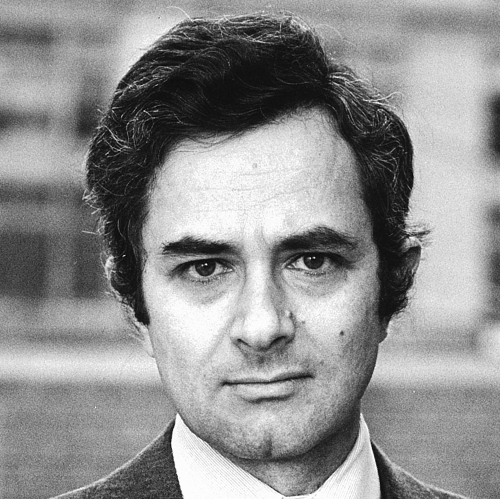
I am not adverting here to the alleged privacy of experience to its possessor. The point of view in question is not one accessible only to a single individual. Rather it is a type. It is often possible to take up a point of view other than one's own, so the comprehension of such facts is not limited to one's own case. There is a sense in which phenomenological facts are perfectly objective: one person can know or say of another what the quality of the other's experience is. They are subjective, however, in the sense that even this objective ascription of experience is possible only for someone sufficiently similar to the object of ascription to be able to adopt his point of view - to understand the ascription in the first person as well as in the third, so to speak. The more different from oneself the other experiencer is, the less success one can expect with this enterprise.
▼
Source
source
pp. 171-172
3 months 4 weeks ago
He who remembers the evils he has undergone, and those that have threatened him, and the slight causes that have changed him from one state to another, prepares himself in that way for future changes and for recognizing his condition. The life of Caesar has no more to show us than our own; an emperor's or an ordinary man's, it is still a life subject to all human accidents.
▼
Source
source
Ch. 13
1 month 3 weeks ago
The Jesuits founded their politics on the virtual disappearance of God and on the worldly and spectacular manipulation of consciences-the evanescence of God in the epiphany of power-the end of transcendence, which now only serves as an alibi for a strategy altogether free of influences and signs. Behind the baroqueness of images hides the éminence grise of politics.
▼
Source
source
"The Precession of Simulacra," p. 5
CivilSimian.com created by AxiomaticPanic, CivilSimian, Kalokagathia