

2 months 2 weeks ago
The problem is that sex is the most dangerous way of trying to achieve personal growth, because the life force has mixed it so liberally with a string sense of "magic", which, in the attempt at possession turns out to be an illusion. The attempt to possess a woman through an act of sex is as frustrating as trying to possess the scent of a rose by cooking and eating it.
▼
Source
source
p. 250
4 months 6 days ago
While loving glory so much how can you persist in a plan which will cause you to lose it?
▼
Source
source
Letters of Voltaire and Frederick the Great (New York: Brentano's, 1927), transl. Richard Aldington, letter 130 from Voltaire to Frederick II of Prussia, October 1757.

3 weeks 4 days ago
Yet with every allowance, one feels it difficult to see how any mortal ever could consider this Koran as a Book written in Heaven, too good for the Earth; as a well-written book, or indeed as a book at all; and not a bewildered rhapsody; written, so far as writing goes, as badly as almost any book ever was!

3 months 2 weeks ago
In this theater of man's life it is reserved only for God and angels to be lookers on.
▼
Source
source
Francis Bacon, in The Advancement of Learning (1605) Book II, xx, 8.
2 months 3 weeks ago
A child educated only at school is an uneducated child.
▼
Source
source
"Why I Am Not a Marxist" "Modern Monthly: Volume: 9″ (April 1935); Page: 77-79.

3 months 1 week ago
Be charitable before Wealth makes thee covetous.

3 months 5 days ago
It is a general popular error to suppose the loudest complainers for the publick to be the most anxious for its welfare.
▼
Source
source
Observations on a Late Publication on the Present State of the Nation
4 weeks ago
If what we are discussing were a point of law or of the humanities, in which neither true nor false exists, one might trust in subtlety of mind and readiness of tongue and in the greater experience of the writers, and expect him who excelled in those things to make his reasoning most plausible, and one might judge it to be the best. But in the natural sciences, whose conclusions are true and necessary and have nothing to do with human will, one must take care not to place oneself in the defense of error; for here a thousand Demostheneses and a thousand Aristotles would be left in the lurch by every mediocre wit who happened to hit upon the truth for himself. Therefore, Simplicio, give up this idea and this hope of yours that there may be men so much more learned, erudite, and well-read than the rest of us as to be able to make that which is false become true in defiance of nature.
▼
Source
source
Salviati, p. 61
3 months 4 days ago
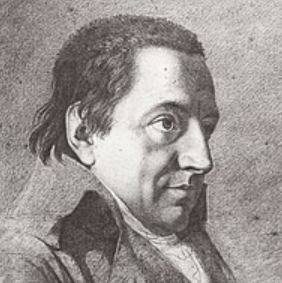
By means of the new education we want to mould the Germans into a corporate body, which shall be stimulated and animated in all its individual members by the same interest.
▼
Source
source
Introduction p. 15

4 months 5 days ago
It must not be supposed that the subjective elements are any less 'real' than the objective elements; they are only less important... because they do not point to anything beyond ourselves...
▼
Source
source
An Outline of Philosophy Ch.15 The Nature of our Knowledge of Physics, 1927

3 months 5 days ago
Above all, avoid falsehood, every kind of falsehood, especially falseness to yourself. Watch over your own deceitfulness and look into it every hour, every minute.
▼
Source
source
Book II, ch. 4 (trans. Constance Garnett) The Elder Zossima, speaking to Mrs. Khoklakov
Just now
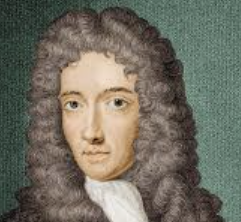
But if judicious men skilled in Chymical affairs shall once agree to write clearly and plainly of them, and thereby keep men from being stunn'd... or imposed upon by dark and empty Words; 'tis to be hop'd that these men finding that they can no longer write impertinently and absurdly, without being laugh'd at for doing so, will be reduc'd either to write nothing, or Books that may teach us something, and not rob men, as formerly, of invaluable Time; and so ceasing to trouble the world with Riddles or Impertinencies, we shall either by their Books receive an Advantage, or by their silence escape an Inconvenience.
4 days ago
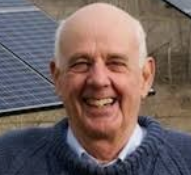
Our century of war, militarism, and political terror has produced great - and successful - advocates of true peace, among whom Mohandas Gandhi and Martin Luther King, Jr., are the paramount examples. The considerable success that they achieved testifies to the presence, in the midst of violence, of an authentic and powerful desire for peace and, more important, of the proven will to make the necessary sacrifices.
4 months 5 days ago
There is no need to worry about mere size. We do not necessarily respect a fat man more than a thin man. Sir Isaac Newton was very much smaller than a hippopotamus, but we do not on that account value him less.
▼
Source
source
"The Expanding Mental Universe", Saturday Evening Post, 7/1/1959
2 days ago
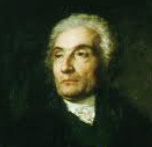
I am a perfect stranger to France, which I have never seen, and I expect nothing from her king, whom I shall never know.
▼
Source
source
Chapter VIII, p. 76
4 months 5 days ago
I found one day in school a boy of medium size ill-treating a smaller boy. I expostulated, but he replied: "The bigs hit me, so I hit the babies; that's fair." In these words he epitomized the history of the human race.
▼
Source
source
p. 31
4 days ago
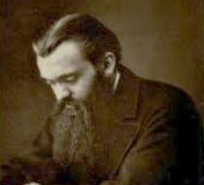
Riemann has shewn that as there are different kinds of lines and surfaces, so there are different kinds of space of three dimensions; and that we can only find out by experience to which of these kinds the space in which we live belongs. In particular, the axioms of plane geometry are true within the limits of experiment on the surface of a sheet of paper, and yet we know that the sheet is really covered with a number of small ridges and furrows, upon which (the total curvature not being zero) these axioms are not true. Similarly, he says although the axioms of solid geometry are true within the limits of experiment for finite portions of our space, yet we have no reason to conclude that they are true for very small portions; and if any help can be got thereby for the explanation of physical phenomena, we may have reason to conclude that they are not true for very small portions of space.
▼
Source
source
Abstract

2 months 2 days ago
The young today cannot follow narrative but they are alert to drama. They cannot bear description but they love landscape and action.
▼
Source
source
Letter to Harold Adam Innis (14 March 1951), published in Essential McLuhan (1995), edited by Eric McLuhan and Frank Zingrone, p. 74

4 months 4 days ago
The effects of opposition are wonderful. There are men who rise refreshed on hearing of a threat, - men to whom a crisis which intimidates and paralyzes the majority - demanding, not the faculties of prudence and thrift, but comprehension, immovableness, the readiness of sacrifice - comes graceful and beloved as a bride!
▼
Source
source
p. 189
3 weeks 4 days ago
The man whom Nature has appointed to do great things is, first of all, furnished with that openness to Nature which renders him incapable of being insincere! To his large, open, deep-feeling heart Nature is a Fact: all hearsay is hearsay; the unspeakable greatness of this Mystery of Life, let him acknowledge it or not, nay even though he seem to forget it or deny it, is ever present to him,-fearful and wonderful, on this hand and on that.

2 months 2 weeks ago
The natural impulse of the primitive man to strike back, to avenge a wrong, is out of date. Instead, the civilized man, stripped of courage and daring, has delegated to an organized machinery the duty of avenging his wrongs, in the foolish belief that the State is justified in doing what he no longer has the manhood or consistency to do.
2 months 3 weeks ago
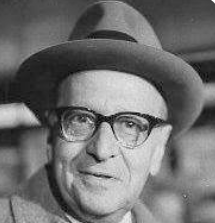
All things in nature become identical with the phenomena they present when submitted to the practices of our laboratories, whose problems no less than their apparatus express in turn the problems and interests of society as it is. This view may be compared with that of a criminologist maintaining that trustworthy knowledge of a human being can be obtained only by the well-tested and streamlined examining methods applied to a suspect in the hands of the metropolitan police.
▼
Source
source
describing the pragmatist view, p. 49.
4 months 3 days ago
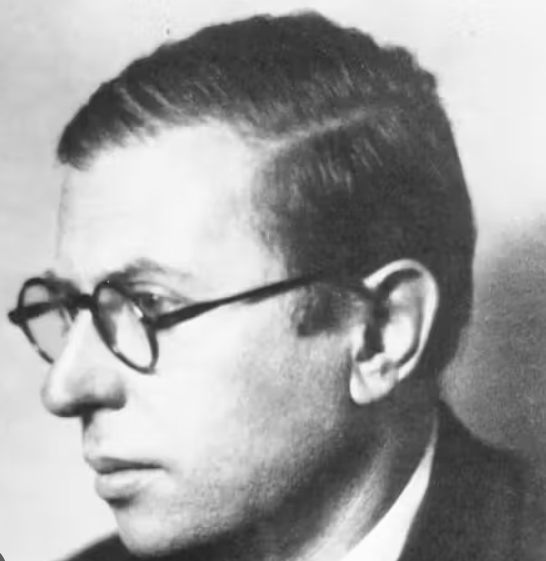
Dostoevsky once wrote: "If God did not exist, everything would be permitted"; and that, for existentialism, is the starting point. Everything is indeed permitted if God does not exist, and man is in consequence forlorn, for he cannot find anything to depend upon either within or outside himself. He discovers forthwith, that he is without excuse.
▼
Source
source
pp. 33-34
2 months 3 weeks ago
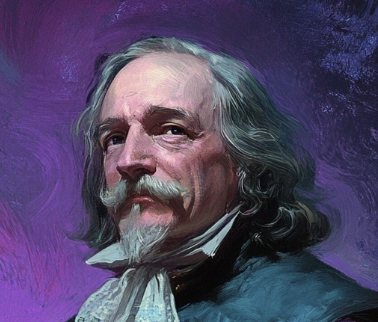
The office of the sovereign, be it a monarch or an assembly, consisteth in the end for which he was trusted with the sovereign power, namely the procuration of the safety of the people, to which he is obliged by the law of nature, and to render an account thereof to God, the Author of that law, and to none but Him. But by safety here is not meant a bare preservation, but also all other contentments of life, which every man by lawful industry, without danger or hurt to the Commonwealth, shall acquire to himself. And this is intended should be done, not by care applied to individuals, further than their protection from injuries when they shall complain; but by a general providence, contained in public instruction, both of doctrine and example; and in the making and executing of good laws to which individual persons may apply their own cases.
▼
Source
source
The Second Part, Chapter 30: Of the Office of the Sovereign Representative
4 months 2 weeks ago
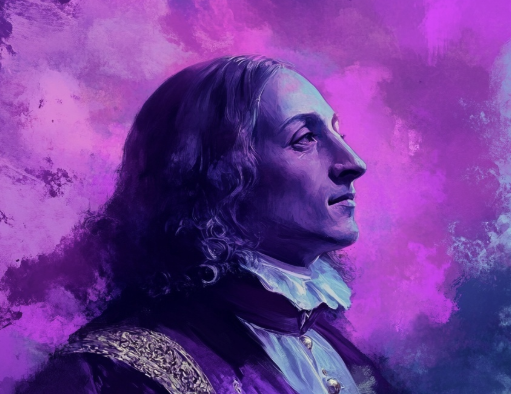
The best books are those, which those who read them believe they themselves could have written.
3 months 4 days ago
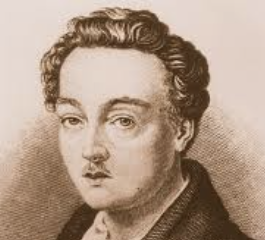
We are only puppets, our strings are being pulled by unknown forces.
▼
Source
source
Act II.
3 weeks 6 days ago
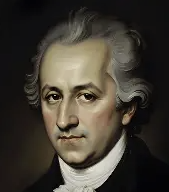
One of the most striking signs of the decay of art is the intermixing of different genres.
▼
Source
source
Propylaea (1798) Introduction
4 days ago
I would rather be exposed to the inconveniences attending too much liberty, than those attending too small a degree of it.
▼
Source
source
Letter to Archibald Stuart , Philadelphia
4 days ago
And even should the cloud of barbarism and despotism again obscure the science and libraries of Europe, this country remains to preserve and restore light and liberty to them. In short, the flames kindled on the fourth of July, 1776, have spread over too much of the globe to be extinguished by the feeble engines of despotism; on the contrary, they will consume these engines and all who work them.
▼
Source
source
Letter to John Adams, 12 September 1821
1 day ago
All that is harmony for you, my Universe, is in harmony with me as well. Nothing that comes at the right time for you is too early or too late for me. Everything is fruit to me that your seasons bring, Nature. All things come of you, have their being in you, and return to you.
▼
Source
source
IV, 23
3 weeks 6 days ago
America, you have it better than our continent, the old one.
▼
Source
source
Wendts Musen-Almanach
2 months 2 days ago
The mask, like the side-show freak, is mainly participatory rather than pictorial in its sensory appeal.
▼
Source
source
(p. 352)

4 months 4 days ago
Wherever you are it is your own friends who make your world.
▼
Source
source
As quoted in The Thought and Character of William James (1935) by Ralph Barton Perry, Vol. II, ch. 91
4 months 4 days ago
And every man, in love or pride, Of his fate is ever wide.
▼
Source
source
Nemesis

2 months 4 days ago
People try to do all sorts of clever and difficult things to improve life instead of doing the simplest, easiest thing-refusing to participate in activities that make life bad.
▼
Source
source
p. 210
5 months 5 days ago
It is impossible for motion to subsist without place, and void, and time.

4 weeks 1 day ago
We need a good alternative to Trumpism. There is a majority in favor of that, but... the other party is really not providing that alternative in a very clear way.
▼
Source
source
46:46:00
1 day ago
The nature of the universe is the nature of things that are. Now, things that are have kinship with things that are from the beginning. Further, this nature is styled Truth; and it is the first cause of all that is true.
▼
Source
source
IX, 1
2 months 2 weeks ago
When we subordinate rest to work, we ignore the divine.

5 months 2 days ago
There's something about a pious man such as he. He will cheerfully cut your throat if it suits him, but he will hesitate to endanger the welfare of your immaterial and problematical soul.

4 months 3 weeks ago
The Superior Man is all-embracing and not partial. The inferior man is partial and not all-embracing.

4 months 5 days ago
Again, defenders of utility often find themselves called upon to reply to such objections as this-that there is not time, previous to action, for calculating and weighing the effects of any line of conduct on the general happiness. This is exactly as if any one were to say that it is impossible to guide our conduct by Christianity, because there is not time, on every occasion on which anything has to be done, to read through the Old and New Testaments. The answer to the objection is, that there has been ample time, namely, the whole past duration of the human species. During all that time mankind have been learning by experience the tendencies of actions.
▼
Source
source
Ch. 2
2 months 1 week ago
It is not my aim to surprise or shock you - but the simplest way I can summarize is to say that there are now in the world machines that think, that learn and that create. Moreover, their ability to do these things is going to increase rapidly until - in a visible future - the range of problems they can handle will be coextensive with the range to which the human mind has been applied.
▼
Source
source
Newell & Simon (1958), quoted in AI, by Daniel Crevier
1 day ago
Love the little trade which thou hast learned, and be content therewith.
▼
Source
source
IV, 31
1 day ago
All things are interwoven with one another; a sacred bond unites them; there is scarcely one thing that is isolated from another. Everything is coordinated, everything works together in giving form to one universe. The world-order is a unity made up of multiplicity: God is one, pervading all things; all being is one, all law is one (namely, the common reason which all thinking persons possess) and all truth is one- if, as we believe, there can be but one path to perfection for beings that are alike in kind and reason.
▼
Source
source
VII. 9, trans. Maxwell Staniforth
5 months 5 days ago
The ancient philosophers... all of them assert that the elements, and those things which are called by them principles, are contraries, though they establish them without reason, as if they were compelled to assert this by truth itself. They differ, however... that some of them assume prior, and others posterior principles; and some of them things more known according to reason, but others such as are more known according to sense: for some establish the hot and the cold, others the moist and the dry, others the odd and the even, and others strife and friendship, as the causes of generation. ...in a certain respect they assert the same things, and speak differently from each other. They assert different things... but the same things, so far as they speak analogously. For they assume principles from the same co-ordination; since, of contraries, some contain, and others are contained.

3 months ago
So it is that after each night, facing a new day, the impossible necessity of dealing with it fills us with dread; exiled in light as if the world had just started, inventing the sun, we flee from tears-just one of which would be enough to wash us out of time.
2 months 2 weeks ago
The STATE IDEA, the authoritarian principle, has been proven bankrupt by the experience of the Russian Revolution. If I were to sum up my whole argument in one sentence I should say: The inherent tendency of the State is to concentrate, to narrow, and monopolize all social activities; the nature of revolution is, on the contrary, to grow, to broaden, and disseminate itself in ever-wider circles. In other words, the State is institutional and static; revolution is fluent, dynamic. These two tendencies are incompatible and mutually destructive. The State idea killed the Russian Revolution and it must have the same result in all other revolutions, unless the libertarian idea prevail.

4 months 1 week ago
In the country of the blind the one-eyed man is king.
▼
Source
source
Adagia (first published 1500, with numerous expanded editions through 1536), III, IV, 96
4 months 2 weeks ago
So the Church too, like Mary, enjoys perpetual virginity and uncorrupted fecundity.
▼
Source
source
195:2
CivilSimian.com created by AxiomaticPanic, CivilSimian, Kalokagathia