

1 month 2 weeks ago
The population of the US is nearly 300 million, including many of the best educated, most talented, most resourceful, humane people on earth. By almost any measure of civilised attainment, from Nobel prize-counts on down, the US leads the world by miles. You would think that a country with such resources, and such a field of talent, would be able to elect a leader of the highest quality. Yet, what has happened? At the end of all the primaries and party caucuses, the speeches and the televised debates, after a year or more of non-stop electioneering bustle, who, out of that entire population of 300 million, emerges at the top of the heap? George Bush.
▼
Source
source
"Bin Laden's victory " The Guardian
2 months 1 week ago
The general fellowship of our human situation has been rendered even more dubious than before, inasmuch as, though the old ties of caste have been loosened, a new restriction of the individual to some prescribed status in society is manifest. Less than ever, perhaps, is it possible for a man to transcend the limitations imposed by his social origins.
2 months 2 days ago
I believe that the man choosing progress can find a new unity through the full development of all his human forces, which are produced in three orientations. These can be presented separately or together: biophilia, love for humanity and nature, and independence and freedom.

1 month 2 weeks ago
The nuclear bomb will turn warfare into the juggling of images.
▼
Source
source
(p. 360)
3 months 2 weeks ago
No differeance without alterity, no alterity without singularity, no singularity without here-now.
▼
Source
source
Injunctions of Marx, p,31



3 months 3 weeks ago
A single part of physics occupies the lives of many men, and often leaves them dying in uncertainty.
▼
Source
source
"A Madame la Marquise du Châtelet, Avant-Propos," Eléments de Philosophie de Newton, 1738

2 months 1 week ago
What man shall there be among you, that shall have one sheep, and if it fall into a pit on the sabbath day, will he not lay hold on it, and lift it out? How much then is a man better than a sheep? Wherefore it is lawful to do well on the sabbath days.
▼
Source
source
12:11-12 (KJV) Said to the Pharisees.

3 months 2 weeks ago
If you say that this is absurd, that we cannot be in love with everyone at once, I merely point out to you that, as a matter of fact, certain persons do exist with an enormous capacity for friendship and for taking delight in other people's lives; and that such person know more of truth than if their hearts were not so big. The vice of ordinary Jack and Jill affection is not its intensity, but its exclusions and its jealousies. Leave those out, and you see that the ideal I am holding up before you, however impracticable to-day, yet contains nothing intrinsically absurd.
▼
Source
source
"What Makes a Life Significant?"
1 month 1 week ago
It may be that the public mind of India may expand under our system till it has outgrown that system; that by good government we may educate our subjects into a capacity for better government, that, having become instructed in European knowledge, they may, in some future age, demand European institutions. Whether such a day will ever come I know not. But never will I attempt to avert or to retard it. Whenever it comes, it will be the proudest day in English history.
▼
Source
source
Speech in the House of Commons

5 days ago
Who, then, can be more ignorant of nature than he who classes this cruel and hurtful vice as belonging to her best and most polished work?

3 months 2 weeks ago
Nor knowest thou what argument Thy life to thy neighbor's creed has lent: All are needed by each one, Nothing is fair or good alone.
▼
Source
source
Each and All, st. 1

2 months 2 weeks ago
It cannot at this time be too often repeated; line upon line; precept upon precept; until it comes into the currency of a proverb, To innovate is not to reform.
▼
Source
source
p. 20
4 days ago
Macaulay is like a book in breeches...He has occasional flashes of silence, that make his conversation perfectly delightful.
▼
Source
source
Vol. I, ch. 11, p. 415
2 months 4 days ago
There continue to be complex debates about what Nietzsche understood truth to be. Quite certainly, he did not think, in pragmatist spirit, that beliefs are true if they serve our interests or welfare: we have just seen some of his repeated denials of this idea. The more recently fashionable view is that he was the first of the deniers, thinking that there is no such thing as truth, or that truth is what anyone thinks it is, or that it is a boring category that we can do without. This is also wrong, and more deeply so. Nietzsche did not think that the ideal of truthfulness went into retirement when its metaphysical origins were discovered, and he did not suppose, either, that truthfulness could be detached from a concern for the truth. Truthfulness as an ideal retains its power, and so far from his seeing truth as dispensable or malleable, his main question is how it can be made bearable.
▼
Source
source
p. 16
4 months 1 week ago
Hence, as Narcissus, by catching at the shadow, plunged himself in the stream and disappeared, so he who is captivated by beautiful bodies, and does not depart from their embrace, is precipitated, not with his body, but with his soul, into a darkness profound and repugnant to intellect (the higher soul), through which, remaining blind both here and in Hades, he associates with shadows.
5 days ago
It would be some consolation for the feebleness of ourselves and our works, if all things should perish as slowly as they come into being; but as it is, increases are of sluggish growth, but the way to ruin is rapid.
▼
Source
source
Letters to Lucilius, letter 91, page 294.

3 months 2 weeks ago
The history of science, like the history of all human ideas, is a history of irresponsible dreams, of obstinacy, and of error. But science is one of the very few human activities - perhaps the only one - in which errors are systematically criticized and fairly often, in time, corrected. This is why we can say that, in science, we often learn from our mistakes, and why we can speak clearly and sensibly about making progress there.
▼
Source
source
Ch. 1 "Science : Conjectures and Refutations"
3 months 2 weeks ago
The purely corporeal can be uncanny. Compare the way angels and devils are portrayed. So-called "miracles" must be connected with this. A miracle must be, as it were, a sacred gesture.
▼
Source
source
p. 50e
1 month 2 weeks ago
Manuscript culture is conversational if only because the writer and his audience are physically related by the form of publication as performance.
▼
Source
source
(p. 96)
3 months 2 weeks ago
In the ceremonies of the public execution, the main character was the people, whose real and immediate presence was required for the performance.
▼
Source
source
Chapter One, pp. 56
2 months 1 week ago
The direction of society has been taken over by a type of man who is not interested in the principles of civilisation. Not of this or that civilisation but - from what we can judge to-day - of any civilisation. ...The type of man dominant to-day is a primitive one, a Naturmensch rising up in the midst of a civilised world.
▼
Source
source
Chap.IX: The Primitive and the Technical
2 months 1 week ago
In the world of action, we know that it is disastrous to treat animals or human beings as though they were stocks and stones. Why should we suppose this treatment to be any less mistaken in the world of ideas?
▼
Source
source
p. 21.
4 months 2 weeks ago
Every ideology is contrary to human psychology.

4 months 2 weeks ago
If I were to imagine a girl deeply in love and some man who wanted to use all his reasoning powers and knowledge to ridicule her passion, well, there's surely no question of the enamoured girl having to choose between keeping her wealth and being ridiculed. No, but if some extremely cool and calculating man calmly told the young girl, "I will explain to you what love is," and the girl admitted that everything he told her was quite correct, I wonder if she wouldn't choose his miserable common sense rather than her wealth?
2 months 1 day ago
Law is the continuous manifestation of God's presence - not reason for believing him absent. Great confusion arises from our using the same word law in two totally distinct senses ... as the cause and the effect. It is said that to "explain away" everything by law is to enable us to do without God. But law is no explanation of anything; law is simply a generalization, a category of facts. Law is neither a cause, nor a reason, nor a power, nor a coercive force. It is nothing but a general formula, a statistical table. Law brings us continually back to God instead of carrying us away from him.
▼
Source
source
Suggestions for Thought : Selections and Commentaries (1994), edited by Michael D. Calabria and Janet A. MacRae, p. 41
2 months 2 weeks ago
No theory, no ready-made system, no book that has ever been written will save the world. I cleave to no system. I am a true seeker.
▼
Source
source
As quoted in Michael Bakunin (1937) by E.H. Carr, p. 175

4 months 1 week ago
Honesty and trust are promoted, and good neighborliness cultivated.

2 months 2 weeks ago
You have dreamed of setting the world ablaze, and you have not even managed to communicate your fire to words, to light up a single one!

3 months 2 weeks ago
Ha! to forget. How childish! I feel you in my bones. Your silence screams in my ears. You may nail your mouth shut, you may cut out your tongue, can you keep yourself from existing? Will you stop your thoughts.
▼
Source
source
Inès reiterating to Garcin that they cannot ignore one another, Act 1, sc. 5

3 months 3 days ago
But Hermotimus, the Colophonian, rendered more abundant what was formerly published by Eudoxus and Theætetus, and invented a multitude of elements, and wrote concerning some geometrical places. But Philippus the Mendæan, a disciple of Plato, and by him inflamed in the mathematical disciplines, both composed questions, according to the institutions of Plato, and proposed as the object of his enquiry whatever he thought conduced to the Platonic philosophy.
▼
Source
source
Ch. IV.
4 months 1 week ago
It is the way of the superior man to prefer the concealment of his virtue, while it daily becomes more illustrious, and it is the way of the mean man to seek notoriety, while he daily goes more and more to ruin. It is characteristic of the superior man, appearing insipid, yet never to produce satiety; while showing a simple negligence, yet to have his accomplishments recognized; while seemingly plain, yet to be discriminating. He knows how what is distant lies in what is near. He knows where the wind proceeds from. He knows how what is minute becomes manifested. Such a one, we may be sure, will enter into virtue.
2 months 1 week ago
Do not be afraid. I am the First and the Last, and the living one, and I became dead, but look! I am living forever and ever, and I have the keys of death and of the Grave.
▼
Source
source
Revelation 1:17-18, NWT

3 months 2 weeks ago
The only purpose for which power can be rightfully exercised over any member of a civilized community, against his will, is to prevent harm to others. His own good, either physical or moral, is not a sufficient warrant.
▼
Source
source
Ch. 1: Introductory
2 months 3 weeks ago
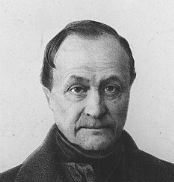
And now I have explained the series of social and intellectual conditions by which the discovery of sociological laws, and consequently the foundation of Positivism, was fixed for the precise date at which I began my philosophical career: that is to say, one generation after the progressive dictatorship of the Convention, and almost immediately after the fall of the retrograde tyranny of Bonaparte.
▼
Source
source
p. 71
2 months 2 weeks ago
Each of us believes, quite unconsciously of course, that we alone pursue the truth, which the rest are incapable of seeking out and unworthy of attaining. This madness is so deep-rooted and so useful that it is impossible to realize what would become of each of us if it were someday to disappear.

3 months 3 weeks ago
We were halves throughout, and to that degree that, methinks, by outliving him I defraud him of his part.
▼
Source
source
Ch. 27. Of Friendship, tr. Cotton, rev. W. Hazlitt, 1842
1 month 2 weeks ago
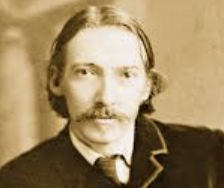
Them that die will be the lucky ones!
▼
Source
source
Ch. 20, Silver's Embassy.

3 months 3 weeks ago
Furthermore, how will you endure [the Romanists'] terrible idolatries? It was not enough that they venerated the saints and praised God in them, but they actually made them into gods. They put that noble child, the mother Mary, right into the place of Christ. They fashioned Christ into a judge and thus devised a tyrant for anguished consciences, so that all comfort and confidence was transferred from Christ to Mary, and then everyone turned from Christ to his particular saint. Can anyone deny this? Is it not true?
▼
Source
source
Luther's Works, 47:45; cf. also Anderson, Stafford & Burgess (1992), p. 29
1 month 2 weeks ago
It is often said, mainly by the 'no-contests', that although there is no positive evidence for the existence of God, nor is there evidence against his existence. So it is best to keep an open mind and be agnostic. At first sight that seems an unassailable position, at least in the weak sense of Pascal's wager. But on second thoughts it seems a cop-out, because the same could be said of Father Christmas and tooth fairies. There may be fairies at the bottom of the garden. There is no evidence for it, but you can't prove that there aren't any, so shouldn't we be agnostic with respect to fairies?
▼
Source
source
From speech at the Edinburgh International Science Festival, 1992-04-15.
4 months 2 weeks ago
Death induces the sensual person to say: Let us eat and drink, because tomorrow we shall die – but this is sensuality's cowardly lust for life, that contemptible order of things where one lives in order to eat and drink instead of eating and drinking in order to live.
3 months 2 weeks ago
Why in the world shouldn't they have regarded with awe and reverence that act by which the human race is perpetuated. Not every religion has to have St. Augustine's attitude to sex. Why even in our culture marriages are celebrated in a church, everyone present knows what is going to happen that night, but that doesn't prevent it being a religious ceremony.
▼
Source
source
Intentionality, and Romanticism (1997) by Richard Thomas Eldridge, p. 130
3 months 2 weeks ago
Setting the mind to remember... involves a continual minimal irradiation of excitement into paths which lead thereto... the continued presence of the thing in the 'fringe' of our consciousness. Letting the thing go involves withdrawal of the irradiation, unconsciousness of the thing, and... obliteration of the paths.
▼
Source
source
Ch. 16
4 months 2 weeks ago
The history of science is full of revolutionary advances that required small insights that anyone might have had, but that, in fact, only one person did.
2 months 6 days ago
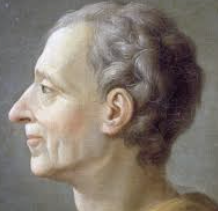
There are only two cases in which war is just: first, in order to resist the aggression of an enemy, and second, in order to help an ally who has been attacked.
▼
Source
source
No. 95. (Usbek writing to Rhedi)

1 week 4 days ago
Blessed is he who has found his work; let him ask no other blessedness.
▼
Source
source
Bk. III, ch. 11.

3 months 3 weeks ago
That the sun will not rise to-morrow is no less intelligible a proposition, and implies no contradiction, than the affirmation, that it will rise.
▼
Source
source
§ 4.8

3 months 2 weeks ago
"If a nation expects to be ignorant and free," said Jefferson, "it expects what never was and never will be."
▼
Source
source
Chapter 4 (p. 34)
2 months 2 weeks ago
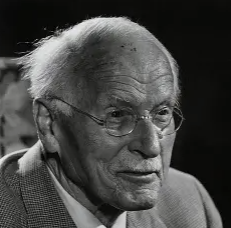
"Education to personality" has become a pedagogical ideal that turns its back upon the standardized-the collective and normal-human being. It thus fittingly recognizes the historical fact that the great, liberating deeds of world history have come from leading personalities and never from the inert mass that is secondary at all times and needs a demagogue if it is to move at all. The paean of the Italian nation is addressed to the personality of the Duce, and dirges of other nations lament the absence of great leaders.
▼
Source
source
Lecture, The Inner Voice, Kulturbund, Vienna (1932); quoted in The Integration of Personality, Farrar & Rinehart, NY
CivilSimian.com created by AxiomaticPanic, CivilSimian, Kalokagathia