

3 weeks 2 days ago
It is the sidereal day, that is, the duration of the rotation of the earth, which is the constant unit of time. ...However ...many astronomers ...think that the tides act as a check on our globe, and that the rotation of the earth is becoming slower and slower. Thus would be explained the apparent acceleration of the motion of the moon...

3 months 4 weeks ago
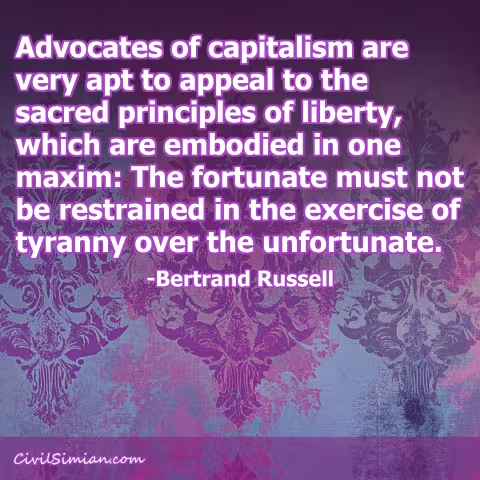
It often happens that reforms merely have the effect of transferring the undesirable tendencies of individuals from one channel to another channel. An old outlet for some particular wickedness is closed; but a new outlet is opened. The wickedness is not abolished; it is merely provided with a different set of opportunities for self-expression.
▼
Source
source
Ch. 3, p. 20 [2012 reprint]
4 months 3 weeks ago
So when the universe was quickened with soul, God was well pleased; and he bethought him to make it yet more like its type. And whereas the type is eternal and nought that is created can be eternal, he devised for it a moving image of abiding eternity, which we call time. And he made days and months and years, which are portions of time; and past and future are forms of time, though we wrongly attribute them also to eternity. For of eternal Being we ought not to say 'it was', 'it shall be', but 'it is' alone: and in like manner we are wrong in saying 'it is' of sensible things which become and perish; for these are ever fleeting and changing, having their existence in time.
3 months 4 weeks ago
...this Jewish doctrine of the primacy of economic values has found the widest acceptance and been most whole-heartedly acted upon. From America it has begun to infect the rest of the world. We may be pardoned for wishing that the Jews had remained not forty, but four thousand years in their repulsive wilderness.
▼
Source
source
"One and Many," pp. 18


1 month 4 weeks ago
Love hinders death. Love is life. All, everything that I understand, I understand only because I love. Everything is, everything exists, only because I love. Everything is united by it alone. Love is God, and to die means that I, a particle of love, shall return to the general and eternal source.
▼
Source
source
Thoughts of Prince Andrew Bk XII, Ch. 16
1 month 2 weeks ago
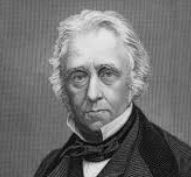
To have been a Sovereign, yet the champion of liberty,-a revolutionary leader, yet the supporter of social order, is the peculiar glory of William. Till his accession the British Constitution was in its Chaos. It had contained, from a very remote period, the simple elements of an harmonious government. But they were in a state not of amalgamation, but of conflict,-not of equilibrium but of alternate elevation and depression. The tyranny of Charles the first produced civil war and anarchy. Tyranny had now again produced resistance and revolution. And, but for the wisdom of the new King, it seems probable that the same cycle of misery would have been again described.
▼
Source
source
'Essay on the Life and Character of King William III' (1822), written for the Greaves Historical Prize at Cambridge, quoted in The Times Literary Supplement (1 May 1969), p. 469
4 months 1 day ago
Great minds are related to the brief span of time during which they live as great buildings are to a little square in which they stand: you cannot see them in all their magnitude because you are standing too close to them.
▼
Source
source
Vol. 2, Ch. 20, § 242
1 month 3 weeks ago
I don't believe you until you tell me, do you really believe, for example, if they say they are Catholic, "Do you really believe that when a priest blesses a wafer, it turns into the body of Christ? Are you seriously telling me you believe that? Are you seriously saying that wine turns into blood?" Mock them. Ridicule them. In public. Don't fall for the convention that we're all too polite to talk about religion. Religion is not off the table. Religion is not off limits. Religion makes specific claims about the universe which need to be substantiated and need to be challenged and, if necessary, need to be ridiculed with contempt.
▼
Source
source
Reason Rally, National Mall, Washington, DC, 2012-03-24 Richard Dawkins and his Foundation at the Reason Rally, YouTube, 7 April 2012
3 months 4 days ago
When one compares the talents one has with those of a Leibniz, one is tempted to throw away one's books and go die quietly in the dark of some forgotten corner.
▼
Source
source
Oeuvres complètes, vol. 7, p. 678
2 weeks 1 day ago
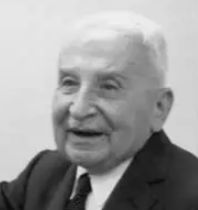
No social co-operation under the division of labour is possible when some people or unions of people are granted the right to prevent by violence and the threat of violence other people from working. When enforced by violence, a strike in vital branches of production or a general strike are tantamount to a revolutionary destruction of society.

2 months 3 weeks ago
An aphorism? Fire without flames. Understandable that no one tries to warm himself at it.
2 months 3 weeks ago
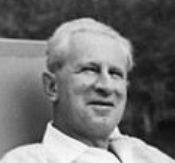
The historical world, in so far as it is built, organized, and shaped by the conscious activity of thinking subjects, is a realm of mind. But the mind is fully realized and exists in its true form only when it indulges in its proper activity, namely, in art, religion, and philosophy.
▼
Source
source
P. 87

1 month 6 days ago
For Leopardi evil is integral to the way the world works; but when he talks of evil he does not mean any kind of malign agency of the sort that Gnostics imagined. Evil is the suffering that is built into the scheme of things. 'What hope is there when evil is ordinary?' he asks. 'I mean, in an order where evil is necessary?' These rhetorical questions show why Leopardi had no interest in projects of revolution and reform. No type of human action - least of all the harlequinade of politics - could fundamentally alter a world in which evil was ordinary.
▼
Source
source
The Faith of Puppets: Leopardi and the Souls of Machines (p.35-6)

2 weeks 6 days ago
In the meanest mortal there lies something nobler. The poor swearing soldier, hired to be shot, has his "honor of a soldier," different from drill-regulations and the shilling a day. It is not to taste sweet things, but to do noble and true things, and vindicate himself under God's Heaven as a god-made Man, that the poorest son of Adam dimly longs. Show him the way of doing that, the dullest day-drudge kindles into a hero. They wrong man greatly who say he is to be seduced by ease.

3 months ago
Is there in the whole world a being who would have the right to forgive and could forgive? I don't want harmony. From love for humanity I don't want it. I would rather be left with the unavenged suffering. I would rather remain with my unavenged suffering and unsatisfied indignation, even if I were wrong. Besides, too high a price is asked for harmony; it's beyond our means to pay so much to enter on it. And so I hasten to give back my entrance ticket, and if I am an honest man I am bound to give it back as soon as possible. And that I am doing. It's not God that I don't accept, Alyosha, only I most respectfully return him the ticket.
▼
Source
source
Book II, Chapter 4: Rebellion (trans. Constance Garnett)
4 months ago
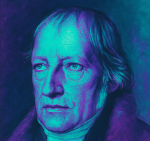
The force of mind is only as great as its expression; its depth only as deep as its power to expand and lose itself.
▼
Source
source
Preface (J. B. Baillie translation), § 10

3 months 4 weeks ago
Man is a useless passion.
▼
Source
source
Part 4, Chapter 2, III
1 month 2 weeks ago
It is surely delightful, Sir, to look forward to that period when a series of liberal and prudent measures shall have delivered islands, so highly favoured by the bounty of Providence, from the curse inflicted on them by the frantic rapacity of man. Then the peasant of the Antilles will no longer crawl in listless and trembling dejection round a plantation from whose fruits he must derive no advantage, and a hut whose door yields him no protection; but, when his cheerful and voluntary labour is performed, he will return with the firm step and erect brow of a British citizen from the field which is his freehold to the cottage which is his castle.
▼
Source
source
Speech to a meeting of the Anti-Slavery Society held in Freemasons' Tavern (25 June 1824), quoted in Report of the Committee of the Society for the Mitigation and Gradual Abolition of Slavery Throughout the British Dominions, Volume I (1824), p. 77
2 months 2 weeks ago
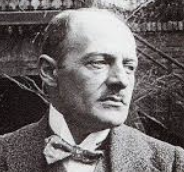
Ressentiment is always to some degree a determinant of the romantic type of mind. At least this is so when the romantic nostalgia for some past era (Hellas, the Middle Ages, etc.) is not primarily based on the values of that period, but on the wish to escape from the present. Then all praise of the "past" has the implied purpose of downgrading present-day reality.
▼
Source
source
L. Coser, trans. (1973), p. 68

2 months 3 weeks ago
He that is not with me is against me: and he that gathereth not with me scattereth.
▼
Source
source
Luke 11:23 (KJV)
3 months 4 weeks ago
First of all, principles should be general. That is, it must be possible to formulate them without use of what would be intuitively recognized as proper names, or rigged definite descriptions.
▼
Source
source
Chapter III, Section 23, pg. 131
1 month 3 weeks ago
The advanced members of the medical profession know that the health of society is not to be obtained or maintained by medicines; - that it is far better, far more easy and far wiser, to adopt substantive measures to prevent disease of body or mind, than to allow substantive measure to remain continually to generate causes to produce physical and mental disorders.
▼
Source
source
3rd Part

4 months 2 weeks ago
Cease therefore to be dismayed by the mere novelty and so to reject reason from your mind with loathing: weigh the questions rather with keen judgment and if they seem to you to be true, surrender, or if the thing is false, gird yourself to the encounter.
▼
Source
source
Book II, lines 1040-1043 (tr. Munro)
2 weeks 6 days ago
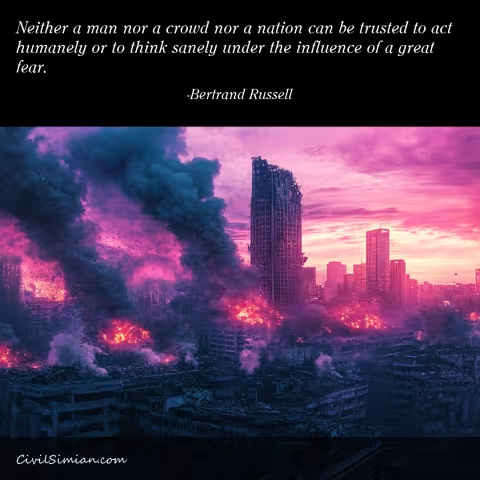
To reconcile Despotism with Freedom:-well, is that such a mystery? Do you not already know the way? It is to make your Despotism just. Rigorous as Destiny; but just too, as Destiny and its Laws. The Laws of God: all men obey these, and have no 'Freedom' at all but in obeying them. The way is already known, part of the way;-and courage and some qualities are needed for walking on it!
1 month 1 week ago
I must write it all out, at any cost. Writing is thinking. It is more than living, for it is being conscious of living.
▼
Source
source
Locked Rooms and Open Doors
3 months ago
Only a man who is at one with the world can be at one with himself.
▼
Source
source
"Ideas," Lucinde and the Fragments, P. Firchow, trans. (1991), § 130
1 month 1 week ago
The coming of Buddhism to the West may well prove to be the most important event of the Twentieth Century.
▼
Source
source
In Lama Surya Das, Awakening the Buddha Within

4 months ago
I once received a letter from an eminent logician, Mrs. Christine Ladd Franklin, saying that she was a solipsist, and was surprised that there were no others. Coming from a logician, this surprise surprised me.
▼
Source
source
Human Knowledge: Its Scope and Limits (1948), Part III, chapter II, "Solipsism", p. 196
2 weeks 6 days ago
All the gifted souls, of every rank, who are born to you in this generation. These are appointed, by the true eternal "divine right" which will never become obsolete, to be your governors and administrators; and precisely as you employ them, or neglect to employ them, will your State be favored of Heaven or disfavored. This noble young soul, you can have him on either of two conditions; and on one of them, since he is here in the world, you must have him. As your ally and coadjutor; or failing that, as your natural enemy: which shall it be? I consider that every Government convicts itself of infatuation and futility, or absolves and justifies itself before God and man, according as it answers this question.
4 months ago
All traditional logic habitually assumes that precise symbols are being employed. It is therefore not applicable to this terrestial life but only to an imagined celestial existence... logic takes us nearer to heaven than other studies.
▼
Source
source
Vagueness', first published in The Australasian Journal of Psychology and Philosophy, 1 June, 1923
2 weeks ago
The fox, when caught, is worth nothing: he is followed for the pleasure of following.
▼
Source
source
Vol. I, ch. 6, "Of Occupation", p. 177

2 months 1 week ago
The Outsider's miseries are the prophet's teething pains. He retreats into his room, like a spider in a dark corner; he lives alone, wishes to avoid people.
▼
Source
source
Chapter Four The Attempt to Gain Control

3 months 3 weeks ago
So we do sometimes think because it has been found to pay.
▼
Source
source
§ 470

4 months 3 days ago
Truth springs from argument amongst friends.
1 month 1 week ago
Given our anthropocentric bias, thinking of non-human vertebrates not just as equivalent in moral status to toddlers or infants, but as though they were toddlers or infants, is a useful exercise. Such reconceptualisation helps correct our lack of empathy for sentient beings whose physical appearance is different from "us". Ethically, the practice of intelligent "anthropomorphism" shouldn't be shunned as unscientific, but embraced insofar as it augments our stunted capacity for empathy. Such anthropomorphism can be a valuable corrective to our cognitive and moral limitations. This is not a plea to be sentimental, simply for impartial benevolence.
▼
Source
source
Reprogramming Predators, BLTC Research, 2009

1 month 3 weeks ago
New media are new archetypes, at first disguised as degradations of older media.
▼
Source
source
Arts in society, Volume 3, 1964, p. 240
1 week 3 days ago
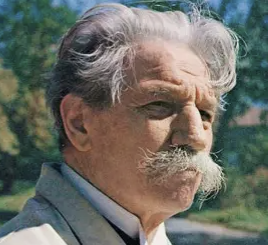
May the men who hold the destiny of peoples in their hands, studiously avoid anything that might cause the present situation to deteriorate and become even more dangerous. May they take to heart the words of the Apostle Paul: "If it be possible, as much as lieth in you, live peaceably with all men." These words are valid not only for individuals, but for nations as well. May these nations, in their efforts to maintain peace, do their utmost to give the spirit time to grow and to act.
2 months 3 weeks ago
We understand God by everything in ourselves that is fragmentary, incomplete, and inopportune.
3 months 2 weeks ago
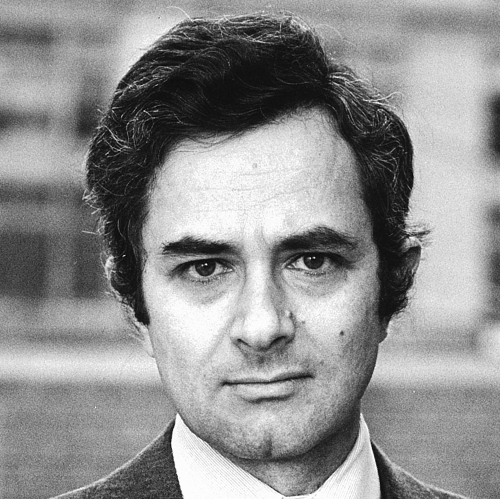
In speaking of the fear of religion, I don't mean to refer to the entirely reasonable hostility toward certain established religions and religious institutions, in virtue of their objectionable moral doctrines, social policies, and political influence. Nor am I referring to the association of many religious beliefs with superstition and the acceptance of evident empirical falsehoods. I am talking about something much deeper-namely, the fear of religion itself. I speak from experience, being strongly subject to this fear myself: I want atheism to be true and am made uneasy by the fact that some of the most intelligent and well-informed people I know are religious believers. It isn't just that I don't believe in God and, naturally, hope that I'm right in my belief. It's that I hope there is no God! I don't want there to be a God; I don't want the universe to be like that.
▼
Source
source
The Last Word, Oxford University Press, 1997, pp. 130-131.
2 months 1 week ago
Now the basic impulse behind existentialism is optimistic, very much like the impulse behind all science. Existentialism is romanticism, and romanticism is the feeling that man is not the mere he has always taken himself for. Romanticism began as a tremendous surge of optimism about the stature of man. Its aim - like that of science - was to raise man above the muddled feelings and impulses of his everyday humanity, and to make him a god-like observer of human existence.
▼
Source
source
p. 96

2 months 3 weeks ago
We are living in what the Greeks called the right time for a "metamorphosis of the gods," i.e. of the fundamental principles and symbols. This peculiarity of our time, which is certainly not of our conscious choosing, is the expression of the unconscious man within us who is changing. Coming generations will have to take account of this momentous transformation if humanity is not to destroy itself through the might of its own technology and science.
▼
Source
source
p 110
2 weeks 5 days ago
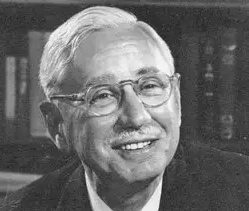
She is a woman now, and not an idle girl, not a domestic ornament or a sexual convenience anymore.
▼
Source
source
On the maturation of women, Ch. 4 : On Old Age
4 months ago
There's a Bible on that shelf there. But I keep it next to Voltaire - poison and antidote.
▼
Source
source
In Kenneth Harris Talking To: Bertrand Russell, 1971
3 months 2 weeks ago
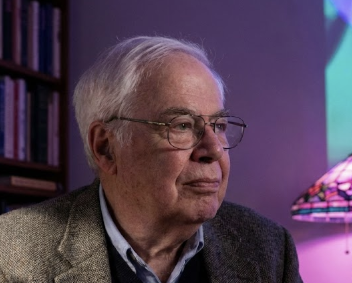
The encouragement of light-mindedness about traditional philosophical topics serves the same purposes as does the encouragement of light-mindedness about traditional theological topics. Like the rise of large market economies, the increase in literacy, the proliferation of artistic genres, and the insouciant pluralism of contemporary culture, such philosophical superficiality and light-mindedness helps along the disenchantment of the world. It helps make the world's inhabitants more pragmatic, more tolerant, more liberal, more receptive to the appeal of instrumental rationality.
3 weeks 2 days ago
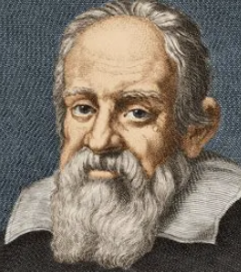
If what we are discussing were a point of law or of the humanities, in which neither true nor false exists, one might trust in subtlety of mind and readiness of tongue and in the greater experience of the writers, and expect him who excelled in those things to make his reasoning most plausible, and one might judge it to be the best. But in the natural sciences, whose conclusions are true and necessary and have nothing to do with human will, one must take care not to place oneself in the defense of error; for here a thousand Demostheneses and a thousand Aristotles would be left in the lurch by every mediocre wit who happened to hit upon the truth for himself. Therefore, Simplicio, give up this idea and this hope of yours that there may be men so much more learned, erudite, and well-read than the rest of us as to be able to make that which is false become true in defiance of nature.
▼
Source
source
Salviati, p. 61
1 month 3 weeks ago
For the first half of geological time our ancestors were bacteria. Most creatures still are bacteria, and each one of our trillions of cells is a colony of bacteria.
2 months 1 week ago
The progress of human knowledge depends on maintaining that touch of scepticism even about the most "unquestionable" truths. A century ago, Darwin's theory of evolution by natural selection was regarded as scientifically unshakeable; today, most biologists have their reservations about it. Fifty years ago, Freud's sexual theory of neurosis was accepted by most psychiatrists; today, it is widely recognized that his methods were highly questionable. At the turn of this century, a scientist who questioned Newton's theory of gravity would have been regarded as insane; twenty years later, it had been supplanted by Einstein's theory, although, significantly, few people actually understood it. It seems perfectly conceivable that our descendants of the twenty-second century will wonder how any of us could have been stupid enough to have been taken in by Darwin, Freud or Einstein.
▼
Source
source
p. 4
CivilSimian.com created by AxiomaticPanic, CivilSimian, Kalokagathia