


4 months 5 days ago
He who created you without you will not justify you without you.
▼
Source
source
169

2 months 2 weeks ago
The more intense a spiritual leader's appetite for power, the more he is concerned to limit it to others.
2 months 2 weeks ago
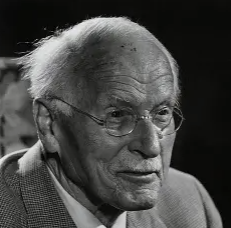
There are as many nights as days, and the one is just as long as the other in the year's course. Even a happy life cannot be without a measure of darkness, and the word "happy" would lose its meaning if it were not balanced by sadness.
▼
Source
source
"The Art of Living", interview with journalist Gordon Young first published in 1960

2 months 2 weeks ago
...what I look to with seriousness is the Phalanx of Party which exists in the body of the dissenters, who are, at the very least, nine tenths of them entirely devoted, some with greater some with less zeal, to the principles of the French Revolution.
▼
Source
source
Letter to the Home Secretary, Henry Dundas (30 September 1791), quoted in Alfred Cobban and Robert A. Smith (eds.), The Correspondence of Edmund Burke, Volume VI: July 1789-December 1791 (1967), p. 419

3 months 2 weeks ago
The possession and the exercise of political, and among others of electoral, rights, is one of the chief instruments both of moral and of intellectual training for the popular mind; and all governments must be regarded as extremely imperfect, until every one who is required to obey the laws, has a voice, or the prospect of a voice, in their enactment and administration.
▼
Source
source
Thoughts on Parliamentary Reform (1859), p. 22

3 months 2 weeks ago
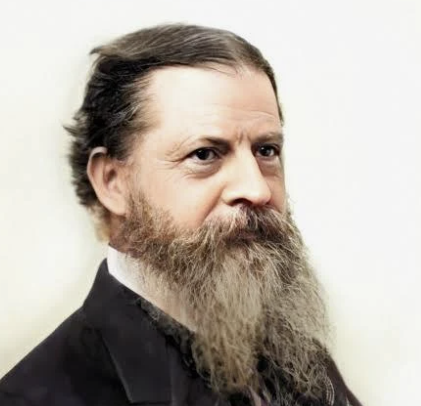
Sunshine cannot bleach the snow, Nor time unmake what poets know.
▼
Source
source
"The Test", as quoted in Emerson As A Poet (1883) by Joel Benton, p. 40
2 months 2 weeks ago
Unless man have a natural bent in accordance with nature's, he has no chance of understanding nature at all.
▼
Source
source
IV
4 months 2 weeks ago
Misfortune shows those who are not really friends.
1 month 2 weeks ago
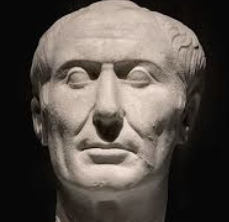
Have courage, or cunning, when you deal with an enemy.
▼
Source
source
Maxim 156
2 months 2 weeks ago
"I exist" does not follow from "there is a thought now." The fact that a thought occurs at a given moment does not entail that any other thought has occurred at any other moment, still less that there has occurred a series of thoughts sufficient to constitute a single self. As Hume conclusively showed, no one event intrinsically points to any other. We infer the existence of events which we are not actually observing, with the help of general principle. But these principles must be obtained inductively. By mere deduction from what is immediately given we cannot advance a single step beyond. And, consequently, any attempt to base a deductive system on propositions which describe what is immediately given is bound to be a failure.
▼
Source
source
p. 47.
2 months 2 weeks ago
But what is liberty without wisdom, and without virtue? It is the greatest of all possible evils; for it is folly, vice, and madness, without tuition or restraint.
2 months 2 weeks ago
My mission is to see things as they are. Exactly the contrary of a mission.

3 months 2 weeks ago
The wraith of Sigmund said. "You know what this is, I suppose. Religious melancholia. Stop while there is time. If you dive, you dive into insanity."
▼
Source
source
Pilgrim's Regress 168

3 months 3 weeks ago
The ceaseless labour of your life is to build the house of death.
▼
Source
source
Book I, Ch. 20
1 month 3 weeks ago
If every strategy today is that of mental terror and of deterrence tied to the suspension and the eternal simulation of catastrophe, then the only means of mitigating this scenario would be to make the catastrophe arrive, to produce or to reproduce a real catastrophe. To which Nature is at times given: in its inspired moments, it is God who through his cataclysms unknots the equilibrium of terror in which humans are imprisoned. Closer to us, this is what terrorism is occupied with as well: making real, palpable violence surface in opposition to the invisible violence of security. Besides, therein lies terrorism's ambiguity.
▼
Source
source
"The China Syndrome," p. 58
2 months 2 weeks ago
The determination to print them (his lectures), and to communicate them to the General Public, must also speak for itself; and should it not do so, any other recommendation of them would be thrown away. Thus, with respect to the appearance of this work, I have nothing further to say to the Public, than that I have nothing to say.
▼
Source
source
Preface

2 months 4 days ago
Intelligence is quickness to apprehend as distinct from ability, which is capacity to act wisely on the thing apprehended.
▼
Source
source
p. 135; Ch. 17, December 15, 1939.
2 months 1 day ago
In the dominant Western religious system, the love of God is essentially the same as the belief in God, in God's existence, God's justice, God's love. The love of God is essentially a thought experience. In the Eastern religions and in mysticism, the love of God is an intense feeling experience of oneness, inseparably linked with the expression of this love in every act of living.
▼
Source
source
Ch. 2
1 month 2 weeks ago
When Fortune is on our side, popular favor bears her company.
▼
Source
source
Maxim 275
2 months 2 weeks ago
Nature must not win the game, but she cannot lose. And whenever the conscious mind clings to hard and fast concepts and gets caught in its own rules and regulations-as is unavoidable and of the essence of civilized consciousness-nature pops up with her inescapable demands.
▼
Source
source
Alchemical Studies

2 months 3 days ago
Revolutionary feminism embraces men who are able to change, who are capable of responding mutually in a subject-to-subject encounter where desire and fulfillment are in no way linked to coercive subjugation. This feminist vision of the sexual imaginary is the space few men seem able to enter.

1 month 4 weeks ago
Of all the inventions of man I doubt whether any was more easily accomplished than that of a Heaven.
▼
Source
source
L 34
1 month 2 weeks ago
We are interested in others, when they are interested in us.
▼
Source
source
Maxim 16

4 days ago
And what is freedom, you ask? It means not being a slave to any circumstance, to any constraint, to any chance; it means compelling Fortune to enter the lists on equal terms.
4 months 5 days ago
I have read in Plato and Cicero sayings that are very wise and very beautiful; but I never read in either of them, "Come unto me, all ye that labor and are heavy laden."
▼
Source
source
p. 62
2 months 2 weeks ago
To reckon on anything at all, here or elsewhere, is to afford proofs that we are still burdened with chains. The reprobate aspires to paradise; this aspiration disparages, compromises him. To be free is to rid yourself forever of the notion of reward, it is to expect nothing of men or gods, it is to renounce not only this world and all worlds but salvation itself-it is to destroy even the notion of it, that chain among chains.

2 months 3 weeks ago
I am far from denying that newspapers in democratic countries lead citizens to do very ill-considered things in common; but without newspapers there would be hardly any common action at all. So they mend many more ills than they cause.
▼
Source
source
Book Two, Chapter VI.

3 months 2 weeks ago
Fire is the most tolerable third party.
▼
Source
source
January 2, 1853

1 month 2 weeks ago
A real mother, who knows the will of God by experience, will prepare her children also to fulfil it. Such a mother will suffer if she sees her child overfed, effeminate, and dressed-up, for she knows that these things will make it difficult for it to fulfil the will of God which she recognizes.
2 months 1 week ago
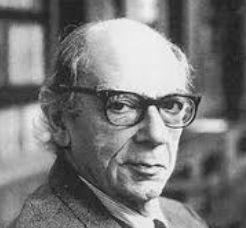
By freedom he meant a condition in which men were not prevented from choosing both the object and the manner of their worship. For him only a society in which this condition was realised could be called fully human. Its realisation was an ideal which Mill regarded as more precious than life itself.

3 months 2 weeks ago
If we could sniff or swallow something that would, for five or six hours each day, abolish our solitude as individuals, atone us with our fellows in a glowing exaltation of affection and make life in all its aspects seem not only worth living, but divinely beautiful and significant, and if this heavenly, world-transfiguring drug were of such a kind that we could wake up next morning with a clear head and an undamaged constitution-then, it seems to me, all our problems (and not merely the one small problem of discovering a novel pleasure) would be wholly solved and earth would become paradise.
▼
Source
source
Wanted, A New Pleasure

3 months 2 weeks ago
Democracy is still upon its trial. The civic genius of our people is its only bulwark.
▼
Source
source
Robert Gould Shaw: Oration upon the Unveiling of the Shaw Monument
1 month 1 week ago
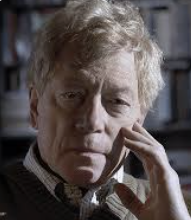
It goes without saying that apartheid is offensive. It was adopted, however, as the lesser of two evils. The Afrikaners believe that black majority rule has, in almost every case, led to the collapse of the constitutional government which they brought to South Africa, and upon which their freedoms and privileges - and perhaps even their lives - depend. And it did not seem so very bad to deny to blacks a vote which they would, when in power, promptly deny to themselves.
▼
Source
source
'A lift at last for the other Afrikaners', The Times (17 May 1983), p. 12

3 months 2 weeks ago
The theoretical understanding of the world, which is the aim of philosophy, is not a matter of great practical importance to animals, or to savages, or even to most civilized men.
▼
Source
source
Ch. 1: Mysticism and Logic
2 months 2 weeks ago
"War," says Machiavel, "ought to be the only study of a prince;" and by a prince he means every sort of state, however constituted. "He ought," says this great political doctor, "to consider peace only as a breathing-time, which gives him leisure to contrive, and furnishes ability to execute military plans." A meditation on the conduct of political societies made old Hobbes imagine that war was the state of nature.
2 months 2 weeks ago
A distant enemy is always preferable to one at the gate.
1 month 2 weeks ago
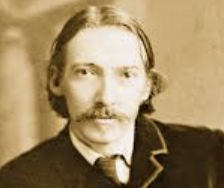
Quiet minds cannot be perplexed or frightened but go on in fortune or misfortune at their own private pace, like a clock during a thunderstorm.
▼
Source
source
'La Fère of Cursed Memory', 15th vignette of An Inland Voyage (1878), in Collected Memoirs, Travel Sketches and Island Literature of Robert Louis Stevenson, Stevenson, e-artnow
4 months 1 week ago
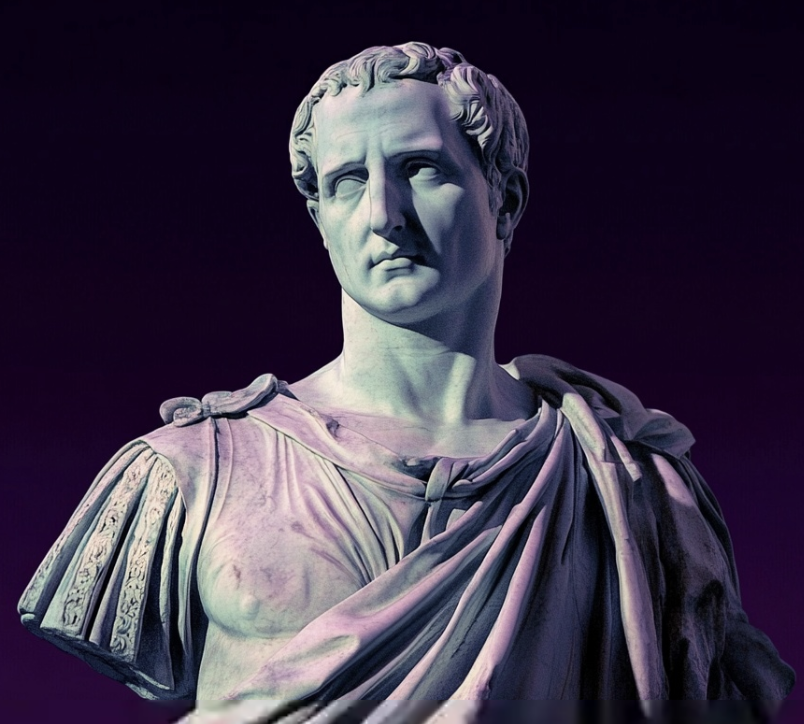
We know, that of all living beings man is the best formed, and, as the gods belong to this number, they must have a human form. ... I do not mean to say that the gods have body and blood in them; but I say that they seem as if they had bodies with blood in them. . . , Epicurus, for whom hidden things were as tangible as if he had touched them with his finger, teaches us that gods are not generally visible, but that they are intelligible; that they are not bodies having a certain solidity . . . but that we can recognize them by their passing images; that as there are atoms enough in the infinite space to produce such images, these are produced before us . . . and make us realize what are these happy, immortal beings.
▼
Source
source
Book I, Section 18

2 months 2 days ago
It reminds us that a man driven to desire to possess a certain female is a highly purposive individual. We have already noted that evolution tends to mark time when individuals have no reason to evolve. The same applies to individuals; they may be talented and intelligent, and yet waste their lives because they somehow lack the motivation to make use of these faculties. The best piece of luck that can befall any individual is to have a strong sense of purpose.
▼
Source
source
p. 225

3 months 3 weeks ago
My philosophical views approach somewhat closely those of the late Countess of Conway, and hold a middle position between Plato and Democritus, because I hold that all things take place mechanically as Democritus and Descartes contend against the views of Henry More and his followers, and hold too, nevertheless, that everything takes place according to a living principle and according to final causes - all things are full of life and consciousness, contrary to the views of the Atomists.
▼
Source
source
Letter to Thomas Burnet (1697), as quoted in Platonism, Aristotelianism and Cabalism in the Philosophy of Leibniz (1938) by Joseph Politella, p. 18

3 months 2 weeks ago
Quietism is the attitude of people who say, "let others do what I cannot do." The doctrine I am presenting before you is precisely the opposite of this, since it declares that there is no reality except in action. It goes further, indeed, and adds, "Man is nothing else but what he purposes, he exists only in so far as he realizes himself, he is therefore nothing else but the sum of his actions, nothing else but what his life is." Hence we can well understand why some people are horrified by our teaching.
▼
Source
source
p. 41

2 months 5 days ago
Culture is an instrument wielded by professors to manufacture professors, who, when their turn comes, will manufacture professors.
▼
Source
source
The Need for Roots, part 2: Uprootedness, chapter 1: Uprootedness in the Towns

2 months 1 week ago
I disclose my mysteries to those who are worthy of my mysteries.
3 months 2 weeks ago
The bluebird carries the sky on his back.
▼
Source
source
April 3, 1852
2 months 1 week ago
And hereby it comes to passe, that Intemperance, is naturally punished with Diseases; Rashness, with Mischance; Injustice; with Violence of Enemies; Pride, with Ruine; Cowardice, with Oppression; Negligent government of Princes, with Rebellion; and Rebellion with Slaughter.
▼
Source
source
The Second Part, Chapter 31, p. 194
4 days ago
Who can be forced has not learned how to die.
▼
Source
source
line 426; (Megara). Alternate translation: Who can be compelled does not know how to die.
1 week 2 days ago
[after quoting from Lucretius] In the face of warfare and inevitable death, there is no wisdom but in ataraxia, "to look on all things with a mind at peace"." Here, clearly, the old pagan joy of life is gone, and an almost exotic spirit touches a broken lyre. History, which is nothing if not humorous, was never so facetious as when she gave to this abstemious and epic pessimist the name of Epicurean.

2 months 3 weeks ago
The world that I regard is my selfe, it is the Microcosme of mine owne frame, that I cast mine eye on; for the other, I use it but like my Globe, and turne it round sometimes for my recreation. Men that look upon my outside, perusing onely my condition, and fortunes, do erre in my altitude; for I am above Atlas his shoulders.
▼
Source
source
Section 12
3 months 2 weeks ago
As far as men go, it is not what they are that interests me, but what they can become.
▼
Source
source
Act 5, sc. 3

1 month 2 weeks ago
I heard what you were saying. You - you know nothing of my work. You mean my whole fallacy is wrong. How you ever got to teach a course in anything is totally amazing.
▼
Source
source
Cameo appearance as himself in Woody Allen's 1977 film Annie Hall
CivilSimian.com created by AxiomaticPanic, CivilSimian, Kalokagathia