


2 weeks ago
We need a good alternative to Trumpism. There is a majority in favor of that, but... the other party is really not providing that alternative in a very clear way.
▼
Source
source
46:46:00

3 months 4 weeks ago
But plants, though they have not powers of perception, yet, as they have life, certainly approach very nearly to those things which are endowed with sentient faculties. What then is so completely insensible as stony substance? yet even in this, there appears to be a desire of union. Thus the loadstone attracts iron to it, and holds it fast in its embrace, when so attracted. Indeed, the attraction of cohesion, as a law of love, takes place throughout all inanimate nature.
4 weeks ago
Genes and culture have co-evolved. But crudely, natural selection "designed" male human primates to hunt nonhumans and build coalitions of other male human primates in order to wage territorial wars of aggression. Nature didn't design us to become a scientific community and collaborate to overcome aging. It's difficult to imagine that any human enemy could inflict such gruesome damage on the victims as growing old. The ravages of aging strike down combatants and civilians alike. So the trillions of dollars that humans currently spend on ways to harm and kill each other ("defence") would be more fruitfully spent on defeating our common enemy. We should work together to build a "Triple S" civilisation of superlongevity, superhappiness and superintelligence.
▼
Source
source
Transhumanism 2017: Towards a 'Triple S' civilisation of Superlongevity, Superintelligence and Superhappiness, Timeship Buddha
2 months 5 days ago
Both are torn halves of an integral freedom, to which however they do not add up.
▼
Source
source
On high culture and popular culture, in a letter to Walter Benjamin
1 month 3 weeks ago
What we have is a device for producing sentences in response to sentences. But none of these sentences is at all connected to the real world. If one coupled two of these machines and let them play the Imitation Game with each other, then they would go on 'fooling' each other forever, even if the rest of the world disappeared! There is no more reason to regard the machine's talk of apples as referring to real world apples than there is to regard the ant's 'drawing' as referring to Winston Churchill.
▼
Source
source
Chap. 1 : Brains in a vat
1 month 3 weeks ago
It is precisely because we can destroy that we are under an obligation to know why we ought not to do it, and to summon those countervailing powers that curb our destructive capacity. Nonviolence becomes an ethical obligation by which we are bound precisely because we are bound to one another; it may well be an obligation against which we rail, in which ambivalent swings of the psyche make themselves known, but the obligation to preserve the social bond can be resolved upon without precisely resolving that ambivalence. The obligation not to destroy each other emerges from, and reflects, the vexed social form of our lives, and it leads us to reconsider whether self-preservation is not linked to preserving the lives of others.
▼
Source
source
p. 148

3 months 2 weeks ago
The sublime is excited in me by the great stoical doctrine, Obey thyself.
▼
Source
source
p. 14
2 months 1 week ago
And the Science of them, is the true and onely Moral Philosophy. For Moral Philosophy is nothing else but the Science of what is Good, and Evill, in the conversation, and Society of mankind. Good, and Evill, are names that signify our Appetites, and Aversions; which in different tempers, customes, and doctrines of men, are different.
▼
Source
source
The First Part, Chapter 15, p. 79

3 months 2 weeks ago
But you must see that if two things are alike, then it is a further question whether the first is copied from the second, or the second from the first, or both from a third.''What would the third be?''Some have thought that all these loves were copies of our love for the Landlord.'
▼
Source
source
Pilgrim's Regress 59

2 months 4 days ago
The ancient world takes its stand upon the drama of the Universe, the modern world upon the inward drama of the Soul.
▼
Source
source
Ch. 9: "Science and Philosophy", p. 196
2 months 2 weeks ago
Speculative philosophy as the realisation of God is the positing of God, and at the same time his cancellation or negation; theism and at the same time atheism: for God - in the sense of theology - is God only as long as he is taken to be a being distinguished from and independent of the being of man as well as of nature. The theism that as the positing of God is simultaneously his negation or, conversely, as the negation of God equally his affirmation, is pantheism. Theological theism - that is, theism properly speaking - is nothing other than imaginary pantheism which itself is nothing other than real and true theism.
▼
Source
source
Part I, Section 14

2 months 2 weeks ago
You know I am not born to tread in the beaten track - the peculiar bent of my nature pushes me on.
▼
Source
source
Letter to Everina Wollstonecraft

3 months 2 weeks ago
The collective name for the ripe fruits of religion in a character is Saintliness. The saintly character is the character for which spiritual emotions are the habitual centre of the personal energy; and there is a certain composite photograph of universal saintliness, the same in all religions, of which the features can easily be traced.
▼
Source
source
Lectures XI, XII, AND XIII : "Saintliness"

3 months 3 weeks ago
There must be a seed of every good thing in the character of men, otherwise no one can bring it out. Lacking that, analogous motives, honor, etc., are substituted. Parents are in the habit of looking out for the inclinations, for the talents and dexterity, perhaps for the disposition of their children, and not at all for their heart or character.
▼
Source
source
Part III : Selection on Education from Kant's other Writings, Ch. I Pedagogical Fragments, # 13

4 days ago
No man can suffer both severely and for a long time; Nature, who loves us most tenderly, has so constituted us as to make pain either endurable or short.
1 month 5 days ago
The man of science who commits himself to even one statement which turns out to be devoid of good foundation loses somewhat of his reputation among his fellows, and if he be guilty of the same error often he loses not only his intellectual, but his moral standing among them. For it is justly felt that errors of this kind have their root rather in the moral than in the intellectual nature.
▼
Source
source
The Evidence of the Miracle of the Resurrection

1 month 2 weeks ago
Anna Pávlovna's reception was in full swing. The spindles hummed steadily and ceaselessly on all sides. With the exception of the aunt, beside whom sat only one elderly lady, who with her thin careworn face was rather out of place in this brilliant society, the whole company had settled into three groups. One, chiefly masculine, had formed round the abbé. Another, of young people, was grouped round the beautiful Princess Hélène, Prince Vasíli's daughter, and the little Princess Bolkónskaya, very pretty and rosy, though rather too plump for her age. The third group was gathered round Mortemart and Anna Pávlovna.
▼
Source
source
Bk. I, Ch. III

4 months 2 weeks ago
To one unnamed, whose name will one day be named, is dedicated, with this little work, the entire authorship, as it was from the beginning.

2 months 2 weeks ago
To dream of an enterprise of demolition that would spare none of the traces of the original Big Bang.
1 month 2 weeks ago
The patient typically finds himself impelled by some deep, inner conviction that something is true, or right, or virtuous: a conviction that doesn't seem to owe anything to evidence or reason, but which, nevertheless, he feels as totally compelling and convincing. We doctors refer to such a belief as "faith".

2 months 2 weeks ago
Mere imagination would indeed be mere trifling; only no imagination is mere.
▼
Source
source
Vol. VI, par. 286

2 months 5 days ago
The necessity for power is obvious, because life cannot be lived without order; but the allocation of power is arbitrary because all men are alike, or very nearly. Yet power must not seem to be arbitrarily allocated, because it will not then be recognized as power. Therefore prestige, which is illusion, is of the very essence of power.
▼
Source
source
p. 235
4 weeks ago
When one is gripped by excruciating physical pain, one is always shocked at just how frightful it can be.
▼
Source
source
"The Abolitionist Project", Talks given at the FHI (Oxford University) and the Charity International Happiness Conference, 2007
3 months 3 weeks ago
No circumstance is ever so desperate that one cannot nurture some spark of hope.
▼
Source
source
Act I, scene i
2 months 2 weeks ago
Men may one day feel that they are partakers of a common nature, and that true freedom and perfect equity, like food and air, are pregnant with benefit to every constitution.
▼
Source
source
Vol. 1, bk. 1, ch. 3

3 months 2 weeks ago
Blood doubly unites us, for we share the same blood and we have spilled blood.
▼
Source
source
Orestes to Electra, Act 2

2 months 3 weeks ago
So many of my thoughts and feelings are shared by the English that England has turned into a second native land of the mind for me.
▼
Source
source
Journeys to England and Ireland, 1835.

4 months 2 weeks ago
The essential nature (concerning the soul) cannot be corporeal, yet it is also clear that this soul is present in a particular bodily part, and this one of the parts having control over the rest (heart).
3 months 2 weeks ago
The union of the mathematician with the poet, fervor with measure, passion with correctness, this surely is the ideal.
▼
Source
source
Ch. 11 - Clifford's Lectures and Essays, 1879
2 months 2 weeks ago
We die in proportion to the words we fling around us.
1 week 6 days ago
I think I have already said somewhere that mathematics is the art of giving the same name to different things.
▼
Source
source
Part I. Ch. 2 : The Future of Mathematics, p. 31

4 months 2 weeks ago
We get into the habit of living before acquiring the habit of thinking.
1 week 5 days ago
Nothing is great but truth, and the smallest truth is great. The other day I had a thought, which I put like this: Even a harmful truth is useful, for it can be harmful only for the moment and will lead to other truths, which must always become useful, very much so. Conversely, even a useful error is harmful, for it can be useful only for the moment, enticing us into other errors, which become more and more harmful.
▼
Source
source
Letter to Charlotte von Stein (1787) in Goethe's World View: Presented in His Reflections and Maxims (1963), Edited with an Introduction by Frederick Ungar, Translated by Heinz Norden, pp. 72-73, Frederick Ungar Publishing Company, New York.

3 months 4 weeks ago
But by far the greatest hindrance and aberration of the human understanding proceeds from the dullness, incompetency, and deceptions of the senses; in that things which strike the sense outweigh things which do not immediately strike it, though they be more important. Hence it is that speculation commonly ceases where sight ceases; insomuch that of things invisible there is little or no observation.
▼
Source
source
Aphorism 50

2 months 1 week ago
You read the face of the sky and of the earth, but you have not recognized the one who is before you, and you do not know how to read this moment.

2 months 1 week ago
The transition from philosophy to the domain of state and society had been an intrinsic part of Hegel's system.
▼
Source
source
P. 251

4 months 4 days ago
Be not swept off your feet by the vividness of the impression, but say, "Impression, wait for me a little. Let me see what you are and what you represent. Let me try you."
▼
Source
source
Book II, ch. 18, § 24, Reported in Bartlett's Quotations (1919) as "Be not hurried away by excitement, but say, "Semblance, wait for me a little".

1 month 2 weeks ago
The audience, as ground, shapes and controls the work of art.
▼
Source
source
p. 48
1 week 6 days ago
Roemer used eclipses of the satellites of Jupiter, and sought how much the event fell behind its prediction. But... this prediction is made... by... astronomic laws; for instance Newton's... The velocity of light... is adopted, such that the astronomic laws compatible with this value may be as simple as possible.
1 week 2 days ago
Science tells us how to heal and how to kill; it reduces the death rate in retail and then kills us wholesale in war; but only wisdom - desire coordinated in the light of all experience - can tell us when to heal and when to kill. To observe processes and to construct means is science; to criticize and coordinate ends is philosophy: and because in these days our means and instruments have multiplied beyond our interpretation and synthesis of ideals and ends, our life is full of sound and fury, signifying nothing. For a fact is nothing except in relation to desire; it is not complete except in relation to a purpose and a whole. Science without philosophy, facts without perspective and valuation, cannot save us from havoc and despair. Science gives us knowledge, but only philosophy can give us wisdom.
▼
Source
source
Introduction : On the Uses of Philosophy


2 months 2 days ago
God functions like a stabilizer of time.
3 months 2 weeks ago
The state of society is one in which the members have suffered amputation from the trunk, and strut about so many walking monsters,-a good finger, a neck, a stomach, an elbow, but never a man.
▼
Source
source
par. 5
2 months 2 weeks ago
The healthy man does not torture others-generally it is the tortured who turn into torturers.
▼
Source
source
In Du, May 1941

4 months 1 week ago
It is only he, possessed of all sagely qualities that can exist under heaven, who shows himself quick in apprehension, clear in discernment, of far-reaching intelligence, and all-embracing knowledge, fitted to exercise rule; magnanimous, generous, benign, and mild, fitted to exercise forbearance; impulsive, energetic, firm, and enduring, fitted to maintain a firm hold; self-adjusted, grave, never swerving from the Mean, and correct, fitted to command reverence; accomplished, distinctive, concentrative, and searching, fitted to exercise discrimination. All-embracing is he and vast, deep and active as a fountain, sending forth in their due season his virtues. All-embracing and vast, he is like Heaven. Deep and active as a fountain, he is like the abyss. He is seen, and the people all reverence him; he speaks, and the people all believe him; he acts, and the people all are pleased with him.
1 month 1 week ago
Train any population rationally, and they will be rational. Furnish honest and useful employments to those so trained, and such employments they will greatly prefer to dishonest or injurious occupations. It is beyond all calculation the interest of every government to provide that training and that employment; and to provide both is easily practicable.
7 months 3 weeks ago
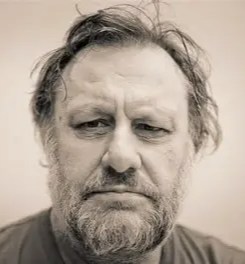
In the Critique of Cynical Reasoning, a great bestseller in Germany (Sloterdijk, 1983), Peter Sloterdijk puts forward the thesis that ideology's dominant mode of functioning is cynical which renders impossible - or, more precisely, vain - the classical critical-ideological procedure. The cynical subject is quite aware of the distance between the ideological mask and the social reality, but he none the less still insists upon the mask.

3 months 2 weeks ago
It seems to me that I may be living too long. Indeed: my nearest relations have all died, and so have some of my best friends, and even some of my best pupils. However, I do not have a reason to complain. I am grateful and happy to be alive, and still be able to continue with my work, if only just. My work seems to me more important than ever.
▼
Source
source
As quoted in "At 90, and Still Dynamic : Revisiting Sir Karl Popper and Attending His Birthday Party" by Eugene Yue-Ching Ho, in Intellectus 23

1 week 3 days ago
The true Church of England, at this moment, lies in the Editors of its Newspapers. These preach to the people daily, weekly; admonishing kings themselves; advising peace or war, with an authority which only the first Reformers, and a long-past class of Popes, were possessed of; inflicting moral censure; imparting moral encouragement, consolation, edification; in all ways diligently "administering the Discipline of the Church."
1 month 2 weeks ago
People usually think that progress consists in the increase of knowledge, in the improvement of life, but that isn't so. Progress consists only in the greater clarification of answers to the basic questions of life. The truth is always accessible to a man. It can't be otherwise, because a man's soul is a divine spark, the truth itself. It's only a matter of removing from this divine spark (the truth) everything that obscures it. Progress consists, not in the increase of truth, but in freeing it from its wrappings. The truth is obtained like gold, not by letting it grow bigger, but by washing off from it everything that isn't gold.
▼
Source
source
Tolstoy's Diaries (1985) edited and translated by R. F. Christian. London: Athlone Press, Vol 2, p. 512
CivilSimian.com created by AxiomaticPanic, CivilSimian, Kalokagathia