


2 months 3 days ago
To die is to wander.

3 months 3 weeks ago
The tendency of our perceptions is to emphasise increasingly the objective elements in an impression, unless we have some special reason, as artists have, for doing the opposite.
▼
Source
source
An Outline of Philosophy Ch.15 The Nature of our Knowledge of Physics, 1927
2 months 2 days ago
A girl, if she has any pride, is so ashamed of having anything she wishes to say out of the hearing of her own family, she thinks it must be something so very wrong, that it is ten to one, if she have the opportunity of saying it, that she will not. And yet she is spending her life, perhaps, in dreaming of accidental means of unrestrained communion.

2 months 2 weeks ago
Tragic paradox of freedom: the mediocre men who alone make its exercise possible cannot guarantee its duration.
1 month 2 weeks ago
Adversity shows whether we have friends, or only the shadows of friends.
▼
Source
source
Maxim 35

3 months 2 weeks ago
Critical social science attempts to determine when theoretical statements grasp invariant regularities of social action as such and when they express ideologically frozen relations of dependence that can in principle be transformed.
▼
Source
source
p. 310 as cited in: Dominick LaCapra (1983) Rethinking Intellectual History: Texts, Contexts, Language. p. 170

3 months 4 weeks ago
Throughout your treatment you forget that you said that 'free-will' can do nothing without grace, and you prove that 'free-will' can do all things without grace! Your inferences and analogies "For if man has lost his freedom, and is forced to serve sin, and cannot will good, what conclusion can more justly be drawn concerning him, than that he sins and wills evil necessarily?
▼
Source
source
p. 149
3 months 3 weeks ago
Two men who differ as to the ends of life cannot hope to agree about education.
▼
Source
source
Ch. 12: Education and Discipline

2 months 3 weeks ago
If there ever are great revolutions there, they will be caused by the presence of the blacks upon American soil. That is to say, it will not be the equality of social conditions but rather their inequality which may give rise thereto.
▼
Source
source
Book Three, Chapter XXI.
2 months 2 weeks ago
There are no arguments. Can anyone who has reached the limit bother with arguments, causes, effects, moral considerations, and so forth? Of course not. For such a person there are only unmotivated motives for living. On the heights of despair, the passion for the absurd is the only thing that can still throw a demonic light on chaos. When all the current reasons - moral, esthetic, religious, social, and so on - no longer guide one's life, how can one sustain life without succumbing to nothingness? Only by a connection with the absurd, by love of absolute uselessness, loving something which does not have substance but which simulates an illusion of life. I live because the mountains do not laugh and the worms do not sing.

2 months 3 weeks ago
The wise soul feareth not death; rather she sometimes striveth for death, she goeth beyond to meet her. Yet eternity maintaineth her substance throughout time, immensity throughout space, universal form throughout motion.
▼
Source
source
I 1
2 months 3 weeks ago
The dead govern the living.
▼
Source
source
Le Catéchisme positiviste

4 months 2 weeks ago
"I conclude that all is well," says Oedipus, and that remark is sacred. It echoes in the wild and limited universe of man. It teaches that all is not, has not been, exhausted. It drives out of this world a god who had come into it with dissatisfaction and a preference for futile suffering. It makes of fate a human matter, which must be settled among men.

3 months 3 weeks ago
Classical political economy nearly touches the true relation of things, without, however,consciously formulating it. This it cannot so long as it sticks in its bourgeois skin.
▼
Source
source
Vol. I, Ch. 19, pg. 594.
2 months 2 weeks ago
"Where do you get those superior airs of yours?" "I've managed to survive, you see, all those nights when I wondered: am I going to kill myself at dawn?"

2 months 3 weeks ago
They made and recorded a sort of institute and digest of anarchy, called the rights of man, in such a pedantic abuse of elementary principles as would have disgraced boys at school; but this declaration of rights was worse than trifling and pedantic in them; as by their name and authority they systematically destroyed every hold of authority by opinion, religious or civil, on the minds of the people. By this mad declaration they subverted the state; and brought on such calamities as no country, without a long war, has ever been known to suffer, and which may in the end produce such a war, and perhaps, many such.
▼
Source
source
Speech in the House of Commons (9 February 1790), quoted in The Parliamentary History of England, From the Earliest Period to the Year 1803, Vol. XXVIII (1816), column 358

3 months 2 weeks ago
Daughters of Time, the hypocritic Days, Muffled and dumb like barefoot dervishes, And marching single in an endless file, Bring diadems and fagots in their hands.
▼
Source
source
Days
3 months 3 weeks ago
Figure to yourself the mixture of surprise and delight which has this instant been poured into my mind by the sound of my name, as uttered by you, in the speech just read to me out of the Morning Herald... By one and the same man, not only Parliamentary Reform, but Law Reform advocated. Advocated? and by what man? By one who, in the vulgar sense of profit and loss, has nothing to gain by it... Yes, only from Ireland could such self-sacrifice come; nowhere else: least of all in England, cold, selfish, priest-ridden, lawyer-ridden, lord-ridden, squire-ridden, soldier-ridden England, could any approach to it be found.
▼
Source
source
Letter to Daniel O'Connell (15 July 1828) , quoted in The Works of Jeremy Bentham, Vol. X (1843), pp. 594-595

3 months 2 weeks ago
Burning in effigy. Kissing the picture of one's beloved... it aims at nothing at all; we just behave this way and then we feel satisfied.
▼
Source
source
Ch. 7 : Remarks on Frazer's Golden Bough, p. 123
2 months 3 weeks ago
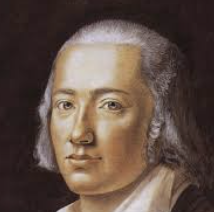
The earth with yellow pears And overgrown with roses wild Upon the pond is bent, And swans divine, With kisses drunk You drop your heads In the sublimely sobering water. But where, with winter come, am I To find, alas, the floweres, and where The sunshine And the shadow of the world? Cold the walls stand And the wordless, in the wind The weathercocks are rattling.
▼
Source
source
"Halves of Life"
3 months 3 weeks ago
I wanted certainty in the kind of way in which people want religious faith. I thought that certainty is more likely to be found in mathematics than elsewhere. But I discovered that many mathematical demonstrations, which my teachers expected me to accept, were full of fallacies, and that, if certainty were indeed discoverable in mathematics, it would be in a new field of mathematics, with more solid foundations than those that had hitherto been thought secure. But as the work proceeded, I was continually reminded of the fable about the elephant and the tortoise. having constructed an elephant upon which the mathematical world could rest, I found the elephant tottering, and proceeded to construct a tortoise to keep the elephant from falling. But the tortoise was no more secure than the elephant, and after some twenty years of very arduous toil, I came to the conclusion that there was nothing more that I could do in the way of making mathematical knowledge indubitable.
▼
Source
source
p. 53

3 months 1 week ago
We ought to regard the interests of the state as of far greater moment than all else, in order that they may be administered well; and we ought not to engage in eager rivalry in despite of equity, nor arrogate to ourselves any power contrary to the common welfare. For a state well administered is our greatest safeguard. In this all is summed up: When the state is in a healthy condition all things prosper; when it is corrupt, all things go to ruin.
1 day ago
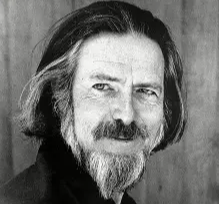
Wouldn't it be as farfetched to call birth the cause of death as to call the cat's head the cause of the tail? Lifting the neck of a bottle implies lifting the bottom as well, for the "two parts" come up at the same time. If I pick up an accordion by one end, the other will follow a little later, but the principle is the same. Total situations are, therefore, patterns in time as much as patterns in space.
▼
Source
source
p. 72

1 month 2 weeks ago
Try not to have Emily exposed to hours and hours of TV. It is a vile drug which permeates the nervous system, especially in the young.
▼
Source
source
Letter to son Eric McLuhan, regarding one of Eric's daughters, 1976
1 month 2 weeks ago
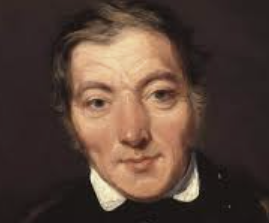
The end of government is to make the governed and the governors happy. That government then is thebest, which in practice produces the greatest happiness to the greatest number; including those who govern, and those who obey.
▼
Source
source
Essay Fourth, The Principles of the Former Essays Applied to Government
3 months 3 weeks ago
I shall keep it [the manuscript] by me until the end of May for purposes of revision, and of adding malicious foot-notes.
▼
Source
source
Letter to W. W. Norton, 17 February, 1931

3 months 2 days ago
Holding fast to these things, you will know the worlds of gods and mortals which permeates and governs everything. And you will know, as is right, nature similar in all respects, so that you will neither entertain unreasonable hopes nor be neglectful of anything.
▼
Source
source
As quoted in Divine Harmony: The Life and Teachings of Pythagoras by John Strohmeier and Peter Westbrook.

2 weeks 2 days ago
The task of a theory of class is to identify the existing conditions for potential collective struggle and express them as a political proposition.
▼
Source
source
104

1 month 2 weeks ago
At the approach of danger there are always two voices that speak with equal force in the heart of man: one very reasonably tells the man to consider the nature of the danger and the means of avoiding it; the other even more reasonable says that it is too painful and harassing to think of the danger, since it is not a man's power to provide for everything and escape from the general march of events; and that it is therefore better to turn aside from the painful subject till it has come, and to think of what is pleasant. In solitude a man generally yields to the first voice; in society to the second.
▼
Source
source
Bk. X, ch. 17
1 month 2 weeks ago
The literate man is a sucker for propaganda...You cannot propagandize a native. You can sell him rum and trinkets, but you cannot sell him ideas.

3 months 3 weeks ago
The rich man... is always sold to the institution which makes him rich.

4 months 1 week ago
Is God willing to prevent evil, but not able? Then he is not omnipotent. Is he able, but not willing? Then he is malevolent. Is he both able and willing? Then whence cometh evil? Is he neither able nor willing? Then why call him God?
3 months 3 weeks ago
Capital is money: Capital is commodities. [...] For the movement, in the course of which it adds surplus-value, is its own movement, its expansion, therefore, is automatic expansion. Because it is value, it has acquired the occult quality of being able to add value to itself. It brings forth living offspring, or, at the least, lays golden eggs.
▼
Source
source
Vol. I, Ch. 2, pg. 171.
1 month 4 weeks ago
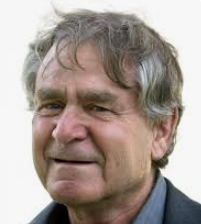
A single observation that is inconsistent with some generalization points to the falsehood of the generalization, and thereby 'points to itself'.
▼
Source
source
Chapter 4, Evidence, p. 34.

2 months ago
If countries were named after the words you first hear when you go there, England would have to be called Damn It.
▼
Source
source
F 33

2 months 3 weeks ago
Humiliate the reason and distort the soul...
▼
Source
source
Part 2, Chapter ?

4 months 6 days ago
What is love's perfection? To love our enemies, and to love them to the end that they may be our brothers.
▼
Source
source
First Homily, as translated by John Burnaby (1955), p. 266

2 months 1 week ago
He that is not on my side is against me, and he that does not gather with me scatters.
▼
Source
source
12:30, New World Translation

3 months 3 weeks ago
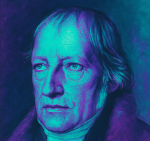
The science of religion is one science within philosophy; indeed it is the final one. In that respect it presupposes the other philosophical disciplines and is therefore a result.
3 months 2 weeks ago
Always put the best interpretation on a tenet. Why not on Christianity, wholesome, sweet, and poetic? It is the record of a pure and holy soul, humble, absolutely disinterested, a trutn-speaker, and bent on serving, teaching, and uplifting men. Christianity taught the capacity, the element, to Jove the All-perfect without a stingy bargain for personal happiness. It taught that to love him was happiness,-to love him in other's virtues.

3 months 3 weeks ago
When national debts have once been accumulated to a certain degree, there is scarce, I believe, a single instance of their having been fairly and completely paid. The liberation of the public revenue, if it has ever been brought about at all, has always been brought about by bankruptcy; sometimes by an avowed one, but always by a real one, though frequently by a pretend payment.
▼
Source
source
Chapter III, Part V, p. 1012.
2 months 3 weeks ago
The pursuit of wealth generally diverts men of great talents and strong passions from the pursuit of power; and it frequently happens that a man does not undertake to direct the fortunes of the state until he has shown himself incompetent to conduct his own.
▼
Source
source
Chapter XIII.

1 month 1 week ago
The picture of modern philosophy as centered in epistemology and driven by the desire to ground our representations is so tenacious that some philosophers are prepared to bite the bullet and declare the effort simply wasted. Rorty, for example, finds it easier to reject modern philosophy altogether than to reject the standard accounts of its history. His narrative is more polemical than most, but it's a polemical version of the story told in most philosophy departments in the second half of the twentieth century. The story is one of tortuously decreasing interest. Philosophy, like some people, was prepared to accept boredom in exchange for certainty as it grew to middle age.

2 months 3 days ago
Our whole civilization, our entire culture is concentrated in the mad demand for the most perfected weapons of slaughter. Ammunition! Ammunition! O, Lord, thou who rulest heaven and earth, thou God of love, of mercy and of justice, provide us with enough ammunition to destroy our enemy. Such is the prayer which is ascending daily to the Christian heaven.
2 months 5 days ago
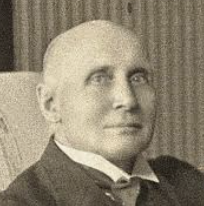
It belongs to the self-respect of intellect to pursue every tangle of thought to its final unravelment.
▼
Source
source
Ch. 12: "Religion and Science", p. 258
1 month 2 weeks ago
When you move into a new area, a new territory and learn a new language, the language is not a new subject, it is an environment, it is total.
▼
Source
source
(p. 105)
2 months 6 days ago
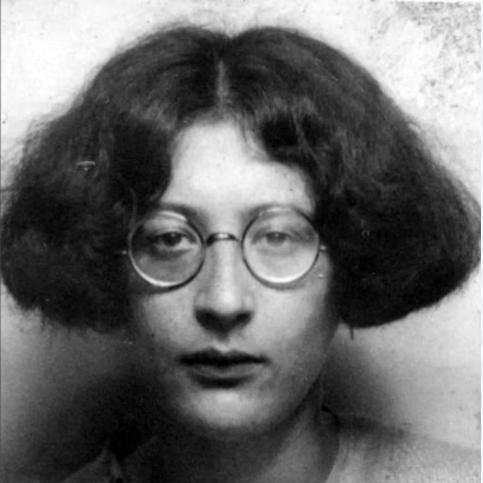
I too have a growing inner certainty that there is a deposit of pure gold in me which ought to be passed on. The trouble is that I am more and more convinced by my experience and observation of my contemporaries that there is no one to receive it.
3 months 3 weeks ago
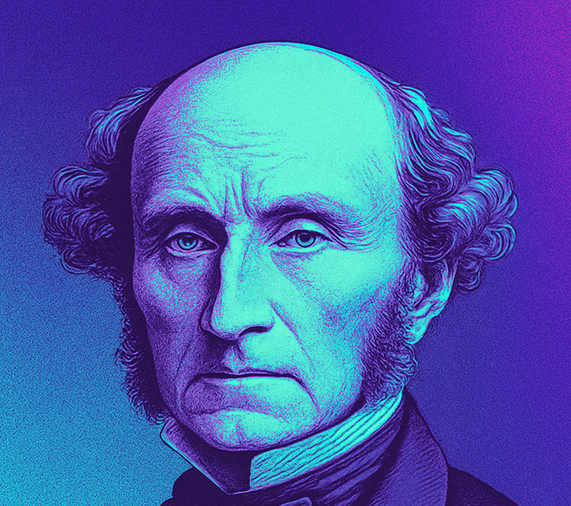
People are not aware how entirely, in former ages, the law of superior strength was the rule of life; how publicly and openly it was avowed, I do not say cynically or shamelessly - for these words imply a feeling that there was something in it to be ashamed of, and no such notion could find a place in the faculties of any person in those ages, except a philosopher or a saint.
▼
Source
source
Ch. 1
1 month 2 weeks ago
We are interested in others, when they are interested in us.
▼
Source
source
Maxim 16
CivilSimian.com created by AxiomaticPanic, CivilSimian, Kalokagathia