

4 months 2 weeks ago
The infinite... happens to subsist in a way contrary to what is asserted by others: for the infinite is not that beyond which there is nothing, but it is that of which there is always something beyond. ...But that pertaining to which there is nothing beyond is perfect and whole. ...that of which nothing is absent pertaining to the parts ...the whole is that pertaining to which there is nothing beyond. But that pertaining to which something external is absent, that is not all ...But nothing is perfect which has not an end; and the end is a bound. On this account... Parmenides spoke better than Melissus: for the latter says that the infinite is a whole; but the former, that the whole is finite, and equally balanced from the middle: for to conjoin the infinite with the universe and the whole, is not to connect line with line.
3 months 3 weeks ago
Men will not understand ... that when they fulfil their duties to men, they fulfil thereby God's commandments; that they are consequently always in the service of God, as long as their actions are moral, and that it is absolutely impossible to serve God otherwise.
▼
Source
source
As quoted in German Thought, From The Seven Years' War To Goethe's Death : Six Lectures (1880) by Karl Hillebrand, p. 207
2 months 1 week ago
Every living creature is happy when he fulfills his destiny, that is, when he realizes himself, when he is being that which in truth he is. For this reason, Schlegel, inverting the relationship between pleasure and destiny, said, "We have a genius for what we like." Genius, man's superlative gift for doing something, always carries a look of supreme pleasure.
▼
Source
source
pp. 16-17

2 months 3 weeks ago
That Vulcan gave arrows unto Apollo and Diana the fourth day after their Nativities, according to Gentile Theology, may pass for no blind apprehension of the Creation of the Sun and Moon, in the work of the fourth day.
▼
Source
source
Opening lines of Ch. 1

4 months 2 weeks ago
A line by Thomas à Kempis which perhaps could be used as a motto sometime. He says of Paul: Therefore he turned everything over to God, who knows all, and defended himself solely by means of patience and humility . . . . He did defend himself now and then so that the weak would not be offended by his silence.
3 months 1 week ago
We appear to be faced with a general difficulty about psychophysical reduction. In other areas the process of reduction is a move in the direction of greater objectivity, toward a more accurate view of the real nature of things. ... The less it depends on a specifically human viewpoint, the more objective is our description. ...Experience itself, however, does not seem to fit the pattern. ... If the subjective character of experience is fully comprehensible only from one point of view, then any shift to greater objectivity - that is, less attachment to a specific viewpoint - does not take us nearer to the real nature of the phenomenon: it takes us further away from it.
▼
Source
source
p. 174.
3 months 2 weeks ago
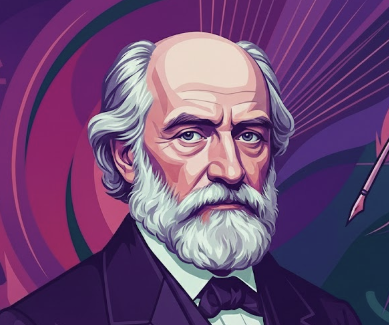
No greater mistake can be made than to imagine that what has been written latest is always the more correct; that what is written later on is an improvement on what was written previously; and that every change means progress. Men who think and have correct judgment, and people who treat their subject earnestly, are all exceptions only. Vermin is the rule everywhere in the world: it is always at hand and busily engaged in trying to improve in its own way upon the mature deliberations of the thinkers.
1 month 2 weeks ago
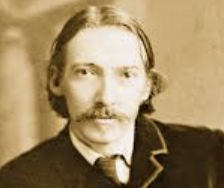
When things fall out opportunely for the person concerned, he is not apt to be critical about the how or why, his own immediate personal convenience seeming a sufficient reason for the strangest oddities and revolutions in our sublunary things.
▼
Source
source
The Sire de Maletroit's Door.
3 months 2 weeks ago
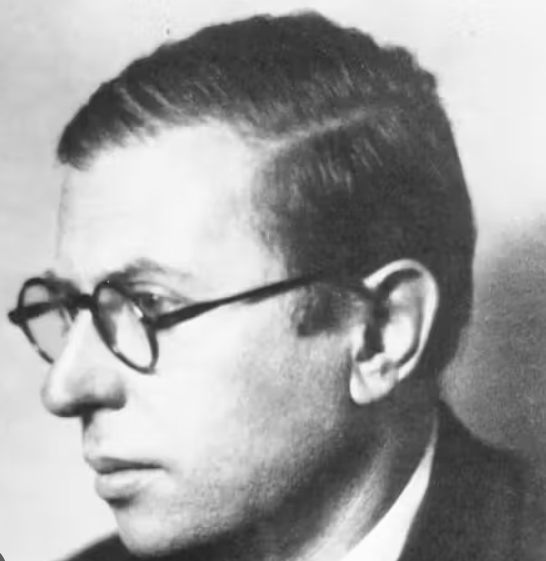
But since he has decided to have the impossibility of living, every misfortune is an opportunity which lays this importance of living before his eyes and obliges him to decide, once again, to die.
▼
Source
source
p. 158
3 months 2 weeks ago
This actual world of what is knowable, in which we are and which is in us, remains both the material and the limit of our consideration.
▼
Source
source
Vol I, Ch. 4, The World As Will: Second Aspect, § 53, as translated by Eric F. J. Payne, 1958
3 months 1 week ago
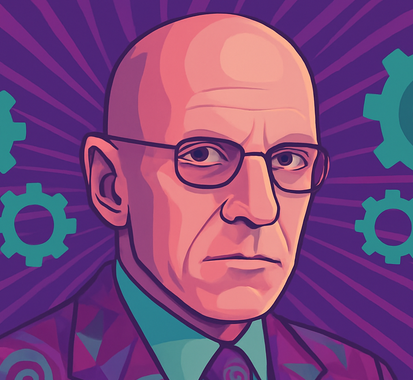
To sum up all these steps, each of which is very lengthy and complex, we will have put the game of truth back in the network of constraints and dominations. Truth, I should say rather, the system of truth and falsity, will have revealed the face it turned away from us for so long and which is that of its violence.
▼
Source
source
p. 4

3 months 2 weeks ago
I cannot read a sentence in the book of the Hindoos without being elevated as upon the table-land of the Ghauts. It has such a rhythm as the winds of the desert, such a tide as the Ganges, and seems as superior to criticism as the Himmaleh Mounts. Even at this late hour, unworn by time with a native and inherent dignity it wears the English dress as indifferently as the Sanscrit.
▼
Source
source
August 6, 1841

3 months 2 weeks ago
There have been men before ... who got so interested in proving the existence of God that they came to care nothing for God himself... as if the good Lord had nothing to do but to exist. There have been some who were so preoccupied with spreading Christianity that they never gave a thought to Christ.
▼
Source
source
Ch. 9

3 months 3 weeks ago
There are and can be only two ways of searching into and discovering truth. The one flies from the senses and particulars to the most general axioms, and from these principles, the truth of which it takes for settled and immovable, proceeds to judgment and to the discovery of middle axioms. And this way is now in fashion. The other derives axioms from the senses and particulars, rising by a gradual and unbroken ascent, so that it arrives at the most general axioms last of all. This is the true way, but as yet untried.
▼
Source
source
Aphorism 19
2 months 1 day ago
No artist can develop without increasing his self-knowledge; but self-knowledge supposes a certain preoccupation with the meaning of human life and the destiny of man. A definite set of beliefs - Methodist Christianity, for example - may only be a hindrance to development; but it is not more so than Beckett's refusal to think at all. Shaw says somewhere that all intelligent men must be preoccupied with either religion, politics, or sex. (He seems to attribute T. E. Lawrence's tragedy to his refusal to come to grips with any of them.) It is hard to see how an artist could hope to achieve any degree of self-knowledge without being deeply concerned with at least one of the three.
▼
Source
source
p. 197

1 week 2 days ago
Under all speech that is good for anything there lies a silence that is better.
▼
Source
source
Silence is deep as Eternity; speech is shallow as Time.
3 days ago
Life is to be fortified by many friendships. To love, and to be loved, is the greatest happiness of existence. If I lived under the burning sun of the equator, it would be a pleasure to me to think that there were many human beings on the other side of the world who regarded and respected me; I could and would not live if I were alone upon the earth, and cut off from the remembrance of my fellow-creatures. It is not that a man has occasion often to fall back upon the kindness of his friends; perhaps he may never experience the necessity of doing so; but we are governed by our imaginations, and they stand there as a solid and impregnable bulwark against all the evils of life.
▼
Source
source
Vol. I, ch. 6, "Of Friendship", p. 178
2 months 4 days ago
Language is a skin: I rub my language against the other. It is as if I had words instead of fingers, or fingers at the tip of my words. My language trembles with desire.
▼
Source
source
Talking, in A Lover's Discourse
2 weeks ago
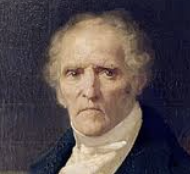
Agricultural association, which in all ages has been deemed impossible, would produce results of unbounded magnificence the rigorous demonstrations, the mathematical calculations by which these results will be verified, will not, however, prevent the picture of the future harmony and happiness which they present from repelling minds habituated to the miseries and wretchedness of our present civilization. The Theory of Social Organization.
▼
Source
source
Harmonian Man: Selected Writings of Charles Fourier, p. 5.
3 months 2 weeks ago
There is something which unites magic and applied science while separating both from the wisdom of earlier ages. For the wise men of old the cardinal problem had been how to conform the soul to reality, and the solution had been knowledge, self-discipline, and virtue. For magic and applied science alike the problem is how to subdue reality to the wishes of men.
1 month 1 day ago
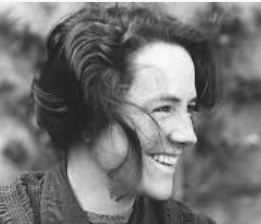
Only in growth, reform, and change, paradoxically enough, is true security to be found.
▼
Source
source
The Wave of the Future
3 months 2 weeks ago
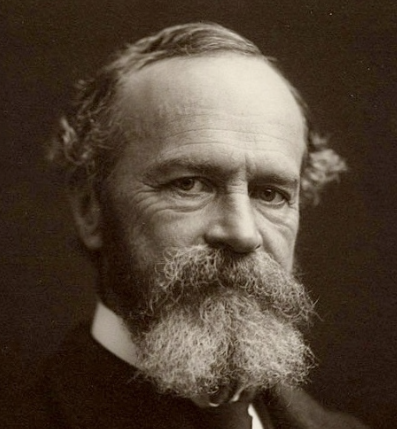
If belief consists in an emotional reaction of the entire man on an object, how can we believe at will? We cannot control our emotions.... But gradually our will can lead us to the same results by a very simple method: we need only in cold blood act as if the thing in question were real, and keep acting as if it were real, and it will infallibly end by growing into such a connection with our life that it will become real. It will become so knit with habit and emotion that our interests in it will be those which characterize belief.
▼
Source
source
Ch. 21
2 months 5 days ago
"The bitterest sorrow that man can know is to aspire to do much and to achieve nothing"... so Herodotus relates that a Persian said to a Theban at a banquet (book ix., chap. xvi.). And it is true. With knowledge and desire we can embrace everything , or almost everything; with the will nothing, or almost nothing. And contemplation is not happiness - no! not if this contemplation implies impotence. And out of this collision between our knowledge and our power pity arises.

3 months 2 weeks ago
We have, in fact, two kinds of morality side by side; one which we preach but do not practise, and another which we practise but seldom preach.
▼
Source
source
Ch. 8: Eastern and Western Ideals of Happiness

4 months 2 weeks ago
Truth, like light, blinds. Falsehood, on the contrary, is a beautiful twilight that enhances every object.
2 months 3 weeks ago
Burden not the back of Aries, Leo, or Taurus, with thy faults, nor make Saturn, Mars, or Venus, guilty of thy Follies.
▼
Source
source
Part III, Section VII

3 months 2 weeks ago
Where knowledge is a duty, ignorance is a crime.
▼
Source
source
Public Good, Philadelphia: John Dunlap, 1780

1 month 2 weeks ago
I know-as we all do-very little of the practice and the spoken and written doctrine of former times on the subject of non-resistance to evil. I knew what had been said on the subject by the fathers of the Church-Origen, Tertullian, and others-I knew too of the existence of some so-called sects of Mennonites, Herrnhuters, and Quakers, who do not allow a Christian the use of weapons, and do not enter military service; but I knew little of what had been done by these so-called sects toward expounding the question.
▼
Source
source
Preface

3 months 3 weeks ago
Once conform, once do what others do because they do it, and a kind of lethargy steals over all the finer senses of the soul.
2 months 1 day ago
I have tried to show how religion, the backbone of civilisation, hardens into a Church that is unacceptable to Outsiders, and the Outsiders - the men who strive to become visionaries - become the Rebels. In our case, the scientific progress that has brought us closer than ever before to conquering the problems of civilisation, has also robbed us of spiritual drive; and the Outsider is doubly a rebel: a rebel against the Established Church , a rebel against the unestablished church of materialism. Yet for all this, he is the real spiritual heir of the prophets, of Jesus and St. Peter, of St. Augustine and Peter Waldo. The purest religion of any age lies in the hands of its spiritual rebels. The twentieth century is no exception.
▼
Source
source
p. 320
1 month 2 weeks ago
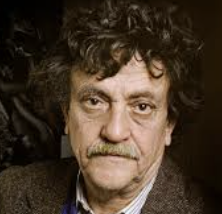
I sometimes wondered what the use of any of the arts was. The best thing I could come up with was what I call the canary in the coal mine theory of the arts. This theory says that artists are useful to society because they are so sensitive. They are super-sensitive. They keel over like canaries in poison coal mines long before more robust types realize that there is any danger whatsoever.
▼
Source
source
Physicist, Purge Thyself in the Chicago Tribune Magazine

2 months ago
Newton's law is nothing but the statistics of gravitation, it has no power whatever. Let us get rid of the idea of power from law altogether. Call law tabulation of facts, expression of facts, or what you will; anything rather than suppose that it either explains or compels.
▼
Source
source
Suggestions for Thought : Selections and Commentaries (1994), edited by Michael D. Calabria and Janet A. MacRae, p. 41
3 months 3 weeks ago
For the inquisition of Final Causes is barren, and like a virgin consecrated to God produces nothing.
▼
Source
source
Book III, viii
1 week 2 days ago
I esteem the modern error, That all goes by self-interest and the checking and balancing of greedy knaveries, and that in short, there is nothing divine whatever in the association of men, a still more despicable error, natural as it is to an unbelieving century, than that of a "divine right" in people called Kings. I say, Find me the true Konning, King, or Able-man, and he has a divine right over me.

2 months 2 weeks ago
Virtue can only flourish amongst equals.
▼
Source
source
A Vindication of the Rights of Men
4 months 4 days ago
Will is to grace as the horse is to the rider.
4 months 2 weeks ago
The welfare of the people in particular has always been the alibi of tyrants, and it provides the further advantage of giving the servants of tyranny a good conscience. It would be easy, however, to destroy that good conscience by shouting to them: if you want the happiness of the people, let them speak out and tell what kind of happiness they want and what kind they don't want! But, in truth, the very ones who make use of such alibis know they are lies; they leave to their intellectuals on duty the chore of believing in them and of proving that religion, patriotism, and justice need for their survival the sacrifice of freedom.
2 months 4 days ago
By reducing any quality to quantity, myth economizes intelligence: it understands reality more cheaply.
▼
Source
source
p. 153
4 months 2 weeks ago
Blessed are the hearts that can bend; they shall never be broken.


2 months 1 day ago
The vitality of the ordinary members of society is dependent on its Outsiders.
▼
Source
source
Chapter Three, The Romantic Outsider

2 months 2 weeks ago
Morality knows nothing of geographical boundaries, or distinctions of race.
▼
Source
source
Pt. IV, Ch. 30 : General Considerations

3 days ago
Pain he endures, death he awaits.
2 months 2 weeks ago
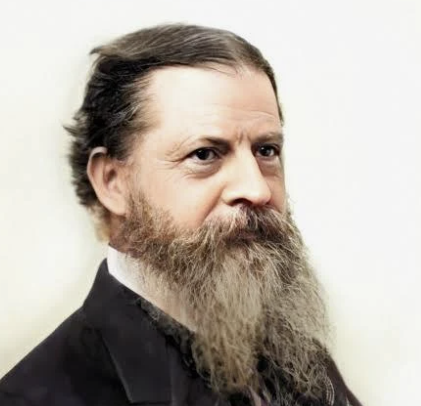
Few persons care to study logic, because everybody conceives himself to be proficient enough in the art of reasoning already. But I observe that this satisfaction is limited to one's own ratiocination and does not extend to that of other men. We come to the full possession of our power of drawing inferences the last of all our faculties, for it is not so much a natural gift as a long and difficult art.
▼
Source
source
Illustrations of the Logic of Science First Paper - The Fixation of Belief", in Popular Science Monthly, Vol. 12

3 months ago
Time is the soul of this world.
▼
Source
source
As quoted in Wisdom (2002) by Desmond MacHale

2 months 3 weeks ago
Americans of all ages, all stations of life, and all types of disposition are forever forming associations... In democratic countries knowledge of how to combine is the mother of all other forms of knowledge; on its progress depends that of all the others.
▼
Source
source
Book Two, Chapter V.

3 months 2 weeks ago
We must plan for freedom, and not only for security, if for no other reason than that only freedom can make security secure.
▼
Source
source
Vol. 2, Ch. 21 "An Evaluation of the Prophecy"
1 month 2 weeks ago
Be kind. Don't kill for any reason. Don't even kill out of self-defense. Really - I mean that. Don't take any more than you need of anything. Help others.
▼
Source
source
From a speech given on 20 January 1969 at the University of Michigan, about two months before Slaughterhouse Five was published
3 weeks 6 days ago
Dialogue never ends not for lack of time or opportunity but for essential reasons.
▼
Source
source
Chapter 7, Vigilance and Interruption, p. 121
CivilSimian.com created by AxiomaticPanic, CivilSimian, Kalokagathia