


3 months ago
Freedom and not servitude is the cure of anarchy; as religion, and not atheism, is the true remedy for superstition.
3 months 2 weeks ago
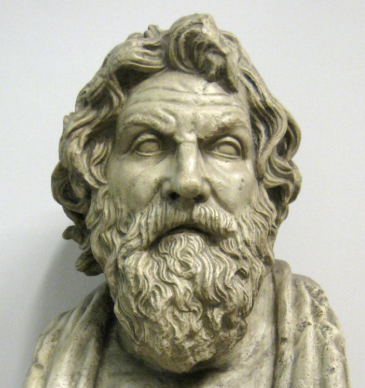
Antisthenes ... said once to a youth from Pontus who was on the point of coming to him to be his pupil, and was asking him what things he wanted, "You want a new book, and a new pen, and a new tablet;"
▼
Source
source
meaning a new mind. § 4
4 months 3 weeks ago
To two men living the same number of years, the world always provides the same sum of experiences. It is up to us to be conscious of them.

4 months ago
Politics is concerned with herds rather than with individuals, and the passions which are important in politics are, therefore, those in which the various members of a given herd can feel alike.
3 months 3 weeks ago
There is nothing outside the text," which Derrida opponents have characterized to mean that nothing exists but language.
▼
Source
source
Il n'y a pas de hors-texte. Of Grammatology (1967). G. Spivak translated this as "

3 months 4 weeks ago
They [Christians] believe that the living, dynamic activity of love has been going on in God forever and has created everything else. And that, by the way, is perhaps the most important difference between Christianity and all other religions: that in Christianity God is not an impersonal thing nor a static thing-not even just one person-but a dynamic pulsating activity, a life, a kind of drama, almost, if you will not think me irreverent, a kind of dance ... (The) pattern of this three-personal life is ... the great fountain of energy and beauty spurting up at the very center of reality.
▼
Source
source
Book IV, Chapter 4, "Good Infection"
2 weeks 5 days ago
To speak ill of others is a dishonest way of praising ourselves; let us be above such transparent egotism. If you can't say good and encouraging things, say nothing. Nothing is often a good thing to do, and always a clever thing to say.
▼
Source
source
We Have a Right To Be Happy Today, commencement address at the Webb School of Claremont, California

2 months 2 weeks ago
There may be a rationalist who has never wavered in his conviction of the mortality of the soul, and there may be a vitalist who has never wavered in his faith in immortality; but at the most this would prove that just as there are natural monstrosities, so there are those who are stupid as regards heart and feeling, however great their intelligence, and those who are stupid intellectually, however great their virtue. But, in normal cases, I cannot believe those who assure me that never, not in a fleeting moment, not in the hours of direst loneliness and grief, has this murmur of uncertainty breathed upon their consciousness.
3 months 4 days ago
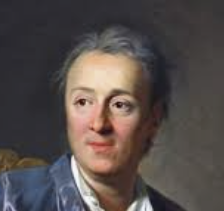
Bad company is as instructive as licentiousness. One makes up for the loss of one's innocence with the loss of one's prejudices.

4 months 2 weeks ago
Of all the means which wisdom acquires to ensure happiness throughout the whole of life, by far the most important is friendship.

3 months ago
It was evident that he revived by fits and starts. He would suddenly come to himself from actual delirium for a few minutes; he would remember and talk with complete consciousness, chiefly in disconnected phrases which he had perhaps thought out and learnt by heart in the long weary hours of his illness, in his bed, in sleepless solitude.
▼
Source
source
Part 2, Chapter 10

2 months 3 weeks ago
A marvel that has nothing to offer, democracy is at once a nation's paradise and its tomb.
2 months 3 weeks ago
Impossible to accede to truth by opinions, for each opinion is only a mad perspective of reality.

4 months ago
Money appears as measure (in Homer, e.g. oxen) earlier than as medium of exchange,because in barter each commodity is still its own medium of exchange. But it cannot be its own or its own standard of comparison.
▼
Source
source
Notebook I, The Chapter on Money, p. 93.
2 months 3 weeks ago
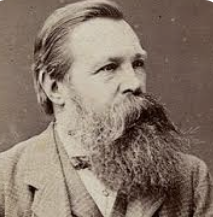
People think they have taken quite an extraordinarily bold step forward when they have rid themselves of belief in hereditary monarchy and swear by the democratic republic. In reality, however, the state is nothing but a machine for the oppression of one class by another, and indeed in the democratic republic no less than in the monarchy.
▼
Source
source
Introduction to 1891 edition of Karl Marx's, The Civil War in France
3 months 4 weeks ago
When He died in the Wounded World He died not for men, but for each man. If each man had been the only man made, He would have done no less. Each thing, from the single grain of Dust to the strongest eldil, is the end and the final cause of all creation and the mirror in which the beam of His brightness comes to rest and so returns to Him. Blessed be He!
4 months 2 weeks ago
Hence, as Narcissus, by catching at the shadow, plunged himself in the stream and disappeared, so he who is captivated by beautiful bodies, and does not depart from their embrace, is precipitated, not with his body, but with his soul, into a darkness profound and repugnant to intellect (the higher soul), through which, remaining blind both here and in Hades, he associates with shadows.
3 months 4 weeks ago
What can you ever really know of other people's souls - of their temptations, their opportunities, their struggles? One soul in the whole creation you do know: and it is the only one whose fate is placed in your hands. If there is a God, you are, in a sense, alone with Him. You cannot put Him off with speculations about your next door neighbours or memories of what you have read in books.
▼
Source
source
Book IV, Chapter 10, "Nice People or New Men"
3 months 3 weeks ago
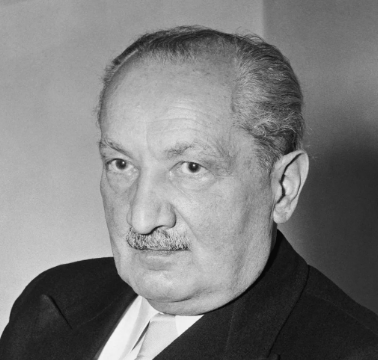
The particularity (Jeweiligkeit) of the places and their manifoldness are grounded in space, and the particularity of the time points is grounded in time. That basic characteristic of the thing, that essential determination of the thingness of the thing to be this one (je dieses), is grounded in the essence of space and time. Our question "What is a thing?" includes, therefore, the questions "What is space?" and "What is time?" It is customary The particularity (Jeweiligkeit) os the places.
▼
Source
source
p. 16
3 months ago
...he always firmly believed that they were purely on the defensive in that rebellion. He considered the Americans as standing at that time, and in that controversy, in the same relation to England, as England did to king James the Second, in 1688.
▼
Source
source
p. 396
1 month 3 weeks ago
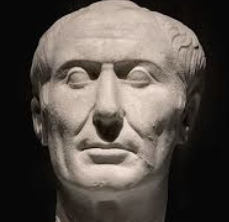
The greatest of empires, is the empire over one's self.
▼
Source
source
Maxim 891
2 weeks 5 days ago
It is a mistake to think that the past is dead. Nothing that has ever happened is quite without influence at this moment. The present is merely the past rolled up and concentrated in this second of time. You, too, are your past; often your face is your autobiography; you are what you are because of what you have been; because of your heredity stretching back into forgotten generations; because of every element of environment that has affected you, every man or woman that has met you, every book that you have read, every experience that you have had; all these are accumulated in your memory, your body, your character, your soul. So with a city, a country, and a race; it is its past, and cannot be understood without it.
▼
Source
source
As quoted in "The Gentle Philosopher" (2006) by John Little at the Will Durant Foundation
2 months 3 weeks ago
Music is everything. God himself is nothing more than an acoustic hallucination.

1 month 3 weeks ago
If a work of art is to explore new environments, it is not to be regarded as a blueprint but rather as a form of action-painting.
▼
Source
source
To Wilfred Watson, October 6 1965. Letters of Marshall McLuhan (1987), p. 325

3 weeks 3 days ago
To write well is to think well; there is no art of style distinct from the culture of the mind. The good writer is a complete mind, gifted with judgment, passion, imagination, and at the same time well trained. The inner qualities of rectitude, of brilliant geniality, are not given; instruction, wealth of information, fulness of knowledge, are acquired. Thus good training of the mind is the only school of good style. Wanting that, you have merely rhetoric and bad taste.
▼
Source
source
As quoted in The Art of Authorship (1890) by George Bainton
1 month 2 weeks ago
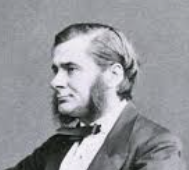
I have never had the least sympathy with the a priori reasons against orthodoxy, and I have by nature and disposition the greatest possible antipathy to all the atheistic and infidel school. Nevertheless I know that I am, in spite of myself, exactly what the Christian would call, and, so far as I can see, is justified in calling, atheist and infidel.
▼
Source
source
Letter to Charles Kingsley
4 months ago
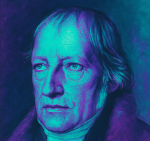
In history, we are concerned with what has been and what is; in philosophy, however, we are concerned not with what belongs exclusively to the past or to the future, but with that which is, both now and eternally - in short, with reason.
▼
Source
source
As translated by H. B. Nisbet, 1975
1 month 2 weeks ago
The extent of the region of the uncertain, the number of the problems the investigation of which ends in a verdict of not proven, will vary according to the knowledge and the intellectual habits of the individual agnostic. I do not very much care to speak of anything as unknowable. What I am sure about is that there are many topics about which I know nothing, and which, so far as I can see, are out of reach of my faculties. But whether these things are knowable by any one else is exactly one of those matters which is beyond my knowledge, though I may have a tolerably strong opinion as to the probabilities of the case.
2 months 3 weeks ago
Saints live in flames; wise men, next to them.

3 months 4 weeks ago
It is freedom, it is particularity, it is solitude that we are aiming at, and not Evil for its own sake.
▼
Source
source
p. 179
4 months 1 week ago
If you are a preacher of mercy, do not preach an imaginary but the true mercy. If the mercy is true, you must therefore bear the true, not an imaginary sin. God does not save those who are only imaginary sinners. Be a sinner, and let your sins be strong (sin boldly), but let your trust in Christ be stronger, and rejoice in Christ who is the victor over sin, death, and the world. We will commit sins while we are here, for this life is not a place where justice resides. We, however, says Peter (2. Peter 3:13) are looking forward to a new heaven and a new earth where justice will reign.
▼
Source
source
Letter 99, Paragraph 13. Erika Bullmann Flores, Tr. from: Dr. Martin Luther's Saemmtliche SchriftenDr. Johann Georg Walch Ed. (St. Louis: Concordia Publishing House, N.D.), Vol. 15, cols. 2585-2590.

3 months 3 weeks ago
The political, ethical, social, philosophical problem of our day is not to try to liberate the individual from the state and from the state's institutions but to liberate us both from the state and from the type of individualization which is linked to the state. We have to promote new forms of subjectivity through the refusal of this kind of individuality which has been imposed on us for several centuries.
▼
Source
source
p. 785

3 months 4 weeks ago
Men love to wonder, and that is the seed of our science.
▼
Source
source
Works and Days;
4 months 1 day ago
Every man takes the limits of his own field of vision for the limits of the world.
▼
Source
source
"Psychological Observations"
3 months 4 weeks ago
To believe is to know you believe, and to know you believe is not to believe.

3 months 5 days ago
The severe Schools shall never laugh me out of the Philosophy of Hermes, that this visible world is but a picture of the invisible.
▼
Source
source
Section 12
4 months ago
The inclination to act as the laws command, a virtue, is a synthesis in which the law ... loses its universality and the subject its particularity; both lose their opposition, while in the Kantian conception of virtue this opposition remains, and the universal becomes the master and the particular the mastered.

2 months 3 weeks ago
Dialectical logic undoes the abstractions of formal logic and of transcendental philosophy, but it also denies the concreteness of immediate experience. To the extent to which this experience comes to rest with the things as they appear and happen to be, it is a limited and even false experience. It attains its truth if it has freed itself from the deceptive objectivity which conceals the factors behind the facts - that is, if it understands its world as a historical universe, in which the established facts are the work of the historical practice of man.
▼
Source
source
p. 141
5 months ago
There is only one way to avoid criticism: do nothing, say nothing and be nothing.
5 months ago
The vices respectively fall short of or exceed what is right in both passions and actions, while virtue both finds and chooses that which is intermediate.
2 months 1 week ago
The key to understanding Crowley is the same as the key to understanding the Marquis de Sade. Both wasted an immense amount of energy screaming defiance at the authority they resented so much, and lacked the insight to see that they were shaking their fists at an abstraction.
▼
Source
source
p. 29

2 weeks ago
Why then do you occupy me with the words rather than with the works of wisdom? Make me braver, make me calmer, make me the equal of Fortune, make me her superior.
1 week 3 days ago
If Christianity is wine and Islam coffee, Buddhism is most certainly tea.
▼
Source
source
p. 190
5 months ago
A tragedy, then, is the imitation of an action that is serious and also, as having magnitude, complete in itself; in language ... not in a narrative form; with incidents arousing pity and fear, wherewith to accomplish its catharsis of such emotions.
1 month 3 weeks ago
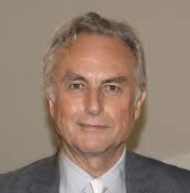
The wheel may be one of those cases where the engineering solution can be seen in plain view, yet be unattainable in evolution because it lies on the other side of a deep valley, cutting unbridgeably across the massif of Mount Improbable.
▼
Source
source
Dawkins, Richard (24 November 1996). "Why don't animals have wheels?". The Sunday Times. Retrieved on 29 October 2008.

4 months 1 day ago
It is sad that often, to be a good patriot, one must be the enemy of the rest of mankind.
▼
Source
source
"Country"

3 months 4 weeks ago
It is an odd circumstance that neither the old nor the new, by itself, is interesting; the absolutely old is insipid; the absolutely new makes no appeal at all. The old in the new is what claims the attention,-the old with a slightly new turn.
▼
Source
source
Chapter XI: Attention

3 months 4 days ago
An American cannot converse, but he can discuss, and his talk falls into a dissertation. He speaks to you as if he was addressing a meeting; and if he should chance to become warm in the discussion, he will say "Gentlemen" to the person with whom he is conversing.
▼
Source
source
Chapter XIV.

4 months 1 week ago
It is a thorny undertaking, and more so than it seems, to follow a movement so wandering as that of our mind, to penetrate the opaque depths of its innermost folds, to pick out and immobilize the innumerable flutterings that agitate it.
▼
Source
source
Ch. 6. Of Preparation, tr. E. J. Trechmann, 1927
3 months 4 weeks ago
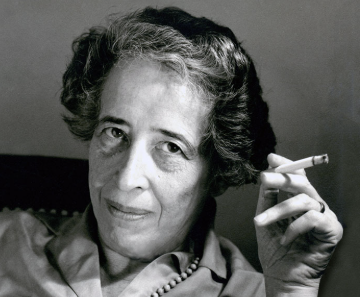
He was genuinely incapable of uttering a single sentence that was not a cliché. Eichmann, despite his rather bad memory, repeated word for word the same stock phrases and self-invented clichés (when he did succeed in constructing a sentence of his own, he repeated it until it became a cliché) each time he referred to an incident or event of importance to him. The longer one listened to him, the more obvious it became that his inability to speak was closely connected with an inability to think, namely to think from the standpoint of somebody else. No communication was possible with him, not because he lied but because he was surrounded by the most reliable of all safeguards against the words and the presence of others, and hence against reality as such.
▼
Source
source
Ch. III
CivilSimian.com created by AxiomaticPanic, CivilSimian, Kalokagathia