


4 days ago
What fools these mortals be!
3 months 3 weeks ago
Wealth is like sea-water; the more we drink, the thirstier we become.
▼
Source
source
E. Payne, trans. (1974) Vol. 1, p. 347
4 days ago
A trifling debt makes a man your debtor; a large one makes him an enemy.
▼
Source
source
Line 11.

2 months 2 weeks ago
Mere parsimony is not economy. Expense, and great expense, may be an essential part in true economy.
4 months 2 weeks ago
Married people pledge love for each other throughout eternity. Well, now, that is easy enough but does not mean very much, for if one is finished with time one is probably finished with eternity. If, instead of saying "throughout eternity," the couple would say, "until Easter, until next May Day," then what they say would make some sense, for then they would be saying something and also something they perhaps could carry out.
1 month 2 weeks ago
Anyone can hold the helm when the sea is calm.
▼
Source
source
Maxim 358

3 months 3 weeks ago
To give the monopoly of the home-market to the produce of domestic industry, in any particular art or manufacture, is in some measure to direct private people in what manner they ought to employ their capitals, and must, in almost all cases, be either a useless or a hurtful regulation.
▼
Source
source
Chapter II, p. 489.

2 months 2 weeks ago
We Shall Naturally look round in vain the macrophysical world for acausal events, for the simple reason that we cannot imagine events that are connected non-causally and are capable of a non-causal explanation. But that does not mean that such events do not exist... The so-called "scientific view of the world" based on this can hardly be anything more than a psychologically biased partial view which misses out all those by no means unimportant aspects that cannot be grasped statistically.
▼
Source
source
p. 5

1 month 2 weeks ago
Literacy remains even now the base and model of all programs of industrial mechanization; but, at the same time, locks the minds and senses of its users in the mechanical and fragmentary matrix that is so necessary to the maintenance of mechanized society.
2 months 2 days ago
It isn't at all a matter of being optimistic, but rather of continuing to have faith in the ongoing and literally unending process of emancipation and enlightenment that, in my opinion, frames and gives direction to the intellectual vocation.
▼
Source
source
Preface to 25th anniversary edition of Orientalism (1994), p. xv
1 month 2 weeks ago
A beautiful face is a silent commendation.
▼
Source
source
Maxim 283

3 months 1 day ago
Above all things reverence thy Self.
▼
Source
source
Variant translations: Respect yourself above all. As quoted in Divine Harmony: The Life and Teachings of Pythagoras by John Strohmeier and Peter Westbrook. (1999) ISBN 0-9653774-5-8
1 week 5 days ago
The history of utopias is no less fascinating than the history of metallurgy or of chemical engineering.
▼
Source
source
New Preface, p. vi
1 month 1 week ago
As free constitutions are the strongest supports of governments, social order is the best safeguard of freedom. Liberty has no enemies so pernicious as those misguided friends whose ardour in her cause leads them to outrage the moral sense of mankind, and to arm against her the interests and feelings which are her natural allies. Even the prejudices of nations should be respected.
▼
Source
source
'Essay on the Life and Character of King William III' (1822), written for the Greaves Historical Prize at Cambridge, quoted in The Times Literary Supplement (1 May 1969), p. 469

3 months 2 weeks ago
I like a church, I like a cowl, I love a prophet of the soul, And on my heart monastic aisles Fall like sweet strains or pensive smiles; Yet not for all his faith can see, Would I that cowled churchman be. Why should the vest on him allure, Which I could not on me endure?
▼
Source
source
The Problem, st. 1

2 months 3 days ago
He alone is aware of the truth, and if all men were aware of it, there would be an end of life. In the country of the blind, the one-eyed man is king. But his kingship is kingship over nothing. It brings no powers and privileges, only loss of faith and exhaustion of the power to act. Its world is a world without values.
▼
Source
source
Chapter one, The Country of the Blind, referencing a quote by Desiderius Erasmus.

3 months 1 week ago
Fortune is lavish with her favors, but not to be depended on. Nature on the other hand is self-sufficing, and therefore with her feebler but trustworthy [resources] she wins the greater [meed] of hope.
1 month 3 weeks ago
Whatever it may be, animals have always had, until our era, a divine or sacrificial nobility that all mythologies recount. Even murder by hunting is still a symbolic relation, as opposed to an experimental dissection. Even domestication is still a symbolic relation, as opposed to industrial breeding. One only has to look at the status of animals in peasant society. And the status of domestication, which presupposes land, a clan, a system of parentage of which the animals are a part, must not be confused with the status of the domestic pet-the only type of animals that are left to us outside reserves and breeding stations-dogs, cats, birds, hamsters, all packed together in the affection of their master. The trajectory animals have followed, from divine sacrifice to dog cemeteries with atmospheric music, from sacred defiance to ecological sentimentality, speaks loudly enough of the vulgarization of the status of man himself.
▼
Source
source
"The Animals: Territory and Metamorphoses," p. 134

3 months 3 weeks ago
But the Jews are so hardened that they listen to nothing; though overcome by testimonies they yield not an inch. It is a pernicious race, oppressing all men by their usury and rapine. If they give a prince or magistrate a thousand florins, they extort twenty thousand from the subjects in payment. We must ever keep on guard against them.
▼
Source
source
863

4 months 2 weeks ago
What I will be remembered for are the Foundation Trilogy and the Three Laws of Robotics. What I want to be remembered for is no one book, or no dozen books. Any single thing I have written can be paralleled or even surpassed by something someone else has done. However, my total corpus for quantity, quality and variety can be duplicated by no one else. That is what I want to be remembered for.

3 months 2 weeks ago
The history of science, like the history of all human ideas, is a history of irresponsible dreams, of obstinacy, and of error. But science is one of the very few human activities - perhaps the only one - in which errors are systematically criticized and fairly often, in time, corrected. This is why we can say that, in science, we often learn from our mistakes, and why we can speak clearly and sensibly about making progress there.
▼
Source
source
Ch. 1 "Science : Conjectures and Refutations"

2 months 1 week ago
Stuart was not dismayed by his sexual feelings about the boy.
▼
Source
source
The Good Apprentice (1985), p. 247.

3 months 3 weeks ago
Kings and philosophers shit, and so do ladies.
▼
Source
source
Ch. 42, English translation from Hartle, Ann (2003), Michel de Montaigne: Accidental Philosopher, Cambridge University Press.

3 months 3 weeks ago
Pure Mathematics is the class of all propositions of the form "p implies q," where p and q are propositions containing one or more variables, the same in the two propositions, and neither p nor q contains any constants except logical constants. And logical constants are all notions definable in terms of the following: Implication, the relation of a term to a class of which it is a member, the notion of such that, the notion of relation, and such further notions as may be involved in the general notion of propositions of the above form. In addition to these, mathematics uses a notion which is not a constituent of the propositions which it considers, namely the notion of truth.
▼
Source
source
Principles of Mathematics (1903), Ch. I: Definition of Pure Mathematics, p. 3
2 months 6 days ago
The greater part of Eastern teachers of the Church, from Clement of Alexandria to Maximus the Confessor, were supporters of Apokatastasis, of universal salvation and resurrection. And this is characteristic of (contemporary) Russian religious thought. Orthodox thought has never been suppressed by the idea of Divine justice and it never forgot the idea of Divine love. Chiefly - it did not define man from the point of view of Divine justice but from the idea of transfiguration and Deification of man and cosmos.
▼
Source
source
"The Truth of Orthodoxy" as translated in Vestnik of the Russian West European Patriarchal Exarchate
3 months 1 day ago
Many words befall men, mean and noble alike; do not be astonished by them, nor allow yourself to be constrained. If a lie is told, bear with it gently. But whatever I tell you, let it be done completely. Let no one persuade you by word or deed to do or say whatever is not best for you.
▼
Source
source
As quoted in Divine Harmony: The Life and Teachings of Pythagoras by John Strohmeier and Peter Westbrook.
2 months 1 week ago
The people are led to find in the productive apparatus the effective agent of thought and action to which their personal thought and action can and must be surrendered. And in this transfer, the apparatus also assumes the role of a moral agent.
▼
Source
source
Conscience is absolved by reification. p. 79
3 months 1 week ago
But what is lawful for all extends across wide-ruling aether and, without cease, through endless sunshine.
▼
Source
source
fr. 135, as quoted in Aristotle's Rhetoric, 1373 b16
2 months 1 week ago
Man is a creation of desire, not a creation of need.
▼
Source
source
The Psychoanalysis of Fire, ch. 2, "Fire and Reverie"
5 days ago
If man puts his honor first in relying upon himself, knowing himself and applying himself, this in self-reliance, self-assertion, and freedom, he then strives to rid himself of the ignorance which makes a strange impenetrable object a barrier and a hindrance to his self-knowledge.
▼
Source
source
p. 23
3 months 1 week ago
Fools -- for their thoughts are not well-considered who suppose that not-being exists or that anything dies and is wholly annihilated.
▼
Source
source
fr. 11
1 month 1 week ago
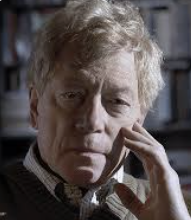
Nationality is not the only kind of social membership, nor is it an exclusive tie. However, it is the only form of membership that has so far shown itself able to sustain a democratic process and a liberal rule of law.

4 months 2 weeks ago
Since we're all going to die, it's obvious that when and how don't matter.
4 days ago
Thus no fortune, no external circumstance, can shut off the wise man from action. For the very thing which engages his attention prevents him from attending to other things. He is ready for either outcome: if it brings goods, he controls them; if evils, he conquers them.

3 months 2 weeks ago
The believers in the non-natural character of sudden conversion have had practically to admit that there is no unmistakable class-mark distinctive of all true converts. The super-normal incidents, such as voices and visions and overpowering impressions of the meaning of suddenly presented scripture texts, the melting emotions and tumultuous affections connected with the crisis of change, may all come by way of nature, or worse still, be counterfeited by Satan. The real witness of the spirit to the second birth is to be found only in the disposition of the genuine child of God, the permanently patient heart, the love of self eradicated. And this, it has to be admitted, is also found in those who pass no crisis, and may even be found outside of Christianity altogether.
▼
Source
source
Lecture X, "Conversion, concluded"
3 months 3 weeks ago
I live from day to day, and content myself with having enough to meet my present and ordinary needs; for the extraordinary, all the provision in the world could not suffice.
▼
Source
source
Ch. 14
4 weeks 1 day ago
Like literature, philosophy is not distinguished from other subjects by a specific approach to a subject-matter independent of it. Chemistry deals with chemicals, biology with life and astronomy with very large, very distant objects. Philosophy can boast no such definite subject-matter.
▼
Source
source
Chapter 4, Philosophy As Writing: The Case Of Hegel, p. 69
3 months 3 weeks ago
A man must always live by his work, and his wages must at least be sufficient to maintain him. They must even upon most occasions be somewhat more, otherwise it would be impossible for him to bring up a family, and the race of such workmen could not last beyond the first generation.
▼
Source
source
Chapter VIII, p. 81.

3 months 2 weeks ago
In short, competition has to shoulder the responsibility of explaining all the meaningless ideas of the economists, whereas it should rather be the economists who explain competition.
▼
Source
source
Vol. III, Ch. L, Illusions Created by Competition, p. 866.
Just now
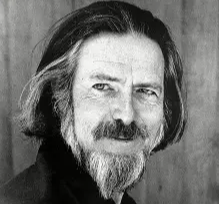
The startling truth is that our best efforts for civil rights, international peace, population control, conservation of natural resources, and assistance to the starving of the earth-urgent as they are-will destroy rather than help if made in the [current] spirit. For, as things stand, we have nothing to give. If our own riches and our own way of life are not enjoyed here, they will not be enjoyed anywhere else. Certainly they will supply the immediate jolt of energy and hope that methedrine, and similar drugs, give in extreme fatigue. But peace can be made only by those who are peaceful, and love can be shown only by those who love. No work of love will flourish out of guilt, fear, or hollowness of heart, just as no valid plans for the future can be made by those who have no capacity for living now.
▼
Source
source
p. 83

2 months 2 weeks ago
Awareness of time: assault on time . . .
3 months 1 day ago
Power is the near neighbour of necessity.
▼
Source
source
As quoted in Aurea Carmina (8) by Hierocles of Alexandria, as translated in Dictionary of Quotations (1906) by Thomas Benfield Harbottle, p. 356
2 months 1 week ago
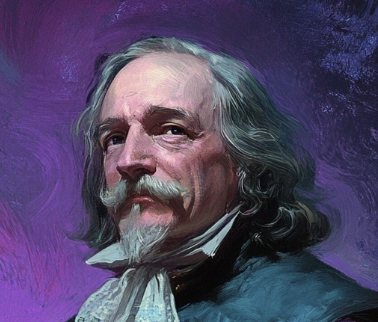
The source of every Crime, is some defect of the Understanding; or some error in Reasoning, or some sudden force of the Passions. Defect in the Understanding, is Ignorance; in Reasoning, Erroneous Opinion.
▼
Source
source
The Second Part, Chapter 27, p. 152
1 week 2 days ago
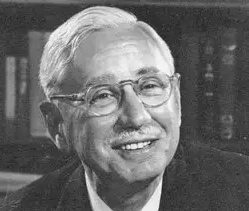
The death of Alexander (323 BC) quickened this process of decay. The boy-emperor, barbarian though he remained after all of Aristotle's tutoring, had yet learned to revere the rich culture of Greece, and had dreamed of spreading that culture through the Orient in the wake of his victorious armies.... But he had underrated the inertia and resistance of the Oriental mind, and the mass and depth of Oriental culture. It was only a youthful fancy, after all, to suppose that so immature and unstable a civilization as that of Greece could be imposed upon a civilization immeasurably more widespread, and rooted in the most venerable traditions. The quantity of Asia proved too much for the quality of Greece.
4 months 2 weeks ago
Of all the cultural aspects of humanity, the only one which is not broken up into national or regional splinters is science. Different nations have different languages, they may have different religions, may have different dietaries, may have different holidays, different ways of thinking, but here's only one science.
▼
Source
source
Interview by Richard Heffner on The Open Mind (19 June 1988); video (25:31)

3 months 3 weeks ago
"You're a bitter man," said Candide. "That's because I've lived," said Martin.
3 months 3 weeks ago
Nobody ever saw a dog make a fair and deliberate exchange of one bone for another with another dog.
▼
Source
source
Chapter II, p. 14.
3 months 2 weeks ago
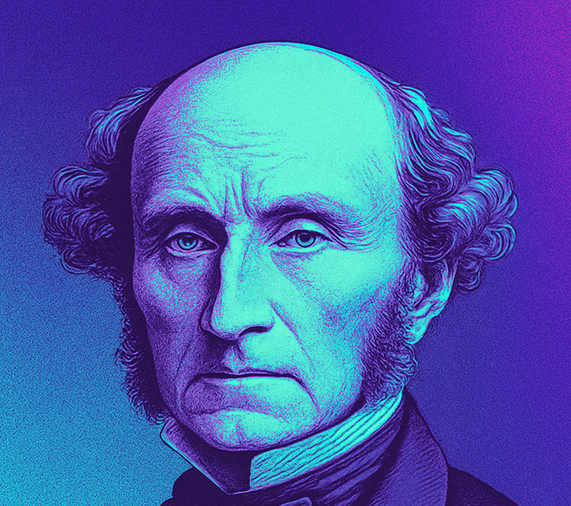
The tendency has always been strong to believe that whatever received a name must be an entity or thing, having an independent existence of its own; and if no real entity answering to the name could be found, men did not for that reason suppose that none existed, but imagined that it was something peculiarly abstruse and mysterious, too high to be an object of sense. The meaning of all general, and especially of all abstract terms, became in this way enveloped in a mystical base...
▼
Source
source
Note to Analysis of the Phenomena of the Human Mind (1829) by James Mill, edited with additional notes by John Stuart Mill, 1869
4 days ago
You can tell the character of every man when you see how he gives and receives praise.
▼
Source
source
Line 12.
5 days ago
You have the courage to tell the masses what no politician told them: you are inferior and all the improvements in your conditions which you simply take for granted you owe to the effort of men who are better than you. If this be arrogance, as some of your critics observed, it is still the truth that had to said in the age of the Welfare State.
▼
Source
source
Mises' letter to Ayn Rand praising Atlas Shrugged,(23 January 1958), quoted in Mises: The Last Knight of Liberalism (2007).
CivilSimian.com created by AxiomaticPanic, CivilSimian, Kalokagathia