


3 months 4 weeks ago
Everything intercepts us from ourselves.
▼
Source
source
1833

3 months 4 weeks ago
All who are not lunatics are agreed about certain things. That it is better to be alive than dead, better to be adequately fed than starved, better to be free than a slave. Many people desire those things only for themselves and their friends; they are quite content that their enemies should suffer. These people can only be refuted by science: Humankind has become so much one family that we cannot ensure our own prosperity except by ensuring that of everyone else. If you wish to be happy yourself, you must resign yourself to seeing others also happy.
▼
Source
source
"The Science to Save Us from Science," The New York Times Magazine, 3/19/1950

4 months 2 weeks ago
To give one's self earnestly to the duties due to men, and, while respecting spiritual beings, to keep aloof from them, may be called wisdom.

1 month 3 weeks ago
Faced with information overload, we have no alternative but pattern-recognition.
▼
Source
source
(p. 132)

3 months 2 weeks ago
Citizens of a Jeffersonian democracy can be as religious or irreligious as they please as long as they are not "fanatical." That is, they must abandon or modify opinion on matters of ultimate importance, the opinions that may hitherto have given sense and point to their lives, if these opinions entail public actions that cannot be justified to most of their fellow citizens.
3 months 2 weeks ago
As long as we try to project from the relative and conditioned to the absolute and unconditioned, we shall keep the pendulum swinging between dogmatism and skepticism. The only way to stop this increasingly tiresome pendulum swing is to change our conception of what philosophy is good for. But that is not something which will be accomplished by a few neat arguments. It will be accomplished, if it ever is, by a long, slow process of cultural change - that is to say, of change in common sense, changes in the intuitions available for being pumped up by philosophical arguments.
▼
Source
source
Introduction to Truth and Progress: Philosophical Papers, Volume 3 (1998).
4 months ago
If two men who were friends in their youth meet again when they are old, after being separated for a life-time, the chief feeling they will have at the sight of each other will be one of complete disappointment at life as a whole; because their thoughts will be carried back to that earlier time when life seemed so fair as it lay spread out before them in the rosy light of dawn, promised so much - and then performed so little.
▼
Source
source
"On the Sufferings of the World"
2 months 3 weeks ago
No moral system can rest solely on authority.
▼
Source
source
Humanist Outlook (1968), p. 4.

3 months 4 weeks ago
The propagandist's purpose is to make one set of people forget that certain other sets of people are human.
▼
Source
source
"Words and Behaviour", The Olive Tree, 1936

3 months 3 weeks ago
A sensible human once said, "If people knew how much ill-feeling unselfishness occasions, it would not be so often recommended from the pulpit"; and again, "She's the sort of woman who lives for others-you can always tell the others by their hunted expression."
▼
Source
source
Letter XXVI

2 months 2 weeks ago
A man should be mourned at his birth, not at his death.
▼
Source
source
No. 40. (Usbek writing to Ibben)

1 month 4 weeks ago
Pierre, who from the moment Prince Andrew entered the room had watched him with glad, affectionate eyes, now came up and took his arm. Before he looked round Prince Andrew frowned again, expressing his annoyance with whoever was touching his arm, but when he saw Pierre's beaming face he gave him an unexpectedly kind and pleasant smile. "There now!... So you, too, are in the great world?" said he to Pierre. "I knew you would be here," replied Pierre. "I will come to supper with you. May I?" he added in a low voice so as not to disturb the vicomte who was continuing his story. "No, impossible!" said Prince Andrew, laughing and pressing Pierre's hand to show that there was no need to ask the question. He wished to say something more, but at that moment Prince Vasíli and his daughter got up to go and the two young men rose to let them pass.
▼
Source
source
Bk. I, Ch. IV
1 week ago
As for Hitler, he nourished a fundamental aversion to the monarchy and, as we have noted, his polemic against the Habsburgs, for instance, was of an unparalleled vulgarity. For Hitler, the Volk alone was the principle of legitimacy. He was established as its direct representative and guide, without intermediaries, and it was to follow him unconditionally. No higher princple existed or was tolerated by him. Therefore it is perfectly correct to speak of a consolidated populist dictatorship employing the tools of a single party and the myth of the Volk. Not only the ancient German traditions, but also the very concept of Reich and, as we shall see, the concept of race were brought by Hitler to the level of the masses, which implied their degradation and distorition. Still, in this context they became tools of great power.
▼
Source
source
p. 35

2 months 2 weeks ago
Reason, that which we call reason, reflex and reflective knowledge, the distinguishing mark of man, is a social product.
2 weeks 4 days ago
Space, subjectively, is the coexistence of perceptions - perceiving two objects at once.
▼
Source
source
Ch. 6 : Our Souls

4 months 1 day ago
Natural science is throughout either a pure or an applied doctrine of motion.
▼
Source
source
Preface, Tr. Bax, 1883

2 months 4 weeks ago
They say in the grave there is peace, and peace and the grave are one and the same.
▼
Source
source
Act I.

1 week 6 days ago
This is the worst trait of minds rendered arrogant by prosperity, they hate those whom they have injured.
▼
Source
source
De Ira (On Anger): Book 2, cap. 33, line 6

1 month 5 days ago
Human knowledge increases, while human irrationality stays the same. Scientific inquiry may be an embodiment of reason, but what such inquiry demonstrates is that humans are not rational animals. The fact that humanists refuse to accept the demonstration only confirms its truth.
▼
Source
source
An Old Chaos: Humanism and Flying Saucers (p. 81)

2 months 1 week ago
What excited me was the recognition that this was simply another version of the problem that had obsessed me all of my life -- the problem of those moments when life seems entirely delightful, when we experience a sensation of what G.K. Chesterton called "absurd good news." Life normally strikes most of us as hard, dull and unsatisfying; but in these moments, consciousness seems to glow and expand, and all the contradictions seem to be resolved. Which of the two visions is true? My own reflections had led me to conclude that the vision of "absurd good news" is somehow broader and more comprehensive than the feeling that life is dull, boring and meaningless. Boredom is basically a feeling of narrowness, and surely a narrow vision is bound to be less true than a broad one?
▼
Source
source
p. 16
3 months 4 weeks ago
I believe that Communism is necessary to the world, and I believe that the heroism of Russia has fired men's hopes in a way which was essential to the realization of Communism in the future. Regarded as a splendid attempt, without which ultimate success would have been very improbable, Bolshevism deserves the gratitude and admiration of all the progressive part of mankind.
▼
Source
source
Preface
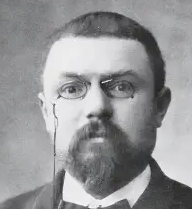
3 weeks 1 day ago
There is no science apart from the general. It may even be said that the very object of the exact sciences is to spare us these direct verifications.
▼
Source
source
Ch. I. (1905) Tr. George Bruce Halstead
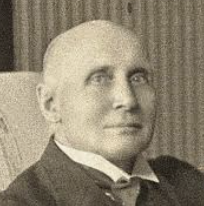
2 months 1 week ago
A culture is in its finest flower before it begins to analyze itself.
▼
Source
source
Ch. 22, August 17, 1941.

4 months 3 weeks ago
In order to cease being a doubtful case, one has to cease being, that's all.
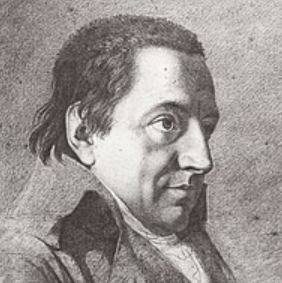
2 months 4 weeks ago
This tendency towards a Christian-European Universal Monarchy has shown itself successively in the several States which could make pretensions to such a dominion, and, since the fall of the Papacy, it has become the sole animating principle of our History. We by no means seek to determine whether this notion of Universal Monarchy has ever been distinctly entertained as a definite plan .... Thus each State either strives to attain this Universal Christian Monarchy, or at least to acquire the power of striving after it;-to maintain the Balance of Power when it is in danger of being disturbed by another; and, in secret, for power, that it may eventually disturb it itself.
▼
Source
source
P. 213-214

3 months 3 weeks ago
The painter is turning his eyes towards us only in so far as we happen to occupy the same position as his subject. We, the spectators, are an additional factor. Though greeted by that gaze, we are also dismissed by it, replaced by that which was always there before we were: the model itself. But, inversely, the painter's gaze, addressed to the void confronting him outside the picture, accepts as many models as there are spectators; in this precise but neutral place, the observer and the observed take part in a ceaseless exchange.
▼
Source
source
Las Menias

3 months 4 weeks ago
The vessel, though her masts be firm, beneath her copper bears a worm.
▼
Source
source
"Though All the Fates Should Prove Unkind", st. 2
3 months 4 weeks ago
In any race between human numbers and natural resources, time is against us.
▼
Source
source
Chapter 12 (p. 113)

4 months 3 weeks ago
An optimistic view of the future would indicate that before long, the clear necessity of expanding humanity's horizons would cause ... space settlements to be built. The construction would also serve as a great project that not only would be clearly of great benefit, but might induce human cooperation in something large enough to fire the heart and mind, and make people forget the petty quarrels that have engaged them for thousands of years in wars over insignificant scraps of earthly territory.
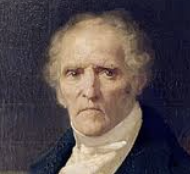
3 weeks 3 days ago
This miracle of social concord would result not from direct conciliation, which would be impossible, but from the development of new interests, and especially from the amazement with which the minds of men would be filled on being convinced of the radical falseness of the civilized social order by comparison with the associative or combined, and of the errors in which the social world has been so long plunged - misled by speculative philosophy, which upholds and extols this order with all its defects to the entire neglect of the study of association.
▼
Source
source
The Theory of Social Organization. Harmonian Man: Selected Writings of Charles Fourier, p. 5.

2 months 2 weeks ago
We have seen that language is something precious because it allows us to express ourselves; but it is fatal when one allows oneself to be completely led astray by it, because then it prevents one from expressing oneself. Language is the source of the prejudices and haste which Descartes thought of as the sources of error.
▼
Source
source
p. 76

2 months 3 weeks ago
Why don't I commit suicide? Because I am as sick of death as I am of life.

4 months 6 days ago
It is not death, it is dying that alarms me.
▼
Source
source
Book II, Ch. 13
2 months 1 week ago
Man's life cannot "be lived" by repeating the pattern of his species; he must live. Man is the only animal that can be bored, that can be discontented, that can feel evicted from paradise. Man is the only animal for whom his own existence is a problem which he has to solve and from which he cannot escape. He cannot go back to the prehuman state of harmony with nature; he must proceed to develop his reason until he becomes the master of nature, and of himself.
▼
Source
source
Ch. 3 "Human Nature and Character
1 month 4 weeks ago
And so the arbitrary union of three incommensurate, mutually disconnected concepts became the basis of a bewildering theory... [by which] one of the lowest renderings of art, art for mere pleasure - against which all of the master teachers warned - was idealized as the ultimate in art.

2 months 4 weeks ago
I consider you the most honest and truthful of men, more honest and truthful than anyone; and if they say that your mind...that is, that you're sometimes afflicted in your mind, it's unjust. I made up my mind about that, and disputed with others, because, though you really are mentally afflicted (you won't be angry with that, of course; I'm speaking from a higher point of view), yet the mind that matters is better in you than in any of them. It's something, in fact, they have never dreamed of. For there are two sorts of mind: one that matters, and one that doesn't matter.
▼
Source
source
Part 3, Chapter 8

3 months 4 weeks ago
I never turned recreant to intellectual culture, or ceased to consider the power and practice of analysis as an essential condition both of individual and of social improvement. But I thought that it had consequences which required to be corrected, by joining other kinds of cultivation with it. The maintenance of a due balance among the faculties, now seemed to me of primary importance. The cultivation of the feelings became one of the cardinal points in my ethical and philosophical creed.
▼
Source
source
(pp. 143-144)
1 week 6 days ago
Tis the first art of kings, the power to suffer hate.
1 week ago
The Chinese believe that when there are too many policemen, there can be no individual liberty, when there are too many lawyers, there can be no justice, and when there are too many soldiers, there can be no peace.
▼
Source
source
Between Tears And Laughter (1943), p. 71.
3 weeks 4 days ago
Whether or not birth control is eugenic, hygienic, and economic, it is the most revolutionary practice in the history of sexual morals.
▼
Source
source
Ch. XIV: "Love in the Great Society", §4, p. 291
4 months 1 day ago
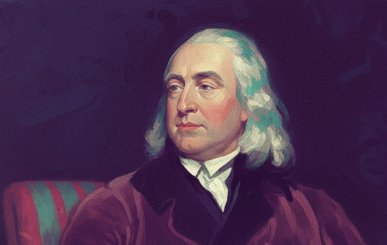
Lawyers are the only persons in whom ignorance of the law is not punished.
▼
Source
source
Attributed to Bentham in The Dictionary of Humorous Quotations (1949) by Evan Esar, p. 29; no earlier sources for this have been located.
3 months 4 weeks ago
Nature is no sentimentalist, - does not cosset or pamper us. We must see that the world is rough and surly, and will not mind drowning a man or a woman, but swallows your ships like a grain of dust. The cold, inconsiderate of persons, tingles your blood, benumbs your feet, freezes a man like an apple. The diseases, the elements, fortune, gravity, lightning, respect no persons.
▼
Source
source
p. 182
1 month 3 weeks ago
I've always been careful never to predict anything that had not already happened.
▼
Source
source
Interview: Tom Wolfe, TVOntario, August 1970
4 months 3 weeks ago
To the rest of the Galaxy, if they are aware of us at all, Earth is but a pebble in the sky. To us it is home, and all the home we know.

3 months 3 days ago
The most formidable of all the ills that threaten the future of the Union arises from the presence of a black population upon its territory; and in contemplating the cause of the present embarrassments, or the future dangers of the United States, the observer is invariably led to this as a primary fact.
▼
Source
source
Chapter XVIII.


1 week 6 days ago
Drunkenness is nothing but voluntary madness.
▼
Source
source
Line 18.
2 months 1 week ago
I do not regard the late Carl Sagan as any kind of authority. On the contrary, as this book will show, I regard him in many ways as a dubious publicity seeker and careerist, more concerned to maintain his reputation as the brilliant and sceptical representative of hard-headed science than to look squarely and honestly at the facts.
▼
Source
source
In short, a bit of a crook. pp. xix-xx
2 months 3 weeks ago
For such is the nature of men, that howsoever they may acknowledge many others to be more witty, or more eloquent, or more learned; Yet they will hardly believe there be many so wise as themselves: For they see their own wit at hand, and other men's at a distance.
▼
Source
source
The First Part, Chapter 13, p. 61
3 months 4 weeks ago
The wise through excess of wisdom is made a fool.
▼
Source
source
Experience
CivilSimian.com created by AxiomaticPanic, CivilSimian, Kalokagathia