


2 weeks 5 days ago
I plead guilty to valuing such a man beyond all other sorts of men. Smooth-shaven Respectabilities not a few one finds, that are not good for much. Small thanks to a man for keeping his hands clean, who would not touch the work but with gloves on!

3 months 3 weeks ago
The sad truth of the matter is that most evil is done by people who never made up their minds to be or do either evil or good.
▼
Source
source
The Life of the Mind (1978), "Thinking"
3 months 3 weeks ago
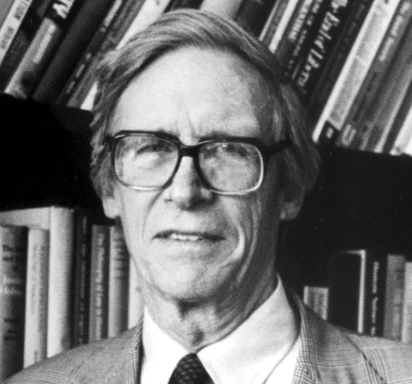
The hazards of the generalized prisoner's dilemma are removed by the match between the right and the good.
▼
Source
source
Chapter IX, Section 86, p. 577
2 weeks 5 days ago
Friend!-Will the ballot-box raise the Noblest to the chief place; does any sane man deliberately believe such a thing?

2 months 4 weeks ago
...he always firmly believed that they were purely on the defensive in that rebellion. He considered the Americans as standing at that time, and in that controversy, in the same relation to England, as England did to king James the Second, in 1688.
▼
Source
source
p. 396
2 months 2 weeks ago
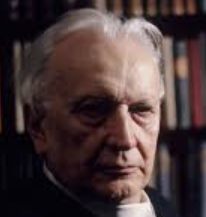
Imminent seems the collapse of that which for millennium has constituted man's universe. The new world which has arisen as an apparatus for supply of the necessaries of life compels everything and everyone to serve it. It annihilates whatever it has no place for person seems to be going undergoing absorption into that which is nothing more than a means to an end, into that which is devoid of purpose of significance.

1 month 5 days ago
Progress in civilization seems possible only in interludes when history is idling.
▼
Source
source
An Old Chaos: The Emperor's Tomb (p. 35)

1 week 6 days ago
Accept in an unruffled spirit that which is inevitable.

5 months 1 day ago
What does man actually know about himself? Is he, indeed, ever able to perceive himself completely, as if laid out in a lighted display case? Does nature not conceal most things from him even concerning his own body in order to confine and lock him within a proud, deceptive consciousness, aloof from the coils of the bowels, the rapid flow of the blood stream, and the intricate quivering of the fibers! She threw away the key.

4 months 1 week ago
Hurl your calumnies boldly; something is sure to stick.
▼
Source
source
De Augmentis Scientiarum

3 months 1 week ago
No evil is honorable; but death is honorable; therefore death is not evil.
▼
Source
source
As quoted in Epistles No. 82, by Seneca the Younger
2 months 3 weeks ago
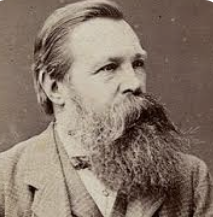
I forsook the company and the dinner-parties, the port-wine and champagne of the middle-classes, and devoted my leisure-hours almost exclusively to the intercourse with plain working men; I am both glad and proud of having done so. Glad, because thus I was induced to spend many a happy hour in obtaining a knowledge of the realities of life-many an hour, which else would have been wasted in fashionable talk and tiresome etiquette; proud, because thus I got an opportunity of doing justice to an oppressed and calumniated class of men who with all their faults and under all the disadvantages of their situation, yet command the respect of every one but an English money-monger.
▼
Source
source
p. 27
4 months 2 weeks ago
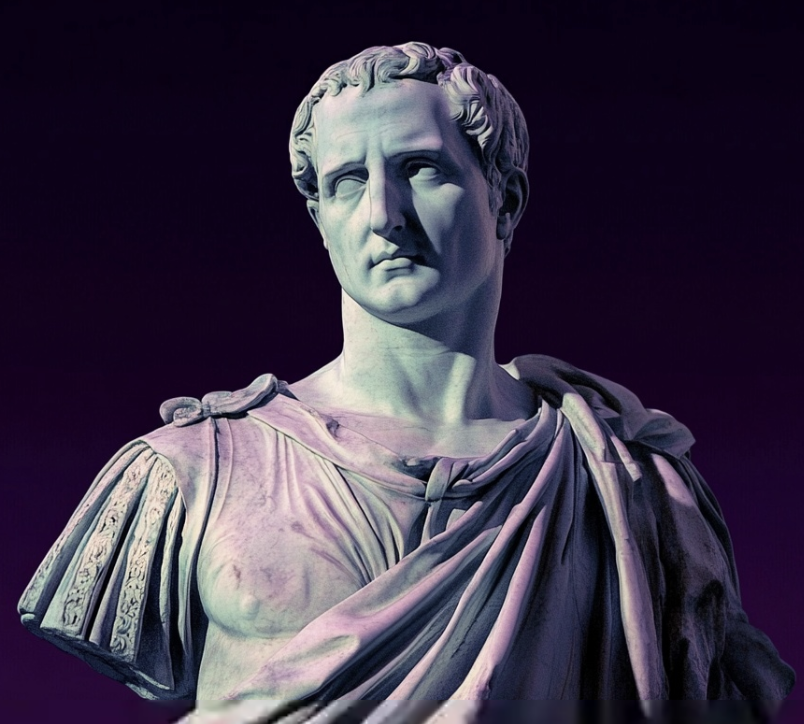
Times are bad. Children no longer obey their parents, and everyone is writing a book.
▼
Source
source
As quoted in InfoWorld, Vol. 23, No. 16, 16 April 2001, p. 49. This had been attributed previously to many other sources from 1908 on, according to this analysis by Quote Investigator.

3 months 3 weeks ago
Enough had been thought, and said, and felt, and imagined. It was about time that something should be done.

3 months 4 weeks ago
There are a thousand hacking at the branches of evil to one who is striking at the root, and it may be that he who bestows the largest amount of time and money on the needy is doing the most by his mode of life to produce that misery which he strives in vain to relieve.
▼
Source
source
p. 87

1 month 3 weeks ago
Although the medium is the message, the controls go beyond programming. The restraints are always directed to the "content," which is always another medium. The content of the press is literary statement, as the content of the book is speech, and the content of the movie is the novel. So the effects of radio are quite independent of its programming.
▼
Source
source
(p. 267)
3 months 3 weeks ago
The chief reason warfare is still with us is neither a secret death-wish of the human species, nor an irrepressible instinct of aggression, nor, finally and more plausibly, the serious economic and social dangers inherent in disarmament, but the simple fact that no substitute for this final arbiter in international affairs has yet appeared on the political scene.
▼
Source
source
"On Violence"
2 weeks ago
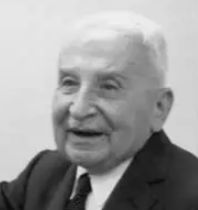
All this talk: the state should do this or that, ultimately means: the police should force consumers to behave otherwise than they would behave spontaneously.
2 months 3 weeks ago
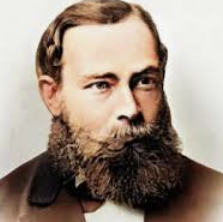
Often it is only after immense intellectual effort, which may have continued over centuries, that humanity at last succeeds in achieving knowledge of a concept in its pure form, by stripping off the irrelevant accretions which veil it from the eye of the mind.
▼
Source
source
Translation J. L. Austin (Oxford, 1950) as quoted by Stephen Toulmin, Human Understanding: The Collective Use and Evolution of Concepts (1972) Vol. 1, p. 56.

3 weeks 3 days ago
The old form of trade union, which was born in the nineteenth century and aimed primarily at negotiating wages for a specific trade is no longer sufficient. First of all, as we have been arguing, the old trade unions are not able to represent the unemployed, the poor, or even the mobile and flexible post-Fordist workers with short term contracts, all of whom participate actively in social production and increase social wealth. Second, the old unions are divided according to the various products and tasks defined in the heyday of industrial production - a miners' union, a pipefitters' union, a machinists' union and so forth. Today, insofar as the conditions and the relations of labor are becoming common, these traditional divisions (or even newly defined divisions) no longer make sense and serve only as an obstacle. Finally the old unions have become purely economic, not political, organization.
▼
Source
source
136
3 months 3 weeks ago
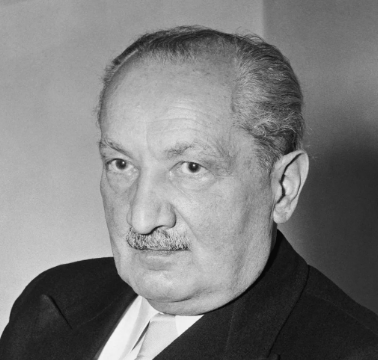
For anyone who at the end of Western philosophy can and must still question philosophically, the decisive question is no longer merely "What basic character do beings manifest?" or "How may the being of beings be characterized?" but "What is this 'being' itself?" The decisive question is that of "the meaning of being," not merely that of the being of beings.
▼
Source
source
p. 18
2 months 4 weeks ago
...what the freedom is that I love, and that to which I think all men intitled. It is not solitary, unconnected, individual, selfish Liberty. As if every Man was to regulate the whole of his Conduct by his own will. The Liberty I mean is social freedom. It is that state of things in which Liberty is secured by the equality of Restraint; A Constitution of things in which the liberty of no one Man, and no body of Men and no Number of men, can find Means to trespass on the liberty of any Person, or any description of Persons in the Society. This kind of liberty is indeed but another name for Justice, as ascertained by wise Laws, and secured by well-constructed institutions.
▼
Source
source
Letter to Charles-Jean-François Depont (November 1789), quoted in Alfred Cobban and Robert A. Smith (eds.), The Correspondence of Edmund Burke, Volume VI: July 1789-December 1791 (1967), p. 42

3 months 3 days ago
In no other country in the world is the love of property keener or more alert than in the United States, and nowhere else does the majority display less inclination toward doctrines which in any way threaten the way property is owned.
▼
Source
source
Book Three, Chapter XXI.
2 months 2 weeks ago
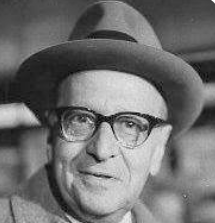
Reason as an organ for perceiving the true nature of reality and determining the guiding principles of our lives has come to be regarded as obsolete.
▼
Source
source
p. 18.

3 months 3 weeks ago
Science must begin with myths, and with the criticism of myths.
▼
Source
source
Ch. 1 "Science : Conjectures and Refutations", Section VII
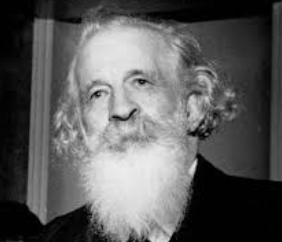
2 months 3 weeks ago
True poetry is a function of awakening. It awakens us, but it must retain the memory of previous dreams.
▼
Source
source
Introduction

4 months 2 weeks ago
I became evil for no reason. I had no motive for my wickedness except wickedness itself. It was foul, and I loved it. I loved the self-destruction, I loved my fall, not the object for which I had fallen but my fall itself. My depraved soul leaped down from your firmament to ruin. I was seeking not to gain anything by shameful means, but shame for its own sake.
▼
Source
source
II, 4
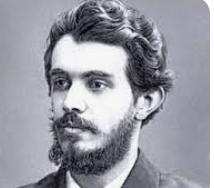
2 months 2 weeks ago
What one needs to do at every moment of one's life is to put an end to the old world and to begin a new world.
1 week 6 days ago
Fire tries gold, misfortune tries brave men.
▼
Source
source
De Providentia (On Providence), 5.9, translated by Aubrey Stewart Alternate translation: Fire is the test of gold; adversity, of strong men. (translator unknown).

4 months 2 days ago
A man must always live by his work, and his wages must at least be sufficient to maintain him. They must even upon most occasions be somewhat more, otherwise it would be impossible for him to bring up a family, and the race of such workmen could not last beyond the first generation.
▼
Source
source
Chapter VIII, p. 81.
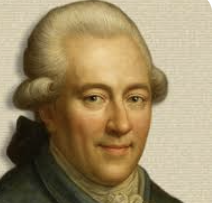
2 months 1 week ago
I am convinced we do not only love ourselves in others but hate ourselves in others too.
▼
Source
source
F 54

4 months 6 days ago
There is nothing more notable in Socrates than that he found time, when he was an old man, to learn music and dancing, and thought it time well spent.
▼
Source
source
Book III, Ch. 13

3 months 4 weeks ago
There is something feeble and a little contemptible about a man who cannot face the perils of life without the help of comfortable myths. Almost inevitably some part of him is aware that they are myths and that he believes them only because they are comforting. But he dare not face this thought! Moreover, since he is aware, however dimly, that his opinions are not rational, he becomes furious when they are disputed.
▼
Source
source
p. 219-220
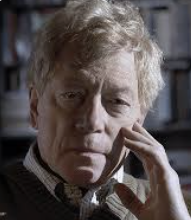
1 month 3 weeks ago
The conservative response to modernity is to embrace it, but to embrace it critically, in full consciousness that human achievements are rare and precarious, that we have no God-given right to destroy our inheritance, but must always patiently submit to the voice of order, and set an example of orderly living.
▼
Source
source
"Eliot and Conservatism" (p. 208)
2 months 2 weeks ago
Ethics occupies a central place in philosophy because it is concerned with sin, with the origin of good and evil and with moral valuations. And since these problems have a universal significance, the sphere of ethics is wider than is generally supposed. It deals with meaning and value and its province is the world in which the distinction between good and evil is drawn, evaluations are made and meaning is sought.
▼
Source
source
The Destiny of Man (1931), p. 15

3 months 4 weeks ago
To see ourselves as others see us is a most salutary gift. Hardly less important is the capacity to see others as they see themselves.
▼
Source
source
Page 159

2 months 3 weeks ago
Now precisely because Galilean science is, in the formation of its concepts, the technic of a specific Lebenswelt, it does not and cannot transcend this Lebenswelt. It remains essentially within the basic experiential framework and within the universe of ends set by this reality.
▼
Source
source
p. 164
2 months 1 day ago
The ascription of an unconscious intentional phenomenon to a system implies that the phenomenon is in principle accessible to consciousness. A statement of the author's "connection principle."
▼
Source
source
"Consciousness, Explanatory Inversion, and Cognitive Science," The Behavioral and Brain Sciences 13, 4 (December 1990): 585-696.
2 months 3 weeks ago
Nothing, I am sure, calls forth the faculties so much as the being obliged to struggle with the world; and this is not a woman's province in a married state. Her sphere of action is not large, and if she is not taught to look into her own heart, how trivial are her occupations and pursuits! What little arts engross and narrow her mind!
▼
Source
source
Thoughts on the Education of Daughters (1787), "Matrimony", p. 100
1 week 6 days ago
A great deal of talent is lost to the world for the want of a little courage. Every day sends to their graves a number of obscure men who have only remained obscure because their timidity has prevented them from making a first effort.
▼
Source
source
Lecture IX : On the Conduct of the Understanding

3 months 4 weeks ago
These numerous points at which money is withdrawn from circulation and accumulated in numerous individual hoards or potential money-capitals appears as so many obstacles to circulation, because they immobilise the money and deprive it of its capacity to circulate for a certain time.
▼
Source
source
Vol. II, Ch. XXI, p. 497.
1 month 5 days ago
It is because human needs are contradictory that no human life can be perfect. That does not mean that human life is imperfect. It means that the idea of perfection has no meaning.
▼
Source
source
'Modus Vivendi' (p.29)
2 months 2 weeks ago
The 'public' is a phantom, the phantom of an opinion supposed to exist in a vast number of persons who have no effective interrelation and though the opinion is not effectively present in the units. Such an opinion is spoken of as 'public opinion,' a fiction which is appealed to by individuals and by groups as supporting their special views. It is impalpable, illusory, transient; "'tis here, 'tis there, 'tis gone"; a nullity which can nevertheless for a moment endow the multitude with power to uplift or destroy.

2 months 1 week ago
I spoke after Sasha, for an hour. I discussed the farce of a government undertaking to carry democracy abroad by suppressing the last vestiges of it at home. I took up the contention of Judge Mayer that only such ideas are permissible as are "within the law." Thus he had instructed the jurymen when he had asked them if they were prejudiced against those who propagate unpopular ideas. I pointed out that there had never been an ideal, however humane and peaceful, which in its time had been considered "within the law." I named Jesus, Socrates, Galileo, Giordano Bruno. "Were they 'within the law"?" I asked. "And the men who set America free from British rule, the Jeffersons and the Patrick Henrys? The William Lloyd Garrisons, the John Browns, the David Thoreaus and Wendell Phillipses-were they within the law?"
▼
Source
source
chapter 45
1 month 3 weeks ago
Literacy, in translating man out of the closed world of tribal depth and resonance, gave man an eye for an ear and ushered him into a visual open world of specialized and divided consciousness.

4 months 2 days ago
My purpose is to explain, not the meaning of words, but the nature of things.
▼
Source
source
Part III, Def. XX

3 months 4 weeks ago
Among a people without fellow-feeling, especially if they read and speak different languages, the united public opinion, necessary to the working of the representative government, cannot exist.
▼
Source
source
Ch. XVI: Of Nationality, As Connected with Representative Government (p. 382)

3 months 4 days ago
What song the Syrens sang, or what name Achilles assumed when he hid himself among women, though puzzling questions, are not beyond all conjecture.
▼
Source
source
Chapter V. Cf Suetonius, Lives of the Twelve Caesars: "Tiberius," Ch 70
1 month 1 week ago
What I would like to show is that there is a vital dimension of their writing, which I call performative reflexivity, which if ignored or misunderstood will impede an adequate response to it.
▼
Source
source
Chapter 8, Performative Reflexivity, p. 134
CivilSimian.com created by AxiomaticPanic, CivilSimian, Kalokagathia