


3 months 3 weeks ago
My trade and my art is living.
▼
Source
source
Ch. 6 (tr. Donald M. Frame)

4 months 2 weeks ago
It built itself up endlessly, like a chess game, and the telemetrists began to use a computer to program the computer that designed the program for the computer that programmed the robot-controlling computer.

1 month 2 weeks ago
The hot radio medium used in cool or nonliterate cultures has a violent effect, quite unlike its effect, say in England or America, where radio is felt as entertainment.
▼
Source
source
(p. 30)
3 weeks 4 days ago
I may not be as unambiguously hostile to capitalism as many people are, but what I don't like about it is the commodification of personal experiences, it turns everyone into actors.
▼
Source
source
Quoted in Will Self, "John Gray: Forget everything you know," The Independent
1 week 2 days ago
These three classes of problems-determination of significant fact, matching of facts with theory, and articulation of theory-exhaust, I think, the literature of normal science, both empirical and theoretical. They do not, of course, quite exhaust the entire literature of science. There are also extraordinary problems, and it may well be their resolution that makes the scientific enterprise as a whole so particularly worthwhile. But extraordinary problems are not to be had for the asking. They emerge only on special occasions prepared by the advance of normal research.
▼
Source
source
p. 34
4 months 1 day ago
Do not mistake yourself by believing that your being has something in it more exalted than that of others.

3 months 2 weeks ago
The profit of books is according to the sensibility of the reader. The profoundest thought or passion sleeps as in a mine until an equal mind and heart finds and publishes it.
▼
Source
source
Quotation and Originality

3 months 2 weeks ago
The industrial peak of a people when its main concern is not yet gain, but rather to gain.
▼
Source
source
Introduction, p. 7.
1 month 1 week ago
All a writer has to do to get a woman is to say he's a writer. It's an aphrodisiac.
▼
Source
source
As quoted in "Dailer's Choice" by Harriet Van Horne, in New York Magazine Vol. 10, No. 13 (28 March 1977), p. 80
2 months 2 weeks ago
What has always made the state a hell on earth has been precisely that man has tried to make it heaven.

2 months 2 days ago
It may seem to be a long way from Blake's innocent talk of love and copulation to De Sade's need to inflict pain. And yet both are the outcome of a sexual mysticism that strives to transcend the everyday world. Simone de Beauvoir said penetratingly of De Sade's work that 'he is trying to communicate an experience whose distinguishing characteristic is, nevertheless its will to remain incommunicable'. De Sade's perversion may have sprung from his dislike of his mother or of other women, but its basis is a kind of distorted religious emotion.
▼
Source
source
p. 90

2 months 2 weeks ago
Even in childhood I watched the hours flow, independent of any reference, any action, any event, the disjunction of time from what was not itself, its autonomous existence, its special status, its empire, its tyranny. I remember quite clearly that afternoon when, for the first time, confronting the empty universe, I was no more than a passage of moments reluctant to go on playing their proper parts. Time was coming unstuck from being - at my expense.

2 months 6 days ago
Absolute relativism, which is neither more nor less than skepticism, in the most modern sense of the term, is the supreme triumph of the reasoning reason.
1 month 1 week ago
Democracies owe their existence to national loyalties - the loyalties that are supposedly shared by government and opposition, by all political parties, and by the electorate as a whole. Wherever the experience of nationality is weak or non-existent, democracy has failed to take root. For without national loyalty, opposition is a threat to government, and political disagreements create no common ground.

3 months 2 weeks ago
If good music has charms to soothe the savage breast, bad music has no less powerful spells for filling the mildest breast with rage, the happiest with horror and disgust. Oh, those mammy songs, those love longings, those loud hilarities! How was it possible that human emotions intrinsically decent could be so ignobly parodied.
▼
Source
source
"Silence is Golden," p. 59

4 months 1 day ago
Love and the gracious heart are a single thing...one can no more be without the otherthan the reasoning mind without its reason.
▼
Source
source
Chapter XVI (tr. Mark Musa)

2 weeks 1 day ago
Philosophy is not the owl of Minerva that takes flight after history has been realized in order to celebrate its happy ending; rather, philosophy is subjective proposition, desire, and praxis that are applied to the event.
▼
Source
source
49
2 months 2 weeks ago
Without consciousness there would, practically speaking, be no world, for the world exists as such only in so far as it is consciously reflected and considered by a psyche. Consciousness is a precondition of being.
▼
Source
source
p 48
2 months 2 weeks ago
I define a Sign as anything which is so determined by something else, called its Object, and so determines an effect upon a person, which effect I call its Interpretant, that the latter is thereby mediately determined by the former.
▼
Source
source
Letter to Victoria, Lady Welby (1908) SS 80-81

2 months 2 weeks ago
The future use and the whole effect, if not the very existence, of the process of an impeachment of high crimes and misdemeanors before the peers of this kingdom upon the charge of the Commons will very much be decided by your judgment in this cause... For we must not deceive ourselves: whatever does not stand with credit cannot stand long. And if the Constitution should be deprived, I do not mean in form, but virtually, of this resource, it is virtually deprived of everything else that is valuable in it. For this process is the cement which binds the whole together; this is the individuating principle that makes England what England is.
▼
Source
source
Speech in opening the impeachment of Warren Hastings (15 February 1788), quoted in The Works of the Right Honourable Edmund Burke, Volume the Ninth (1899), p. 332
1 month 2 weeks ago
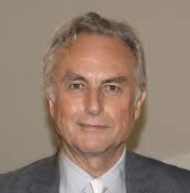
With so many mind-bytes to be downloaded, so many mental codons to be replicated, it is no wonder that child brains are gullible, open to almost any suggestion, vulnerable to subversion, easy prey to Moonies, Scientologists and nuns. Like immune-deficient patients, children are wide open to mental infections that adults might brush off without effort.


1 month 2 weeks ago
The good is the everlasting, the pinnacle of our life. ... life is striving towards the good, toward God. The good is the most basic idea ... an idea not definable by reason ... yet is the postulate from which all else follows. But the beautiful ... is just that which is pleasing. The idea of beauty is not an alignment to the good, but is its opposite, because for most part, the good aids in our victory over our predilections, while beauty is the motive of our predilections. The more we succumb to beauty, the further we are displaced from the good. ...the usual response is that there exists a moral and spiritual beauty ... we mean simply the good. Spiritual beauty or the good, generally not only does not coincide with the typical meaning of beauty, it is its opposite.
1 month 4 weeks ago
Instead of gambling on the eternal impossibility of the revolution and on the fascist return of a war-machine in general, why not think that a new type of revolution is in the course of becoming possible, and that all kinds of mutating, living machines conduct wars, are combined and trace out a plane of consistence which undermines the plane of organization of the World and the States?
▼
Source
source
from Dialogues with Claire Parnet, p. 147 [emphasis in original].

3 months 2 weeks ago
The doctrine that there is as much science in a subject as... mathematics in it, or as much... measurement or 'precision' in it, rests upon... misunderstanding.

3 months 3 weeks ago
Every tax, however, is to the person who pays it a badge, not of slavery but of liberty. It denotes that he is a subject to government, indeed, but that, as he has some property, he cannot himself be the property of a master.
▼
Source
source
Chapter II, Part II, p. 927.
2 months 2 weeks ago
It makes no sense to say that death is the goal of life, but what else is there to say?
2 months 2 weeks ago
A very great part of the mischiefs that vex the world arises from words.
▼
Source
source
Letter to Richard Burke post 19 February 1792 (1792), in R. B. McDowell and William B. Todd (eds), The Writings and Speeches of Edmund Burke, Vol. 9: I: The Revolutionary War, 1794-1797; II: Ireland. p. 647

3 months 2 weeks ago
Most of us are not neutral in feeling, but, as human beings, we have to remember that, if the issues between East and West are to be decided in any manner that can give any possible satisfaction to anybody, whether Communist or anti-Communist, whether Asian or European or American, whether White or Black, then these issues must not be decided by war. We should wish this to be understood, both in the East and in the West.
3 months 2 weeks ago
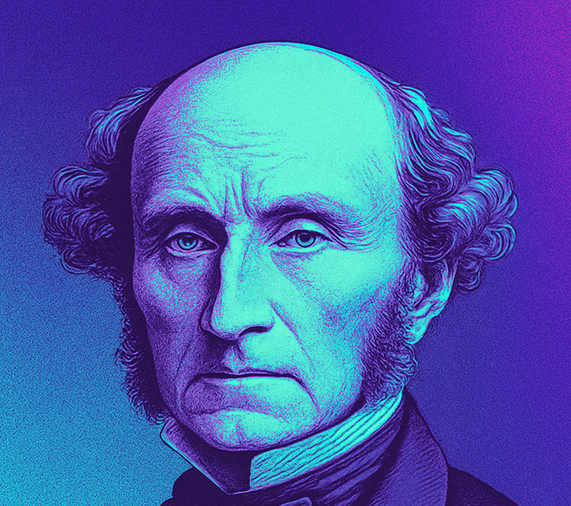
Granted that any practice causes more pain to animals than it gives pleasure to man; is that practice moral or immoral? And if, exactly in proportion as human beings raise their heads out of the slough of selfishness, they do not with one voice answer 'immoral,' let the morality of the principle of utility be for ever condemned.
▼
Source
source
Dr. Whewell on Moral Philosophy (1852), in Dissertations and Discussions: Political, Philosophical, and Historical, vol. 2, London: John W. Parker and son, 1859, p. 485

1 month 2 days ago
Being a planetary citizen does not need space travel. It means being conscious that we are part of the universe and of the earth. The most fundamental law is to recognise that we share the planet with other beings, and that we have a duty to care for our common home.
3 months 2 weeks ago
How significant is the enormous heightening, under mescalin, of the perception of color! ... Man's highly developed color sense is a biological luxury-inestimably precious to him as an intellectual and spiritual being, but unnecessary to his survival as an animal. ... Mescalin raises all colors to a higher power and makes the percipient aware of innumerable fine shades of difference, to which, at ordinary times, he is completely blind. It would seem that, for Mind at Large, the so-called secondary characters of things are primary.
▼
Source
source
describing his experiment with mescaline, pp. 26-27
2 months 5 days ago
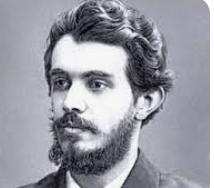
Berdyaev has been categorized as a Christian existentialist and a mystical philosopher. He never avoided the label of "mystic" since he felt it was the mystics of the world who came closest to understanding the role of spirit. Many of the philosophers he quoted were mystics - Meister Eckhart, Angelus Silesius and especially Jacob Boehme. The influence of Dostoevsky was central to his thought. Nevertheless, Berdyaev is not a naively irrational thinker; he brings an enormous fund of philosophical knowledge combined with the profundity of his own thought to support his view of existence. There are no dogmas in his writings to offend one's intellectual conscience.
▼
Source
source
Richard Schain, in In Love with Eternity : Philosophical Essays and Fragments (2005), Ch. 7 : Nikolai Alexandrovich Berdyaev - A Champion of the Spirit, p. 47
3 months 3 weeks ago
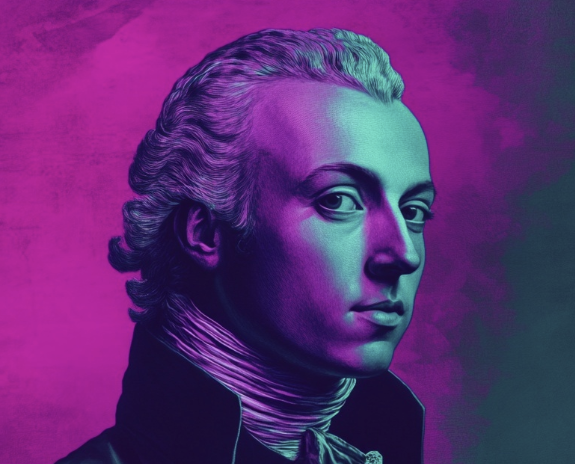
England and France, the two most civilized nations on earth, who are in contrast to each other because of their different characters, are, perhaps chiefly for that reason, in constant feud with one another. Also, England and France, because of their inborn characters, of which the acquired and artificial character is only the result, are probably the only nations who can be assumed to have a particular and, as long as both national characters are not blended by the force of war, unalterable characteristics. That French has become the universal language of conversation, especially in the feminine world, and that English is the most widely used language of commerce among tradesmen, probably reflects the difference in their continental and insular geographic situation.
▼
Source
source
Kant, Immanuel (1996), page 226

4 months 3 days ago
And yet it is hard to believe that anything in nature could stand revealed as solid matter.The lightning of heaven goes through the walls of houses,like shouts and speech; iron glows white in fire; red-hot rocks are shattered by savage steam; hard gold is softened and melted down by heat; chilly brass, defeated by heat, turns liquid; heat seeps through silver, so does piercing cold;by custom raising the cup, we feel them bothas water is poured in, drop by drop, above.
▼
Source
source
Book I, lines 487-496 (Frank O. Copley)
3 months 2 weeks ago
We are obviously heading for revolution-something I have never once doubted since 1850. The first act will include a by no means gratifying rehash of the stupidities of '48-'49. However, that's how world history runs its course, and one has to take it as one finds it.
▼
Source
source
Letter to Ludwig Kugelmann (28 December 1862), quoted in The Collected Works of Karl Marx and Friedrich Engels: Volume 41. Letters 1860-64 (2010), p. 437
4 months 1 week ago
There is no body but eats and drinks. But they are few who can distinguish flavors.
2 months 3 days ago
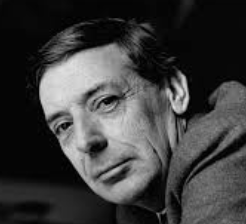
Deniers do not get their views just from simple mistakes about language and truth. Rather, they believe that there is something to worry about in important areas of our thought and in traditional interpretations of those areas; they sense that it has something to do with truth; and (no doubt driven by the familiar desire to say something at once hugely general, deeply important, and reassuringly simple) they extend their worry to the notion of truth itself.
▼
Source
source
p. 6

3 months 3 weeks ago
Divorce is probably of nearly the same age as marriage. I believe, however, that marriage is some weeks the more ancient.
▼
Source
source
"Divorce", 1771
3 months 3 weeks ago
We seek and offer ourselves to be gulled.
▼
Source
source
Book III, Ch. 11. Of Cripples
2 months 2 days ago
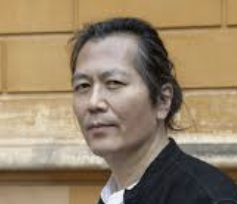
When power is separated from any communicative context, it becomes naked violence.
1 month 4 days ago
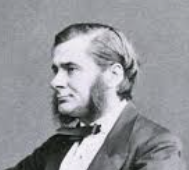
Identical in the physical processes by which he originates-identical in the early stages of his formation-identical in the mode of his nutrition before and after birth, with the animals which lie immediately below him in the scale-Man, if his adult and perfect structure be compared with theirs, exhibits, as might be expected, a marvellous likeness of organization. He resembles them as they resemble one another-he differs from them as they differ from one another.-And, though these differences and resemblances cannot be weighed and measured, their value may be readily estimated; the scale or standard of judgment, touching that value, being afforded and expressed by the system of classification of animals now current among zoologists.
▼
Source
source
Ch.2, p. 83
2 months 2 weeks ago
He was one of those who wished for the abolition of the Slave Trade. He thought it ought to be abolished on principles of humanity and justice.
▼
Source
source
Speech in the House of Commons (9 May 1788), quoted in The Parliamentary History of England, From the Earliest Period to the Year 1803, Vol. XXVII (1816), column 502
1 month 4 days ago
If a well were sunk at our feet in the midst of the city of Norwich, the diggers would very soon find themselves at work in that white substance almost too soft to be called rock, with which we are all familiar as "chalk".
1 month 2 weeks ago
Primitivism has become the vulgar cliche of much modern art and speculation.
▼
Source
source
(p. 77)
4 days ago
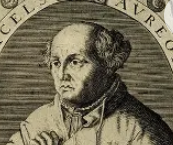
He who wants to govern must have insight into the hearts of men and act accordingly.
3 months 2 weeks ago
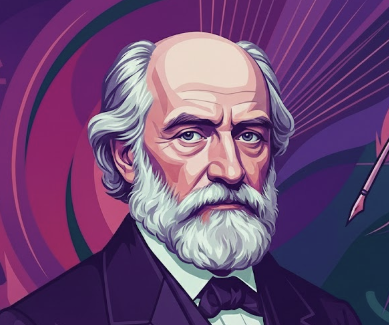
It is difficult, if not impossible, to define the limit of our reasonable desires in respect of possessions.
▼
Source
source
E. Payne, trans. (1974) Vol. 1, p. 346

1 month 4 weeks ago
There were honest people long before there were Christians and there are, God be praised, still honest people where there are no Christians. It could therefore easily be possible that people are Christians because true Christianity corresponds to what they would have been even if Christianity did not exist.
▼
Source
source
L 16
3 months 3 weeks ago
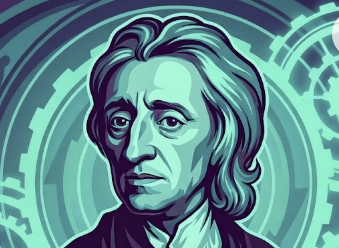
He that will have his son have a respect for him and his orders, must himself have a great reverence for his son.
▼
Source
source
Maxima debetur pueris reverentia [The greatest respect is owed to the children]. Sec. 71; Note: Here Locke quotes Juvenal

3 months 2 weeks ago
And the cost of a thing it will be remembered as the amount of life it requires to be exchanged for it.
▼
Source
source
After December 6, 1845
CivilSimian.com created by AxiomaticPanic, CivilSimian, Kalokagathia