


2 months 2 weeks ago
If there was a God of sorrow, he would grow black heavy wings, to soar not for the skies, but for inferno.
3 months 1 week ago
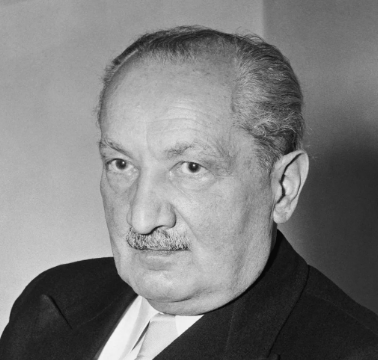
It is said that "being" is the most universal and the emptiest concept. As such it resists every attempt at definition. Nor does this most universal and thus indefinable concept need any definition. Everybody uses it constantly and also already understands what is meant by it.
▼
Source
source
Introduction: The Exposition of the Question of the Meaning of Being (Stambaugh translation)

2 months 2 weeks ago
Politics and the pulpit are terms that have little agreement.

4 months 2 weeks ago
Can one be a saint without God?, that's the problem, in fact the only problem, I'm up against today.

1 month 2 weeks ago
Environment is process, not container.
▼
Source
source
(p. 30)

3 months 2 weeks ago
I pre-suppose, of course, a reader who is willing to learn something new and therefore to think for himself.
▼
Source
source
Author's prefaces to the First Edition.

3 months 2 weeks ago
A difference which makes no difference is no difference at all.
▼
Source
source
As quoted in William James: The Essential Writings (1971), edited by Bruce W. Wilshire, p. xiii

2 months 1 day ago
It reminds us that a man driven to desire to possess a certain female is a highly purposive individual. We have already noted that evolution tends to mark time when individuals have no reason to evolve. The same applies to individuals; they may be talented and intelligent, and yet waste their lives because they somehow lack the motivation to make use of these faculties. The best piece of luck that can befall any individual is to have a strong sense of purpose.
▼
Source
source
p. 225

4 months 2 weeks ago
I can understand myself in believing, although in addition I can in a relative misunderstanding comprehend the human aspect of this life: but comprehend faith or comprehend Christ, I cannot.

2 months ago
The average mind is slow in grasping a truth, but when the most thoroughly organized, centralized institution, maintained at an excessive national expense, has proven a complete social failure, the dullest must begin to question its right to exist. The time is past when we can be content with our social fabric merely because it is "ordained by divine right," or by the majesty of the law.

3 months 2 weeks ago
Better red than dead.
▼
Source
source
Bertrand Russell, attributes this phrase to 'West German friends of peace' but adopted this slogan for the Campaign for Nuclear Disarmament he helped found William Safire, Safire's Political Dictionary, (2008) p. 49-50
2 months 1 week ago
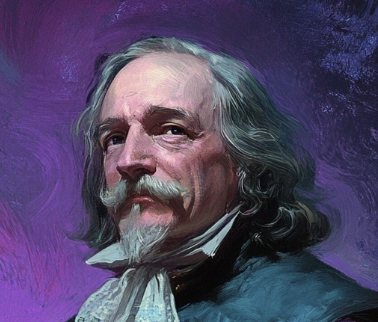
By MANNERS, I mean not here Decency of behaviour; as how one man should salute another, or how a man should wash his mouth, or pick his teeth before company, and such other points of the Small Morals; But those qualities of mankind that concern their living together in Peace and Unity. To which end we are to consider that the Felicity of this life consisteth not in the repose of a mind satisfied. For there is no such Finis ultimus (utmost aim) nor Summum Bonum (greatest good) as is spoken of in the books of the old Moral Philosophers. Nor can a man any more live whose desires are at an end than he whose Senses and Imaginations are at a stand.
▼
Source
source
The First Part, Chapter 11, p. 47
2 months 2 weeks ago
You may have made a Revolution, but not a Reformation. You may have subverted Monarchy, but not recover'd freedom.
▼
Source
source
Letter to Charles-Jean-François Depont (November 1789), quoted in Alfred Cobban and Robert A. Smith (eds.), The Correspondence of Edmund Burke, Volume VI: July 1789-December 1791 (1967), p. 46

3 months 3 weeks ago
Upstart greatness is everywhere less respected than ancient greatness.
▼
Source
source
Chapter I, Part II, p. 773.
3 months 2 weeks ago
The immediate aim of the Communists is the same as that of all the other proletarian parties: Formation of the proletariat into a class, overthrow of the bourgeois supremacy, conquest of political power by the proletariat.
▼
Source
source
Section 2 paragraph 7.
4 months 2 weeks ago
It is of this sort of divine service I used the expression that, in comparison with the Christianity of the New Testament, it is playing Christianity. The expression is essentially true and characterizes the thing perfectly. For what does it mean to play, when one reflects how the word must be understood in this connection? It means to imitate, to counterfeit, a danger when there is no danger, and to do it in such a way that the more art is applied to it, the more delusive the pretense is that the danger is present.

2 months 3 weeks ago
Égalité is an expression of envy. It means, in the real heart of every Republican, " No one shall be better off than I am;" and while this is preferred to good government, good government is impossible.
▼
Source
source
Conversation with Nassau William Senior, 22 May 1850 Nassau, p. 94

2 months 3 days ago
Truth is sought not because it is truth but because it is good.
▼
Source
source
p. 213
1 month 3 weeks ago
These papers are all written from what is called a realist perspective. The statements of science are in my view either true or false (although it is often the case that we don't know which) and their truth or falsity does not consist in their being highly derived ways of describing regularities in human experience. Reality is not a part of the human mind; rather the human mind is a part - and a small part at that - of reality.
▼
Source
source
"Introduction: Science as approximation to truth"

1 month 1 week ago
Whenever you say anything good about East Germany, immediately somebody jumps up and says, "My God, you're a Stalinist..." I'm not defending everything about it, of course. But I laboured on the chapter that talks about the east. I fact-checked it; I had somebody else fact-check it. I knew that I was going to get a lot of flak for that. But in the beginning, East Germany did a better job. They just did.
▼
Source
source
From an interview with Alex Clark, as cited in "Nazism, slavery, empire: can countries learn from national evil?", The Guardian

2 months 1 week ago
When it is evening, ye say, It will be fair weather: for the sky is red. And in the morning, It will be foul weather to day: for the sky is red and lowring. O ye hypocrites, ye can discern the face of the sky; but can ye not discern the signs of the times? A wicked and adulterous generation seeketh after a sign; and there shall no sign be given unto it, but the sign of the prophet Jonas.
▼
Source
source
16:2-4 (KJV)
2 months 4 days ago
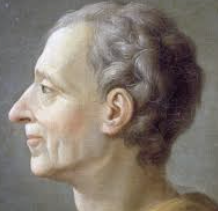
Democratic and aristocratic states are not in their own nature free. Political liberty is to be found only in moderate governments; and even in these it is not always found. It is there only when there is no abuse of power. But constant experience shows us that every man who has power is inclined to abuse it; he goes until he finds limits. Is it not strange, though true, to say that virtue itself has need of limits?.To prevent this abuse, it is necessary that, by the arrangement of things, power shall stop power. A government may be so constituted, as no man shall be compelled to do things to which the law does not oblige him, nor forced to abstain from things which the law permits.
▼
Source
source
Book XI, Chapter 4.
3 months 2 weeks ago
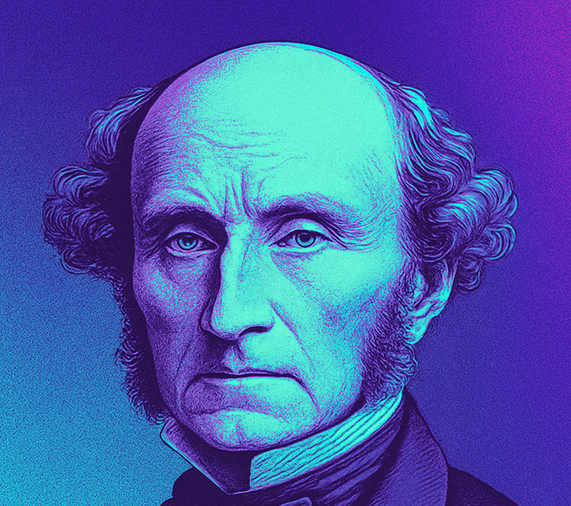
My father's moral inculcations were at all times mainly those of the "Socratici viri;" justice, temperance (to which he gave a very extended application), veracity, perseverance, readiness to encounter pain and especially labour; regard for the public good; estimation of persons according to their merits, and of things according to their intrinsic usefulness; a life of exertion in contradiction to one of self-indulgent sloth. These and other moralities he conveyed in brief sentences, uttered as occasion arose, of grave exhortation, or stern reprobation and contempt.But though direct moral teaching does much, indirect does more; and the effect my father produced on my character, did not depend solely on what he said or did with that direct object, but also, and still more, on what manner of man he was.
▼
Source
source
(p. 47)
2 months 1 week ago
Sex-appeal is the keynote of our whole civilization.
▼
Source
source
Chapter IV
1 week 6 days ago
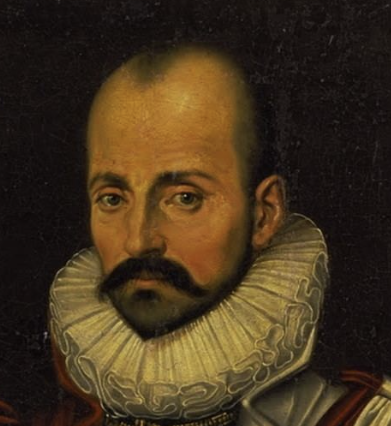
Friendship ... receives its real sustenance from an equality that, to proceed without a limp, must have its two limbs equal.
▼
Source
source
Part 3

3 months 2 weeks ago
The origin of our passions, the root and spring of all the rest, the only one which is born with man, which never leaves him as long as he lives, is self-love; this passion is primitive, instinctive, it precedes all the rest, which are in a sense only modifications of it. In this sense, if you like, they are all natural. But most of these modifications are the result of external influences, without which they would never occur, and such modifications, far from being advantageous to us, are harmful. They change the original purpose and work against its end; then it is that man finds himself outside nature and at strife with himself.
1 month 1 day ago
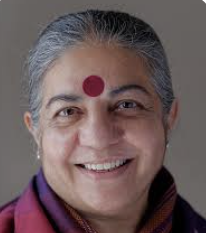
The system of technological production that we have today has been justified in terms of creating more goods to feed more people and to meet more needs. But it actually destroys more of the resources that we need in order to meet those multiple needs. If we shift to an ecological perception, a diversity perception, we realize that some of the instruments of which we are very proud are actually extremely primitive for dealing with nature. To me that is the great lesson of ecological awareness at the turn of the millennium.
▼
Source
source
1998

2 months 4 days ago
But it has been necessary, for the benefit of the social order, to convert religion into a kind of police system, and hence hell. Oriental or Greek Christianity is predominantly eschatological, Protestantism predominantly ethical, and Catholicism is a compromise between the two, although with the eschatological element predominating.
2 months 2 weeks ago
I tell you again that the recollection of the manner in which I saw the Queen of France in the year 1774 and the contrast between that brilliancy, Splendour, and beauty, with the prostrate Homage of a Nation to her, compared with the abominable Scene of 1789 which I was describing did draw Tears from me and wetted my Paper. These Tears came again into my Eyes almost as often as I lookd at the description. They may again. You do not believe this fact, or that these are my real feelings, but that the whole is affected, or as you express it, 'downright Foppery'. My friend, I tell you it is truth-and that it is true, and will be true, when you and I are no more, and will exist as long as men-with their Natural feelings exist.
▼
Source
source
Letter to Philip Francis (20 February 1790), quoted in Alfred Cobban and Robert A. Smith (eds.), The Correspondence of Edmund Burke, Volume VI: July 1789-December 1791 (1967), p. 91

3 months 3 weeks ago
The world is but a perpetual see-saw.

3 months 2 weeks ago
The savage in man is never quite eradicated.
▼
Source
source
September 26, 1859
2 months 2 weeks ago
The Protestant churches generally hold that the elements of the sacrament are flesh and blood only in a tropical sense; they nourish our souls as meat and the juice of it would our bodies. But the Catholics maintain that they are literally just that; although they possess all the sensible qualities of wafer-cakes and diluted wine. But we can have no conception of wine except what may enter into a belief, either -
2 months 3 weeks ago
After having thus successively taken each member of the community in its powerful grasp and fashioned him at will, the government then extends its arm over the whole community. It covers the surface of society with a network of small, complicated rules, minute and uniform, through which the most original minds and the most energetic characters cannot penetrate, to rise above the crowd. The will of man is not shattered, but softened, bent, and guided; men are seldom forced by it to act, but they are constantly restrained from acting. Such a power does not destroy, but it prevents existence: it does not tyrannize, but it compresses, enervates, extinguishes, and stupefies a people, till each nation is reduced to nothing better than a flock of timid and industrious animals, of which the government is the shepherd.
▼
Source
source
Book Four, Chapter VI.
4 months 2 days ago
The first and most necessary topic in philosophy is that of the use of moral theorems, such as, "We ought not to lie;" the second is that of demonstrations, such as, "What is the origin of our obligation not to lie;" the third gives strength and articulation to the other two, such as, "What is the origin of this is a demonstration." For what is demonstration? What is consequence? What contradiction? What truth? What falsehood? The third topic, then, is necessary on the account of the second, and the second on the account of the first. But the most necessary, and that whereon we ought to rest, is the first. But we act just on the contrary. For we spend all our time on the third topic, and employ all our diligence about that, and entirely neglect the first.
▼
Source
source
(51).
3 days ago
A free man must be able to endure it when his fellow men act and live otherwise than he considers proper. He must free himself from the habit, just as soon as something does not please him, of calling for the police.
▼
Source
source
Ch. 1 : The Foundations of Liberal Policy § 11 : The Limits of Governmental Activity



1 week 2 days ago
Of this Shakspeare of ours, perhaps the opinion one sometimes hears a little idolatrously expressed is, in fact, the right one; I think the best judgement not of this country only, but of Europe at large, is slowly pointing to the conclusion, That Shakspeare is the chief of all Poets hitherto; the greatest intellect who, in our recorded world, has left record of himself in the way of Literature. On the whole, I know not such a power of vision, such a faculty of thought, if we take all the characters of it, in any other man. Such a calmness of depth; placid joyous strength; all things imaged in that great soul of his so true and clear, as in a tranquil unfathomable sea!
3 months 2 weeks ago
Let sanguine healthy-mindedness do its best with its strange power of living in the moment and ignoring and forgetting, still the evil background is really there to be thought of, and the skull will grin in at the banquet.
▼
Source
source
Lectures IV and V, "The Religion of Healthy-Mindedness"
2 months 1 week ago
Fear for the Other, fear for the other man's death is my fear, but is in no way an individual's taking fright.
▼
Source
source
The Levinas reader by Levinas, Emmanuel p. 84

3 months 2 weeks ago
All gods are homemade, and it is we who pull their strings, and so, give them the power to pull ours Vijaya in Island.
▼
Source
source
1962
3 weeks 6 days ago
Many city-dwellers have a romanticized conception of the living world. From another perspective, some "conservation biologists" favour e.g. "Pleistocene rewilding". By contrast, I think any truly compassionate person should be horrified at the terrible suffering of Nature "red in tooth and claw". Why not aim for a cruelty-free world instead?
▼
Source
source
"Interview with Pensata Animal", Pensata Animal, 25 Oct. 2009

2 days ago
Perhaps its destruction has been brought about only that it may be raised up again to a better destiny. Oftentimes a reverse has but made room for more prosperous fortune. Many structures have fallen only to rise to a greater height.

3 months 2 weeks ago
The poet presents the imagination with images from life and human characters and situations, sets them all in motion and leaves it to the beholder to let these images take his thoughts as far as his mental powers will permit. This is why he is able to engage men of the most differing capabilities, indeed fools and sages together. The philosopher, on the other hand, presents not life itself but the finished thoughts which he has abstracted from it and then demands that the reader should think precisely as, and precisely as far as, he himself thinks. That is why his public is so small.
▼
Source
source
Vol. 2 "On Philosophy and the Intellect" as translated in Essays and Aphorisms (1970), as translated by R. J. Hollingdale
3 months 2 weeks ago
The first statement of the two principles reads as follows. First: each person is to have an equal right to the most extensive basic liberty compatible with a similar liberty for others. Second: social and economic inequalities are to be arranged so that they are both (a)reasonably expected to be to everyone's advantage, and (b) attached to positions and offices open to all.
▼
Source
source
Chapter II, Section 11, pg. 60
2 months 2 weeks ago
A gifted humanity can only produce skeptics, never saints.
3 months 1 week ago
When the objective gaze is turned on human beings and other experiencing creatures, who are undeniably parts of the world, it can reveal only what they are like in themselves. And if the way things are for these subjects is not part of the way things are in themselves, an objective account, whatever it shows, will omit something. So reality is not just objective reality, and the pursuit of objectivity is not an equally effective method of reaching the truth about everything.
▼
Source
source
"Subjective and Objective" (1979), pp. 212-213.

2 months 2 weeks ago
The fundamental maxim of those who stand at the head of this Age, and therefore the principle of the Age, is this,-to accept nothing as really existing or obligatory, but that which they can understand and clearly comprehend. With regard to this fundamental principle, as we have now declared and adopted it without farther definition or limitation, this third Age is precisely similar to that which is to follow it, the fourth, or age of Reason as Science,-and by virtue of this similarity prepares the way for it. Before the tribunal of Science, too, nothing is accepted but the Conceivable. Only in the application of the principle there is this difference between the two Ages,-that the third, which we shall shortly name that of Empty Freedom, makes its fixed and previously acquired conceptions the measure of existence; while the fourth-that of Science-on the contrary, makes existence the measure, not of its acquired, but of its desiderated beliefs.
▼
Source
source
p. 19

2 months 2 weeks ago
The poverty of the incapable, the distresses that come upon the imprudent, the starvation of the idle, and those shoulderings aside of the weak by the strong, which leave so many "in shallows and in miseries," are the decrees of a large, far-seeing benevolence.
▼
Source
source
Pt. III, Ch. 25 : Poor-Laws
1 month 2 weeks ago
Since Sputnik and the satellites, the planet is enclosed in a manmade environment that ends "Nature" and turns the globe into a repertory theater to be programmed.
▼
Source
source
Shakespeare at the Globe mentioning "All the world's a stage, and all the men and women merely players" (As You Like It, Act II, Scene 7)

3 weeks 6 days ago
Whoever imposes severe punishment becomes repulsive to the people; while he who awards mild punishment becomes contemptible. But whoever imposes punishment as deserved becomes respectable. For punishment when awarded with due consideration, makes the people devoted to righteousness and to works productive of wealth and enjoyment; while punishment, when ill-awarded under the influence of greed and anger or owing to ignorance, excites fury even among hermits and ascetics dwelling in forests, not to speak of householders.
▼
Source
source
Book I : "Concerning Discipline" Chapter 4 "Determination of the Place of Varta and of Dandaniti"
CivilSimian.com created by AxiomaticPanic, CivilSimian, Kalokagathia