


2 months 3 weeks ago
The power of discretionary disqualification by one law of Parliament, and the necessity of paying every debt of the Civil List by another law of Parliament, if suffered to pass unnoticed, must establish such a fund of rewards and terrors as will make Parliament the best appendage and support of arbitrary power that ever was invented by the wit of man. This is felt. The quarrel is begun between the Representatives and the People. The Court Faction have at length committed them. In such a strait the wisest may well be perplexed, and the boldest staggered. The circumstances are in a great measure new. We have hardly any land-marks from the wisdom of our ancestors, to guide us. At best we can only follow the spirit of their proceeding in other cases.
▼
Source
source
Volume i, p. 516
2 months 2 weeks ago
The spectacle of what religions have been in the past, of what certain religions still are to-day, is indeed humiliating for human intelligence. What a farrago of error and folly!'
▼
Source
source
Chapter II : Static Religion

3 months 4 weeks ago
Superstition sets the whole world in flames; philosophy quenches them.
▼
Source
source
Dictionnaire philosophique (1822), "Superstition"
2 months 1 week ago
A modern factory reaches perhaps almost the limit of horror. Everybody in it is constantly harassed and kept on edge by the interference of extraneous wills while the soul is left in cold and desolate misery. What man needs is silence and warmth; what he is given is an icy pandemonium.Physical labour may be painful, but it is not degrading as such. It is not art; it is not science; it is something else, possessing an exactly equal value with art and science, for it provides an equal opportunity to reach the impersonal stage of attention.
▼
Source
source
p. 59
3 months 3 weeks ago
The consciousness of being betrayed is to the collective consciousness of a sacred group what a certain form of schizophrenia is to the individual...it is a form of madness.
▼
Source
source
p. 193
3 months 4 weeks ago
Between the Shaman of the Tungus, the European prelate who rules church and state, the Voguls, and the Puritans, on the one hand, and the man who listens to his own command of duty, on the other, the difference is not that the former make themselves slaves, while the latter is free, but that the former have their lord outside themselves, while the latter carries his lord in himself, yet at the same time is his own slave.

2 months 3 weeks ago
Originally, ethics has no existence apart from religion, which holds it in solution.
▼
Source
source
Ch. 1, The Confusion of Ethical Thought
2 months 6 days ago
The journalists have constructed for themselves a little wooden chapel, which they also call the Temple of Fame, in which they put up and take down portraits all day long and make such a hammering you can't hear yourself speak.
▼
Source
source
D 20
4 months ago
All thought must, directly or indirectly, by way of certain characters, relate ultimately to intuitions, and therefore, with us, to sensibility, because in no other way can an object be given to us.
▼
Source
source
B 33

3 months 4 weeks ago
The greatest challenge to any thinker is stating the problem in a way that will allow a solution.
▼
Source
source
Attributed to Russell in Crainer's The Ultimate Book of Business Quotations (1997), p. 258
1 month 6 days ago
A global transition to a cruelty-free vegan diet won't just help non-human animals. The transition will also help malnourished humans who could benefit from the grain currently fed to factory-farmed animals. For factory-farming is not just cruel; it's energy-inefficient. Let's take just one example. Over the past few decades, millions of Ethiopians have died of "food shortages" while Ethiopia grew grain to sell to the West to feed cattle. Western meat-eating habits prop up the price of grain so that poor people in the developing world can't afford to buy it. In consequence, they starve by the millions.In my work, I explore futuristic, hi-tech solutions to the problem of suffering. But anybody who seriously wants to reduce human and non-human suffering alike should adopt a cruelty-free vegan lifestyle today.
▼
Source
source
"A World Without Suffering?", Instituto Humanitas Unisinos, Jan. 2011
3 months 3 weeks ago
If you use a trick in logic, whom can you be tricking other than yourself?
▼
Source
source
p. 24e

2 months 5 days ago
Basic justice is based on everything we as humans share that is the same. It extends to nature also, but, if we can't keep it straight amongst ourselves, of course we'll never have the traction to extend it to the larger context we are a part of.
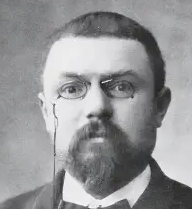
3 weeks ago
All laws are... deduced from experiment; but to enunciate them, a special language is needful... ordinary language is too poor...This... is one reason why the physicist can not do without mathematics; it furnishes him the only language he can speak. And a well-made language is no indifferent thing;...the analyst, who pursues a purely esthetic aim, helps create, just by that, a language more fit to satisfy the physicist....law springs from experiment, but not immediately. Experiment is individual, the law deduced from it is general; experiment is only approximate, the law is precise...In a word, to get the law from experiment, it is necessary to generalize... But how generalize? ...in this choice what shall guide us?It can only be analogy. ...What has taught us to know the true profound analogies, those the eyes do not see but reason divines?It is the mathematical spirit, which disdains matter to cling only to pure form.
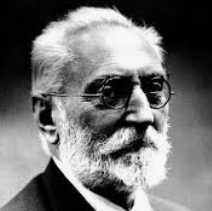
2 months 2 weeks ago
Only the feeble resign themselves to final death and substitute some other desire for the longing for personal immortality. In the strong the zeal for perpetuity overrides the doubt of realizing it, and their superabundance of life overflows upon the other side of death.
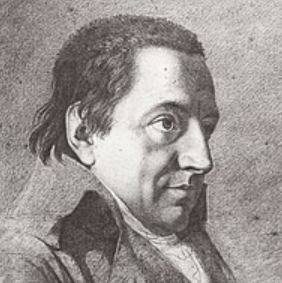
2 months 3 weeks ago
The Age of Empty Freedom ... does not know that man must first through labour, industry, and art, learn how to know; but it has a certain fixed standard for all conceptions, and an established Common Sense of Mankind always ready and at hand, innate within itself and there present without trouble on its part;-and those conceptions and this Common Sense are to it the measure of the efficient and the real. It has this great advantage over the Age of Science, that it knows all things without having learned anything; and can pass judgment upon whatever comes before it at once and without hesitation,-without needing any preliminary evidence:-'That which I do not immediately comprehend by the conceptions which dwell within me, is nothing,'-says Empty Freedom.
▼
Source
source
p. 20
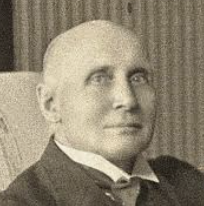
2 months 1 week ago
The term many presupposes the term one, and the term one presupposes the term many.
▼
Source
source
Pt. I, ch. 2, sec. 2.
3 months 1 week ago
Do not ask who started it.
▼
Source
source
Finish it A Dictionary of Thoughts (1908) by Tryon Edwards, p. 234
1 month 2 weeks ago
Hayek's theory of evolutionary rationality shows how traditions and customs (those surrounding sexual relations, for example) might be reasonable solutions to complex social problems, even when, and especially when, no clear rational grounds can be provided to the individual for obeying them. These customs have been selected by the ''invisible hand'' of social reproduction, and societies that reject them will soon enter the condition of ''maladaptation,'' which is the normal prelude to extinction.
▼
Source
source
Hayek and conservatism, in Edward Feser (ed.), The Cambridge Companion to Hayek
2 months 3 weeks ago
In their nomination to office they will not appoint to the exercise of authority as to a pitiful job, but as to a holy function.
▼
Source
source
Volume iii, p. 356
3 months 4 weeks ago
In immediate self-consciousness the simple ego is absolute object, which, however, is for us or in itself absolute mediation, and has as its essential moment substantial and solid independence. The dissolution of that simple unity is the result of the first experience; through this there is posited a pure self-consciousness, and a consciousness which is not purely for itself, but for another, i.e. as an existent consciousness, consciousness in the form and shape of thinghood. Both moments are essential, since, in the first instance, they are unlike and opposed, and their reflexion into unity has not yet come to light, they stand as two opposed forms or modes of consciousness. The one is independent whose essential nature is to be for itself, the other is dependent whose essence is life or existence for another. The former is the Master, or Lord, the latter is the Bondsman.
2 months 2 weeks ago
The primary meaning of the words "modern," "modernity," with which recent times have baptised themselves, brings out very sharply that feeling of "the height of time" which I am at present analysing. "Modern" is what is "in the fashion, "that is to say, the new fashion or modification which has arisen over against the old traditional fashions used in the past. The word "modern" then expresses a consciousness of a new life, superior to the old one, and at the same time an imperative call to be at the height of one's time. For the "modern" man, not to be "modern" means to fall below the historic level.
▼
Source
source
Chap. III: The Height Of The Times

4 months 1 day ago
All sentiment is right; because sentiment has a reference to nothing beyond itself, and is always real, wherever a man is conscious of it. But all determinations of the understanding are not right; because they have a reference to something beyond themselves, to wit, real matter of fact; and are not always conformable to that standard.
▼
Source
source
Part I, Essay 23: Of The Standard of Taste

3 months 3 weeks ago
Great geniuses have the shortest biographies.
▼
Source
source
Plato; or, The Philosopher
3 months 4 weeks ago
Every sensible man, every honorable man, must hold the Christian sect in horror.
▼
Source
source
Examen important de milord Bolingbroke (1736): Conclusion
8 months 2 days ago
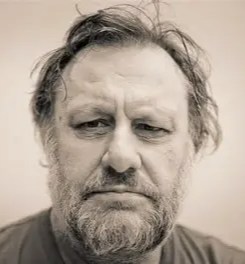
Ideology is not a dreamlike illusion that we build to escape insupportable; in its basic dimension, it is a fantasy-construction which serves as a support for our reality itself; an illusion which structures our effective, real social relations and thereby masks some insupportable, real, impossible kernel.
2 weeks 5 days ago
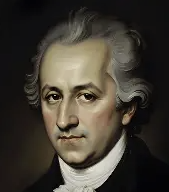
The true, prescriptive artist strives after artistic truth; the lawless artist, following blind instinct, after an appearance of naturalness. The one leads to the highest peaks of art, the other to its lowest depths.
▼
Source
source
Propylaea (1798) Introduction
3 months 3 weeks ago
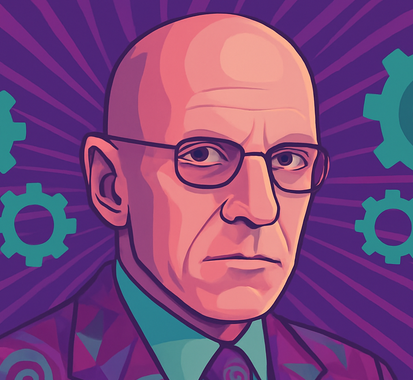
If our intention now is to reveal classical unreason on its own terms, outside of its ties with dreams and error, it must be understood not as a form of reason that is somehow diseased, lost or mad, but quite simply as reason dazzled.
▼
Source
source
Part Two: 2. The Transcendence of Delirium
4 months 5 days ago
The reproduction of mankind is a great marvel and mystery. Had God consulted me in the matter, I should have advised him to continue the generation of the species by fashioning them of clay, in the way Adam was fashioned.
▼
Source
source
752

3 months 3 weeks ago
He sees as well as you do that courage is not simply one of the virtues, but the form of every virtue at the testing point, which means, at the point of highest reality. A chastity or honesty, or mercy, which yields to danger will be chaste or honest or merciful only on conditions.
▼
Source
source
Letter XXIX

2 months 3 weeks ago
Except for music, everything is a lie, even solitude, even ecstasy. Music, in fact, is the one and the other, only better.
2 months 1 week ago
I believe in the possible realization of a world in which man can be much, even if he has little; a world in which the dominant motivation of existence is not consumption; a world in which "man" is the end, first and last; a world in which man can find the way of giving a purpose to his life as well as the strength to live free and without illusions.
3 months 4 weeks ago
It is only when we think abstractly that we have such a high opinion of man. Of men in the concrete, most of us think the vast majority very bad. Civilized states spend more than half their revenue on killing each other's citizens. Consider the long history of the activities inspired by moral fervour: human sacrifices, persecutions of heretics, witch-hunts, pogroms leading up to wholesale extermination by poison gases ... Are these abominations, and the ethical doctrines by which they are prompted, really evidence of an intelligent Creator? And can we really wish that the men who practised them should live for ever? The world in which we live can be understood as a result of muddle and accident; but if it is the outcome of a deliberate purpose, the purpose must have been that of a fiend. For my part, I find accident a less painful and more plausible hypothesis.
▼
Source
source
Essay Do We Survive Death?, 1936
1 month 3 weeks ago
Whatever you can lose, you should reckon of no account.
▼
Source
source
Maxim 191
2 months 3 weeks ago
The state of health is a state of nonsensation, even of nonreality. As soon as we cease to suffer, we cease to exist.
3 months 1 day ago
Good music is very close to primitive language.
▼
Source
source
"Correspondence of Ideas with the Motion of Organs"
2 weeks 4 days ago
We must now ask how changes of this sort can come about, considering first discoveries, or novelties of fact, and then inventions, or novelties of theory. That distinction between discovery and invention or between fact and theory will, however, immediately prove to be exceedingly artificial.
▼
Source
source
p. 52
2 months 1 week ago
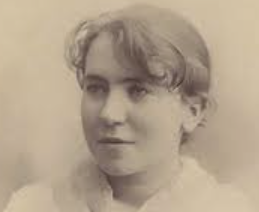
Anarchism is the only philosophy which brings to man the consciousness of himself; which maintains that God, the State, and society are non-existent, that their promises are null and void, since they can be fulfilled only through man's subordination.

3 months 1 week ago
Evil destroyeth itself.
2 months 3 weeks ago
Is it conceivable to adhere to a religion founded by someone else?
2 months 1 week ago
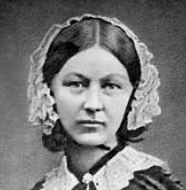
Newton's law is nothing but the statistics of gravitation, it has no power whatever. Let us get rid of the idea of power from law altogether. Call law tabulation of facts, expression of facts, or what you will; anything rather than suppose that it either explains or compels.
▼
Source
source
Suggestions for Thought : Selections and Commentaries (1994), edited by Michael D. Calabria and Janet A. MacRae, p. 41
2 months 3 weeks ago
I have distinctly announced the grounds upon which I regard the Apostle John as the only teacher of true Christianity:-namely, that the Apostle Paul and his party, as the authors of the opposite system of Christianity, remained half Jews, and left unaltered the fundamental error of Judaism as well as of Heathenism, which we must afterwards notice. For the present the following may be enough: -It is only with John that the philosopher can deal, for he alone has respect for Reason, and appeals to that evidence which alone has weight with the philosopher-the internal. "If any man will do the will of him that sent me, he shall know of the doctrine, whether it be of God." But this Will of God, accord ing to John, is, that we should truly believe in God, and in Jesus Christ whom he hath sent. The other promulgators of Christianity, however, rely upon the external evidence of Miracle, which, to us at least, proves nothing.
▼
Source
source
P. 96-97
2 months 3 weeks ago
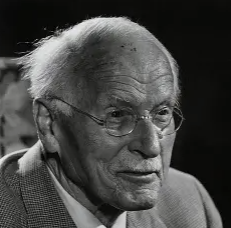
Metaphysical assertions, however, are statements of the psyche, and are therefore psychological. ... Whenever the Westerner hears the word "psychological," it always sounds to him like "only psychological."
▼
Source
source
Psyche and Symbol (1958), p. 285
3 months 4 weeks ago
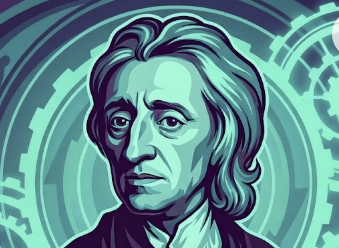
The reservedness and distance that fathers keep, often deprive their sons of that refuge which would be of more advantage to them than an hundred rebukes or chidings.
▼
Source
source
Sec. 96
2 months 3 weeks ago
When I happen to be busy, I never give a moment's thought to the "meaning" of anything, particularly of whatever it is I am doing. A proof that the secret of everything is in action and not abstention, that fatal cause of consciousness.
1 month ago
From each as they choose, to each as they are chosen.
▼
Source
source
Ch. 7 : Distributive Justice, Section I, Patterning, p. 160

2 months 2 weeks ago
And, being assembled together with them, commanded them that they should not depart from Jerusalem, but wait for the promise of the Father, which, saith he, ye have heard of me. For John truly baptized with water; but ye shall be baptized with the Holy Ghost not many days hence.
▼
Source
source
1:4-5 (KJV)

4 months 4 days ago
Wherever your life ends, it is all there. The utility of living consists not in the length of days, but in the use of time; a man may have lived long, and yet lived but a little. Make use of time while it is present with you. It depends upon your will, and not upon the number of days, to have a sufficient length of life. Is it possible you can imagine never to arrive at the place towards which you are continually going? and yet there is no journey but hath its end. And, if company will make it more pleasant or more easy to you, does not all the world go the self-same way?
CivilSimian.com created by AxiomaticPanic, CivilSimian, Kalokagathia