


2 months 1 week ago
Verily I say unto thee, That this night, before the cock crow, thou shalt deny me thrice.
▼
Source
source
26:34 (KJV) Said to Peter.

3 weeks 3 days ago
Terror is not now, if it ever was, something that comes to us from outside. It is a part of the society in which we live. Both liberals and neoconservatives believe terrorism can be dealt with by removing its causes. The truth is less reassuring. Al-Qaeda has mutated into a decentralised, often locally based type of apocalyptic terrorism and, in this new guise, seems to be acquiring a formidable momentum.
▼
Source
source
"Look out for the enemy within," The Observer

2 months 3 days ago
When we are the victims of illusion we do not feel it to be an illusion but a reality. It is the same perhaps with evil. Evil when we are in its power is not felt as evil but as a necessity, or even a duty.
▼
Source
source
p. 64

1 month 3 weeks ago
Much can be inferred about a man from his mistress: in her one beholds his weaknesses and his dreams.
▼
Source
source
F 88

1 month 2 weeks ago
Truth is ... one approach to the attainment of the good, but in and of itself, it is neither the good nor the beautiful ... Socrates, Pascal, and others regarded knowledge of the truth with regard to purposeless objects as incongruous with the good ... [by] exposing deception, truth destroys illusion, which is the principle attribute of beauty.
1 week 4 days ago
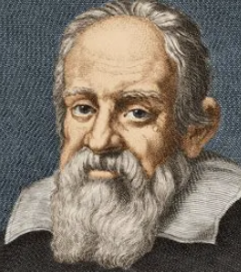
Nature ... is inexorable and immutable; she never transgresses the laws imposed upon her, or cares a whit whether her abstruse reasons and methods of operation are understandable to men. For that reason it appears that nothing physical which sense-experience sets before our eyes, or which necessary demonstrations prove to us, ought to be called in question (much less condemned) upon the testimony of biblical passages which may have some different meaning beneath their words. For the Bible is not chained in every expression to conditions as strict as those which govern all physical effects; nor is God any less excellently revealed in Nature's actions than in the sacred statements of the Bible.
1 month 1 day ago
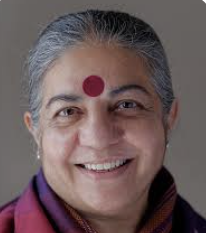
I've had letters from Chinese scientists at the peak of the SARS epidemic who said the problem is a hybridization between the viruses planted into GMO feed, which is then fed to animals, then the virus jumped from the animals to humans. We're going to see more and more of these kinds of risks. I think the whole issue of the H1N1 virus was the fact that it had genes for three influenza types--human, chicken, pig. All of these crossings are becoming possible because of the crossing of genes across species barriers.
▼
Source
source
On the SARS epidemic, as quoted in "A Visit to My Kitchen: Vandana Shiva", The Huffington Post

4 months 2 weeks ago
With all great deceivers there is a noteworthy occurrence to which they owe their power. In the actual act of deception... they are overcome by belief in themselves. It is this which then speaks so miraculously and compellingly to those who surround them.

2 months ago
There certainly is self division. The man who watches a woman undressing has the red eyes of an ape; yet the man who sees two young lovers, really alone for the first time, who brings out all the pathos, the tenderness and uncertainty when he tells about it, is no brute; he is very much human. And the ape and the man exist in one body; and when the ape's desires are about to be fulfilled, he disappears and is succeeded by the man, who is disgusted with the ape's appetite.
▼
Source
source
Chapter one, The Country of the Blind
3 months 2 weeks ago
The Philosophy of Nature takes up the material, prepared for it by physics out of experience, at the point to which physics has brought it, and again transforms it, without basing it ultimately on the authority of experience. Physics therefore must work into the hands of philosophy, so that the latter may translate into a true comprehension (Begriff) the abstract universal transmitted to it, showing how it issues from that comprehension as an intrinsically necessary whole.

2 days ago
We are weak, watery beings standing in the midst of unrealities; therefore let us turn our minds to the things that are everlasting.
2 days ago
Our luxuries have condemned us to weakness; we have ceased to be able to do that which we have long declined to do.

3 months 2 weeks ago
When equality is treated not as a medicine or a safety-gadget, but as an ideal, we begin to breed that stunted and envious sort of mind which hates all superiority. That mind is the special disease of democracy, as cruelty and servility are the special diseases of privileged societies. It will kill us all if it grows unchecked. The man who cannot conceive a joyful and loyal obedience on the one hand, nor an unembarrassed and noble acceptance of that obedience on the other - the man who has never even wanted to kneel or to bow - is a prosaic barbarian. But it would be wicked folly to restore these old inequalities on the legal or external plane. Their proper place is elsewhere.
3 months 2 weeks ago
Where danger shews it self, apprehension cannot, without stupidity, be wanting; where danger is, sense of danger should be; and so much fear as should keep us awake, and excite our attention, industry, and vigour; but not to disturb the calm use of our reason, nor hinder the execution of what that dictates.
▼
Source
source
Sec. 115

2 months 1 week ago
I don't need any support, advice, or compassion, because even if I am the most ruinous man, I still feel so powerful, so strong and fierce. For I am the only one that lives without hope.
2 months 2 weeks ago
The seat of the soul is where the inner world and the outer world meet. Where they overlap, it is in every point of the overlap.

3 months 2 weeks ago
In art the Chinese aim at being exquisite, and in life at being reasonable.
▼
Source
source
The Problem of China (1922), Ch. XI: Chinese and Western Civilization Contrasted
2 months 1 week ago
Maybe suffering has no more justification than life.
3 months 3 weeks ago
... a penny saved is better than a penny earned.
▼
Source
source
The Duty of a Husband and Wife (17 March 1539), No. 4408. LW 54:337
2 months 2 weeks ago
I have distinctly announced the grounds upon which I regard the Apostle John as the only teacher of true Christianity:-namely, that the Apostle Paul and his party, as the authors of the opposite system of Christianity, remained half Jews, and left unaltered the fundamental error of Judaism as well as of Heathenism, which we must afterwards notice. For the present the following may be enough: -It is only with John that the philosopher can deal, for he alone has respect for Reason, and appeals to that evidence which alone has weight with the philosopher-the internal. "If any man will do the will of him that sent me, he shall know of the doctrine, whether it be of God." But this Will of God, accord ing to John, is, that we should truly believe in God, and in Jesus Christ whom he hath sent. The other promulgators of Christianity, however, rely upon the external evidence of Miracle, which, to us at least, proves nothing.
▼
Source
source
P. 96-97

2 months 2 weeks ago
Through a wise and salutary neglect [of the colonies], a generous nature has been suffered to take her own way to perfection; when I reflect upon these effects, when I see how profitable they have been to us, I feel all the pride of power sink and all presumption in the wisdom of human contrivances melt and die away within me. My vigour relents. I pardon something to the spirit of liberty.
2 months 3 days ago
Fate and freedom alike play a part in history; and there are times, as in wars and revolutions, when fate is the stronger of the two. Freedom - the freedom of man and of nations - could never have been the origin of two world wars. These latter were brought about by fate, which exercises its power owing to the weakness and decline of freedom and of the creative spirit of man. Almost all contemporary political ideologies, with their characteristic tendency to state-idolatry, are likewise largely a product of two world wars, begotten as they are of the inexorability's of fate.
▼
Source
source
p. 32
4 months 3 days ago
On Ps 60:3: To Thee have I cried from the ends of the earth.

2 months 1 week ago
In proportion as a man's interests become humane and his efforts rational, he appropriates and expands a common life, which reappears in all individuals who reach the same impersonal level of ideas.
▼
Source
source
Ch. VIII: Ideal Society

3 months 2 weeks ago
When it is a question of money, everybody is of the same religion.
▼
Source
source
Letter to Mme. d'Épinal, Ferney (26 December 1760) from Oeuvres Complètes de Voltaire: Correspondance (Garnier frères, Paris, 1881), vol. IX, letter # 4390 (p. 124)

2 months 4 days ago
"God does not think, He creates; He does not exist, He is eternal," wrote Kierkegaard (Afslutende uvidenskabelige Efterskrift); but perhaps it is more exact to say with Mazzini, the mystic of the Italian city, that "God is great because his thought is action" (Ai giovani d'Italila), because with Him to think is to create, and He gives existence to that which exists in His thought by the mere fact of thinking it, and the impossible is unthinkable by God. It is not written in the Scriptures that God creates with His word - that is to say, with His thought - and that by this, by His Word, He made everything that exists? And what God has once made does He ever forget? May it not be that all the thoughts that have ever passed through the Supreme Consciousness still subsist therein? In Him, who is eternal, is not all existence eternalized?

3 months 2 weeks ago
Thus our duties to animals are indirectly duties to humanity.
▼
Source
source
Part II, p. 213
2 months 3 days ago
Stars and blossoming fruit-trees: utter permanence and extreme fragility give an equal sense of eternity.
▼
Source
source
p. 277

3 months 2 weeks ago
When we have weighed everything, and when our relations in life permit us to choose any given position, we may take that one which guarantees us the greatest dignity, which is based on ideas of whose truth we are completely convinced, which offers the largest field to work for mankind and approach the universal goal for which every position is only a means: perfection.
▼
Source
source
Writings of the Young Marx on Philosophy and Society, L. Easton, trans. (1967), p. 38
2 months 3 days ago
If a young girl is being forced into a brothel she will not talk about her rights. In such a situation the word would sound ludicrously inadequate.
▼
Source
source
p. 63
3 months 2 weeks ago
In order to abolish the idea of private property, the idea of communism is completely sufficient. It takes actual communist action to abolish actual private property. History will com to it; and this movement, which in theory we already know to be a self-transcending movement, will constitute in actual fact a very severe and protracted process. But we must regard it as a real advance to have gained beforehand a consciousness of the limited character a well as of the goal of this historical movement - and a consciousness which reaches out beyond it.
▼
Source
source
p. 99, The Marx-Engels Reader
2 months 2 weeks ago
I posit myself as rational, that is, as free. In doing so I have the representation of freedom. In the same undivided act I posit other free beings. Hence, I describe through my power of imagination a sphere of freedom, which these many separate beings divide amongst themselves. I do not ascribe to myself all the freedom which I have posited, because I must also posit other free beings, and must ascribe part of it to them. Thus, in appropriating freedom to myself, I at the same time restrict myself, by leaving freedom to others.
▼
Source
source
P. 7-8
1 month 1 week ago
The book of the world, so richly studied by autodidacts, is being closed by the "learned," who are raising walls of opinions to shut the world out.
▼
Source
source
p. 15
2 months 1 week ago
The young man who has not wept is a savage, and the old man who will not laugh is a fool.
▼
Source
source
Ch. 3, P. 57
2 months 1 week ago
If we ignore the prior work of attention and notice only the emptiness of the moment of choice we are likely to identify freedom with the outward movement since there is nothing else to identify it with. But if we consider what the work of attention is like, how continuously it goes on, and how imperceptibly it builds up structures of value round about us, we shall not be surprised that at crucial moments of choice most of the business of choosing is already over.
▼
Source
source
The Sovereignty of Good (1970) p. 36.
2 months 1 week ago
When the whole is at stake, there is no crime except that of rejecting the whole, or not defending it. ... Those who identify themselves with the whole, who are installed as the leaders and defenders of the whole can make mistakes, but they cannot do wrong-they are not guilty. They may become guilty again when this identification no longer holds, when they are gone.
▼
Source
source
pp. 82-83
4 months 3 days ago
A man might say, "The things that are in the world are what God has made. ... Why should I not love what God has made?" ...Suppose, my brethren, a man should make for his betrothed a ring, and she should prefer the ring given her to the betrothed who made it for her, would not her heart be convicted of infidelity? ... God has given you all these things: therefore, love him who made them.
▼
Source
source
Second Homily, as translated by John Burnaby (1955), pp. 275-276
3 months 2 weeks ago
Money is always to be found when men are to be sent to the frontiers to be destroyed: when the object is to preserve them, it is no longer so.
▼
Source
source
"Charity", 1770
3 weeks 3 days ago
Humans kill one another - and in some cases themselves - for many reasons, but none is more human than the attempt to make sense of their lives. More than the loss of life, they fear loss of meaning.
▼
Source
source
In the Puppet Theatre: Roof Gardens, Feathers and Human Sacrifice (p. 87)
4 months 1 week ago
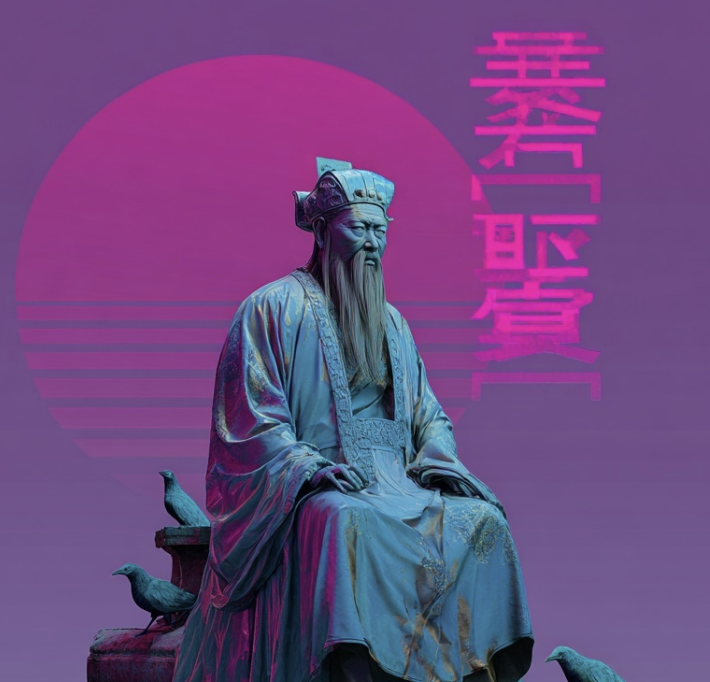
Reviewing what you have learned and learning anew, you are fit to be a teacher.
2 months 1 week ago
Saints live in flames; wise men, next to them.
3 months 2 weeks ago
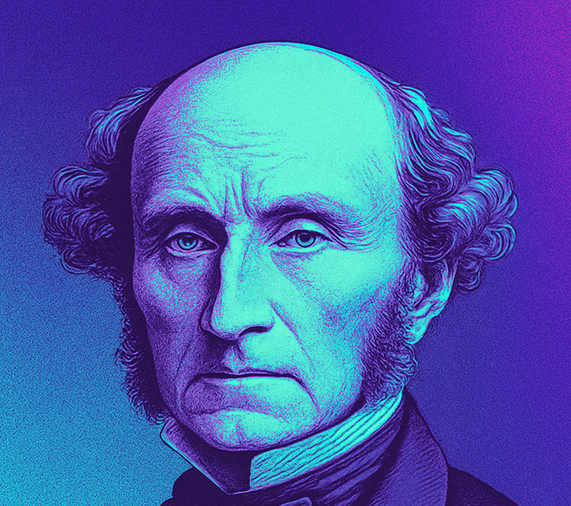
My father was as well aware as anyone that Christians do not, in general, undergo the demoralizing consequences which seem inherent in such a creed, in the manner or to the extent which might have been expected from it. The same slovenliness of thought, and subjection of the reason to fears, wishes, and affections, which enable them to accept a theory involving a contradiction in terms, prevents them from perceiving the logical consequences of the theory. Such is the facility with which mankind believe at one and the same time things inconsistent with one another, and so few are those who draw from what they receive as truths, any consequences but those recommended to them by their feelings, that multitudes have held the undoubting belief in an Omnipotent Author of Hell, and have nevertheless identified that being with the best conception they were able to form of perfect goodness.
▼
Source
source
(pp. 41-42)
3 months 2 weeks ago
It is sad that often, to be a good patriot, one must be the enemy of the rest of mankind.
▼
Source
source
"Country"
3 months 2 weeks ago
A truer image of the world, I think, is obtained by picturing things as entering into the stream of time from an eternal world outside, than from a view which regards time as the devouring tyrant of all that is.
▼
Source
source
Ch. 1: Mysticism and Logic

1 month 2 weeks ago
The electronic age is a world in which causes and effects become almost interchangeable, as in music structures.
▼
Source
source
(p. 99)
2 months 1 week ago
Logical empiricism holds the view, notwithstanding some its assertions, that the forms of knowledge and consequently the relations of man to nature and to other men never change. According to rationalism, too, all subjective and objective potentialities are rooted in insights which the individual already possesses, but rationality uses existing objects as well as the active inner striving and ideas of man to construct standards for the future. In this regard, it is not so closely associated with the present order as is empiricism.
▼
Source
source
p. 148.

1 week 1 day ago
It depends on what we read, after all manner of Professors have done their best for us.
1 week 4 days ago
I esteem myself happy to have as great an ally as you in my search for truth. I will read your work ... all the more willingly because I have for many years been a partisan of the Copernican view because it reveals to me the causes of many natural phenomena that are entirely incomprehensible in the light of the generally accepted hypothesis. To refute the latter I have collected many proofs, but I do not publish them, because I am deterred by the fate of our teacher Copernicus who, although he had won immortal fame with a few, was ridiculed and condemned by countless people (for very great is the number of the stupid).
▼
Source
source
Letter to Johannes Kepler (1596), as quoted in The Story of Civilization : The Age of Reason Begins, 1558-1648 (1935) by Will Durant, p. 603

3 months 2 weeks ago
He who gives himself entirely to his fellow-men appears to them useless and selfish; but he who gives himself partially to them is pronounced a benefactor and philanthropist.
CivilSimian.com created by AxiomaticPanic, CivilSimian, Kalokagathia