

1 week 3 days ago
The concept of original sin gives us a penetrating insight into human destiny.
▼
Source
source
On the Dilemmas of the Christian Legacy
2 months 1 week ago
There is another significant involution of time and movement in space. It is constituted not only by directional tendencies-up and down for example-but by mutual approaches and retreatings. Near and far, close and distant, are qualities of pregnant, often tragic, import-that is, as they are experienced, not just stated by measurement of science. They signify loosening and tightening, expanding and contracting, separating and compacting, soaring and drooping, rising and falling; the dispersive, scattering, and the hovering and brooding, unsubstantial lightness and massive blow. Such actions and reaction are the very stuff out if which the objects and events we experience are made.
▼
Source
source
p. 215

2 months 1 week ago
To conceive a thought - just one, but one that would tear the universe to pieces.
4 months 2 days ago
Yet God hath not only granted these faculties, by which we may bear every event without being depressed or broken by it, but like a good prince and a true father, hath placed their exercise above restraint, compulsion, or hindrance, and wholly within our own control.
▼
Source
source
Book I, ch. 6, 40.
2 months 1 week ago
There are in our minds in solution a vast number of emotional attitudes, feelings ready to be re-excited when the proper stimulus arrives, and more than anything else it is these forms, this residue of experience, which, fuller and richer than in the mind if the ordinary man, constitute the artist's capital. What is called the magic of the artist resides in his ability to transfer these values from one field of experience to another, to attach them to objects of our common life, and by his imaginative insight make these objects poignant and momentous. Not colors, not sense qualities as such, are either matter or form, but these qualities as thoroughly imbued, impregnated, with transferred value. And then they are either matter or form according to the direction of our interest.
▼
Source
source
p. 123
2 months 1 week ago
What I know wreaks havoc upon what I want.

4 months 2 weeks ago
It says nothing against the ripeness of a spirit that it has a few worms.

3 months 2 weeks ago
The New Testament is an invaluable book, though I confess to having been slightly prejudiced against it in my very early days by the church and the Sabbath school, so that it seemed, before I read it, to be the yellowest book in the catalogue. Yet I early escaped from their meshes. It was hard to get the commentaries out of one's head and taste its true flavor. - I think that Pilgrim's Progress is the best sermon which has been preached from this text; almost all other sermons that I have heard, or heard of, have been but poor imitations of this. - It would be a poor story to be prejudiced against the Life of Christ because the book has been edited by Christians.
3 months 2 weeks ago
I freely admit that the remembrance of David Hume was the very thing that many years ago first interrupted my dogmatic slumber and gave a completely different direction to my researches in the field of speculative philosophy.

3 months 2 weeks ago
Every book is a quotation; and every house is a quotation out of all forests and mines and stone-quarries; and every man is a quotation from all his ancestors.
▼
Source
source
Quotation and Originality

2 days ago
Remember, however, before all else, to strip things of all that disturbs and confuses, and to see what each is at bottom; you will then comprehend that they contain nothing fearful except the actual fear.
▼
Source
source
Line 12
1 month 2 weeks ago
We are not yet speaking about equality if we have not yet spoken about equal grievability, or the equal attribution of grievability. Grievability is a defining feature of equality. Those whose grievability is not assumed are those who suffer inequality-unequal value.
▼
Source
source
p. 108

3 weeks 5 days ago
Given our anthropocentric bias, thinking of non-human vertebrates not just as equivalent in moral status to toddlers or infants, but as though they were toddlers or infants, is a useful exercise. Such reconceptualisation helps correct our lack of empathy for sentient beings whose physical appearance is different from "us". Ethically, the practice of intelligent "anthropomorphism" shouldn't be shunned as unscientific, but embraced insofar as it augments our stunted capacity for empathy. Such anthropomorphism can be a valuable corrective to our cognitive and moral limitations. This is not a plea to be sentimental, simply for impartial benevolence.
▼
Source
source
Reprogramming Predators, BLTC Research, 2009
1 month 3 weeks ago
Until the seventeenth century there was no concept of evidence with which to pose the problem of induction!
▼
Source
source
Chapter 4, Evidence, p. 31.
4 months 1 week ago
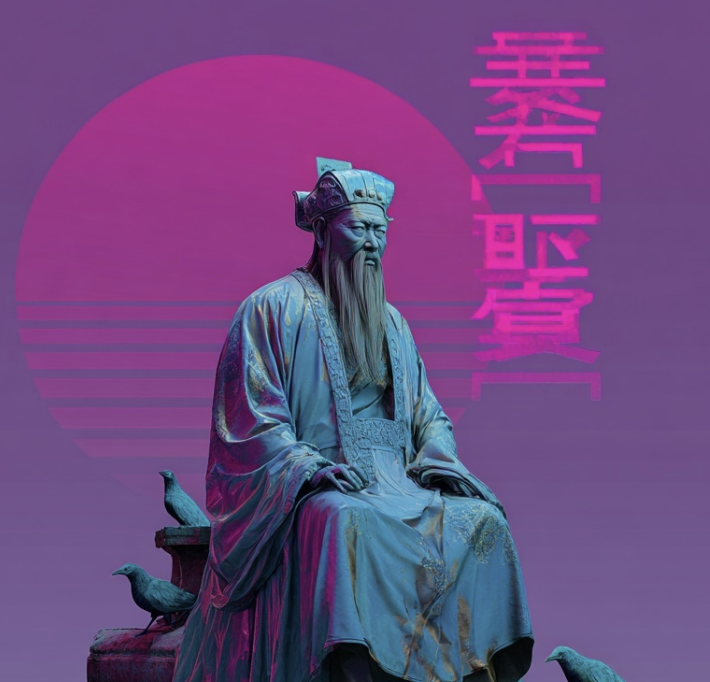
The Master said, "He who exercises government by means of his virtue may be compared to the north polar star, which keeps its place and all the stars turn towards it."

3 months 1 week ago
The guillotine takes life almost without touching the body, just as prison deprives of liberty or a fine reduces wealth. It is intended to apply the law not so to a real body capable of feeling pain as to a juridical subject, the possessor, among other rights, of the right to exist it had to have the abstraction of the law itself.
▼
Source
source
pp. 13, Chapter One The Body of the Condemned

3 months 2 weeks ago
It is never to be expected in a revolution that every man is to change his opinion at the same moment. There never yet was any truth or any principle so irresistibly obvious that all men believed it at once. Time and reason must cooperate with each other to the final establishment of any principle; and therefore those who may happen to be first convinced have not a right to persecute others, on whom conviction operates more slowly. The moral principle of revolutions is to instruct, not to destroy.

1 month 2 weeks ago
The unhappiness of our life; patch up our false way of life as we will, propping it up by the aid of the sciences and arts - that life becomes feebler, sicklier, and more tormenting every year; every year the number of suicides and the avoidance of motherhood increases; every year the people of that class become feebler; every year we feel the increasing gloom of our lives. Evidently salvation is not to be found by increasing the comforts and pleasures of life, medical treatments, artificial teeth and hair, breathing exercises, massage, and so forth;...It is impossible to remedy this by any amusements, comforts, or powders - it can only be remedied by a change of life.

3 months 1 week ago
The truth can be spoken only by someone who is already at home in it; not by someone who still lives in untruthfulness, and does no more than reach out towards it from within untruthfulness.
▼
Source
source
p. 41e
3 months 1 day ago
Soul, indeed, is a certain medium between an impartible essence, and an essence which is divisible about bodies. But intellect is an impartible essence alone. And qualities and material forms are divisible about bodies. Not everything which acts on another, effects that which it does effect by approximation and contact; but those natures which effect any thing by approximation and contact, use approximation accidentally.
2 months 1 week ago
To reckon on anything at all, here or elsewhere, is to afford proofs that we are still burdened with chains. The reprobate aspires to paradise; this aspiration disparages, compromises him. To be free is to rid yourself forever of the notion of reward, it is to expect nothing of men or gods, it is to renounce not only this world and all worlds but salvation itself-it is to destroy even the notion of it, that chain among chains.
3 months 1 week ago
The aspects of things that are most important for us are hidden because of their simplicity and familiarity. (One is unable to notice something - because it is always before one's eyes.) The real foundations of his enquiry do not strike a man at all. Unless that fact has at some time struck him. - And this means: we fail to be struck by what, once seen, is most striking and most powerful.
▼
Source
source
§ 129

2 months 3 weeks ago
That there is no such thing as what philosophers call material substance, I am seriously persuaded: but if I were made to see any thing absurd or skeptical in this, I should then have the same reason to renounce this, that I imagine I have now to reject the contrary opinion.
▼
Source
source
Philonous to Hylas

3 months 2 weeks ago
According to Christian teachers, the essential vice, the utmost evil, is Pride. Unchastity, anger, greed, drunkenness, and all that, are mere fleabites in comparison: it was through Pride that the devil became the devil: Pride leads to every other vice: it is the complete anti-God state of mind.
▼
Source
source
Book III, Chapter 8, "The Great Sin"
3 months 2 weeks ago
I don't deserve a share in governing a hen-roost, much less a nation. Nor do most people - all the people who believe advertisements, and think in catchwords and spread rumors. The real reason for democracy is just the reverse. Mankind is so fallen that no man can be trusted with unchecked power over his fellows. Aristotle said that some people were only fit to be slaves. I do not contradict him. But I reject slavery because I see no men fit to be masters.
1 month 3 weeks ago
Philosophers today are as fond as ever of apriori arguments with ethical conclusions. One reason such arguments are always unsatisfying is that they always prove too much; when a philosopher 'solves' an ethical problem for one, one feels as if one had asked for a subway token and been given a passenger ticket valid for the first interplanetary passenger-carrying space ship instead.
▼
Source
source
How Not to Solve Ethical Problems

2 months 4 days ago
For what is specific in the Catholic religion is immortalization and not justification, in the Protestant sense. Rather is this latter ethical. It is from Kant, in spite of what orthodox Protestants may think of him, that Protestantism derived its penultimate conclusions - namely, that religion rests upon morality, and not morality upon religion, as in Catholicism.

1 week 1 day ago
In the learned professions as in the unlearned, and in human things throughout, in every place and in every time, the true function of intellect is not that of talking, but of understanding and discerning with a view to performing!

4 months 1 week ago
A prudent man, in order to secure his tranquility, will consult his natural disposition in the choice of his plan of life. If, for example, he be persuaded that he should be happier in a state of marriage than in celibacy, he ought to marry; but if he be convinced that matrimony would be an impediment to his happiness, he ought to remain single.

3 months 2 weeks ago
The criminal law has, from the point of view of thwarted virtue, the merit of allowing an outlet for those impulses of aggression which cowardice, disguised as morality, restrains in their more spontaneous forms. War has the same merit. You must not kill you neighbor, whom perhaps you genuinely hate, but by a little propaganda this hate can be transferred to some foreign nation, against whom all your murderous impulses become patriotic heroism.
▼
Source
source
Part III: Man and Himself, Ch. 17: Fear, p. 175

2 months 2 weeks ago
France had for some time been guilty of a continued series of hostile acts against this country, both external and internal: first, she directed her pursuits to universal empire, under the name of fraternity, in order to overturn the fabric of our laws and government.
▼
Source
source
Speech in the House of Commons (12 February 1793)

2 months 2 weeks ago
Neither a person nor a nation can exist without some higher idea. And there is only one higher idea on earth, and it is the idea of the immortality of the human soul, for all other "higher" ideas of life by which humans might live derive from that idea alone.
▼
Source
source
A Writer's Diary, Vol. 1: 1873-1876, ed. Kenneth Lantz (1994), p. 734

3 months 2 weeks ago
The process is so complicated that it offers ever so many occasions for running abnormally.
▼
Source
source
Vol. II, Ch. XXI, p. 500.
3 months 5 days ago
Lamachus chid a captain for a fault; and when he had said he would do so no more, "Sir," said he, "in war there is no room for a second miscarriage." Said one to Iphicrates, "What are ye afraid of?" "Of all speeches," said he, "none is so dishonourable for a general as 'I should not have thought of it.'"
▼
Source
source
52 Iphicrates

3 months 3 weeks ago
A Christian has no need of any law in order to be saved, since through faith we are free from every law. Thus all the acts of a Christian are done spontaneously, out of a sense of pure liberty. As Christians we do not seek our own advantage or salvation because we are already fully satisfied and saved by God's grace through faith. Now our only motive is to do that which is pleasing to God.
▼
Source
source
pp. 75-76

1 week 6 days ago
We share bodies with two eyes, ten fingers, ten toes; we share life on this earth; we share capitalist regimes of production and exploitation; we share common dreams of a better future.
▼
Source
source
128

2 months 1 week ago
Wherefore by their fruits ye shall know them.
▼
Source
source
Matthew 7:20 (KJV)
1 week 1 day ago
And some others that I have seen, were perhaps among the first. There is no third rising. Time sweeps all away with it so fast at this epoch. The Scottish Church has been short-lived, and was late in reaching thither.
3 months 2 weeks ago
Every step of real movement is more important than a dozen programmes.
▼
Source
source
Letter to W. Bracke, 5 May 1875
3 months 1 week ago
If evolution is a struggle for survival, why hasn't it ruthlessly eliminated altruists, who seem to increase another's prospects of survival at the cost of their own?
▼
Source
source
Chapter 1, The Origins Of Altruism, p. 5
3 months 2 weeks ago
Noise is the most impertinent of all forms of interruption. It is not only an interruption, but also a disruption of thought.
▼
Source
source
"On Noise"

2 months 1 week ago
From these two immediate perceptions, we gain a mediate, or inferential perception of the relation of all four instants. This mediate perception is objectively, or as to the object being represented, spread over the four instants; but subjectively, or as itself the subject of duration, it is completely embraced in the second moment. (The reader will observe that I use the word instant to mean a point in time, and moment to mean an infinitesimal duration.
4 months 1 week ago
What the great learning teaches, is to illustrate illustrious virtue; to renovate the people; and to rest in the highest excellence. The point where to rest being known, the object of pursuit is then determined; and, that being determined, a calm unperturbedness may be attained to. To that calmness there will succeed a tranquil repose. In that repose there may be careful deliberation, and that deliberation will be followed by the attainment of the desired end.
2 months 1 week ago
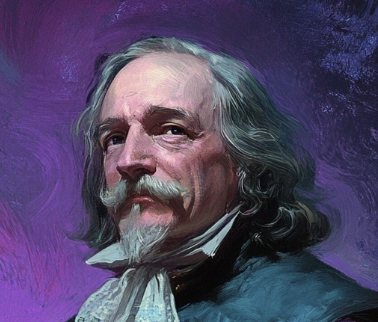
The same, without such opinion, DESPAIRE.
▼
Source
source
The First Part, Chapter 6, p. 25
2 months 2 weeks ago
Should it be proved that woman is naturally weaker than man, from whence does it follow that it is natural for her to labour to become still weaker than nature intended her to be? Arguments of this cast are an insult to common sense, and savour of passion. The divine right of husbands, like the divine right of kings, may, it is to be hoped, in this enlightened age, be contested without danger, and though conviction may not silence many boisterous disputants, yet, when any prevailing prejudice is attacked, the wise will consider, and leave the narrow-minded to rail with thoughtless vehemence at innovation.
▼
Source
source
Ch. 3

3 weeks 3 days ago
Knowledge grows, but human beings remain much the same.Belief in progress is a relic of the Christian view of history as a universal narrative, and an intellectually rigorous atheism would start by questioning it.
2 months 1 day ago
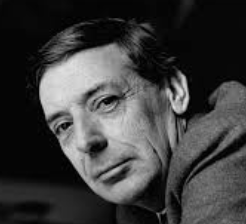
If the passion for truthfulness is merely controlled and stilled without being satisfied, it will kill the activities it is supposed to support. This may be one of the reasons why, at the present time, the study of the humanities runs a risk of sliding from professional seriousness, through professionalization, to a finally disenchanted careerism.
▼
Source
source
p. 3
3 months 1 week ago
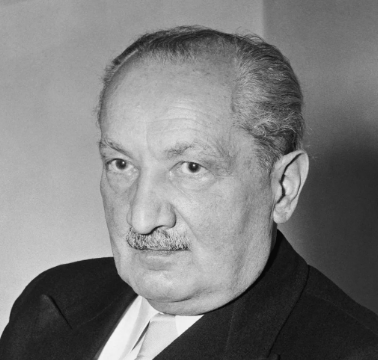
The particularity (Jeweiligkeit) of the places and their manifoldness are grounded in space, and the particularity of the time points is grounded in time. That basic characteristic of the thing, that essential determination of the thingness of the thing to be this one (je dieses), is grounded in the essence of space and time. Our question "What is a thing?" includes, therefore, the questions "What is space?" and "What is time?" It is customary The particularity (Jeweiligkeit) os the places.
▼
Source
source
p. 16
1 week 1 day ago
Every pitifulest whipster that walks within a skin has had his head filled with the notion that he is, shall be, or by all human and divine laws ought to be, 'happy.' His wishes, the pitifulest whipster's, are to be fulfilled for him; his days, the pitifulest whipster's, are to flow on in an ever-gentle current of enjoyment, impossible even for the gods. The prophets preach to us, Thou shalt be happy; thou shalt love pleasant things, and find them. The people clamor, Why have we not found pleasant things? ...God's Laws are become a Greatest Happiness Principle. There is no religion; there is no God; man has lost his soul.
▼
Source
source
Bk. III, ch. 4.
2 months 2 weeks ago
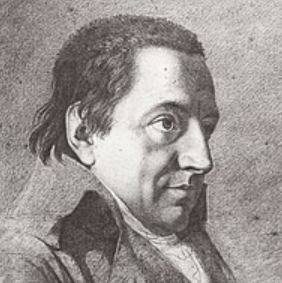
Upon the progress of knowledge the whole progress of the human race is immediately dependent: he who retards that, hinders this also. And he who hinders this, -what character does he assume towards his age and posterity? Louder than with a thousand voices, by his actions he proclaims into the deafened ear of the world present and to come -"As long as I live at least, the men around me shall not become wiser or better; - for in their progress I too, notwithstanding all my efforts to the contrary, should be dragged forward in some direction; and this I detest I will not become more enlightened, - I will not become nobler. Darkness and perversion are my elements, and I will summon all my powers together that I may not be dislodged from them."
▼
Source
source
Αs translated by William Smith, in The Popular Works of Johann Gottlieb Fichte (1889), Vol. I, Lecture IV, p. 188.
CivilSimian.com created by AxiomaticPanic, CivilSimian, Kalokagathia