

3 months 4 weeks ago
People almost invariably arrive at their beliefs not on the basis of proof but on the basis of what they find attractive.
▼
Source
source
De l'Art de persuader ["On the Art of Persuasion"], written 1658; published posthumously.

1 day ago
You have demanded of me, Novatus, that I should write how anger may be soothed, and it appears to me that you are right in feeling especial fear of this passion, which is above all others hideous and wild: for the others have some alloy of peace and quiet, but this consists wholly in action and the impulse of grief, raging with an utterly inhuman lust for arms, blood and tortures, careless of itself provided it hurts another, rushing upon the very point of the sword, and greedy for revenge even when it drags the avenger to ruin with itself.

1 week 4 days ago
There is a left wing version of this longing for community... because in a liberal society we never move as quickly as we should towards full equality, and therefore there are many marginalized groups who feel that the liberal society is... hypocritical, that it's promising an equality of recognition, and of rights, but it is not delivering... and therefore the very concept of liberal universalism is challenged in favor of a definition of rights that is tied to the specific groups.
▼
Source
source
18:44
3 months 1 week ago
Everyday we act in ways that reflect our ethical judgements.
▼
Source
source
Chapter 3, From Evolution To Ethics?, p. 69

1 month 2 weeks ago
Until writing was invented, man lived in acoustic space: boundless, directionless, horizonless, in the dark of the mind, in the world of emotion, by primordial intuition, terror. Speech is a social chart of this bog.
▼
Source
source
(p. 48)

3 months 2 weeks ago
I like mathematics because it is not human and has nothing particular to do with this planet or with the whole accidental universe - because, like Spinoza's God, it won't love us in return.
▼
Source
source
Letter to Lady Ottoline Morrell, March, 1912, as quoted in Gaither's Dictionary of Scientific Quotations (2012), p. 1318

3 months 2 weeks ago
Is anything more certain than that in all those vast times and spaces, if I were allowed to search them, I should nowhere find her face, her voice, her touch? She died. She is dead. Is the word so difficult to learn?

4 months 2 weeks ago
Whoever has overthrown an existing law of custom has hitherto always first been accounted a bad man: but when, as did happen, the law could not afterwards be reinstated and this fact was accepted, the predicate gradually changed: - history treats almost exclusively of these bad men who subsequently became good men!
2 months 2 weeks ago
What is all that men have done and thought over thousands of years, compared with one moment of love. But in all Nature, too, it is what is nearest to perfection, what is most divinely beautiful! There all stairs lead from the threshold of life. From there we come, to there we go.
2 months 1 week ago
Ideas are refined and multiplied in the commerce of minds. In their splendor, images effect a very simple communion of souls.
▼
Source
source
Introduction, sect. 4

2 months 1 week ago
The society which projects and undertakes the technological transformation of nature alters the base of domination by gradually replacing personal dependence (of the slave on the master, the serf on the lord of the manor, the lord on the donor of the fief, etc.) with dependence on the "objective order of things" (on economic laws, the market etc.).
▼
Source
source
p. 144

3 months 2 weeks ago
If, while hurrying ostensibly to the temple of truth, we hand the reins over to our personal interests which look aside at very different guiding stars, for instance at the tastes and foibles of our contemporaries, at the established religion, but in particular at the hints and suggestions of those at the head of affairs, then how shall we ever reach the high, precipitous, bare rock whereon stands the temple of truth?
▼
Source
source
E. Payne, trans. (1974) Vol. 1, pp. 22-23
1 day ago
The object of preaching is, constantly to remind mankind of what mankind are constantly forgetting; not to supply the defects of human intelligence, but to fortify the feebleness of human resolutions.
▼
Source
source
"The Judge That Smites Contrary to the Law: A Sermon Preached...March 28, 1824", in The Works of the Rev. Sydney Smith (1860) p. 428
3 months 2 weeks ago
Try to exclude the possibility of suffering which the order of nature and the existence of free-wills involve, and you find that you have excluded life itself.
3 months 2 weeks ago
New truth is often uncomfortable, especially to the holders of power; nevertheless, amid the long record of cruelty and bigotry, it is the most important achievement of our intelligent but wayward species.
▼
Source
source
Religion and Science (1935), Ch. X: Conclusion

3 months 2 weeks ago
To expect, indeed, that the freedom of trade should ever be entirely restored in Great Britain, is as absurd as to expect that an Oceana or Utopia should never be established in it.
▼
Source
source
Chapter II, p. 505.
1 day ago
You need a change of soul rather than a change of climate.

3 months 2 weeks ago
Genet is a man-failure: he wills the impossible in order to derive from the tragic grandeur of this defeat the assurance that there is something other than the possible.
▼
Source
source
p. 213

3 months 2 weeks ago
Because machines could be made progressively more and more efficient, Western man came to believe that men and societies would automatically register a corresponding moral and spiritual improvement. Attention and allegiance came to be paid, not to Eternity, but to the Utopian future. External circumstances came to be regarded as more important than states of mind about external circumstances, and the end of human life was held to be action, with contemplation as a means to that end. These false and historically, aberrant and heretical doctrines are now systematically taught in our schools and repeated, day in, day out, by those anonymous writers of advertising copy who, more than any other teachers, provide European and American adults with their current philosophy of life. And so effective has been the propaganda that even professing Christians accept the heresy unquestioningly and are quite unconscious of its complete incompatibility with their own or anybody else's religion.

2 months 3 weeks ago
I am obliged to confess that I do not regard the abolition of slavery as a means of warding off the struggle of the two races in the Southern states. The Negroes may long remain slaves without complaining; but if they are once raised to the level of freemen, they will soon revolt at being deprived of almost all their civil rights; and as they cannot become the equals of the whites, they will speedily show themselves as enemies.
▼
Source
source
Chapter XVIII.

3 months 2 weeks ago
Even serious students are misled by the myth of the subject.
1 month 5 days ago
The ambassador of Russia and the grandees who accompanied him were so gorgeous that all London crowded to stare at them, and so filthy that nobody dared to touch them. They came to the court balls dropping pearls and vermin.
▼
Source
source
Vol. V, ch. 23
1 day ago
Preaching has become a byword for long and dull conversation of any kind; and whoever wishes to imply, in any piece of writing, the absence of everything agreeable and inviting, calls it a sermon.
▼
Source
source
Vol. I, ch. 3, p. 81
3 weeks 4 days ago
It is hard to imagine an experience more horrific than being eaten alive. Most of us would prefer not to imagine what it must feel like. Note that the photographer here had to persuade the park ranger to violate the park rules and put the baby elephant out of his misery.By analogy, suppose it were lawful to visit Third World countries for photoshoots but illegal to "interfere" and help a stricken human baby. Is there a fundamental difference between "ethical" intervention to help humans and "sentimental" pleas to "interfere" and help non-humans? Should we encourage the preservation of life-forms such as the hyena in their current guise? Or do the value judgements underlying the "science" of conservation biology need to be re-examined?
▼
Source
source
"Hyenas Eat Baby Elephant Alive: The Case for Intervention"
3 months 2 weeks ago
A man must be perfectly crazy who, where there is tolerable security, does not employ all the stock which he commands…
▼
Source
source
Chapter I, p. 313 (see opportunity cost).
3 months 2 weeks ago
I wanted certainty in the kind of way in which people want religious faith. I thought that certainty is more likely to be found in mathematics than elsewhere. But I discovered that many mathematical demonstrations, which my teachers expected me to accept, were full of fallacies, and that, if certainty were indeed discoverable in mathematics, it would be in a new field of mathematics, with more solid foundations than those that had hitherto been thought secure. But as the work proceeded, I was continually reminded of the fable about the elephant and the tortoise. having constructed an elephant upon which the mathematical world could rest, I found the elephant tottering, and proceeded to construct a tortoise to keep the elephant from falling. But the tortoise was no more secure than the elephant, and after some twenty years of very arduous toil, I came to the conclusion that there was nothing more that I could do in the way of making mathematical knowledge indubitable.
▼
Source
source
p. 53

3 months 2 weeks ago
Solvency is maintained by means of the national debt, on the principle, "If you will not lend me the money, how can I pay you?"
▼
Source
source
Ability
1 month 3 weeks ago
One has to do something new in order to see something new.
▼
Source
source
J 1770
1 month 3 weeks ago
We do not think good metaphors are anything very important, but I think that a good metaphor is something even the police should keep an eye on...
▼
Source
source
E 91 Variant translation: A good metaphor is something even the police should keep an eye on.
3 months 2 weeks ago
There is always a certain meanness in the argument of conservatism, joined with a certain superiority in its fact.
3 months 3 weeks ago
Fear of evil is greater than the evil itself.
▼
Source
source
Act III, scene xi
1 month 1 week ago
It is hard to believe that this simple truth is not understood by those leaders who forbid their followers to use effective contraceptive methods. They express a preference for 'natural' methods of population limitation, and a natural method is exactly what they are going to get. It is called starvation.
▼
Source
source
Ch. 7. Family planning
2 months 1 week ago
Oblivious of Democritus, the unwilling materialists of our day have generally been awkwardly intellectual and quite incapable of laughter. If they have felt anything, they have felt melancholy. Their allegiance and affection were still fixed on those mythical sentimental worlds which they saw to be illusory. The mechanical world they believed in could not please them, in spite of its extent and fertility. Giving rhetorical vent to their spleen and prejudice, they exaggerated nature's meagreness and mathematical dryness. When their imagination was chilled they spoke of nature, most unwarrantably, as dead, and when their judgment was heated they took the next step and called it unreal.
▼
Source
source
Ch. 3 "Mechanism"
2 months 2 weeks ago
Every stage of education begins with childhood. That is why the most educated person on earth so much resembles a child.
▼
Source
source
"Miscellaneous Observations," Philosophical Writings, M. Stolijar, trans. (Albany: 1997) #48

3 months 1 week ago
I shall develop the thesis that anyone acting communicatively must, in performing any speech act, raise universal validity claims and suppose that they can be vindicated.
▼
Source
source
p. 22

3 months 2 weeks ago
The reasons for legal intervention in favour of children, apply not less strongly to the case of those unfortunate slaves and victims of the most brutal part of mankind, the lower animals.
▼
Source
source
Book V, Chapter 11, Section 9

3 months 2 weeks ago
The ordinary surroundings of life which are esteemed by men (as their actions testify) to be the highest good, may be classed under the three heads - Riches, Fame, and the Pleasures of Sense: with these three the mind is so absorbed that it has little power to reflect on any different good. I, 3 Variant translation: The things which ... are esteemed as the greatest good of all ... can be reduced to these three headings, to wit : Riches, Fame, and Pleasure. With these three the mind is so engrossed that it cannot scarcely think of any other good.



3 months 6 days ago
We are but numbers, born to consume resources.
▼
Source
source
Book I, epistle ii, line 27

3 months 2 weeks ago
Under no pretext should arms and ammunition be surrendered; any attempt to disarm the workers must be frustrated, by force if necessary.
▼
Source
source
Address of the Central Committee to the Communist League in London, March 1850

2 months 3 days ago
More than a century ago, in 1804, in Letter XC of that series that constitutes the immense monody of his Obermann, Sénancour wrote the words which I have put at the head of this chapter - and of all the spiritual descendants of the patriarchal Rousseau, Sénancour was the most profound and intense; of all the men of heart and feeling that France has produced, not excluding Pascal, he was the most tragic. "Man is perishable. That may be; but let us perish resisting, and if it is nothingness that awaits us, do not let us so act that it shall be a just fate." Change this sentence from it negative to the positive form - "And if it is nothingness that awaits us, let us so act that it shall be an unjust fate" - and you get the firmest basis of action for the man who cannot or will not be a dogmatist.
6 days ago
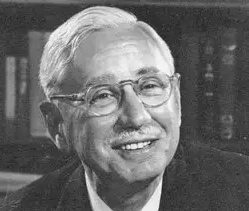
Nothing in all literature is so depressing as the "Dissertations" of the slave [Epictetus], unless it be the "Meditations" of the Emperor [Marcus Aurelius] ...[after some excerpts from the two books]..... In such passages we feel the proximity of Christianity and its dauntless martyrs; indeed were not the Christian ethic of self-denial, the Christian political ideal of an almost communistic brotherhood of man, and the Christian eschatology of the final conflagration of all the world, fragments of Stoic doctrine floating on the stream of thought? In Epictetus the Greco-Roman soul has lost its paganism, and is ready for a new faith".
2 months 3 weeks ago
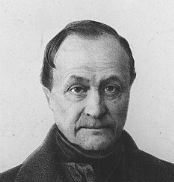
The mathematical thermology created by Fourier may tempt us to hope that, as he has estimated the temperature of the space in which we move, me may in time ascertain the mean temperature of the heavenly bodies: but I regard this order of facts as for ever excluded from our recognition. We can never learn their internal constitution, nor, in regard to some of them, how heat is absorbed by their atmosphere. We may therefore define Astronomy as the science by which we discover the laws of the geometrical and mechanical phenomena presented by the heavenly bodies.
▼
Source
source
Book II: Astronomy, Ch. I: General View

3 months 1 week ago
Commit no lustfulness, so that harm and regret may not reach thee from thine own actions.
3 months 6 days ago
For joys fall not to the rich alone, nor has he lived ill, who from birth to death has passed unknown.
▼
Source
source
Book I, epistle xvii, line 9

1 month 4 weeks ago
Maslow explained that, some time in the late thirties, he had been struck by the thought that modern psychology is based on the study of sick people. But since there are more healthy people around than sick people, how can this psychology give a fair idea of the workings of the human mind? It struck him that it might be worthwhile to devote some time to the study of healthy people.
▼
Source
source
p. 15

3 months 2 weeks ago
An honest man nearly always thinks justly.
▼
Source
source
As quoted in A Dictionary of Thoughts: Being a Cyclopedia of Laconic Quotations from the Best Authors of the World, Both Ancient and Modern (1908) by Tryon Edwards, p. 277.
3 months 2 weeks ago
Organic life, we are told, has developed gradually from the protozoon to the philosopher, and this development, we are assured, is indubitably an advance. Unfortunately it is the philosopher, not the protozoon, who gives us this assurance.
▼
Source
source
Ch. 6: On the Scientific Method in Philosophy
2 months 2 weeks ago
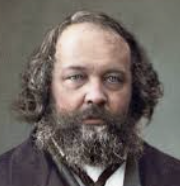
No theory, no ready-made system, no book that has ever been written will save the world. I cleave to no system. I am a true seeker.
▼
Source
source
As quoted in Michael Bakunin (1937) by E.H. Carr, p. 175
2 months 1 week ago
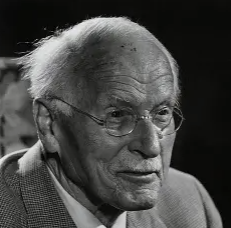
Since in the Middle Ages the psychic relation to woman was expressed in the collective worship of Mary, the image of woman lost a value to which human beings had a natural right. This value could find its natural expression only through individual choice, and it sank into the unconscious when the individual form of expression was replaced by a collective one. In the unconscious the image of woman received an energy charge that activated the archaic and infantile dominants. And since all unconscious contents, when activated by dissociated libido, are projected upon the external object, the devaluation of the real woman was compensated by daemonic features. She no longer appeared as an object of love, but as a persecutor or witch. The consequence of increasing Mariolatry was the witch hunt, that indelible blot on the later Middle Ages.
▼
Source
source
Psychological Types (1921), CW 6. P.344
CivilSimian.com created by AxiomaticPanic, CivilSimian, Kalokagathia