


1 month 2 weeks ago
Every one who has a heart and eyes sees that you, working men, are obliged to pass your lives in want and in hard labor, which is useless to you, while other men, who do not work, enjoy the fruits of your labor-that you are the slaves of these men, and that this ought not to exist.
▼
Source
source
To the Working People, Complete Works, trans. Leo Wiener, Vol 24, p. 129

2 months 2 weeks ago
When we speak of the commerce with our [American] colonies, fiction lags after truth, invention is unfruitful, and imagination cold and barren.
3 months 1 week ago
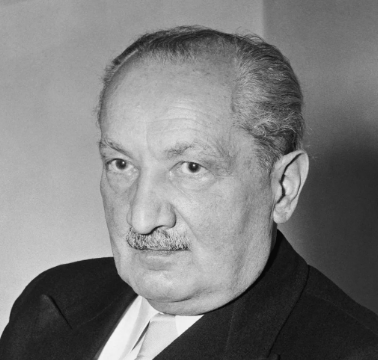
Everyone is the other, and no one is himself. The they, which supplies the answer to the who of everyday Da-sein, is the nobody to whom every Da-sein has always already surrendered itself, in its being-among-one-another.
▼
Source
source
Stambaugh translation

2 months ago
Feminism in the United States has never emerged from the women who are most victimized by sexist oppression; women who are daily beaten down, mentally, physically, and spiritually-women who are powerless to change their condition in life. They are a silent majority. A mark of their victimization is that they accept their lot in life without visible question, without organized protest, without collective anger or rage.
▼
Source
source
p. 1.

2 months 3 weeks ago
I understand Being in all and over all, as there is nothing without participation in Being, and there is no being without Essence. Thus nothing can be free of the Divine Presence.
▼
Source
source
As quoted in "Giordano Bruno" - Theosophy Vol. 26, No. 8

2 months 1 week ago
The meaning and design of a problem seem not to lie in its solution, but in our working at it incessantly.
▼
Source
source
p. 103

3 months 3 weeks ago
Sir Henry Wotton used to say that critics are like brushers of noblemen's clothes.
▼
Source
source
No. 64
2 months 1 week ago
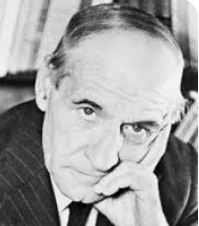
The physical change in the thickness of walls since the Middle Ages could be shown in a diagram. In the fourteenth century each house was a fortress. Man spent the major portion of his day in them, in secret and well-defended solitude. That solitude, working on the soul hour after hour, forged it, like a transcendent blacksmith, into a compact and forceful character. Under its treatment, man consolidated his individual destiny and sallied forth with impunity, never yielding to the contamination from the public. It is only in isolation that we gain, almost automatically, a certain discrimination in ideas, desires, longings, that we learn which are ours, and which are anonymous, floating in the air, falling on us like dust in the street.
▼
Source
source
p. 168
3 months 1 week ago
In everything well known something worthy of thought still lurks.
▼
Source
source
p. xxxix

3 months 2 weeks ago
One capitalist always kills many.
▼
Source
source
Vol. I, Ch. 32, p. 836.


3 months 3 weeks ago
Those who read and rightly understand my teaching will not start an insurrection; they have not learned that from me.
▼
Source
source
p. 65
3 months 2 weeks ago
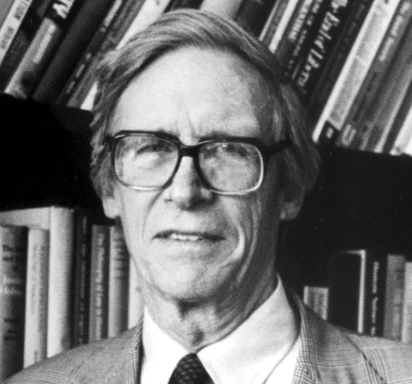
A just system must generate its own support.
▼
Source
source
Chapter V, Section 41, p. 261

3 months 2 weeks ago
When the qualification to vote is regulated by years, it is placed on the firmest possible ground, because the qualification is such as nothing but dying before the time can take away; and the equality of Rights, as a principle, is recognized in the act of regulating the exercise. But when Rights are placed upon, or made dependent upon property, they are on the most precarious of all tenures. "Riches make themselves wings, and fly away," and the rights fly with them ; and thus they become lost to the man when they would be of most value.

2 months 1 week ago
It has been a long time since philosophers have read men's souls. It is not their task, we are told. Perhaps. But we must not be surprised if they no longer matter much to us.

2 months ago
No matter how honest scientists think they are, they are still influenced by various unconscious assumptions that prevent them from attaining true objectivity. Expressed in a sentence, Fort's principle goes something like this: People with a psychological need to believe in marvels are no more prejudiced and gullible than people with a psychological need not to believe in marvels.
▼
Source
source
p. 125
2 months ago
A child might be overawed by a great city, but a civil engineer knows that he might demolish it and rebuild it himself. Husserl's philosophy has the same aim: to show us that, although we may have been thrust into this world without a 'by your leave,' we are mistaken to assume that it exists independently of us. It is true that reality exists apart from us; but what we mistake for the world is actually a world constituted by us, selected from an infinitely complex reality.
▼
Source
source
p. 63
2 months 1 week ago
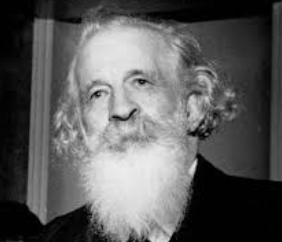
Man is an imagining being.
▼
Source
source
Ch. 2, sect. 10

4 months 2 weeks ago
The Bible and science agree in being unable to say anything certainly about what happened before the beginning. There is this difference. The Bible will never be able to tell us. It has reached its final form, and it simply doesn't say. Science, on the other hand, is still developing, and the time may come when it can answer questions that, at present, it cannot.

4 months 2 weeks ago
We may assume the superiority ceteris paribus [all things being equal] of the demonstration which derives from fewer postulates or hypotheses—in short from fewer premisses; for... given that all these are equally well known, where they are fewer knowledge will be more speedily acquired, and that is a desideratum. The argument implied in our contention that demonstration from fewer assumptions is superior may be set out in universal form...
2 months 1 week ago
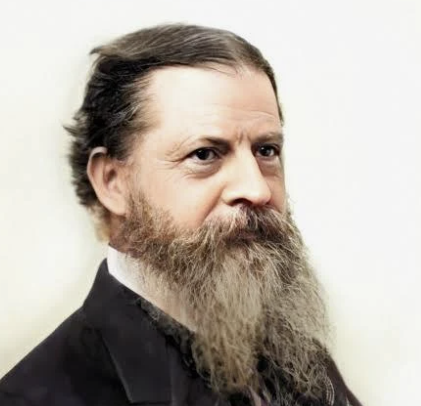
The entire universe is perfused with signs, if it is not composed exclusively of signs.
▼
Source
source
Quoted in Essays in Zoosemiotics (1990) by Thomas A. Sebeok
1 month 2 weeks ago
Love hinders death. Love is life. All, everything that I understand, I understand only because I love. Everything is, everything exists, only because I love. Everything is united by it alone. Love is God, and to die means that I, a particle of love, shall return to the general and eternal source.
▼
Source
source
Thoughts of Prince Andrew Bk XII, Ch. 16

3 months 2 weeks ago
Either the USSR was not the country of socialism, in which case socialism didn't exist anywhere and doubtless, wasn't possible: or else, socialism was that, this abominable monster, this police state, the power of beasts of prey.
▼
Source
source
p. 184
2 months 1 week ago
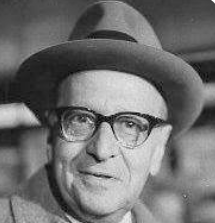
Although the formulations of science now offer the most advanced knowledge of nature, men continue to use obsolete forms of thought long discarded by scientific theory. In so far as these obsolete forms are superfluous for science, the fact that they persist violated the principle of the economy of thought, that characteristic trait of the bourgeois temper.
▼
Source
source
p. 133.
3 months 3 weeks ago
Nay, number (itself) in armies, importeth not much, where the people is of weak courage; for (as Virgil saith) it never troubles the wolf how many the sheep be.
▼
Source
source
Essays or Counsels Civil and Moral (1597), XXIX: "Of the True Greatness of Kingdoms and Estates."

3 months 1 week ago
So we do sometimes think because it has been found to pay.
▼
Source
source
§ 470

1 day ago
Next, if you choose to view its results and the mischief that it does, no plague has cost the human race more dear
2 months 1 week ago
When I happen to be satisfied with everything, even God and myself, I immediately react like the man who, on a brilliant day, torments himself because the sun is bound to explode in a few billion years.

3 months 2 weeks ago
I'm afraid of losing my obscurity. Genuineness only thrives in the dark. Like celery.
▼
Source
source
Those Barren Leaves, 1925

3 months 2 weeks ago
Politics is, as it were, the gizzard of society, full of grit and gravel, and the two political parties are its two opposite halves, - sometimes split into quarters, it may be, which grind on each other. Not only individuals, but States, have thus a confirmed dyspepsia, which expresses itself, you can imagine by what sort of eloquence. Thus our life is not altogether a forgetting, but also, alas! to a great extent, a remembering of that which we should never have been conscious of, certainly not in our waking hours. Why should we not meet, not always as dyspeptics, to tell our bad dreams, but sometimes as eupeptics, to congratulate each other on the ever glorious morning? I do not make an exorbitant demand, surely.
▼
Source
source
p. 495

2 months ago
The smartphone seems to be a playground, but it is a digital panopticon.

2 months 2 weeks ago
We are on a mission: we are called to the cultivation of the earth.
▼
Source
source
Fragment No. 32
2 months 1 week ago
No psychic value can disappear without being replaced by another of equivalent intensity.
▼
Source
source
p. 209
3 months 1 week ago
I see the situation of man in the world of planetary technicity not as an inexitricable and inescapable destiny, but I see the task of thought precisely in this, that within its own limits it helps man as such achieve a satisfactory relationship to the essence of technicity. National Socialism did indeed go in this direction. Those people, however, were far too poorly equipped for thought to arrive at a really explicit relationship to what is happening today and has been underway for the past 300 years.
▼
Source
source
As translated by William Richardson in Risk and Meaning, Nicolas Bouleau (translated by Dené Oglesby and Martin Crossley), ed. Springer, 2011

3 months 2 weeks ago
Do not be too timid and squeamish about your actions. All life is an experiment. The more experiments you make the better.
▼
Source
source
November 11, 1842
2 months 1 week ago
Every father is given the opportunity to corrupt his daughter's nature, and the educator, husband, or psychiatrist then has to face the music. For what has been spoiled by the father can only be made good by a father, just as what has been spoiled by the mother can only be repaired by a mother. The disastrous repetition of the family pattern could be described as the psychological original sin, or as the curse of the Atrides running through the generations.
▼
Source
source
Mysterium Coniunctionis (1955) CW 14: P. 232

1 month 2 weeks ago
Without an anti-environment, all environments are invisible.
▼
Source
source
(p. 33)
3 months 2 weeks ago
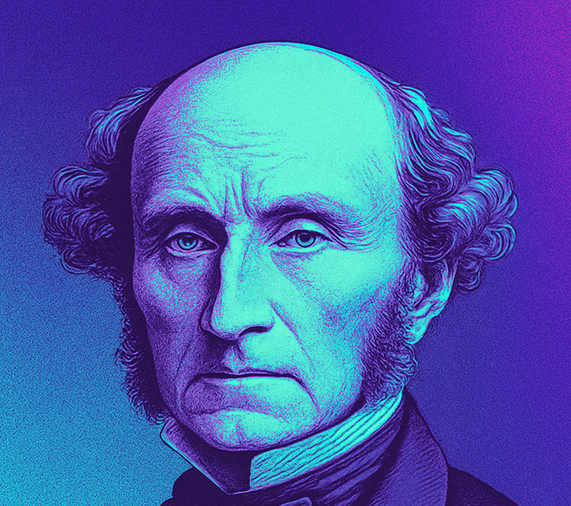
That the human mind has a certain order of possible progress, in which some things must precede others, an order which governments and public instructors can modify to some, but not to an unlimited extent: that all questions of political institutions are relative, not absolute, and that different stages of human progress not only will have, but ought to have, different institutions: That government is always either in the hands, or passing into the hands, of whatever is the strongest power in society, and that what this power is, does not depend on institutions, but institutions on it: That any general theory or philosophy of politics supposes a previous theory of human progress, and that this is the same thing with a philosophy of history.
▼
Source
source
(p. 162)
3 months 2 weeks ago
The example of the Jews, in many things, may not be imitated by us; they had not only orders to cut off several nations altogether, but if they were obliged to war with others, and conquered them, to cut off every male; they were suffered to use polygamy and divorces, and other things utterly unlawful to us under clearer light.

3 weeks 2 days ago
The belief in unity that has fuelled so many utopian dreams is an effort to reconcile the irreconcilable that ends in repression. Berlin suggests we renounce this venerable faith, and learn how to live with intractable conflict.
▼
Source
source
'Isaiah Berlin: The Value of Decency' (p.106-7)

1 week 1 day ago
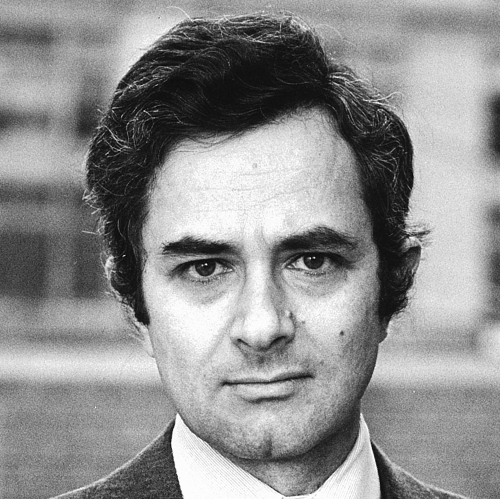
A poet without love were a physical and metaphysical impossibility.
▼
Source
source
Burns (1828).
3 months 1 week ago
Every subjective phenomenon is essentially connected with a single point of view, and it seems inevitable that an objective physical theory will abandon that point of view.
▼
Source
source
p. 167.
3 months 1 week ago
Philosophical problems can be compared to locks on safes, which can be opened by dialing a certain word or number, so that no force can open the door until just this word has been hit upon, and once it is hit upon any child can open it.
▼
Source
source
Ch. 9 : Philosophy, p. 175
3 months 2 weeks ago
Everyone has a goal which appears to be great, at least to himself, and is great when deepest conviction, the innermost voice of the heart, pronounces it great. ... This voice, however, is easily drowned out, and what we thought to be inspiration may have been created by the fleeting moment and again perhaps destroyed by it. ... We must seriously ask ourselves, therefore, whether we are really inspired about a vocation, whether an inner voice approves of it, or whether the inspiration was a deception, whether that which we took as the Deity's calling to us was self-deceit. But how else could we recognize this except by searching for the source of our inspiration?
▼
Source
source
Writings of the Young Marx on Philosophy and Society, L. Easton, trans. (1967), p. 36
2 months ago
The 'intense life' advertised by the neoliberal regime is in truth simply a life of intense consumption.

2 months 3 weeks ago
Solicitation and effort or conation belong properly to animate beings alone. When they are attributed to other things, they must be taken in a metaphorical sense; but a philosopher should abstain from metaphor.
▼
Source
source
Paragraph 3

2 months 1 week ago
We can only learn to love by loving.
▼
Source
source
The Bell (1958), ch. 19; 2001, p. 219.

2 months 3 weeks ago
Life itself is but the shadow of death, and souls departed but the shadows of the living: All things fall under this name. The Sun itself is but the dark simulacrum, and the light but the shadow of God.
▼
Source
source
Ch. 4

2 weeks 2 days ago
If it does not upset, it is not philosophy.
CivilSimian.com created by AxiomaticPanic, CivilSimian, Kalokagathia