


1 month 3 weeks ago
To err is human also in so far as animals seldom or never err, or at least only the cleverest of them do so.
▼
Source
source
G 30

2 months 2 weeks ago
An event has happened, upon which it is difficult to speak, and impossible to be silent.
▼
Source
source
Speech on the sixth article of charge in the impeachment of Warren Hastings (5 May 1789), quoted in The Works of the Right Honourable Edmund Burke, Volume the Tenth (1899), p. 306
2 months 2 weeks ago
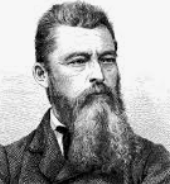
Man has many wishes that he does not really wish to fulfil, and it would be a misunderstanding to suppose the contrary. He wants them to remain wishes, they have value only in his imagination; their fulfilment would be a bitter disappointment to him. Such a desire is the desire for eternal life. If it were fulfilled, man would become thoroughly sick of living eternally, and yearn for death. In reality man wishes merely to avoid a premature, violent or gruesome death. Everything has its measure, says a pagan philosopher; in the end we weary of everything, even of life; a time comes when man desires death. Consequently there is nothing frightening about a normal, natural death, the death of a man who has fulfilled himself and lived out his life.
▼
Source
source
Lecture XXX, Atheism alone a Positive View

1 month 4 weeks ago
There is in Shaw, as in Gurdjieff and Nietzsche, a recognition of the immense effort of Will that is necessary to express even a little freedom, that places them beside Pascal and St. Augustine as religious thinkers. Their view is saved from pessimism only by its mystical recognition of the possibilities of pure Will, freed from the entanglements of automatism.
▼
Source
source
p. 292

2 months 4 weeks ago
Attempt nothing above thy strength!

3 months 2 weeks ago
Man flows at once to God when the channel of purity is open.

3 months 2 weeks ago
No man treats a motorcar as foolishly as he treats another human being. When the car will not go, he does not attribute its annoying behaviour to sin; he does not say, "You are a wicked motorcar, and I shall not give you any more petrol until you go." He attempts to find out what is wrong and to set it right. An analogous way of treating human beings is, however, considered to be contrary to the truths of our holy religion.
▼
Source
source
"The Doctrine of Free Will"
2 months 3 days ago
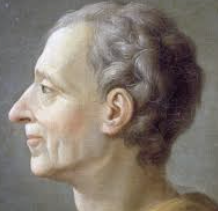
One must give one power a ballast, so to speak, to put it in a position to resist another.
▼
Source
source
Book V, Chapter 14.

1 week ago
There is clear truth in the idea that a struggle from the lower classes of society, towards the upper regions and rewards of society, must ever continue. Strong men are born there, who ought to stand elsewhere than there.
1 month 3 weeks ago
The "second sight" possessed by the Highlanders in Scotland is actually a foreknowledge of future events. I believe they possess this gift because they don't wear trousers... That is also why in all countries women are more prone to utter prophecies.
▼
Source
source
L 26
1 month 2 weeks ago
One day, we shall stand up and our backsides will remain attached to our seats.
3 months 6 days ago
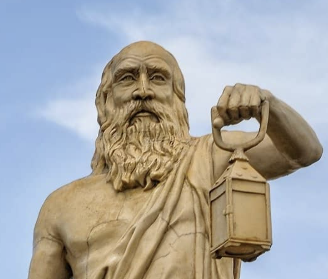
When the slave auctioneer asked in what he was proficient, he replied, "In ruling people."
▼
Source
source
Diogenes Laërtius, vi. 74
1 month 3 weeks ago
The true line is not between "hard" natural science and "soft" social sciences, but between precise science limited to highly abstract and simple phenomena in the laboratory and inexact science and technology dealing with complex problems in the real world.
▼
Source
source
p. 302.
3 months 2 weeks ago
It is not murder which is forgiven but the killer, his person as it appears in circumstances and intentions. The trouble with the Nazi criminals was precisely that they renounced voluntarily all personal qualities, as if nobody were left to be either punished or forgiven. They protested time and again that they had never done anything out of their own initiative, that they had no intentions whatsoever, good or bad, and that they only obeyed orders.

3 months 1 week ago
The problem... Democracy is founded by a politeia, a constitution, where the demos, the people, exercise power, and... everyone is equal in front of the law. Such a constitution... is condemned to give equal place to all forms of parrhesia, even the worst. Because parrhesia is given even to the worst citizens, the overwhelming influence of bad, immoral, or ignorant speakers may lead... into tyranny, or... otherwise endanger the city. Hence parrhesia may be dangerous for democracy itself.

2 months 3 days ago
I have told you that... we know nothing save what we have first, in one way or another, desired; and it may even be added that we can know nothing well save what we love, save what we pity.

3 months 3 weeks ago
Above all, every relation must be considered as suspicious, which depends in any degree upon religion, as the prodigies of Livy: And no less so, everything that is to be found in the writers of natural magic or alchemy, or such authors, who seem, all of them, to have an unconquerable appetite for falsehood and fable.
▼
Source
source
Aphorism 29

3 months 3 weeks ago
Saying is one thing, doing another.
▼
Source
source
Book II, Ch. 31. Of Anger
2 months 3 days ago
Just as eunuchs will never know aesthetics as applied to the selection of beautiful women, so neither will pure rationalists ever know ethics, nor will they ever succeed in defining happiness, for happiness is a thing that is lived and felt, not a thing that is reasoned or defined.
3 months 2 weeks ago
I do not know but it is too much to read one newspaper a week. I have tried it recently, and for so long it seems to me that I have not dwelt in my native region. The sun, the clouds, the snow, the trees say not so much to me. You cannot serve two masters. It requires more than a day's devotion to know and to possess the wealth of a day.
▼
Source
source
p. 491

3 months 2 weeks ago
What the rest of us see only under the influence of mescalin, the artist is congenitally equipped to see all the time. His perception is not limited to what is biologically or socially useful.
▼
Source
source
Page 168
3 months 2 weeks ago
I am sorry to say that at the moment I am so busy as to be convinced that life has no meaning whatever... I do not see that we can judge what would be the result of the discovery of truth, since none has hitherto been discovered.
▼
Source
source
Letter to Will Durant, 20 June, 1931

1 week 2 days ago
The social contract between all people around the world only has one requirement: Don't kill. From there it's those who don't agree, those that agree but have some reactive justification, and those that agree and don't kill.

1 month 2 weeks ago
The error arises from the learned jurists deceiving themselves and others, by asserting that government is not what it really is, one set of men banded together to oppress another set of men, but, as shown by science, is the representation of the citizens in their collective capacity.
▼
Source
source
Chapter VI, Attitude of Men of the Present Day to War Variant translation: Government is an association of men who do violence to the rest of us.
1 month ago
There is, I think, a spontaneous resurgence of thinking that centers on protection of life, celebrating life, enjoying life as both our highest duty and our most powerful form of resistance against a violent and brutal system that globalizes not just trade, but fascism, and denies civil liberties and freedoms.
1 week ago
He who would write heroic poems should make his whole life a heroic poem.
▼
Source
source
Life of Schiller.

1 week 4 days ago
Jesus, in some respects, was an anarchist, for he had no idea of civil government. That government seems to him purely and simply an abuse.
▼
Source
source
Ch. 7.

2 months 1 week ago
Why do ye also transgress the commandment of God by your tradition? For God commanded, saying, Honour thy father and mother: and, He that curseth father or mother, let him die the death. But ye say, Whosoever shall say to his father or his mother, It is a gift, by whatsoever thou mightest be profited by me; And honour not his father or his mother, he shall be free. Thus have ye made the commandment of God of none effect by your tradition. Ye hypocrites, well did Esaias prophesy of you, saying, This people draweth nigh unto me with their mouth, and honoureth me with their lips; but their heart is far from me. But in vain they do worship me, teaching for doctrines the commandments of men.
▼
Source
source
15:3-9 (KJV)

3 months 2 weeks ago
The next thing is by gentle degrees to accustom children to those things they are too much afraid of. But here great caution is to be used, that you do not make too much haste, nor attempt this cure too early, for fear lest you increase the mischief instead of remedying it.
▼
Source
source
Sec. 115

2 months 2 weeks ago
I have seen the truth; I have seen and I know that people can be beautiful and happy without losing the power of living on earth. I will not and cannot believe that evil is the normal condition of mankind. And it is just this faith of mine that they laugh at. But how can I help believing it? I have seen the truth - it is not as though I had invented it with my mind, I have seen it, seen it, and the living image of it has filled my soul for ever. I have seen it in such full perfection that I cannot believe that it is impossible for people to have it.
3 months 3 weeks ago
Observe, observe perpetually.
3 months 2 weeks ago
Any fool can make a ruleAnd every fool will mind it.
▼
Source
source
February 3, 1860

3 months 3 weeks ago
The blame rests with the government. Why do they not put adulterers to death? Then I would not need to give such advice. Between two evils one is always the lesser, in this case allowing the adulterer to remarry in a distant land in order to avoid fornication . . .

4 months 2 weeks ago
How close men, despite all their knowledge, usually live to madness? What is truth but to live for an idea? When all is said and done, everything is based on a postulate; but not until it no longer stands on the outside, not until one lives in it, does it cease to be a postulate.
2 months 1 week ago
This heaven will pass away, and the one above it will pass away. The dead are not alive, and the living will not die. In the days when you consumed what is dead, you made it what is alive. When you come to dwell in the light, what will you do? On the day when you were one you became two. But when you become two, what will you do?
2 months 2 weeks ago
Justice was in all countries originally administered by the priesthood; nor indeed could laws in their first feeble state have either authority or sanction, so as to compel men to relinquish their natural independence, had they not appeared to come down to them enforced by beings of more than human power. The first openings of civility have been everywhere made by religion. Amongst the Romans, the custody and interpretation of the laws continued solely in the college of the pontiffs for above a century.
▼
Source
source
An Essay towards an Abridgment of English History (1757-c. 1763), quoted in The Works of the Right Honourable Edmund Burke, Vol. VI (1856), p. 196

3 months 2 weeks ago
Clever tyrants are never punished.
▼
Source
source
Mérope, act V, scene V, 1743
1 week ago
On the dust of our heroic ancestors we too sit ballot-boxing, saying to one another, It is well, it is well! By inheritance of their noble struggles, we have been permitted to sit slothful so long. By noble toil, not by shallow laughter and vain talk, they made this English Existence from a savage forest into an arable inhabitable field for us; and we, idly dreaming it would grow spontaneous crops forever,-find it now in too questionable a state.

2 months 1 week ago
Once man loses his faculty of indifference he becomes a potential murderer; once he transforms his idea into a god the consequences are incalculable. We kill only in the name of a god or of his counterfeits: the excesses provoked by the goddess Reason, by the concept of nation, class, or race are akin to those of the Inquisition or of the Reformation.

3 months 2 weeks ago
Obstinacy is the result of the will forcing itself into the place of the intellect.
▼
Source
source
Vol. 2, Ch. 26, § 321
1 week ago
Of this Shakspeare of ours, perhaps the opinion one sometimes hears a little idolatrously expressed is, in fact, the right one; I think the best judgement not of this country only, but of Europe at large, is slowly pointing to the conclusion, That Shakspeare is the chief of all Poets hitherto; the greatest intellect who, in our recorded world, has left record of himself in the way of Literature. On the whole, I know not such a power of vision, such a faculty of thought, if we take all the characters of it, in any other man. Such a calmness of depth; placid joyous strength; all things imaged in that great soul of his so true and clear, as in a tranquil unfathomable sea!
2 months 1 week ago
Since the only things we remember are humiliations and defeats, what is the use of all the rest?

4 months 1 week ago
Nothing is harder to understand than a symbolic work. A symbol always transcends the one who makes use of it and makes him say in reality more than he is aware of expressing.
3 months 2 weeks ago
Life consists with wildness. The most alive is the wildest. Not yet subdued to man, its presence refreshes him.

3 months 2 weeks ago
Self-command is the main elegance.
▼
Source
source
p. 205
1 week ago
It is a most earnest thing to be alive in this world; to die is not sport for a man. Man's life never was a sport to him; it was a stern reality, altogether a serious matter to be alive!
4 months 2 weeks ago
It is difficult to set forth any of the greater ideas, except by the use of examples; for it would seem that each of us knows everything that he knows as if in a dream and then again, when he is as it were awake, knows nothing of it all.
CivilSimian.com created by AxiomaticPanic, CivilSimian, Kalokagathia