


2 months 1 week ago
The revolution, Stahl declared, is the 'world-historic mark of our age.' It would found 'the entire State on the will of man instead of on the commandment and ordinance of God.'
▼
Source
source
p. 364



3 months 2 weeks ago
It is likely that America will be more important during the next century or two, but after that it may well be the turn of China.
▼
Source
source
Letter to Rachel Gleason Brooks, May 5, 1930
3 months 3 weeks ago
Let all the 'free-will' in the world do all it can with all its strength; it will never give rise to a single instance of ability to avoid being hardened if God does not give the Spirit, or of meriting mercy if it is left to its own strength.
▼
Source
source
p. 202
4 months 2 weeks ago
The fact is that I've never called myself a genius, and I think the term has been cheapened by overuse into meaninglessness. If other people want to call me that, that's their problem.
2 months 1 week ago
Nature consists of the elements given by the senses. Primitive man first takes out of them certain complexes of these elements that present themselves with a certain stability and are most important to him. The first and oldest words are names for "things". ... The sensations are no "symbols of things". On the contrary the "thing" is a mental symbol for a sensation-complex of relative stability. Not the things, the bodies, but colours, sounds, pressures, times (what we usually call sensations) are the true elements of the world.
▼
Source
source
p. 23, as quoted in Lenin as Philosopher: A Critical Examination of the Philosophical Basis of Leninism (1948) by Anton Pannekoek, p. 454
2 weeks 2 days ago
I agree with Paul that love is more important than faith and hope; but so are honesty, integrity, and moral courage. The world needs less faith and more love and nobility.
▼
Source
source
Preface
4 months 2 weeks ago
Music directly represents the passion of the soul. If one listens to the wrong kind of music, he will become the wrong kind of person.
2 months 3 weeks ago
For no one's authority ought to rank so high as to set a value on his words and terms even though nothing clear and determinate lies behind them.
▼
Source
source
Paragraph 1

2 months 1 week ago
I love talking to simple people, with common folk, if you like, and I still do it and still chat now as before with anyone, regardless of intellectual level. On the contrary, I like uneducated people much better and that is obviously my Rumanian heritage.
2 months 1 week ago
Understanding finds nothing but itself when it seeks the essence behind the appearance of things. 'It is manifest that behind the so-called curtain, which is to hide the inner world, there is nothing to be seen unless we ourselves go behind there, as much in order that we may thereby see, as that there may be something behind there which can be seen.'
▼
Source
source
P. 111
3 months 2 weeks ago
Choose your parents wisely.
▼
Source
source
On the recipe for longevity; Collected Papers of Bertrand Russell, Vol. 29, 2012
1 month 2 weeks ago
Every body continues in its state of rest, or of uniform motion in a right line, unless it is compelled to change that state by forces impressed upon it.
▼
Source
source
Laws of Motion, I

3 months 3 weeks ago
There were never in the world two opinions alike, any more than two hairs or two grains. Their most universal quality is diversity.
▼
Source
source
Ch. 37
1 month 2 weeks ago
When the real is no longer what it was, nostalgia assumes its full meaning. "The Precession of Simulacra,"
▼
Source
source
p. 6
1 month 2 weeks ago
It seems to me, that if the matter of our sun and planets and all the matter of the universe, were evenly scattered throughout all the heavens, and every particle had an innate gravity towards all the rest, and the whole of space throughout which this matter was scattered was but finite, the matter on [toward] the outside of this space would, by its gravity, tend towards all the matter on the inside, and, by consequence, fall down into the middle of the whole space, and there compose one great spherical mass. But if the matter was evenly disposed throughout an infinite space it could never convene into one mass; but some of it would convene into one mass and some into another, so as to make an infinite number of great masses, scattered at great distances from one another throughout all that infinite space.
▼
Source
source
Four Letters to Bentley (1692) first letter
1 month 4 weeks ago
Anarchism is the only philosophy which brings to man the consciousness of himself; which maintains that God, the State, and society are non-existent, that their promises are null and void, since they can be fulfilled only through man's subordination.

2 months 1 day ago
The English never abolish anything. They put it in cold storage.
▼
Source
source
Ch. 36, January 19, 1945.

3 months 2 weeks ago
Bold ideas, unjustified anticipations, and speculative thought, are our only means for interpreting nature: our only organon, our only instrument, for grasping her. And we must hazard them to win our prize. Those among us who are unwilling to expose their ideas to the hazard of refutation do not take part in the scientific game.
▼
Source
source
Ch. 10 "Corroboration, or How a Theory Stands up to Tests", section 85: The Path of Science, p. 280.
1 month 1 week ago
The real reason people are conservatives is that they are attached to the things that they love, and want to preserve them from abuse and decay. They are attached to their family, their friends, their religion, and their immediate environment. They have made a lifelong distinction between the things that nourish and the things that threaten their security and peace of mind.
▼
Source
source
Conservatism and the Conservatory,, National Review
3 months 2 weeks ago
There are all kinds of sources of our knowledge; but none has authority ... The fundamental mistake made by the philosophical theory of the ultimate sources of our knowledge is that it does not distinguish clearly enough between questions of origin and questions of validity.
3 months 2 weeks ago
Each pursues his private interest and only his private interest; and thereby serves the private interests of all, the general interest, without willing it or knowing it. The real point is not that each individual's pursuit of his private interest promotes the totality of private interests, the general interest. One could just as well deduce from this abstract phrase that each individual reciprocally blocks the assertion of the others' interests, so that, instead of a general affirmation, this war of all against all produces a general negation.
▼
Source
source
Notebook I, The Chapter on Money, p. 76.
1 month 4 weeks ago
If things are deprived of memory, they become information or commodities. They are pushed into a time-free, ahistorical place.
3 months 2 weeks ago
Suicide evokes revulsion with horror, because everything in nature seeks to preserve itself: a damaged tree, a living body, an animal; and in man, then, is freedom, which is the highest degree of life, and constitutes the worth of it, to become now a principium for self-destruction? This is the most horrifying thing imaginable. For anyone who has already got so far as to be master, at any time, over his own life, is also master over the life of anyone else; for him, the door stands open to every crime, and before he can be seized he is ready to spirit himself away out of the world. So suicide evokes horror, in that a man thereby puts himself below the beasts. We regard a suicide as a carcase, whereas we feel pity for one who meets his end through fate.
▼
Source
source
Part II, p. 146
3 weeks 4 days ago
Nietzsche would say my friends lacked ears.
▼
Source
source
Chapter 8, Performative Reflexivity, p. 133
2 months 2 weeks ago
Simplify the social system, in the manner which every motive, but those of usurpation and ambition, powerfully recommends; render the plain dictates of justice level to every capacity; remove the necessity of implicit faith; and we may expect the whole species to become reasonable and virtuous.
▼
Source
source
Portable Enlightenment Reader, p. 477
3 months 2 weeks ago
If you would convince a man that he does wrong, do right. But do not care to convince him. Men will believe what they see.
▼
Source
source
Let them see. Pearls of Thought (1881) p. 222
1 month 3 weeks ago
From any vocabulary of ideas we can build other ideas by formal combinations of signs. But not any set of ideas will be instructive. One must have the right ideas.
▼
Source
source
Chapter 15, Inductive Logic, p. 139.
3 months 2 weeks ago
There are uncertain truths - even true statements that we may take to be false - but there are no uncertain certainties. Since we can never know anything for sure, it is simply not worth searching for certainty; but it is well worth searching for truth; and we do this chiefly by searching for mistakes, so that we have to correct them.
3 months 2 weeks ago
In all affairs - love, religion, politics, or business - it's a healthy idea, now and then, to hang a question mark on the things you have long taken for granted.
▼
Source
source
As quoted in The Reader's Digest, Vol. 37 (1940), p. 90; no specific source given.
1 month 4 weeks ago
The martyr sacrifices herself (himself in a few instances) entirely in vain. Or rather not in vain; for she (or he) makes the selfish more selfish, the lazy more lazy, the narrow narrower.
▼
Source
source
As quoted in Forever Yours (1990) by Martha Vicinus and Bea Nergaard , p. 275. Letter, c. 1867, to the scholar Benjamin Jowett.

1 month 2 weeks ago
War is not a courtesy but the most horrible thing in life; and we ought to understand that, and not play at war. We ought to accept this terrible necessity sternly and seriously. It all lies in that: get rid of falsehood and let war be war and not a game. As it is now, war is the favourite pastime of the idle and frivolous.
▼
Source
source
Bk. X, ch. 25

1 day ago
See the foundations of the most celebrated cities hardly now to be discerned; they were ruined by anger. See deserts extending for many miles without an inhabitant: they have been desolated by anger.
3 months 6 days ago
Look round and round the man you recommend, for yours will be the shame should he offend.
▼
Source
source
Book I, epistle xviii, line 76 (translated by John Conington).
2 months 2 weeks ago
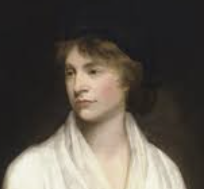
You know I am not born to tread in the beaten track - the peculiar bent of my nature pushes me on.
▼
Source
source
Letter to Everina Wollstonecraft
2 months 3 weeks ago
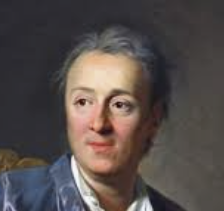
It has been said that love robs those who have it of their wit, and gives it to those who have none.
▼
Source
source
Paradoxe sur le Comédien
2 months 1 week ago
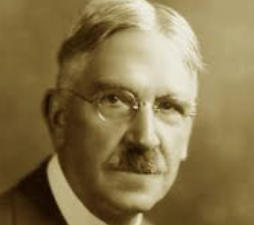
Interest only becomes one-sided and morbid only when it ceases to be frank, and becomes sly and furtive.
▼
Source
source
p. 197

1 week ago
We are no longer instinctively driven to apprehend, and lay to heart, what is Good and Lovely, but rather to inquire, as onlookers, how it is produced, whence it comes, whither it goes. Our favourite Philosophers have no love and no hatred; they stand among us not to do, nor to create anything, but as a sort of Logic mills, to grind out the true causes and effects of all that is done and created.
1 day ago
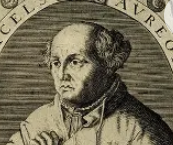
Consider that we shouldn't call our brother a fool, since we don't know ourselves what we are.

3 months 2 weeks ago
Every man, as the Stoics used to say, is first and principally recommended to his own care; and every man is certainly, in every respect, fitter and abler to take care of himself than of any other person. Every man feels his own pleasures and his own pains more sensibly than those of other people. The former are the original sensations; the latter the reflected or sympathetic images of those sensations. The former may be said to be the substance; the latter the shadow.
▼
Source
source
Section II, Chap. I.

4 months 2 weeks ago
Most men are too concerned with themselves to be malicious.
2 months 1 week ago
Diogenes, in his mud-covered sandals, tramps over the carpets of Aristippus. The cynic pullulated at every corner, and in the highest places. This cynic did nothing but saboter the civilisation of the time. He was the nihilist of Hellenism. He created nothing, he made nothing. His role was to undo - or rather to attempt to undo, for he did not succeed in his purpose. The cynic, a parasite of civilisation, lives by denying it, for the very reason that he is convinced that it will not fail. What would become of the cynic among a savage people where everyone, naturally and quite seriously, fulfils what the cynic farcically considers to be his personal role?
▼
Source
source
Chapter XI: The Self-Satisfied Age

3 months 2 weeks ago
In the days before machinery men and women who wanted to amuse themselves were compelled, in their humble way, to be artists. Now they sit still and permit professionals to entertain them by the aid of machinery. It is difficult to believe that general artistic culture can flourish in this atmosphere of passivity.
2 months 1 week ago
Once we begin to want, we fall under the jurisdiction of the Devil.
3 months 2 weeks ago
Men go to a fire for entertainment. When I see how eagerly men will run to a fire, whether in warm or in cold weather, by day or by night, dragging an engine at their heels, I'm astonished to perceive how good a purpose the level of excitement is made to serve.
▼
Source
source
June, 1850
3 months 1 week ago
On James's view, "true" resembles "good" or "rational" in being a normative notion, a compliment paid to sentences that seem to be paying their way and that fit with other sentences which are doing so.
▼
Source
source
Introduction to Consequences of Pragmatism

2 months 2 weeks ago
Writers, especially when they act in a body and with one direction, have great influence on the public mind.
2 months 2 weeks ago
A conscientious man would be cautious how he dealt in blood.
▼
Source
source
Letter to the Sheriffs of Bristol (3 April 1777); as published in The Works of the Right Hon. Edmund Burke (1899), vol. 2, p. 206
4 months 2 weeks ago
But it is clear there is a difference in the ends proposed: for in some cases they are activities, and in others results beyond the mere activities, and where there are certain ends beyond and beside the actions, the results are naturally superior to the activities. Now, as there are numerous kinds of actions and numerous arts and sciences, it follows that the ends are also various. Thus the end of the healing art is health, of ship-building ships, of strategy victory, of economy wealth.
CivilSimian.com created by AxiomaticPanic, CivilSimian, Kalokagathia