


3 months 3 weeks ago
Cato said the best way to keep good acts in memory was to refresh them with new.
▼
Source
source
No. 247

2 months 2 weeks ago
We have unmistakable proof that throughout all past time, there has been a ceaseless devouring of the weak by the strong.
▼
Source
source
Vol. I, Part III, Ch. 2 General Aspects of the Special-Creation-Hypothesis

3 months 2 weeks ago
Our condition is like that of the poor wolves: if one of the flock wound himself, or so much as limp, the rest eat him up incontinently. That serene Power interposes the check upon the caprices and officiousness of our wills.

3 months 2 weeks ago
The Bhagavad-Gita is perhaps the most systematic scriptural statement of the Perennial Philosophy. To a world at war, a world that, because it lacks the intellectual and spiritual prerequisites to peace, can only hope to patch up some kind of precarious armed truce, it stands pointing, clearly and unmistakably, to the only road of escape from the self-imposed necessity of self-destruction.
3 months 2 weeks ago
A reproach can only hurt if it hits the mark. Whoever knows that he does not deserve a reproach can treat it with contempt.
2 months 1 week ago
England is the paradise of individuality, eccentricity, heresy, anomalies, hobbies, and humors.
▼
Source
source
"The British Character"

1 month 1 week ago
It is generally characteristic of arms races, including human ones, that although all would be better off if none of them escalated, so long as one of them escalates none can afford not to.
▼
Source
source
Chapter 7 "Constructive Evolution" (p. 184)

1 week ago
For being a man worth any thousand men, the response your Knox, your Cromwell gets, is an argument for two centuries whether he was a man at all. God's greatest gift to this Earth is sneeringly flung away.
1 month 2 days ago
The method of scientific investigation is nothing but the expression of the necessary mode of working of the human mind.
▼
Source
source
Our Knowledge of the Causes of the Phenomena of Organic Nature

3 months 3 weeks ago
Every other knowledge is harmful to him who does not have knowledge of goodness.
▼
Source
source
Ch. 25
3 months 2 weeks ago
The individual, so far as he suffers from his wrongness and criticizes it, is to that extent consciously beyond it, and in at least possible touch with something higher, if anything higher exist. Along with the wrong part there is thus a better part of him, even though it may be but a most helpless germ. With which part he should identify his real being is by no means obvious at this stage; but when stage 2 (the stage of solution or salvation) arrives, the man identifies his real being with the germinal higher part of himself; and does so in the following way. He becomes conscious that this higher part is coterminous and continuous with a more of the same quality, which is operative in the universe outside of him, and which he can keep in working touch with, and in a fashion get on board of and save himself when all his lower being has gone to pieces in the wreck.
▼
Source
source
Lecture XX, "Conclusions"

3 weeks 2 days ago
Blair has been the modern man he claims to be: for him, a sense of subjective certainty is all that is needed for an action to be right. If deception is needed to realise the providential design, it cannot be truly deceitful.
▼
Source
source
Neoconned!: How Blair took New Labour for a ride, The Independent

2 months 3 weeks ago
That some have never dreamed is as improbable as that some have never laughed.
2 months 1 week ago
There is philosophy, which is about conceptual analysis - about the meaning of what we say - and there is all of this ... all of life.
▼
Source
source
Emphasizing his views on philosophy as something abstract and separate from normal life to Isaiah Berlin, in the early 1930s, as quoted in A.J. Ayer: A Life (1999) by Ben Rogers, p. 2.

3 months 2 weeks ago
"'Are the gods not just?' 'Oh no, child. What would become of us if they were?'"
▼
Source
source
Orual & The Fox

1 week 4 days ago
He whom God has touched will always be a being apart: he is, whatever he may do, a stranger among men; he is marked by a sign.
▼
Source
source
Oeuvres Complètes, vol. 3. L'Avenir de la Science (1890).

1 month 4 weeks ago
Emptiness is not a denial of the proper but an affirmation of it.
1 month 2 weeks ago
High school is closer to the core of the American experience than anything else I can think of.
▼
Source
source
Introduction to Our Time Is Now: Notes From the High School Underground, John Birmingham, ed.

3 months 2 weeks ago
I wanted for the moments in my life to follow each other and order themselves like those of a life remembered. It would be just as well to try to catch time by the tail.
2 months 1 week ago
The woman is increasingly aware that love alone can give her full stature, just as the man begins to discern that spirit alone can endow his life with its highest meaning. Fundamentally, therefore, both seek a psychic relation to the other, because love needs the spirit, and the spirit love, for their fulfillment.
▼
Source
source
p. 185
3 months 2 weeks ago
What I see is teeming cohesion, contained dispersal.... For him, to sculpt is to take the fat off space.
▼
Source
source
On Alberto Giacometti's work, Situations, in Braziller

2 months 4 weeks ago
Anger begins in folly, and ends in repentance.
▼
Source
source
As quoted in Treasury of Thought: Forming an Encyclopædia of Quotations from Ancient and Modern Authors (1894) by Maturin Murray Ballou

2 months 2 weeks ago
A great profusion of things, which are splendid or valuable in themselves, is magnificent. The starry heaven, though it occurs so very frequently to our view, never fails to excite an idea of grandeur. This cannot be owing to the stars themselves, separately considered. The number is certainly the cause. The apparent disorder augments the grandeur, for the appearance of care is highly contrary to our idea of magnificence. Besides, the stars lie in such apparent confusion, as makes it impossible on ordinary occasions to reckon them. This gives them the advantage of a sort of infinity.
▼
Source
source
Part II Section XIII
2 months 2 weeks ago
To execute laws is a royal office; to execute orders is not to be a king. However, a political executive magistracy, though merely such, is a great trust.
▼
Source
source
Volume iii, p. 497

2 months 1 week ago
Facing a landscape annihilated by the light, to remain serene supposes a temper I do not have. The sun is my purveyor of black thoughts; and summer the season when I have always reconsidered my relations with this world and with myself, to the greatest prejudice of both.

4 months 1 week ago
At my age one's got to be sincere. Lying's too much effort.

2 months 3 weeks ago
In the pursuit of truth we must beware of being misled by terms which we do not rightly understand. That is the chief point. Almost all philosophers utter the caution; few observe it.
▼
Source
source
Paragraph 1

2 months ago
Today's mic-hogging, fast-talking, contentious young (and old) lefties continue to hawk little books and pamphlets on revolution, always with choice words or documents from Marx, Mao, even Malcolm. But I've never seen a broadside with "A Black Feminist Statement or even the writings of Angela Davis or June Jordan or Barbara Omolade or Flo Kennedy or Audre Lorde or bell hooks or Michelle Wallace, at least not from the groups who call themselves leftist. These women's collective wisdom has provided the richest insights into American radicalism's most fundamental questions: How can we build a multiracial movement? Who are the working class and what do they desire? How do we resolve the Negro Question and the Woman Question? What is freedom?
▼
Source
source
Robin Kelley Freedom Dreams

3 months 2 weeks ago
A man who is so exceedingly civil that for the sake of quietude and a peaceable name will silently see the community imposed upon, or their rights invaded, may, in his principles, be a good man, but cannot be stiled a useful one, neither does he come up to the full mark of his duty; for silence becomes a kind of crime when it operates as a cover or an encouragement to the guilty.
▼
Source
source
"To the People of America", Pennsylvania Packet, January 23, 1779

3 months 2 weeks ago
The secret of being a bore is to tell everything.
▼
Source
source
"Sixième discours: sur la nature de l'homme," Sept Discours en Vers sur l'Homme, 1738
3 months 2 weeks ago
Seeing only what is fair, Sipping only what is sweet, Thou dost mock at fate and care.
▼
Source
source
To the Humble Bee, st. 6

1 month 2 weeks ago
The assertion that art may be good art and at the same time incomprehensible to a great number of people is extremely unjust, and its consequences are ruinous to art itself...it is the same as saying some kind of food is good but most people can't eat it.
3 months 2 weeks ago
Some people talk as if meeting the gaze of absolute goodness would be fun. They need to think again. They are still only playing with religion. Goodness is either the great safety or the great danger-according to the way you react to it.
▼
Source
source
Book I, Chapter 5, "We Have Cause to Be Uneasy"

1 month 4 weeks ago
Moral activity? There is scarcely such a thing possible! Everything is sketchy. The world does nothing but sketch.

3 months 2 weeks ago
It is not because men's desires are strong that they act ill; it is because their consciences are weak.
▼
Source
source
On Liberty, 1859
3 months 3 weeks ago
When I play with my cat, who knows whether I do not make her more sport than she makes me?
▼
Source
source
Book II, Ch. 12. Apology for Raimond Sebond

1 month 4 weeks ago
This in turn suggests an answer to our question: what happened between the birth of De Sade and the birth of Krafft-Ebbing? The rise of the novel taught Europe to use its imagination. And when imagination was applied to sex, the result was the rise of pornography -- and of "sexual perversion."
▼
Source
source
p. 86
2 months 1 week ago
Even more than in a poem, it is the aphorism that the word is god.

2 months 2 weeks ago
I consider you the most honest and truthful of men, more honest and truthful than anyone; and if they say that your mind...that is, that you're sometimes afflicted in your mind, it's unjust. I made up my mind about that, and disputed with others, because, though you really are mentally afflicted (you won't be angry with that, of course; I'm speaking from a higher point of view), yet the mind that matters is better in you than in any of them. It's something, in fact, they have never dreamed of. For there are two sorts of mind: one that matters, and one that doesn't matter.
▼
Source
source
Part 3, Chapter 8

4 weeks 1 day ago
I believe most people are aware of periods in their lives when they seem to be "in grace" and other periods when they feel "out of grace," even though they may use different words to describe these states. In the first happy condition, one seems to carry all one's tasks before one lightly, as if borne along on a great tide; and in the opposite state one can hardly tie a shoe-string. It is true that a large part of life consists in learning a technique of tying the shoe-string, whether one is in grace or not. But there are techniques of living too; there are even techniques in the search for grace.
4 months 2 weeks ago
While both are dear, Piety requires us to honor truth above our friends.
4 months 1 week ago
The evil that is in the world always comes of ignorance, and good intentions may do as much harm as malevolence, if they lack understanding. On the whole men are more good than bad; that, however, isn't the real point. But they are more or less ignorant, and it is this that we call vice or virtue; the most incorrigible vice being that of an ignorance which fancies it knows everything and therefore claims for itself the right to kill. There can be no true goodness, nor true love, without the utmost clear-sightedness.

3 months 1 week ago
The task of universal pragmatics is to identify and reconstruct universal conditions of possible mutual understanding.
▼
Source
source
p. 21


1 month 2 weeks ago
Fortune is not satisfied with inflicting one calamity.
▼
Source
source
Maxim 274
2 months 4 weeks ago
Better be mute, than dispute with the Ignorant.

2 months 2 weeks ago
I'll know how to die with courage; that is easier than living.
▼
Source
source
Act II.
1 month 1 week ago
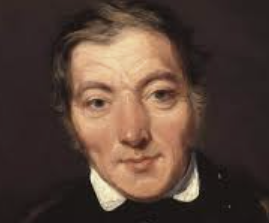
They would receive the same care and attention as those who belong to the establishment. Nor will there be any distinction made between the children of those parents who are deemed the worst, and of those who may be esteemed the best members of society: indeed I would prefer to receive the offspring of the worst, if they shall be sent at an early age; because they really require more of our care and pity and by well-training these, society will be more essentially benefited than if the like attention were paid to those whose parents are educating them in comparatively good habits. On educating children of the poor, and of neighboring communities.
4 months 2 weeks ago
It is absurd to hold that a man ought to be ashamed of being unable to defend himself with his limbs but not of being unable to defend himself with reason when the use of reason is more distinctive of a human being than the use of his limbs.
2 months 2 weeks ago
The supervision of the state extends to the lock upon the door, and there begins mine own. The lock is the boundary line between the power of the government and my own private power. It is the intention of locks to make possible self-protection. In my own house my person is sacred and inviolable even to the government. In civil cases government has no right to attack me in my house, but must wait till I am upon public ground.
▼
Source
source
P. 324
CivilSimian.com created by AxiomaticPanic, CivilSimian, Kalokagathia