

3 months 3 weeks ago
Space is employed as the type even of the concept of time itself, representing it by a line, and its limits - moments - by points. Time, on the other had, approaches more to a universal and rational concept, comprising under its relations all things whatsoever, to wit, space itself, and besides, those accidents which are not comprehended in the relations of space, such as the thoughts of the soul. Again, time, besides this, though it certainly does not dictate the laws of reason, yet constitutes the principal conditions tinder favor of which the mind compares its notions according to the laws of reason. Thus, I cannot judge what is impossible except by predicating a and not-a of the same subject at the same time.
3 months 3 weeks ago
Moreover, if the character is formed, and the mind made up, on the few cardinal points of human opinion, agreement of conviction and feeling on these, has been felt in all times to be an essential requisite of anything worthy the name of friendship, in a really earnest mind. All these circumstances united, made the number very small of those whose society, and still more whose intimacy, I now voluntarily sought.
▼
Source
source
(p. 229)

3 months 3 weeks ago
Propaganda in favor of action that is consonant with enlightened self-interest appeals to reason by means of logical arguments based upon the best available evidence fully and honestly set forth. Propaganda in favor of action dictated by the impulses that are below self-interest offers false, garbled or incomplete evidence, avoids logical argument and seeks to influence its victims by the mere repetition of catchwords, by the furious denunciation of foreign or domestic scapegoats, and by cunningly associating the lower passions with the highest ideals, so that atrocities come to be perpetrated in the name of God and the most cynical kind of Realpolitik is treated as a matter of religious principle and patriotic duty.
▼
Source
source
Chapter 4 (p. 33)

3 months 3 weeks ago
Every hero becomes a bore at last.
▼
Source
source
Uses of Great Men

3 months 2 weeks ago
The way you use the word "God" does not show whom you mean - but, rather, what you mean.
▼
Source
source
p. 50e

3 months 3 weeks ago
We have, in fact, two kinds of morality side by side; one which we preach but do not practise, and another which we practise but seldom preach.
▼
Source
source
Ch. 8: Eastern and Western Ideals of Happiness
3 months 3 weeks ago
A whole from necessary substances is impossible. The whole, therefore, of substances is a whole of contingent things, and the world consists essentially of only contingent things.

2 months 1 week ago
The key to a Christian conception of studies is the realization that prayer consists of attention. It is the orientation of all the attention of which the soul is capable toward God. The quality of the attention counts for much in the quality of the prayer. Warmth of heart cannot make up for it.
▼
Source
source
"Reflections on the Right Use of School Studies with a View to the Love of God"

3 months 3 weeks ago
Religion may be purified. This great work was begun two hundred years ago: but men can only bear light to come in upon them by degrees.
▼
Source
source
The critical review, or annals of literature, Volume XXVI, by A Society of Gentlemen (1768) p. 450
2 weeks 4 days ago
To doubt everything or to believe everything are two equally convenient solutions; both dispense with the necessity of reflection.
▼
Source
source
Preface, Dover abridged edition (1952), p. xxii

2 months 3 weeks ago
Men who undertake considerable things, even in a regular way, ought to give us ground to presume ability.

2 months 2 weeks ago
Simon Peter said to Him, "Let Mary leave us, for women are not worthy of Life." Jesus said, "I myself shall lead her in order to make her male, so that she too may become a living spirit resembling you males. For every woman who will make herself male will enter the Kingdom of Heaven."
2 weeks 4 days ago
There is no science apart from the general. It may even be said that the very object of the exact sciences is to spare us these direct verifications.
▼
Source
source
Ch. I. (1905) Tr. George Bruce Halstead


4 months 1 week ago
If any one will piously and soberly consider the sermon which our Lord Jesus spoke on the mount, as we read it in the Gospel according to Matthew, I think that he will find in it, so far as regards the highest morals, a perfect standard of the Christian life: and this we do not rashly venture to promise, but gather it from the very words of the Lord Himself. For the sermon itself is brought to a close in such a way, that it is clear there are in it all the precepts which go to mould the life. He has sufficiently indicated, as I think, that these sayings which He uttered on the mount so perfectly guide the life of those who may be willing to live according to them, that they may justly be compared to one building upon a rock.
▼
Source
source
On the Sermon on the Mount, as translated by William Findlay (1888), Book I, Ch. 1

4 months 1 week ago
The best people renounce all for one goal, the eternal fame of mortals; but most people stuff themselves like cattle. For what sense or understanding have they? They follow minstrels and take the multitude for a teacher, not knowing that many are bad and few good. For the best men choose one thing above all immortal glory among mortals; but the masses stuff themselves like cattle.

4 months 3 weeks ago
It built itself up endlessly, like a chess game, and the telemetrists began to use a computer to program the computer that designed the program for the computer that programmed the robot-controlling computer.
4 months 1 week ago
Even then [at the time of Peter's speech in Acts 2] it was the last days; how much more so now, when there must still be as much time till the end of the world as has passed since the ascension of the Lord! We do not know the end of the world, because it is not for us to know the times or the seasons that the Father has set in his power; but we know that, like the apostles, we live in the last times, in the last days, in the last hour. Those who lived after the apostles and before us were more in what we call the last times, and we ourselves are in them even more than they; those who will come after us will be so much more, till one gets to those who will be, if one may say so, the last of the last, and finally till that day, the very last, of which the Lord means to speak when he said, "And I will raise him up on the last day". How far are we from that day? That is an impenetrable secret.

3 months 5 days ago
Write in the sand the flaws of your friend.
▼
Source
source
As quoted in Geary's Guide to the World's Great Aphorists (2007) by James Geary

3 months 4 weeks ago
There is no art which one government sooner learns of another than that of draining money from the pockets of the people.
▼
Source
source
Chapter II, Part II, Appendix to Articles I and II.

2 months 2 weeks ago
The mind advances only when it has the patience to go in circles, in other words, to deepen.

2 months 4 weeks ago
All things are artificial, for nature is the Art of God.
▼
Source
source
Section 16
1 month 2 weeks ago
We've reached a truly remarkable situation: a grotesque mismatch between the American intelligentsia and the American electorate. A philosophical opinion about the nature of the universe which is held by the vast majority of top American scientists, and probably the majority of the intelligentsia generally, is so abhorrent to the American electorate that no candidate for popular election dare affirm it in public. If I'm right, this means that high office in the greatest country in the world is barred to the very people best qualified to hold it: the intelligentsia, unless they are prepared to lie about their beliefs. To put it bluntly American political opportunities are heavily loaded against those who are simultaneously intelligent and honest.
▼
Source
source
Richard Dawkins on militant atheism,

4 months 3 weeks ago
The next thing you can learn from the woman who was a sinner, something she herself understood, is that with regard to finding forgiveness she is able to do nothing at all.
2 days ago
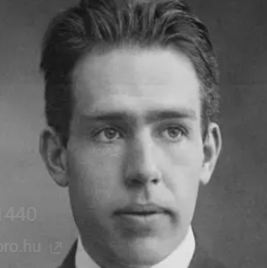
How wonderful that we have met with a paradox. Now we have some hope of making progress.
▼
Source
source
As quoted in Niels Bohr : The Man, His Science, & the World They Changed (1966) by Ruth Moore, p. 196
2 months 2 weeks ago
Existential envy which is directed against the other person's very nature, is the strongest source of ressentiment. It is as if it whispers continually: "I can forgive everything, but not that you are- that you are what you are-that I am not what you are-indeed that I am not you." This form of envy strips the opponent of his very existence, for this existence as such is felt to be a "pressure," a "reproach," and an unbearable humiliation. In the lives of great men there are always critical periods of instability, in which they alternately envy and try to love those whose merits they cannot but esteem. Only gradually, one of these attitudes will predominate. Here lies the meaning of Goethe's reflection that "against another's great merits, there is no remedy but love."
▼
Source
source
L. Coser, trans. (1973), pp. 52-53

3 months 3 weeks ago
He sees as well as you do that courage is not simply one of the virtues, but the form of every virtue at the testing point, which means, at the point of highest reality. A chastity or honesty, or mercy, which yields to danger will be chaste or honest or merciful only on conditions.
▼
Source
source
Letter XXIX
2 months 2 weeks ago
I know of nothing more terrible than the poor creatures who have learned too much. Instead of the sound powerful judgement which would probably have grown up if they had learned nothing, their thoughts creep timidly and hypnotically after words, principles and formulae, constantly by the same paths. What they have acquired is a spider's web of thoughts too weak to furnish sure supports, but complicated enough to provide confusion.
▼
Source
source
On the Relative Educational Value of the Classics and the Mathematico-Physical Sciences in Colleges and High Schools, an address in (16 April 1886)
2 months 4 weeks ago
I believe the world grows near its end, yet is neither old nor decayed, nor will ever perish upon the ruins of its own principles.
▼
Source
source
Section 45
1 month 2 weeks ago
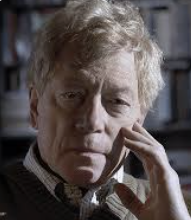
An international socialism is the stated ideal of most socialists; an international liberalism is the unstated tendency of the liberal. To neither system is it thinkable that men live, not by universal aspirations but by local attachments; not by a "solidarity" that stretches across the globe from end to end, but by obligations that are understood in terms which separate men from most of their fellows-in terms such as national history, religion, language, and the customs that provide the basis of legitimacy.
▼
Source
source
How to be a Non-Liberal, Anti-Socialist Conservative, Intercollegiate Review: A Journal of Scholarship and Opinion
4 months 1 day ago
The first method for estimating the intelligence of a ruler is to look at the men he has around him.
▼
Source
source
The Prince (1513), Ch. 22



4 months 1 week ago
You are a little soul carrying a corpse around, as Epictetus used to say.
▼
Source
source
Fragment 26 (Oldfather translation). This fragment originates from Marcus Aurelius, Meditations, IV. 41.

2 months 4 weeks ago
An American cannot converse, but he can discuss, and his talk falls into a dissertation. He speaks to you as if he was addressing a meeting; and if he should chance to become warm in the discussion, he will say "Gentlemen" to the person with whom he is conversing.
▼
Source
source
Chapter XIV.

3 months 3 weeks ago
Be quiet! Anyone can spit in my face, and call me a criminal and a prostitute. But no one has the right to judge my remorse.
▼
Source
source
Act 1

3 months 2 weeks ago
The public execution, then, has a juridico-political function. It is a ceremonial by which a momentarily injured sovereignty is reconstituted. It restores that sovereignty by manifesting it at its most spectacular. The public execution, however hasty and everyday, belongs to a whole series of great rituals in which power is eclipsed and restored (coronation, entry of the king into a conquered city, the submission of rebellious subjects); over and above the crime that has placed the sovereign in contempt, it deploys before all eyes an invincible force. Its aim is not so much to re-establish a balance as to bring into play, as its extreme point, the dissymmetry between the subject who has dared to violate the law and the all-powerful sovereign who displays his strength.
▼
Source
source
Chapter One, The Spectacle of the Scaffold

2 days ago
If the early Chinese people had any chivalry, it was manifested not toward women and children, but toward old people. That feeling of chivalry found clear expression in Mencius in some such saying as, "The people with gray hair should not be seen carrying burdens on the street," which was expressed as the final goal of good government.
▼
Source
source
p. 193

3 months 3 weeks ago
The study a posteriori of the distribution of consciousness shows it to be exactly such as we might expect in an organ added for the sake of steering a nervous system grown too complex to regulate itself.
▼
Source
source
Ch. 5
2 months 2 weeks ago
Utopia is a mixture of childish rationalism and secularized angelism.
3 months 5 days ago
Truth is so great a perfection, that if God would render himself visible to men, he would choose light for his body and truth for his soul.
▼
Source
source
As quoted in A Dictionary of Thoughts: Being a Cyclopedia of Laconic Quotations from the Best Authors of the World, both Ancient and Modern (1908) by Tyron Edwards, p. 592
2 months 2 weeks ago
You have heard that it was said to those of old, 'You shall not commit adultery.' But I say to you that whoever looks at a woman to lust for her has already committed adultery with her in his heart. If your right eye causes you to sin, pluck it out and cast it from you; for it is more profitable for you that one of your members perish, than for your whole body to be cast into hell. And if your right hand causes you to sin, cut it off and cast it from you; for it is more profitable for you that one of your members perish, than for your whole body to be cast into hell.
▼
Source
source
Exodus 20:14, Seventh Commandment Matthew 5:27-30 (NKJV)
2 months 2 weeks ago
The class of big capitalists, who, in all civilized countries, are already in almost exclusive possession of all the means of subsistance and of the instruments (machines, factories) and materials necessary for the production of the means of subsistence. This is the bourgeois class, or the bourgeoisie.
2 months 3 days ago
Man is to be found in reason, God in the passions.
▼
Source
source
K 21

4 months 1 day ago
When I play with my cat, who knows if I am not a pastime to her more than she is to me?
▼
Source
source
Ch. 12 (tr. Donald M. Frame) , tr. David Wills, 2008
3 months 3 weeks ago
I met, not long ago, a young man who aspired to become a novelist. Knowing that I was in the profession, he asked me to tell him how he should set to work to realize his ambition. I did my best to explain. 'The first thing,' I said, 'is to buy quite a lot of paper, a bottle of ink, and a pen. After that you merely have to write.'
▼
Source
source
"Sermons in Cats"

4 months 1 day ago
I know well what I am fleeing from but not what I am in search of.
▼
Source
source
Book III, Ch. 9
3 months 3 weeks ago
To see ourselves as others see us is a most salutary gift. Hardly less important is the capacity to see others as they see themselves.
▼
Source
source
Page 159
2 months 2 weeks ago
"Meeting, after several years, someone we used to know as a child, the first glance almost always suggests that some great disaster must have befallen him" Leopardi, quoted by cioran.
4 days ago
Violence, less and less embarrassed by the limits imposed by centuries of lawfulness, is brazenly and victoriously striding across the whole world, unconcerned that its infertility has been demonstrated and proved many times in history. What is more, it is not simply crude power that triumphs abroad, but its exultant justification. The world is being inundated by the brazen conviction that power can do anything, justice nothing.
CivilSimian.com created by AxiomaticPanic, CivilSimian, Kalokagathia