

4 months 2 weeks ago
If self-knowledge does not lead to knowing oneself before God - well, then there is something to what purely human self-observation says, namely, this self-knowledge leads to a certain emptiness that produces dizziness. Only by being before God can one totally come to oneself in the transparency of soberness.

2 months 2 days ago
Like monarchy, monotheism had a martial origin. "It is only on the march and it time of war," says Robertson Smith in The Prophets of Israel, "that a nomad people feels any urgent need of a central authority, and so it came about that in the first beginnings of national organization, centering in the sanctuary of the ark, Israel was thought of mainly as a host of Jehovah. the very name of Israel is martial, and means 'God (El) fighteth,' and Jehovah in the Old Testament is Iahwé Cebāôth - the Jehovah of the armies of Israel. It was on the battlefield that Jehovah's presence was most clearly realized; but in primitive nations the leader in time of war is also the natural judge in time of peace."
3 months 2 weeks ago
Without risks or prizes for the darer, history would be insipid indeed; and there is a type of military character which every one feels that the race should never cease to breed, for everyone is sensitive to its superiority. The duty is incumbent on mankind, of keeping military character in stock - if keeping them, if not for use, then as ends in themselves and as pure pieces of perfection, - so that Roosevelt's weaklings and mollycoddles may not end by making everything else disappear from the face of nature.

1 month 4 weeks ago
This is a strange -- and rather alarming -- realisation. For it clearly implies that masturbation is one of our highest faculties that human beings have developed. Many animals masturbate -- but never without the presence of another animal, or some similar stimulus. A human being can masturbate in an empty room: a triumph of pure imagination.
▼
Source
source
p. 90

3 months 2 weeks ago
I, for my part, do not conceive an act as having causes, and I consider myself satisfied when I have found in it not its 'factors' but the general themes which it organizes: for our decisions gather into new syntheses and on new occasions the leitmotif that governs our life
▼
Source
source
p. 461
2 months 1 week ago
The old dualistic notion of mind and matter, so prominent in Cartesianism, as two radically different kinds of substance, will hardly find defenders to-day. Rejecting this, we are driven to some form of hylopathy, otherwise called monism.

3 months 2 weeks ago
If there is equality, it is in His love, not in us.
1 month 4 weeks ago
The struggle to end sexist oppression that focuses on destroying the cultural basis for such domination strengthens other liberation struggles. Individuals who fight for the eradication of sexism without struggles to end racism or classism undermine their own efforts. Individuals who fight for the eradication of racism or classism while supporting sexist oppression are helping to maintain the cultural basis of all forms of group oppression.

6 days ago
Civil government does by its nature include much that is mechanical, and must be treated accordingly. We term it indeed, in ordinary language, the Machine of Society, and talk of it as the grand working wheel from which all private machines must derive, or to which they must adapt, their movements.

3 months 2 weeks ago
These labourers, who must sell themselves piecemeal, are a commodity, like every other article of commerce, and are consequently exposed to all the vicissitudes of competition, to all the fluctuations of the market.
▼
Source
source
Section 1, Paragraph 30

3 months 2 weeks ago
Philosophy seems to me on the whole a rather hopeless business.
▼
Source
source
Letter to Gilbert Murray, December 28, 1902
2 months 1 day ago
Hegel ... destroyed the illusion of the subject's being-in-itself and showed that the subject is itself an aspect of social objectivity. ... However, ... we must ask this question: is this objectivity which we have shown to be a necessary condition and which subsumes abstract subjectivity in fact the higher factor? Does it not rather remain precisely what Hegel reproached it with being in his youth, namely pure externality, the coercive collective? Does not the retreat to this supposedly higher authority signify the regression of the subject, which had earlier won its freedom only with the greatest efforts, with infinite pains?
▼
Source
source
p. 16
1 month 2 weeks ago
Just acquiring this amount of "education" will not, by itself, make you an educated person, even less will it give you what Oakeshott calls "judgment." But if the manner of instruction is adequate, the student should be able to acquire this much knowledge in a way that combines intellectual openness, critical scrutiny, and logical clarity. If so, learning will not stop when the student leaves the university.
4 weeks ago
I want to write - I want to write - I want to write and never never never will. I know it and I am so unhappy and it seems as though nothing else mattered. Whatever I'm doing, it's always there, an ultimate longing there saying, "Write this - write that - write -" and I can't. Lack ability, time, strength, and duration of vision. I wish someone would tell me brutally, "You can never write anything. Take up home gardening!"
2 months 2 days ago
I am dreaming ...? Let me dream, if this dream is my life. Do not awaken me from it. I believe in the immortal origin of this yearning for immortality, which is the very substance of my soul. But do I really believe in it ...? And wherefore do you want to be immortal? you ask me, wherefore? Frankly, I do not understand the question, for it is to ask the reason of the reason, the end of the end, the principle of the principle.

2 months 3 weeks ago
The created World is but a small Parenthesis in Eternity.
▼
Source
source
Part III, Section XXIX
3 months 3 weeks ago
The human understanding is unquiet; it cannot stop or rest, and still presses onward, but in vain. Therefore it is that we cannot conceive of any end or limit to the world, but always as of necessity it occurs to us that there is something beyond... But he is no less an unskilled and shallow philosopher who seeks causes of that which is most general, than he who in things subordinate and subaltern omits to do so.
▼
Source
source
Aphorism 48
4 months 1 day ago
The confession of evil works is the first beginning of good works.
▼
Source
source
Tractates on the Gospel of John; tractate XII on John 3:6-21, and 13
2 months 2 days ago
We men do nothing but lie and make ourselves important. Speech was invented for the purpose of magnifying all of our sensations and impressions - perhaps so that we could believe in them.
▼
Source
source
Niebla [Mist]
3 months 2 weeks ago
This inner revolution is realistic because it maintains itself deliberately within the framework of existing institutions; the oppressed reckon with the real situation.
▼
Source
source
p. 66

3 months 3 weeks ago
Unless I am convinced by the testimony of the Scriptures or by clear reason (for I do not trust either in the pope or in councils alone, since it is well known that they have often erred and contradicted themselves), I am bound by the Scriptures I have quoted and my conscience is captive to the Word of God. I cannot and will not recant anything, since it is neither safe nor right to go against conscience. May God help me. Amen.
▼
Source
source
Statement in defense of his writings at the Diet of Worms (19 April 1521), as translated in The Nature of Protestantism (1963) by Karl Heim, p. 78

3 months 1 week ago
The Democratic Party is beyond redemption at this point when it comes to seriously speaking to the needs of poor and working people... The neofascism that's escalating is predicated on the rottenness of a system in which the Democratic Party facilitates that frustration and desperation because it can't present an alternative... If America is unable to present an alternative to the Democratic Party, then we're going fascist.
1 month 1 week ago
My friends, I tell you that hitherto you have been prevented from even knowing what happiness really is, solely in consequence of the errors - gross errors - that have been combined with the fundamental notions of every religion that has hitherto been taught to men. And, in consequence, they have made man the most inconsistent, and the most miserable being in existence. By the errors of these systems he has been made a weak, imbecile animal; a furious bigot and fanatic or a miserable hypocrite; and should these qualities be carried, not only into the projected villages, but into Paradise itself, a Paradise would no longer be found!
▼
Source
source
Statement (21 August 1817), as quoted by Jim Herrick, in "Bradlaugh and Secularism: 'The Province of the Real'"

3 months 3 weeks ago
Animals only follow their natural instincts; but man, unless he has experienced the influence of learning and philosophy, is at the mercy of impulses that are worse than those of a wild beast. There is no beast more savage and dangerous than a human being who is swept along by the passions of ambition, greed, anger, envy, extravagance, and sensuality.
▼
Source
source
Translated by Beert C. Verstraete as On Education for Children, in The Erasmus Reader (University of Toronto Press: 1990), p. 73

4 months 1 week ago
Real fulfillment, for the man who allows absolutely free rein to his desires, and who must dominate everything, lies in hatred.

1 month 4 weeks ago
Its first ethical precept is the identity of means used and aims sought. The ultimate end of all revolutionary social change is to establish the sanctity of human life, the dignity of man, the right of every human being to liberty and wellbeing. Unless this be the essential aim of revolution, violent social changes would have no justification. For external social alterations can be, and have been, accomplished by the normal processes of evolution. Revolution, on the contrary, signifies not mere external change, but internal, basic, fundamental change. That internal change of concepts and ideas, permeating ever-larger social strata, finally culminates in the violent upheaval known as revolution.

1 month 1 week ago
Interface, of the resonant interval as 'where the action is', whether chemical, psychic or social, involves touch.
▼
Source
source
p. 102

2 months 3 weeks ago
For those endowed with insight there is in reality no object of love but God, nor does anyone but He deserve love Love, Longing, Intimacy and Contentment.
▼
Source
source
Islamic Texts Society. 2011. p. 23. ISBN 978-1-903682-27-2. Translated with an introduction and notes by Eric Ormsby.

3 months 2 weeks ago
Technological progress has merely provided us with more efficient means for going backwards.
▼
Source
source
Ch. 1, p. 9 [2012 reprint]. Also in "Tomorrow and Tomorrow and Tomorrow" in Adonis and the Alphabet (1956); later in Collected Essays (1959), p. 293
1 week 1 day ago
One of the most striking signs of the decay of art is the intermixing of different genres.
▼
Source
source
Propylaea (1798) Introduction

2 months 1 week ago
All men cannot receive this saying, save they to whom it is given. For there are some eunuchs, which were so born from their mother's womb: and there are some eunuchs, which were made eunuchs of men: and there be eunuchs, which have made themselves eunuchs for the kingdom of heaven's sake. He that is able to receive it, let him receive it.
▼
Source
source
19:11-12 (KJV)
3 weeks 3 days ago
To understand how indirect communication is possible we must grasp what it is about ordinary communication that is being changed.
▼
Source
source
Chapter 6, Indirect Communication, p. 110
2 months 3 weeks ago
The proximity between the counterfeit and the good coin does not make the good coin counterfeit nor the counterfeit good. In the same way the proximity between truth and falsehood does not make truth falsehood nor falsehood truth.
▼
Source
source
III. The Classes of Seekers, p. 33.

3 months 2 weeks ago
That the sun will not rise to-morrow is no less intelligible a proposition, and implies no contradiction, than the affirmation, that it will rise.
▼
Source
source
§ 4.8
2 months 1 week ago
The Spirit of the Lord is on me, because he has anointed me to proclaim good news to the poor. He has sent me to proclaim freedom for the prisoners and recovery of sight for the blind, to set the oppressed free, to proclaim the year of the Lord's favor.
▼
Source
source
Luke 4:18-19 NIV
2 months 2 weeks ago
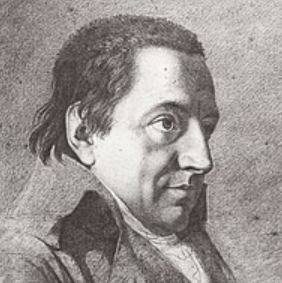
Show me what thou truly lovest, what thou seekest and strivest for with thy whole heart when thou hopest to attain to true en joyment of thyself-and thou hast thereby shown me thy Life. What thou lovest, in that thou livest. This very Love is thy Life, the root, the seat, the central point of thy being. All other emotions within thee have life only in so far as they are governed by this one central emotion.
▼
Source
source
P. 3
3 months 2 weeks ago
Morality is thus the relation of actions to the autonomy of the will, that is, to a possible giving of universal law through its maxims. An action that can coexist with the autonomy of the will is permitted; one that does not accord with it is forbidden. A will whose maxims necessarily harmonize with the laws of autonomy is a holy, absolutely good will. The dependence upon the principle of autonomy of a will that is not absolutely good (moral necessitation) is obligation. This, accordingly, cannot be attributed to a holy being. The objective of an action from obligation is called duty.
1 week 5 days ago
Love, in spite of the romantics, is not self-sustaining; it endures only when the lovers love many things together, and not merely each other.
▼
Source
source
Ch. XIV: "Love in the Great Society", §6, pp. 308-309
3 months 5 days ago
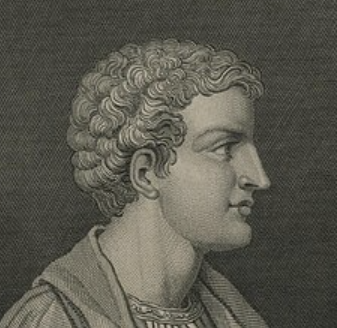
Look round and round the man you recommend, for yours will be the shame should he offend.
▼
Source
source
Book I, epistle xviii, line 76 (translated by John Conington).
4 months 4 days ago
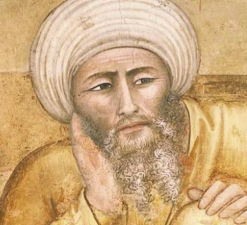
On the whole, a man who denies the existence of the effects arranged according to the causes in the question of arts, or whose wisdom cannot understand it, then he has no knowledge of the art of its Maker.
2 months 1 week ago
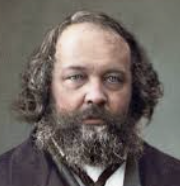
We wish, in a word, equality - equality in fact as a corollary, or rather, as primordial condition of liberty. From each according to his faculties, to each according to his needs; that is what we wish sincerely and energetically.
▼
Source
source
As quoted in The Old Order and the New (1890) by J. Morris Davidson
3 months 3 weeks ago
Rejoice in the things that are present; all else is beyond thee.
3 months 2 weeks ago
They made me take cod liver oil: that is the height of luxury: a medicine to make you hungry while the others, in the street, would have sold themselves for a beefsteak. I saw them passing my window with their signs: "Give me bread".
▼
Source
source
Act 3, sc. 3
3 months 2 weeks ago
The History of the world is none other than the progress of the consciousness of Freedom; a progress whose development according to the necessity of its nature, it is our business to investigate.
▼
Source
source
Part III. Philosophic History; § 21, as translated by John Sibree; p. 19, (1900 edition) Variant translated by Robert S. Hartman, in Reason In History, A General Introduction to the Philosophy of History (1953) , 3/1/2007
1 month 4 weeks ago
Jung believed that he was proceeding scientifically, but most Freudians remain convinced that he was inventing his own underground realm, rather as Tolkien invented Middle Earth. There is at least an element of truth in this view.
▼
Source
source
p. 126
2 months 2 weeks ago
The life of the wealthy is one long Sunday.
3 months 2 weeks ago
He asked my religion and I replied 'agnostic'. He asked how to spell it, and remarked with a sigh: 'Well, there are many religions, but I suppose they all worship the same God. This remark kept me cheerful for about a week.
1 month 4 weeks ago
The STATE IDEA, the authoritarian principle, has been proven bankrupt by the experience of the Russian Revolution. If I were to sum up my whole argument in one sentence I should say: The inherent tendency of the State is to concentrate, to narrow, and monopolize all social activities; the nature of revolution is, on the contrary, to grow, to broaden, and disseminate itself in ever-wider circles. In other words, the State is institutional and static; revolution is fluent, dynamic. These two tendencies are incompatible and mutually destructive. The State idea killed the Russian Revolution and it must have the same result in all other revolutions, unless the libertarian idea prevail.
3 months 2 weeks ago
The original scriptures of most religions are poetical and unsystematic. Theology, which generally takes the form of a reasoned commentary on the parables and aphorisms of the scriptures, tends to make its appearance at a later stage of religious history. The Bhagavad-Gita occupies an intermediate position between scripture and theology; for it combines the poetical qualities of the first with the clear-cut methodicalness of the second... one of the clearest and most comprehensive summaries of the Perennial Philosophy ever to have been made. Hence its enduring value, not only for Indians, but for all mankind.
1 month 4 weeks ago
It is true that parents today are learning to enhance the physical qualities of their children. But their minds and characters they cannot mould. The antiquated system of education and our perverse social influences unfortunately do that. In view of the numerous misfit and marred children these institutions have created, I am quite content not to have contributed any of my own.
CivilSimian.com created by AxiomaticPanic, CivilSimian, Kalokagathia