


1 week 4 days ago
Some economists also use the terms Fordism and pos-Fordism to mark the shift from an economy characterized by the stable-long-term employment typical of factory workers to one marked by flexible, mobile, and precarious labor relations: flexible because workers have to adapt to different tasks, mobile because workers have to move frequently between jobs, and precarious because no contracts guarantee stable, long-term employment. Whereas economic modernization, which developed Fordist labor relations, centered on the conomies of scale and larga systems of production and exchange, economic postmodernization, with its post-Fordist labor relations, develops smaller-scale, flexible systems.
▼
Source
source
112
4 months 3 days ago
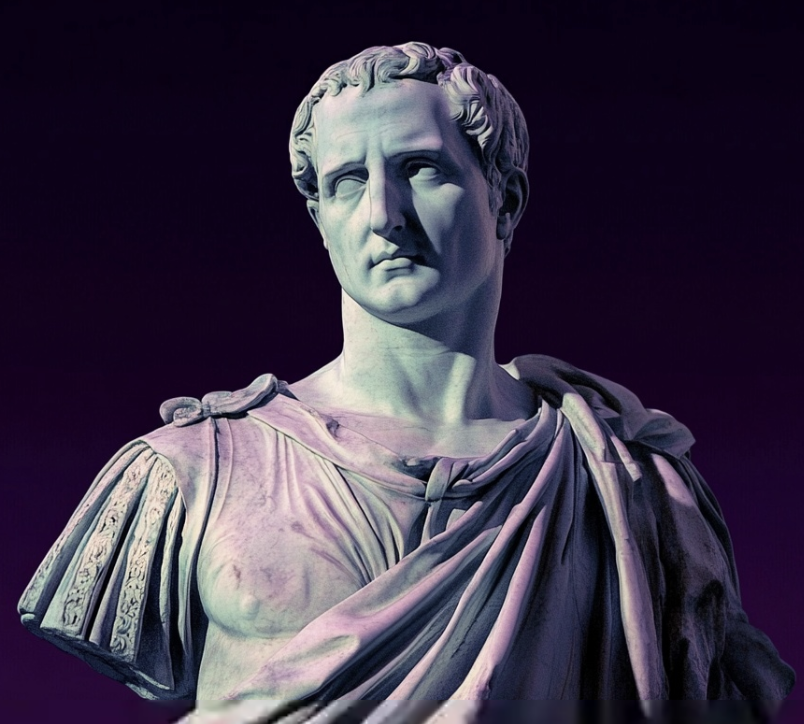
I will speak in a low voice, just so as to let the judges hear me. For men are not wanting who would be glad to excite that people against me and against every eminent man; and I will not assist them and enable them to do so more easily.
▼
Source
source
Cicero, The Orations of Marcus Tullius Cicero; Translation by C.D. Yonge., 1856.

3 months 2 weeks ago
The method of "postulating" what we want has many advantages; they are the same as the advantages of theft over honest toil.
▼
Source
source
Ch. 7: Rational, Real and Complex Numbers

2 months 1 week ago
Accordingly, time logically supposes a continuous range of intensity of feeling. It follows then, from the definition of continuity, that when any particular kind of feeling is present, an infinitesimal continuum of all feelings differing infinitesimally from that, is present.
1 month 4 days ago
All parties seem to be agreed on one point, that the dialects commonly spoken among the natives of this part of India contain neither literary nor scientific information, and are moreover so poor and rude that, until they are enriched from some other quarter, it will not be easy to translate any valuable work into them.
3 months 2 weeks ago
Intuitionism is not constructive, perfectionism is unacceptable.
▼
Source
source
Chapter I, Section 9, pg. 52
3 months 2 weeks ago
Greater intelligence, wealth and opportunity, for example, allow a person to achieve ends he could not rationally contemplate otherwise.
▼
Source
source
Chapter II, Section 15, pg. 93
2 months 1 day ago
Whenever one tries to suppress doubt, there is tyranny.
▼
Source
source
Lectures in philosophy [Leçons de philosophie] (1959) as translated by Hugh Price p. 103

3 months 3 weeks ago
Tis the sharpness of our mind that gives the edge to our pains and pleasures.
▼
Source
source
Book I, Ch. 14

3 months 6 days ago
Commit no slander; so that infamy and wickedness may not happen unto thee.
▼
Source
source
(p. 59)

3 months 1 week ago
To be an intellectual really means to speak a truth that allows suffering to speak. That is, it creates a vision of the world that puts into the limelight the social misery that is usually hidden or concealed by the dominant viewpoints of a society. "Intellectual" in that sense simply means those who are willing to reflect critically upon themselves as well as upon the larger society and to ascertain whether there is some possibility of amelioration and betterment.
▼
Source
source
"Chekhov, Coltrane, and Democracy: Interview by David Lionel Smith." in The Cornel West Reader. Basic Books. 2000. p. 551. ISBN 978-0-465-09110-2.

1 week 3 days ago
He whom God has touched will always be a being apart: he is, whatever he may do, a stranger among men; he is marked by a sign.
▼
Source
source
Oeuvres Complètes, vol. 3. L'Avenir de la Science (1890).
3 months 1 week ago
There is hardly a philosophy which has not invoked something like the will or desire to know, the love of truth, etcetera. But, in truth, very few philosophers-apart, perhaps, from Spinoza and Schopenhauer-have accorded it more than a marginal status; as if there was no need for philosophy to say first of all what the name that it bears actually refers to. As if placing at the head of its discourse the desire to know, which it repeats in its name, was enough to justify its own existence and show-at a stroke-that it is necessary and natural: All men desire to know. Who, then, is not a philosopher, and how could philosophy not be the most necessary thing in the world?
▼
Source
source
pp. 4-5
3 months 2 weeks ago
It is from the Bible that man has learned cruelty, rapine, and murder; for the belief of a cruel God makes a cruel man.
▼
Source
source
A Letter: Being an Answer to a Friend, on the publication of The Age of Reason" (12 May 1797), published in an 1852 edition of The Age of Reason, p. 205
1 month 1 day ago
Science has taught... me to be careful how I adopt a view which jumps with my preconceptions, and to require stronger evidence for such belief than for one to which I was previously hostile. My business is to teach my aspirations to conform themselves to fact, not to try and make facts harmonise with my aspirations.

2 months 1 week ago
Tyranny is just what one can develop a taste for, since it so happens that man prefers to wallow in fear rather than to face the anguish of being himself.
4 months 1 week ago
We certainly must contend by every argument against him who does away with knowledge or reason or mind and then makes any dogmatic assertion about anything. The philosopher, who pays the highest honor to these things, must necessarily, as it seems, because of them refuse to accept the theory of those who say the universe is at rest, whether as a unity or in many forms, and must also refuse utterly to listen to those who say that being is universal motion; he must say that being and the universe consist of both.

3 months 2 weeks ago
The Beatific Vision, Sat Chit Ananda, Being-Awareness-Bliss-for the first time I understood, not on the verbal level, not by inchoate hints or at a distance, but precisely and completely what those prodigious syllables referred to. And then I remembered a passage I had read in one of Suzuki's essays. "What is the Dharma-Body of the Buddha?" ('"the Dharma-Body of the Buddha" is another way of saying Mind, Suchness, the Void, the Godhead.) The question is asked in a Zen monastery by an earnest and bewildered novice. And with the prompt irrelevance of one of the Marx Brothers, the Master answers, "The hedge at the bottom of the garden." "And the man who realizes this truth," the novice dubiously inquires, "what, may I ask, is he?" Groucho gives him a whack over the shoulders with his staff and answers, "A golden-haired lion."

1 month 4 weeks ago
The exploration of oneself is usually also an exploration of the world at large, of other writers, a process of comparison with oneself with others, discoveries of kinships, gradual illumination of one's own potentialities.
▼
Source
source
p. 231

6 days ago
Let the modern eye look earnestly on that old midnight hour in St. Edmundsbury Church, shining yet on us, ruddy-bright, through the depths of seven hundred years; and consider mournfully what our Hero-worship once was, and what it now is!
1 month 4 weeks ago
To die is to wander.

3 months 2 weeks ago
Each pursues his private interest and only his private interest; and thereby serves the private interests of all, the general interest, without willing it or knowing it. The real point is not that each individual's pursuit of his private interest promotes the totality of private interests, the general interest. One could just as well deduce from this abstract phrase that each individual reciprocally blocks the assertion of the others' interests, so that, instead of a general affirmation, this war of all against all produces a general negation.
▼
Source
source
Notebook I, The Chapter on Money, p. 76.
3 months 2 weeks ago
The mere word 'design' by itself has no consequences and explains nothing. It is the barrenest of principles. The old question of whether there is design is idle. The real question is what is the world, whether or not it have a designer - and that can be revealed only by the study of all nature's particulars.
▼
Source
source
Lecture III, Some Metaphysical Problems Pragmatically Considered
4 months 1 day ago
The inclination to seek the truth is safer than the presumption which regards unknown things as known.
▼
Source
source
(Cambridge: 2002), Book 9, Chapter 1, p. 24
3 months 2 weeks ago
I must confess that I am deeply troubled. I fear that human beings are intent upon acting out a vast deathwish and that it lies with us now to make every effort to promote resistance to the insanity and brutality of policies which encompass the extermination of hundreds of millions of human beings.
▼
Source
source
Letter to Rudolf Carnap, June 21, 1962
2 months 1 week ago
Perhaps the only true dignity of man is his capacity to despise himself.
2 months 1 week ago
To call war the soil of courage and virtue is like calling debauchery the soil of love.
▼
Source
source
Ch. III: Industry, Government, the peasants
3 months 2 weeks ago
If conquest constitutes a natural right on the part of the few, the many have only to gather sufficient strength in order to acquire the natural right of reconquering what has been taken from them.
▼
Source
source
The Abolition of Landed Property Letter to Robert Applegarth, 3 December 1869
3 months 2 weeks ago
No man treats a motorcar as foolishly as he treats another human being. When the car will not go, he does not attribute its annoying behaviour to sin; he does not say, "You are a wicked motorcar, and I shall not give you any more petrol until you go." He attempts to find out what is wrong and to set it right. An analogous way of treating human beings is, however, considered to be contrary to the truths of our holy religion.
▼
Source
source
"The Doctrine of Free Will"

2 months 1 day ago
Religion in so far as it is a source of consolation is a hindrance to true faith; and in this sense atheism is a purification. I have to be an atheist with that part of myself which is not made for God. Among those in whom the supernatural part of themselves has not been awakened, the atheists are right and the believers wrong.
▼
Source
source
"Faiths of Meditation; Contemplation of the divine" as translated in The Simone Weil Reader (1957) edited by George A. Panichas, p. 417
2 months 1 week ago
Few new truths have ever won their way against the resistance of established ideas save by being overstated.
▼
Source
source
As quoted in Communications and History : Theories of Knowledge, Media and Civilization (1988) by Paul Heyer, p. 125
3 months 1 week ago
In order to remain silent Da-sein must have something to say.
▼
Source
source
Stambaugh translation

3 months 2 weeks ago
You don't have a soul. You are a soul. You have a body.
▼
Source
source
Commonly attributed to Mere Christianity, where it is not found. Earliest reference seems to be an unsourced attribution to George MacDonald in an 1892 issue of the Quaker periodical The British Friend.
3 months 2 weeks ago
What modern apologists call 'true' Christianity is something depending upon a very selective process. It ignores much that is to be found in the Gospels: for example, the parable of the sheep and the goats, and the doctrine that the wicked will suffer eternal torment in Hell fire. It picks out certain parts of the Sermon on the Mount, though even these it often rejects in practice. It leaves the doctrine of non-resistance, for example, to be practised only by non-Christians such as Gandhi. The precepts that it particularly favours are held to embody such a lofty morality that they must have had a divine origin. And yet ... these precepts were uttered by Jews before the time of Christ.
▼
Source
source
"Can Religion Cure Our Troubles?", in Stockholm newspaper Dagens Nyheter, part II., 11/11/1954
1 month 4 days ago
We have seen that the true source of the power of demagogues is the obstinacy of rulers and that a liberal Government makes a conservative people.
▼
Source
source
Speech in the House of Commons on the Reform Bill (5 July 1831), quoted in Speeches of the Right Honourable T. B. Macaulay, M.P. (1854), pp. 28-29

2 months 3 weeks ago
It is then unnecessary to investigate whether there be beyond the heaven Space, Void or Time. For there is a single general space, a single vast immensity which we may freely call Void; in it are innumerable globes like this one on which we live and grow. This space we declare to be infinite, since neither reason, convenience, possibility, sense-perception nor nature assign to it a limit. In it are an infinity of worlds of the same kind as our own.
1 month 1 week ago
What worries me about religion is that it teaches people to be satisfied with not understanding the world they live in.
▼
Source
source
Heart Of The Matter: God Under The Microscope | BBC
2 months 1 week ago
Liberal philosophy, at this point, ceases to be empirical and British in order to become German and transcendental. Moral life, it now believes, is not the pursuit of liberty and happiness of all sorts by all sorts of different creatures; it is the development of a single spirit in all life through a series of necessary phases, each higher than the preceding one. No man, accordingly, can really or ultimately desire anything but what the best people desire. This is the principle of the higher snobbery; and in fact, all earnest liberals are higher snobs.
▼
Source
source
"The Irony of Liberalism"
3 months 2 weeks ago
I am trying here to prevent anyone saying the really foolish thing that people often say about Him: 'I'm ready to accept Jesus as a great moral teacher, but I don't accept His claim to be God.' That is the one thing we must not say. A man who was merely a man and said the sort of things Jesus said would not be a great moral teacher. He would be either a lunatic-on a level with the man who says he is a poached egg-or else he would be the Devil of Hell. You must make your choice. Either this man was, and is, the Son of God: or else a madman or something worse. You can shut Him up for a fool, you can spit at Him and kill Him as a demon; or you can fall at His feet and call Him Lord and God. But let us not come with any patronising nonsense about His being a great human teacher. He has not left that open to us. He did not intend to.
▼
Source
source
Book II, Chapter 3, "The Shocking Alternative"
2 months 1 week ago
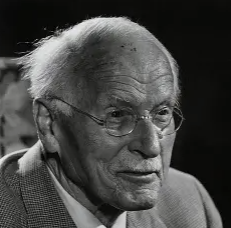
The discussion of the sexual problem is only a somewhat crude prelude to a far deeper question, and that is the question of the psychological relationship between the sexes. In comparison with this the other pales into insignificance, and with it we enter the real domain of woman. Woman's psychology is founded on the principle of Eros, the great binder and loosener, whereas from ancient times the ruling principle ascribed to man is Logos.
▼
Source
source
P.254

3 months 2 weeks ago
I wanted pure love: foolishness; to love one another is to hate a common enemy: I will thus espouse your hatred. I wanted Good: nonsense; on this earth and in these times, Good and Bad are inseparable: I accept to be evil in order to become good.
▼
Source
source
Act 11, sc. 2
6 days ago
Under all speech that is good for anything there lies a silence that is better.
▼
Source
source
Silence is deep as Eternity; speech is shallow as Time.
2 months 1 day ago
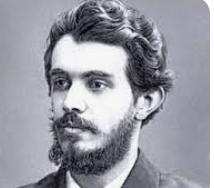
The life of Berdyaev spans the momentous events of the first half of the twentieth century in Europe. He was no ivory tower philosopher but was intimately affected by these events throughout his life and drew his inspirations from them regarding the nature of the human condition. His writings bear the imprint of the catastrophic situations within which he was destined to live.
▼
Source
source
Richard Schain, in In Love with Eternity : Philosophical Essays and Fragments (2005), Ch. 7 : Nikolai Alexandrovich Berdyaev - A Champion of the Spirit, p. 43
2 months 1 week ago
The deep critical thinker has become the misfit of the world. This is not a coincidence. To maintain order and control you must isolate the intellectual, the sage, the philosopher, the savant before their ideas awaken people.
2 months 1 week ago
When I happen to be busy, I never give a moment's thought to the "meaning" of anything, particularly of whatever it is I am doing. A proof that the secret of everything is in action and not abstention, that fatal cause of consciousness.
2 months 1 week ago
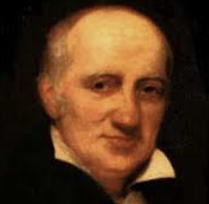
Nothing can be of more importance than to separate prejudice and mistake on the one hand from reason and demonstration on the other.
▼
Source
source
Book III, Ch.1
2 months 1 week ago
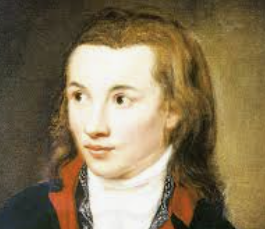
The best thing about the sciences is their philosophical ingredient, like life for an organic body. If one dephilosophizes the sciences, what remains left? Earth, air, and water.
▼
Source
source
Fragment No. 62
2 months 1 week ago
And Beasts that have Deliberation, must necessarily also have Will.
▼
Source
source
The First Part, Chapter 6, p. 28
CivilSimian.com created by AxiomaticPanic, CivilSimian, Kalokagathia