

3 months 3 weeks ago
Instead of insanity eliminating the crime according to the original meaning of article 64,every crime and even every offense now carries within it, as a legitimate suspicion, but also as a right that may be claimed, the hypothesis of insanity, in any case of anomaly. And the sentence that condemns or acquits is not simply a judgement of guily, a legal decision that lays down punishment; it bears within it an assessment of normality and a technical prescription for a possible normalization Today the judge- magistrate or juror0 certainly does more than 'judge'
▼
Source
pp. 20-21

3 months 3 weeks ago
His personal prestige, his qualities, his competence assure him a preponderant role however; since 1927 he has been above all the unchallenged specialist on peasant question. But the power he exercises is no more dictatorial than, for example, Roosevelt's was. New China's Constitution renders impossible the concentration of authority in one man's hands; the country is governed by a team whose members have been united through a long common struggle and by a close friendship.
▼
Source
On Mao Zedong, in

3 months 3 weeks ago
On the morning of November 22nd, a Friday, it became clear the gap between living and dying was closing. Realizing that Aldous [Huxley] might not survive the day, Laura [Huxley's wife] sent a telegram to his son, Matthew, urging him to come at once. At ten in the morning, an almost inaudible Aldous asked for paper and scribbled "If I go" and then some directions about his will. It was his first admission that he might die ...Around noon he asked for a pad of paper and scribbledLSD-try itintermuscular100mmIn a letter circulated to Aldous's friends, Laura Huxley described what followed: 'You know very well the uneasiness in the medical mind about this drug. But no 'authority', not even an army of authorities, could have stopped me then. I went into Aldous's room with the vial of LSD and prepared a syringe. The doctor asked me if I wanted him to give the shot- maybe because he saw that my hands were trembling. His asking me that made me conscious of my hands, and I said, 'No, I must do this.'An hour later she gave Huxley a second 100mm. Then she began to talk, bending close to his ear, whispering, 'light and free you let go, darling; forward and up. You are going forward and up; you are going toward the light. Willingly and consciously you are going, willingly and consciously, and you are doing this beautifully — you are going toward the light — you are going toward a greater love ... You are going toward Maria's [Huxley's first wife, who had died many years earlier] love with my love. You are going toward a greater love than you have ever known. You are going toward the best, the greatest love, and it is easy, it is so easy, and you are doing it so beautifully.'All struggle ceased. The breathing became slower and slower and slower until, 'like a piece of music just finishing so gently in sempre piu piano, dolcamente,' at twenty past five in the afternoon, Aldous Huxley died.
▼
Source
Laura Huxley in This Timeless Moment (1971) as quoted by Jay Stevens in Storming Heaven: LSD and the American Dream (1987)
3 months 3 weeks ago
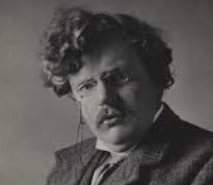
White founts falling in the courts of the sun, And the Soldan of Byzantium is smiling as they run.
▼
Source
Lepanto
3 months 3 weeks ago
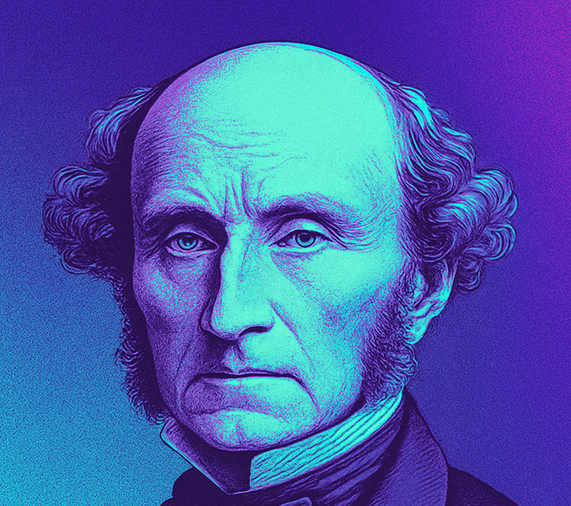
Aim at something great; aim at things which are difficult; and there is no great thing which is not difficult. Do not pare down your undertaking to what you can hope to see successful in the next few years, or in the years of your own life. Fear not the reproach of Quixotism and impracticability, or to be pointed at as the knight-errants of an idea. After you have well weighed what you undertake, if you see your way clearly, and are convinced that you are right, go forward, even though you...do it at the risk of being torn to pieces by the very men through whose changed hearts your purpose will one day be accomplished. Fight on with all your strength against whatever odds, and with however small a band of supporters. If you are right, the time will come when that small band will swell into a multitude: you will at least lay the foundations of something memorable, and you may...—though you ought not to need or expect so great a reward—be spared to see that work completed which, when you began it, you only hoped it might be given to you to help forward a few stages on its way.
▼
Source
John Stuart Mill, William Lloyd Garrison, in The Collected Works of John Stuart Mill, Toronto, 1988, vol. 28, p. 202
3 months 3 weeks ago
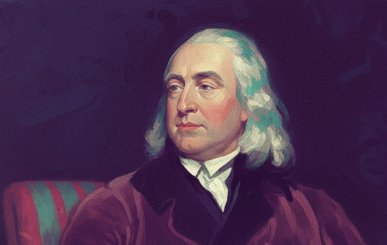
Of corruption, the principal and direct use is, to engage the representatives of the people to betray their trust, and sell themselves and the people to the universal corrupter—the monarch, in his capacity of corrupter-general.
▼
Source
Constitutional Code (written between 1820 and 1832), quoted in The Works of Jeremy Bentham, Vol. XVII (1841), p. 76
3 months 3 weeks ago
The judges of normality are present everywhere. We are in the society of the teacher-judge, the doctor-judge, the educator-judge, the social worker-judge; it is on them that the universal reign of the normative is based; and each individual, wherever he may find himself, subjects to it his body, his gestures, his behavior, his aptitudes, his achievements.
3 months 3 weeks ago
Were we really more advanced than the alchemists of Carmona? We had brought to light certain facts that they were not aware of, we had organised them into the right order; but had we advanced even a step nearer to the mysterious heart of the universe?
3 months 3 weeks ago
We are talking about an artist; and for the enjoyment of the artist the mask must be to some extent moulded on the face. What he makes outside him must correspond to something inside him; he can only make his effects out of some of the materials of his soul.
3 months 3 weeks ago
All honour to those who can abnegate for themselves the personal enjoyment of life, when by such renunciation they contribute worthily to increase the amount of happiness in the world; but he who does it, or professes to do it, for any other purpose, is no more deserving of admiration than the ascetic mounted on his pillar. He may be an inspiriting proof of what men can do, but assuredly not an example of what they should.
▼
Source
Ch. 2
3 months 3 weeks ago
The parrhesia comes from "below,"... and is directed... "above." ...[A]n ancient Greek would not say ...a teacher or father who criticizes a child uses parrhesia.
3 months 3 weeks ago
Change your life today. Don't gamble on the future, act now, without delay.
▼
Source
As quoted in The Book of Positive Quotations (2007) by John Cook, p. 548
3 months 3 weeks ago
Life in a world centred on function is liable to dispair because in reality the world is empty, it rings hollow; and if it resist this temptation it is only to the extent that there comes into plat from within it and in its favour certain hidden forces which are beyond its power to conceive or to recognise.
3 months 3 weeks ago
He was often, and much beyond reason, provoked by my failures in cases where success could not have been expected; but in the main his method was right, and it succeeded. I do not believe that any scientific teaching ever was more thorough, or better fitted for training the faculties, than the mode in which logic and political economy were taught to me by my father. Striving, even in an exaggerated degree, to call forth the activity of my faculties, by making me find out everything for myself, he gave his explanations not before, but after, I had felt the full force of the difficulties; and not only gave me an accurate knowledge of these two great subjects, as far as they were then understood, but made me a thinker on both.
▼
Source
([https://archive.org/details/autobiography01mill/page/28/mode/1up pp. 28–29])
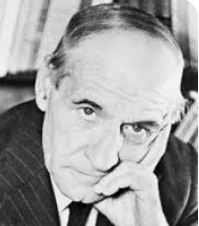
3 months 3 weeks ago
The metaphor is perhaps one of man's most fruitful potentialities. Its efficacy verges on magic, and it seems a tool for creation which God forgot inside one of His creatures when He made him. All our other faculties keep us within the realm of the real, of what is already there. The most we can do is to combine things or to break them up. The metaphor alone furnishes an escape; between the real things, it lets emerge imaginary reefs, a crop of floating islands. A strange thing, indeed, the existence in man of this mental activity which substitutes one thing for another — from an urge not so much to get at the first as to get rid of the second.
▼
Source
"Taboo and Metaphor"
3 months 3 weeks ago
In making these various critical points, I am not proposing that Foucault should lose his place in the social and political theory hall of fame. He undoubtedly deserves his berth (as well as deserving what all the other inductees have won as a right: the right to be constructively criticised). I am not even suggesting that Foucault's writings on power are totally tainted by the problems I have highlighted. Certainly, many of his pronouncements about surveillance, for instance, along with the examples offered above look overblown now. The fact that the panopticon was never actually built should have alerted more readers (including me) to this at the time his main power pieces were being published, as should have the fact that the ‘eye of power’ arrangements of hospitals, schools, factories, and so forth (see esp. Foucault 1980: 146–65) were more a matter of architectural fashion, among other things, than they were an attempt to enhance the surveillance of subjects. But making claims that now look overblown is not much of a charge; it was the 1970s after all. I think that in this context I should dismiss that charge as trivial and concentrate instead on the fact that the second and third volumes of the History of Sexuality project (both published posthumously: Foucault 1986a, 1986b) – books in which the problem of ‘theorising’ stressed above is totally absent – were inspirational to Peter Brown in producing some of the most exciting and convincing work on power produced in the last thirty years (see esp. Brown 1988). This is both Foucault on power and Foucault at his very best: ‘the author of descriptive genealogies – “grey, meticulous and patiently documentary”’ (Saunders, quoting Foucault, 1997: 105–6)
▼
Source
Gary Wickham, "Foucault and the Promise of Power without Dogma", in Routledge International Handbook of Contemporary Social and Political Theory (2011) edited by Gerard Delanty and Stephen P. Turner
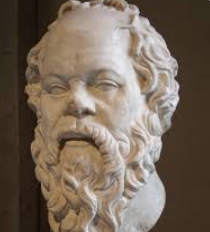
3 months 3 weeks ago
I am confident in the belief that there truly is such a thing as living again, and that the living spring from the dead, and that the souls of the dead are in existence, and that the good souls have a better portion than the evil.

3 months 3 weeks ago
Nativity is the enemy of prophecy—nativity and roots, which do not allow you to become a prophet in your own land, unless you disassociate from the familiarity of family.
▼
Source
On creating independence. [http://worldpolicy.org/2017/10/17/puerto-rico-i-took-liberties/] (World Policy Institute, October 17, 2017)
3 months 3 weeks ago
The influence of Charles Austin over me differed from that of the persons I have hitherto mentioned, in being not the influence of a man over a boy, but that of an elder contemporary. It was through him that I first felt myself, not a pupil under teachers, but a man among men. He was the first person of intellect whom I met on a ground of equality, though as yet much his inferior on that common ground. He was a man who never failed to impress greatly those with whom he came in contact, even when their opinions were the very reverse of his. The impression he gave was that of boundless strength, together with talents which, combined with such apparent force of will and character, seemed capable of dominating the world. Those who knew him, whether friendly to him or not, always anticipated that he would play a conspicuous part in public life. It is seldom that men produce so great an immediate effect by speech, unless they, in some degree, lay themselves out for it; and he did this in no ordinary degree. He loved to strike, and even to startle. He knew that decision is the greatest element of effect, and he uttered his opinions with all the decision he could throw into them, never so well pleased as when he astonished any one by their audacity.
▼
Source
([https://archive.org/details/autobiography01mill/page/77/mode/1up pp. 77-78])
3 months 3 weeks ago
Human life, by its very nature, has to be dedicated to something, an enterprise glorious or humble, a destiny illustrious or trivial. We are faced with a condition, strange but inexorable, involved in our very existence.
▼
Source
Chapter XIV: Who Rules The World?
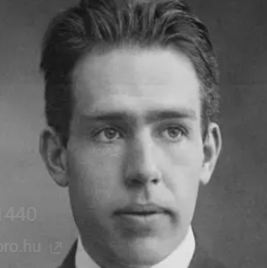
3 months 3 weeks ago
We must be clear that when it comes to atoms, language can be used only as in poetry. The poet, too, is not nearly so concerned with describing facts as with creating images and establishing mental connections.
▼
Source
In his first meeting with Werner Heisenberg in early summer 1920, in response to questions on the nature of language, as reported in Discussions about Language (1933); quoted in Defense Implications of International Indeterminacy (1972) by Robert J. Prang
3 months 3 weeks ago
What is that the inherence of which, will render the body alive? The soul. ...Then whatever the soul possesses, to that she comes bearing life? ...And is there an opposite to life? Death. Then the soul, as she has been acknowledged, will never receive the opposite of what she brings. ...And what do we call the principle which does not admit of death? The immortal. And does the soul admit of death? No. Then the soul is immortal? Yes.
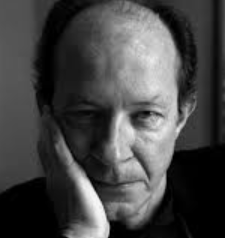
3 months 3 weeks ago
God didn't die, he was transformed into money.
▼
Source
As quoted in [https://libcom.org/article/god-didnt-die-he-was-transformed-money-interview-giorgio-agamben-peppe-sava "God didn't die, he was transformed into money" - An interview with Giorgio Agamben - Peppe Savà], libcom.org.
3 months 3 weeks ago
It is not to be supposed that she was, or that any one, at the age at which I first saw her, could be, all that she afterwards became. Least of all could this be true of her, with whom self-improvement, progress in the highest and in all senses, was a law of her nature; a necessity equally from the ardour with which she sought it, and from the spontaneous tendency of faculties which could not receive an impression or an experience without making it the source or the occasion of an accession of wisdom. Up to the time when I first saw her, her rich and powerful nature had chiefly unfolded itself according to the received type of feminine genius. To her outer circle she was a beauty and a wit, with an air of natural distinction, felt by all who approached her: to the inner, a woman of deep and strong feeling, of penetrating and intuitive intelligence, and of an eminently meditative and poetic nature.
▼
Source
([https://archive.org/details/autobiography01mill/page/185/mode/1up p. 185])
3 months 3 weeks ago
I have always thought that clarity is a form of courtesy that the philosopher owes; moreover, this discipline of ours considers it more truly a matter of honor today than ever before to be open to all minds … This is different from the individual sciences which increasingly [interpose] between the treasure of their discoveries and the curiosity of the profane the tremendous dragon of their closed terminology.
▼
Source
p. 19

3 months 3 weeks ago
...undefiled by pleasures, invulnerable to any pain, untouched by arrogance, unaffected by meanness, an athlete in the greatest of all contests—the struggle not to be overwhelmed by anything that happens. (Hays translation)
▼
Source
III, 4
3 months 3 weeks ago
Everything we call real is made of things that cannot be regarded as real.
▼
Source
Often attributed to Bohr online, and in some books like Our Mathematical Universe by Max Tegmark ([https://books.google.com/books?id=k96ODQAAQBAJ&pg=PA157 p. 157]) and The Great Unknown: Seven Journeys to the Frontiers of Science by Marcus du Sautoy ([htt
3 months 3 weeks ago
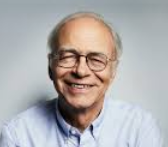
[One thing] underpins, makes consistent, and gives meaning to all our other activities on behalf of animals. This one thing is that we take responsibility for our own lives, and make them as free of cruelty as we can. The first step is that we cease to eat animals. Many people who are opposed to cruelty to animals draw the line at becoming a vegetarian. It was of such people that Oliver Goldsmith, the eighteenth-century humanitarian essayist, wrote: "They pity, and they eat the objects of their compassion."
▼
Source
Ch. 4: Becoming a Vegetarian
3 months 3 weeks ago
Contentment is natural wealth; luxury, artificial poverty.
▼
Source
As reported by Charles Simmons in A Laconic Manual and Brief Remarker, containing over a thousand subjects alphabetically and systematically arranged (North Wrentham, Mass. 1852), [http://books.google.de/books?id=YOAyAQAAMAAJ&pg=PA103&dq=socrates p. 103].
3 months 3 weeks ago
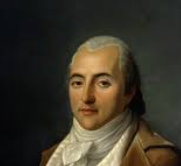
We regard society as the ensemble and union of men engaged in useful work. We can conceive of no other kind of society.
3 months 3 weeks ago
We are far too apt to think of Mill as a technically philosophical writer, because we cannot help thinking of him as the author of the Logic, and to forget that he, no less than Bentham and the other utilitarians, is primarily dominated by the practical interest of the social reformer. He is really far more interested in the question of how, “once the general happiness is recognized as the ethical standard,” this ideal is to be practically realized, than in the question of the ethical criterion and its proof.
▼
Source
James Seth, The Alleged Fallacies in Mill’s “Utilitarianism”, The Philosophical Review, 17(5): 478
3 months 3 weeks ago
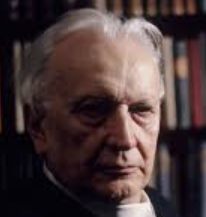
I approach the presentation of Kierkegaard with some trepidation. Next to Nietzsche, or rather, prior to Nietzsche, I consider him to be the most important thinker of our post-Kantian age. With Goethe and Hegel, an epoch had reached its conclusion, and our prevalent way of thinking — that is, the positivistic, natural-scientific one — cannot really be considered as philosophy.
▼
Source
The Great Philosophers (1962)
3 months 3 weeks ago
Whatever happens at all happens as it should; you will find this true, if you watch narrowly.
▼
Source
IV, 10
3 months 3 weeks ago
September 11, 2001, was just another day for most of the world’s desperately poor people, so presumably close to 30,000 children under five died from these causes on that day—about ten times the number of victims of the terrorist attacks. The publication of these figures did not lead to an avalanche of money for UNICEF or other aid agencies helping to reduce infant mortality. In the year 2000 Americans made private donations for foreign aid of all kinds totaling about $4 per person in extreme poverty, or roughly $20 per family. New Yorkers who were living in lower Manhattan on September 11, 2001, whether wealthy or not, were able to receive an average of $5,300 per family. The distance between these amounts encapsulates the way in which, for many people, the circle of concern for others stops at the boundaries of their own country—if it extends even that far.
▼
Source
Chapter 5: One Community (p. 176)

3 months 3 weeks ago
Build your opponent a golden bridge to retreat across.
▼
Source
This has appeared as a variant of Sun Tzu's assertion to "leave a way of escape." Tu Mu, commenting on Sun Tzu, advises, "Show him there is a road to safety..." Ch. 7; it has also recently appeared on the internet attributed to Scipio Africanus, but witho
3 months 3 weeks ago
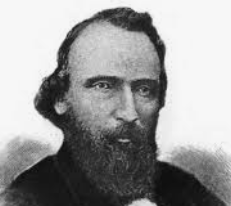
In the conduct of life, habits count for more than maxims, because habit is a living maxim, becomes flesh and instinct. To reform one's maxims is nothing: it is but to change the title of the book. To learn new habits is everything, for it is to reach the substance of life. Life is but a tissue of habits.
3 months 3 weeks ago
Always take the short cut; and that is the rational one. Therefore say and do everything according to soundest reason.
▼
Source
IV, 51
3 months 3 weeks ago
As long as we try to project from the relative and conditioned to the absolute and unconditioned, we shall keep the pendulum swinging between dogmatism and skepticism. The only way to stop this increasingly tiresome pendulum swing is to change our conception of what philosophy is good for. But that is not something which will be accomplished by a few neat arguments. It will be accomplished, if it ever is, by a long, slow process of cultural change – that is to say, of change in common sense, changes in the intuitions available for being pumped up by philosophical arguments.
▼
Source
Introduction to Truth and Progress: Philosophical Papers, Volume 3 (1998).

3 months 3 weeks ago
Be gentle to all and stern with yourself.
▼
Source
Maxim 55, p. 259
3 months 3 weeks ago
It is the modest, not the presumptuous, inquirer who makes a real and safe progress in the discovery of divine truths. One follows Nature and Nature's God; that is, he follows God in his works and in his word.
▼
Source
Letter to Alexander Pope; compare: "Slave to no sect, who takes no private road, But looks through Nature up to Nature’s God", Alexander Pope, Essay on Man, epistle iv. line 331.
3 months 3 weeks ago
The only thing that isn't worthless: to live this life out truthfully and rightly. And be patient with those who don't.
▼
Source
VI, 47 (Hays translation)

3 months 3 weeks ago
We are firm believers in the maxim that for all right judgment of any man or thing it is useful, nay, essential, to see his good qualities before pronouncing on his bad.
▼
Source
Goethe.

3 months 3 weeks ago
The principal crime of the human race, the highest guilt charged upon the world, the whole procuring cause of judgment, is idolatry.
▼
Source
Chapter I, Wide Scope of the Word Idolatry, translated by the Rev. S. Thelwall
3 months 3 weeks ago
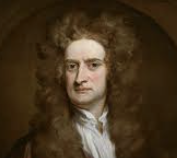
If I have seen further it is by standing on ye sholders of Giants.
▼
Source
Letter to Robert Hooke (15 February 1676) [dated as 5 February 1675 using the Julian calendar with March 25th rather than January 1st as New Years Day, equivalent to 15 February 1676 by Gregorian reckonings.] A facsimile of the original is online at [http
3 months 3 weeks ago
In his place, concord will appear, brooding peace and prosperity on the happy land; joy fitting in every face, content in every heart; a people unoppressed, undisturbed, unalarmed; busy to improve their private property and the public stock; fleets covering the ocean; bringing home wealth by the returns of industry; carrying assistance or terror abroad by the direction of wisdom; and asserting triumphantly the right and the honour of Great Britain, as far as waters roll and as winds can waft them.Those who live to see such happy days, and to act in so glorious a scene, will perhaps call to mind with some tenderness of sentiment, when he is no more, a man, who contributed his mite to carry on so good a work, and who desired life for nothing so much, as to see a king of Great Britain the most popular man in his country, and a patriot king at the head of an united people.
▼
Source
pp. 225-226
3 months 3 weeks ago
Thought without language, says Lavelle, would not be a purer thought; it would be no more than the intention to think. And his last book offers a theory of expressiveness which makes of expression not “a faithful image of an already realized interior being, but the very means by which it is realized.”
▼
Source
p. 8
3 months 3 weeks ago
That which had grown from the earth, to the earth, But that which has sprung from heavenly seed, Back to the heavenly realms returns. This is either a dissolution of the mutual involution of the atoms, or a similar dispersion of the unsentient elements.
▼
Source
VII, 50
3 months 3 weeks ago
If we read History with any degree of thoughtfulness, we shall find that checks and balances of Profit and Loss have never been the grand agents with men, that they have never been roused into deep, thorough, all-pervading efforts by any computable prospect of Profit and Loss, for any visible, finite object; but always for some invisible and infinite one.
3 months 3 weeks ago
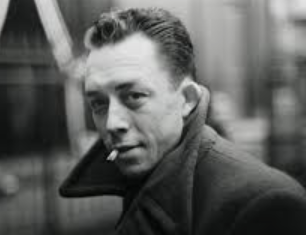
There is not love of life without despair about life.
▼
Source
Preface, Lyrical and Critical Essays (1970)

3 months 3 weeks ago
I do nobody harm, I say none harm, I think none harm, but wish everybody good. And if this be not enough to keep a man alive, in good faith, I long not to live.
▼
Source
Thomas More's Account, in a letter to his daughter Margaret Roper, of his Second Interrogation
CivilSimian.com created by AxiomaticPanic, CivilSimian, Kalokagathia