
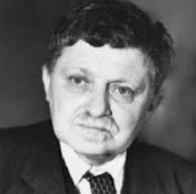
Gabriel Marcel
Member for
6 months 2 weeksGabriel Marcel — Being and Having, Problem and Mystery, and the Philosophy of Intersubjective Presence (1889–1973)
Gabriel Honoré Marcel was a French philosopher, playwright, music critic, and drama critic — born in Paris on 7 December 1889, his mother Jewish, dying when he was four, raised by his father and maternal aunt in a household of culture without religious conviction, educated at the Sorbonne where he passed the agrégation in 1910, holding no permanent academic post for most of his career — only intermittent secondary school teaching — yet delivering the Gifford Lectures at Aberdeen in 1949–50 and the William James Lectures at Harvard in 1961, and being recognized by Sartre himself, in "Existentialism Is a Humanism," as a leading existentialist, a label Marcel initially accepted and later firmly rejected, preferring "neo-Socratean" or "philosophy of existence" as less likely to associate him with the atheism and materialism he opposed. He converted to Roman Catholicism in 1929. He died in Paris on 8 October 1973.
Marcel was not primarily a systematic philosopher — he distrusted systems as distortions of the lived reality that philosophy was supposed to illuminate — but a philosopher of the concrete: of embodied existence, of personal encounter, of the specific textures of hope, fidelity, love, and presence as they were actually experienced by actual people in the actual conditions of the twentieth century. He wrote thirty plays alongside his philosophical works, using drama as a philosophical instrument for exploring situations that abstract argument could not reach.
His central concern: that modern technological society was systematically eroding the conditions of genuine human existence — substituting the logic of function, efficiency, and having for the deeper reality of being, presence, and communion — and that philosophy's task was to act as a watchman, un veilleur, keeping alert to what was being lost.
Problem and Mystery — The Central Distinction
The distinction Marcel considered most fundamental to his thought was between a problem and a mystery. A problem was a question from which the questioner could detach — something external to the self, something that could be studied objectively and solved by a method accessible in principle to anyone. Problems admitted solutions that, once found, closed the inquiry. The number of ways to tile a floor, the chemical composition of water, the cause of a particular mechanical failure — these were problems.
A mystery was different in kind. A mystery, as Marcel put it, was "a problem that encroaches on its own data" — a question in which the questioner was implicated, which could not be held at arm's length for objective inspection because the very act of questioning was already part of what was being questioned. One could not substitute one inquirer for another without changing the nature of the inquiry. The existence of evil, the reality of love, the ground of hope, the meaning of death, the nature of being itself — these were mysteries, not problems. Treating them as problems — seeking objective, universally accessible solutions — was not merely intellectually inadequate but spiritually destructive: it meant applying to the whole of human existence the logic appropriate only to its manageable outer edges.
"A mystery is a problem that encroaches on its own data. In the case of a mystery, the questioner is directly involved in the question and so is unable to separate from it in order to study it in an objective manner. In the realm of mystery, it is not possible to substitute one person for another without altering the question itself."
— Marcel, "On the Ontological Mystery" (1933)
Being and Having — The Ontological Distinction
The distinction between being and having ran through all of Marcel's philosophy. To have something — a possession, a property, an attribute — was to stand in a relationship of external control or ownership to it. What one has is other than oneself; it could in principle be taken away. The logic of having was the logic of technology, property, and functional definition: a person is what they possess, what role they fill, what function they serve. Modern society, Marcel argued, had organized itself almost entirely around the logic of having — and was destroying human beings in the process.
To be was different in kind. One did not have one's body in the way one had a coat — the body was not an instrument the self deployed but the mode through which the self existed at all. This was the first and most fundamental instance of being rather than having: embodiment was not ownership but existence. The same logic extended to one's relationships, commitments, and values — the things that constituted rather than merely accompanied a person. A person who genuinely loved was not someone who had the property of love-capacity but someone whose being was structured by love, who existed differently because of it.
"The impact of technology leads too often to a loss of the sense of the mystery of being and self, authenticity and integrity, the concrete and the existential, truth and dialogue, freedom and love, humanity and community, fidelity and creativity, the natural and the transcendent."
Presence and Availability — What It Means to Truly Meet Another
Marcel's most distinctive contribution to the philosophy of intersubjectivity was his account of presence — what it meant to genuinely encounter another person. Presence was not the same as physical proximity, or even attentiveness. One could be in the same room with someone, attending to their words, and not be present to them at all — processing them as a source of information rather than encountering them as a person. Genuine presence required what Marcel called "disponibilité" — availability: a kind of openness to the other in which one's own agenda, defenses, and functional categories were suspended, allowing the other to genuinely affect and claim one.
Availability was the opposite of what he called "unavailability" (indisponibilité) — the state of someone so preoccupied with themselves, their possessions, their plans, their self-image, that they could not be genuinely claimed by another. The unavailable person was encumbered — full of themselves — and therefore impermeable to the presence of others. Only the available person could receive the other as a genuine presence rather than as an object to be categorized and processed. This was not a rare mystical state but the condition of ordinary human love — the ground of friendship, care, and genuine encounter.
"There is only one suffering and that is to be alone. By nature itself, my being is a being-with-others. It is our innate desire to be in communion with others."
— Marcel
Hope, Fidelity, and Creative Love — The Ontological Virtues
Marcel's "concrete approaches" to being — his term for the philosophical examination of specific human experiences as windows onto the deeper reality of existence — were hope, fidelity, love, and faith. These were not optional ornaments to human life but constitutive features of what it meant to be a person.
Hope, for Marcel, was not mere optimism or desire for a good outcome. It was the fundamental orientation of a being who understood itself as unfinished — who projected itself toward a fullness of being not yet achieved. True hope was not hope for this or that specific thing but an absolute hope that resisted being reduced to any particular desired outcome. When someone said "I hope in spite of everything," they expressed something more fundamental than any specific wish — an orientation toward being itself that could not be extinguished by the failure of particular hopes.
Fidelity was the temporal expression of genuine commitment: the ability to remain available to another over time, to sustain the creative presence that had characterized the initial encounter even when the emotional intensity faded. Creative fidelity was not mere persistence or habit but the ongoing renewal of genuine availability — the choice to remain open to the other rather than to close around a fixed image of what the other was.
"How can I test the initial assurance that is somehow the ground of my fidelity? This appears to lead to a vicious circle. In principle, to commit myself I must know myself, but the fact is I really only know myself when I have committed myself."
— Marcel, Creative Fidelity (1964)
Against Mass Society — Philosophy as Watchman
Marcel's "Man Against Mass Society" (1951) applied his philosophical framework to the specific pathologies of the twentieth century: totalitarianism, mass propaganda, bureaucratic dehumanization, and the reduction of persons to functions. His analysis was not primarily political but ontological: these were not merely bad political arrangements but systematic assaults on the conditions of genuine personal existence — on the availability, presence, fidelity, and hope through which persons constituted themselves as persons.
The "mass man" of modern society was not defined by poverty or ignorance but by unavailability: encumbered by possessions, addicted to stimulation, incapable of genuine encounter, and therefore incapable of genuine freedom. Technology in itself was not the enemy — but the technological mentality, applied to the whole of human existence, treated every dimension of life as a problem to be solved rather than a mystery to be inhabited, and thereby drained human life of its depth.
"The task of the philosopher is to be a watchman, un veilleur, on the alert for a hopeful resolution of the human predicament — to keep alive the awareness of what technology threatens when it absorbs the entirety of human self-understanding."
Drama and Philosophy — Thirty Plays
Marcel wrote thirty plays alongside his philosophical works — not as illustrations of his philosophy but as a distinct philosophical mode. He believed that certain truths about human existence could only be shown dramatically, in the concrete specificity of particular relationships under particular pressures, rather than stated abstractly in philosophical prose. The play "A Man of God" (1922) explored the relationship between faith, marriage, and betrayal. "The Broken World" (1932) examined the spiritual emptiness beneath the surface comfort of bourgeois modern life. These were not philosophical theses dramatized but philosophical investigations conducted through dramatic form — a claim that literature and philosophy served different but equally necessary aspects of the philosophical enterprise.
"Nothing could be more uncustomary than the thought of Gabriel Marcel: there seems to be no direct precedent for it in the entire history of philosophy. Presenting elements of phenomenology, existentialism, idealism, and empiricism all consorting together in symbolic bliss, it completely defies classification."
— Kenneth T. Gallagher, The Philosophy of Gabriel Marcel
Legacy — The Philosopher of Presence
Marcel died in Paris in 1973 at the age of eighty-three, having outlived most of the major existentialist movement he had helped to found and then distanced himself from. His work remained influential primarily in Catholic philosophical circles, in personalist philosophy, and in bioethics — where his account of the irreducibility of personal presence and the illegitimacy of treating persons as functions provided philosophical resources for critiquing reductive approaches to medical and technological practice.
On CivSim he belongs alongside Buber, Levinas, and Paul Ricoeur — the tradition that insisted the encounter between persons was the ground of all genuine moral and philosophical understanding, and that any framework that reduced this encounter to a transaction between function-bearers had missed what was most fundamental about human existence. His challenge to Universal Humanism is the presence challenge: a philosophy of human flourishing must account not just for what people need but for the quality of encounter through which those needs are met — that provision without presence is not fully humanizing, that a person served as a function is not a person fully served.
"A fulfilling human existence must be sought outside of the technological mindset, in our lived experience with others and in a spiritual quest that protects the mystery of the human condition — grounded in lived experience, flesh, communion, communication, and participation with others."
School Certificates: 0
No certificates shown yet.
CivilSimian.com created by AxiomaticPanic, CivilSimian, Kalokagathia