
3 months 3 weeks ago
In my Judgment no Lines ought to be admitted into plain Geometry besides the right Line and the Circle.
3 months 3 weeks ago
Things are opaque to us, and we are opaque to ourselves.
▼
Source
p. 117.

3 months 3 weeks ago
If thou canst see sharp, look and judge wisely, says the philosopher.
▼
Source
VIII, 38

3 months 3 weeks ago
The premonition of madness is complicated by the fear of lucidity in madness, the fear of the moments of return and reunion, when the intuition of disaster is so painful that it almost provokes a greater madness [...] One would welcome chaos if one were not afraid of lights in it.

3 months 3 weeks ago
O thou who art able to write a Book, which once in the two centuries or oftener there is a man gifted to do, envy not him whom they name City-builder, and inexpressibly pity him whom they name Conqueror or City-burner! Thou too art a Conqueror and Victor; but of the true sort, namely over the Devil: thou too hast built what will outlast all marble and metal, and be a wonder-bringing City of the Mind, a Temple and Seminary and Prophetic Mount, whereto all kindreds of the Earth will pilgrim.
▼
Source
Bk. II, ch. 8.
3 months 3 weeks ago
There is but one truly serious philosophical problem and that is suicide. Judging whether life is or is not worth living amounts to answering the fundamental question of philosophy. All the rest – whether or not the world has three dimensions, whether the mind has nine or twelve categories – comes afterwards. These are games; one must first answer. And if it is true, as Nietzsche claims, that a philosopher, to deserve our respect, must preach by example, you can appreciate the importance of that reply, for it will precede the definitive act. These are facts the heart can feel; yet they call for careful study before they become clear to the intellect. If I ask myself how to judge that this question is more urgent than that, I reply that one judges by the actions it entails. I have never seen anyone die for the ontological argument.
▼
Source
Absurdity and Suicide

3 months 3 weeks ago
The peripatetics look on God as they do on carpenters, who build with stone and timber, without any infusion of life. But the world which is God's building is full of spirit, quick and living.
3 months 3 weeks ago
The managers will exercise their control over the instruments of production and gain preference in the distribution of the products, not directly, through property rights vested in them as individuals, but indirectly, through their control of the state which in turn will own and control the instruments of production. The state – that is, the institutions which comprise the state – will if we wish to put it that way, be the “property” of the managers’.
▼
Source
p. 71–72; As cited in: Stijn Maria Verhagen (2005). Zorglogica’s uit balans. p. 300
3 months 3 weeks ago
The universal intelligence puts itself in motion for every separate effect... or it puts itself in motion once, and everything else comes by way of a sequence in a manner; or individual elements are the origin of all things. In a word, if there is a god, all is well; and if chance rules, do not thou be governed by it.
▼
Source
IX, 28
3 months 3 weeks ago
That fear which gives birth to thoughts, and the fear of thoughts...
3 months 3 weeks ago
The uttered part of a man's life, let us always repeat, bears to the unuttered, unconscious part a small unknown proportion. He himself never knows it, much less do others.
3 months 3 weeks ago
A profound thought is in a constant state of becoming; it adopts the experience of a life and assumes its shape. Likewise, a man's sole creation is strengthened in its successive and multiple aspects: his works. One after another they complement one another, correct or overtake one another, contradict one another, too. If something brings creation to an end, it is not the victorious and illusory cry of the blinded artist: "I have said everything," but the death of the creator which closes his experiences and the book of his genius. That effort, that superhuman consciousness are not necessarily apparent to the reader. There is no mystery in human creation. Will performs this miracle. But at least there is no true creation without a secret. To be true, a succession of works can be but a series of approximations of the same thought. But it is possible to conceive of another type of creator proceeding by juxtaposition. Their words may seem to be devoid of inter-relations, to a certain degree, they are contradictory. But viewed all together, they resume their natural grouping.
3 months 3 weeks ago
Magic is nothing but the wisdom of the Creator revealed and planted in the creature. It is a name — as Agrippa saith — "not distasteful to the very Gospel itself."
3 months 3 weeks ago
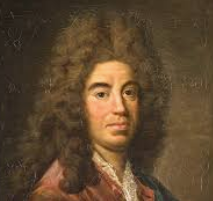
All kinds of music are not suited to praise God and to be heard in the sanctuary; all methods of philosophy are not fit for discoursing worthily of God, His power, the principles of His operations, and His mysteries.
▼
Source
Of Freethinkers (23)
3 months 3 weeks ago
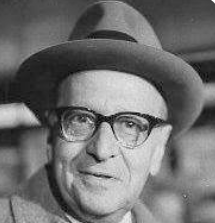
If the subjectivist view hold true, thinking cannot be of any help in determining the desirability of any goal in itself. The acceptability of ideals, the criteria for our actions and beliefs, the leading principles of ethics and politics, all our ultimate decisions are made to depend upon factors other than reason. They are supposed to be matters of choice and predilection, and it has become meaningless to speak of truth in making practical, moral or esthetic decisions.
▼
Source
pp. 7-8.
3 months 3 weeks ago
Only to the rational animal is it given to follow voluntarily what happens; but simply to follow is a necessity imposed on all.
▼
Source
X, 28
3 months 3 weeks ago
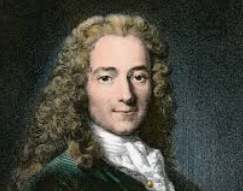
Books, like conversation, rarely give us any precise ideas: nothing is so common as to read and converse unprofitably. We must here repeat what Locke has so strongly urged—Define your terms.
▼
Source
[http://www.gutenberg.org/files/35621/35621-h/35621-h.htm "Abuse of Words"] (1764) | Cf. Locke: "The names of simple ideas are not capable of any definition; the names of all complex ideas are. It has not, that I know, been yet observed by anybody what wo
3 months 3 weeks ago
Tell me how you want to die, and I'll tell you who you are.
3 months 3 weeks ago
They understood in their heart that it was indispensable to be brave; that Odin would have no favor for them, but despise and thrust them out, if they were not brave. Consider too whether there is not something in this! It is an everlasting duty, valid in our day as in that, the duty of being brave. Valor is still value. The first duty for a man is still that of subduing Fear. We must get rid of Fear; we cannot act at all till then.
3 months 3 weeks ago
The important thing isn't the soundness or otherwise of the argument, but for it to make you think.

3 months 3 weeks ago
The secret of happiness is freedom and the secret of freedom is courage.
▼
Source
Book II, 2.43
3 months 3 weeks ago
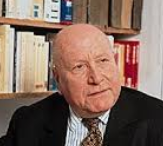
Shortly after 9/11 a French spokesman for the activist group ATTAC quoted the adage: "He who sows the wind shall reap the whirlwind." French prime minister Lionel Jospin seemed to be pointing in this direction when he asked, "What lesson are the Americans going to draw from what has happened?" The lesson, Jospin indicated, should be for the U.S. to moderate her unilateralism. For Cardinal Karl Lehmann, president of the German Bishops' Conference, the lesson to be drawn from terrorism was that "the West must not seek to dominate the rest of the world."
3 months 3 weeks ago
Know the joy of life by piling good deed on good deed until no rift or cranny appears between them.
▼
Source
τί λοιπὸν ἢ ἀπολαύειν τοῦ ζῆν συνάπτοντα ἄλλο ἐπ ἄλλῳ ἀγαθόν, ὥστε μηδὲ τὸ βραχύτατον διάστημα ἀπολείπειν; | XII, 29
3 months 3 weeks ago
Superstition excites storms; philosophy appeases them.
▼
Source
p. 93
3 months 3 weeks ago
Irons and the unbreathable air of this world strip us of everything, except the freedom to kill ourselves; and this freedom grants us a strength and pride to triumph over the loads which overwhelm us.
3 months 3 weeks ago
In the meanest mortal there lies something nobler. The poor swearing soldier, hired to be shot, has his "honor of a soldier," different from drill-regulations and the shilling a day. It is not to taste sweet things, but to do noble and true things, and vindicate himself under God's Heaven as a god-made Man, that the poorest son of Adam dimly longs. Show him the way of doing that, the dullest day-drudge kindles into a hero. They wrong man greatly who say he is to be seduced by ease.
3 months 3 weeks ago
Metaphysical rebellion is a claim, motivated by the concept of a complete unity, against the suffering of life and death and a protest against the human condition both for its incompleteness, thanks to death, and its wastefulness, thanks to evil.
▼
Source
Part 2: Metaphysical Rebellion
3 months 3 weeks ago
As for democracy, the men of sense among us knew what it was, and I perhaps as well as any, as I have more cause to complain of it; but there is nothing new to be said of a patent absurdity-meanwhile we did not think it safe to alter it under the pressure of your hostility.
▼
Source
Book VI, 6.89-[6]
3 months 3 weeks ago
Well, what does “good” mean anyway...? As Wittgenstein suggested, “good,” like “game,” has a family of meanings. Prominent among them is this one: “meets the criteria or standards of assessment or evaluation.”
▼
Source
P. 152.
3 months 3 weeks ago
Too much gravity argues a shallow mind.
▼
Source
No. 183
3 months 3 weeks ago
When you wake up in the morning, tell yourself: The people I deal with today will be meddling, ungrateful, arrogant, dishonest, jealous, and surly. They are like this because they can't tell good from evil. But I have seen the beauty of good, and the ugliness of evil, and have recognized that the wrongdoer has a nature related to my own—not of the same blood or birth, but the same mind, and possessing a share of the divine.
▼
Source
II. 1, trans. Gregory Hays
3 months 3 weeks ago
It is strange that thought should depend upon the stomach, and still that men with the best stomachs are not always the best thinkers.
▼
Source
p. 233
3 months 3 weeks ago
To Live signifies to believe and hope — to lie and to lie to oneself.
3 months 3 weeks ago
The Age of Miracles is forever here!
3 months 3 weeks ago
Manhattan. Sometimes from beyond the skyscrapers, across of thousands of high walls, the cry of a tugboat finds you in your insomnia in the middle of the night, and you remember that this desert of iron and cement is an island.

3 months 3 weeks ago
Beautiful objects are wrought by study through effort, but ugly things are reaped automatically without toil.
▼
Source
Freeman (1948), p. 161 | Variant: The good things of life are produced by learning with hard work; the bad are reaped of their own accord, without hard work.

3 months 3 weeks ago
Not only may particular decisions made according to rules result in material injustice, but a rule may systematically discriminate against the poor and the oppressed. In such circumstances, to be committed to applying the rules, however fairly or impartially administered, come what may, is to ignore the more obvious and direct demands of justice and human welfare.
▼
Source
The Left and Rights (Routledge: 1983), p. [http://books.google.com/books?id=9kPnuG9ufDgC&pg=RA1-PT18 18]
3 months 3 weeks ago
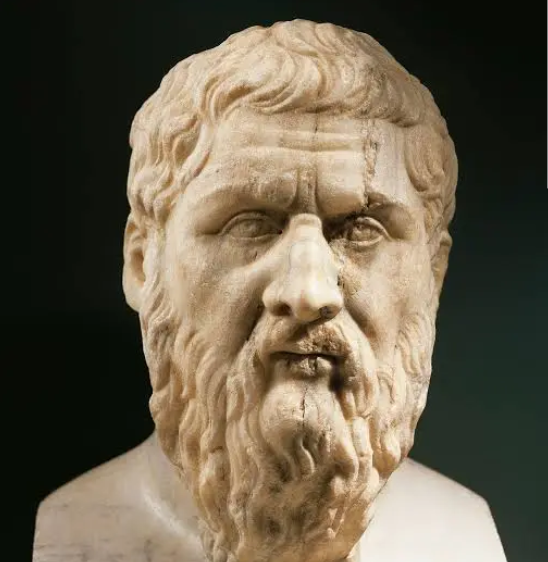
No man of sense can put himself and his soul under the control of names... You must consider courageously and thoroughly and not accept anything carelessly.
▼
Source
440c–d
3 months 3 weeks ago
The existence of a law is one thing, its merits or demerits is are another thing. Whether a law be, is one inquiry; whether it ought to be o whether it agree with a given or assumed test, is another and a distinct inquiry.
▼
Source
p. 278 | Variant: The existence of law is one thing; its merit or demerit is another. Whether it be or be not is one enquiry; whether it be or be not conformable to an assumed standard, is a different enquiry. A law, which actually exists, is a law, thoug
3 months 3 weeks ago
O Voltaire! O humaneness! O nonsense! There is something about "truth", about the search for truth; and when a human being is too human about it- "il ne cherche le vrai que pour faire le bien"- I bet he finds nothing.
▼
Source
Friedrich Nietzsche, Beyond Good and Evil, Trns: Walter Kauffmann
3 months 3 weeks ago
Long before physics or psychology were born, pain disintegrated matter, and affliction the soul.

3 months 3 weeks ago
The Value or WORTH of a man, is as of all other things, his Price; that is to say, so much as would be given for the use of his Power...
▼
Source
The First Part, Chapter 10, p. 42
3 months 3 weeks ago
Every noble work is at first impossible.
▼
Source
From Past and Present (1843), Chapter XI : Labour
3 months 3 weeks ago
Neither art nor wisdom may be attained without learning.

3 months 3 weeks ago
Where the presence of truth should be possible, it can be possible solely under the condition of the recognition of myth—that is, the recognition of its crushing indifference to truth.
▼
Source
p. 326
3 months 3 weeks ago
Let every man remind their descendants that they also are soldiers who must not desert the ranks of their ancestors, or from cowardice fall behind. Even as I exhort you this day, and in all future time, whenever I meet with any of you, shall continue to remind and exhort you, O ye sons of heroes, that you strive to be the bravest of men. And I think that I ought now to repeat what your fathers desired to have said to you who are their survivors, when they went out to battle, in case anything happened to them. I will tell you what I heard them say, and what, if they had only speech, they would fain be saying, judging from what they then said. And you must imagine that you hear them saying what I now repeat to you:Sons, the event proves that your fathers were brave men; for we might have lived dishonourably, but have preferred to die honourably rather than bring you and your children into disgrace, and rather than dishonour our own fathers and forefathers; considering that life is not life to one who is a dishonour to his race, and that to such a one neither men nor Gods are friendly, either while he is on the earth or after death in the world below.Remember our words, then, and whatever is your aim let virtue be the condition of the attainment of your aim, and know that without this all possessions and pursuits are dishonourable and evil.For neither does wealth bring honour to the owner, if he be a coward; of such a one the wealth belongs to another, and not to himself. Nor does beauty and strength of body, when dwelling in a base and cowardly man, appear comely, but the reverse of comely, making the possessor more conspicuous, and manifesting forth his cowardice.And all knowledge, when separated from justice and virtue, is seen to be cunning and not wisdom; wherefore make this your first and last and constant and all-absorbing aim, to exceed, if possible, not only us but all your ancestors in virtue; and know that to excel you in virtue only brings us shame, but that to be excelled by you is a source of happiness to us.And we shall most likely be defeated, and you will most likely be victors in the contest, if you learn so to order your lives as not to abuse or waste the reputation of your ancestors, knowing that to a man who has any self-respect, nothing is more dishonourable than to be honoured, not for his own sake, but on account of the reputation of his ancestors.The honour of parents is a fair and noble treasure to their posterity, but to have the use of a treasure of wealth and honour, and to leave none to your successors, because you have neither money nor reputation of your own, is alike base and dishonourable.And if you follow our precepts you will be received by us as friends, when the hour of destiny brings you hither; but if you neglect our words and are disgraced in your lives, no one will welcome or receive you. This is the message which is to be delivered to our children.
▼
Source
A speech of Aspasia, recounted by Socrates, as portrayed in the dialogue.
3 months 3 weeks ago
Both in the natural sciences and in sociology direct perception is deceptive, leading to the view that we are confronted with something which is in itself just what it appears to be. This is by no means the case and has long ago been rejected by the physical sciences, and it would be interesting to find out why it is still virtually unchallenged in sociology.
▼
Source
Max Weber and Value-free Sociology: A Marxist Critique (1975), p. 39.
3 months 3 weeks ago
I shall take leave to think the worse, rather of the practice of the men than of the book of God.
▼
Source
"Some Considerations Touching the Style of the Holy Scriptures" (1661) "Seventh Objection", as quoted in Treatises on the High Veneration Man's Intellect Owes to God: on Things Above Reason; and on The Style of the Holy Scriptures (1835) [https://books.go
3 months 3 weeks ago
If we would regain our freedom, we must shake off the burden of sensation, no longer react to the world by our senses, break our bonds. For all sensation is a bond, pleasure as much as pain, joy as much as misery. The only free mind is the one that, pure of all intimacy with beings or objects, plies its own vacuity.
3 months 3 weeks ago
No man's error becomes his own Law; nor obliges him to persist in it.
▼
Source
The Second Part, Chapter 26, p. 144
CivilSimian.com created by AxiomaticPanic, CivilSimian, Kalokagathia