

3 months 3 weeks ago
In a valiant suffering for others, not in a slothful making others suffer for us, did nobleness ever lie.

3 months 3 weeks ago
Too many of our preferences reflect nasty behaviours and states of mind that were genetically adaptive in the ancestral environment. Instead, wouldn't it be better if we rewrote our own corrupt code?
▼
Source
"[https://www.abolitionist.com/ The Abolitionist Project]", Talks given at the FHI (Oxford University) and the Charity International Happiness Conference, 2007

3 months 3 weeks ago
Faith can no more be described to a thoroughly rational mind than the idea of colors can be conveyed to a blind man.
▼
Source
Chapter Five, Christian sources, p. 82
3 months 3 weeks ago
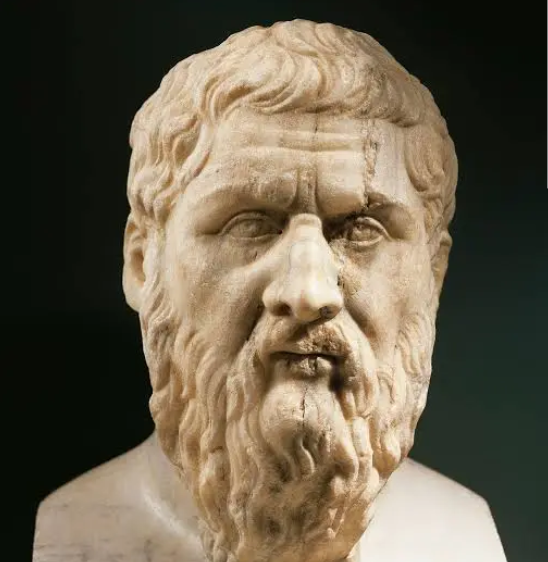
And when the father who begat it perceived the created image of the eternal gods, that it had motion and life, he rejoiced and was well pleased; and he bethought him to make it yet more nearly like its pattern. Now whereas that is a living being eternally existent, even so he essayed to make this All the like to the best of his power. Now so it was that the nature of the ideal was eternal. But to bestow this attribute altogether upon a created thing was impossible; so he bethought him to make a moving image of eternity, and while he was ordering the universe he made of eternity that abides in unity an eternal image moving according to number, even that which we have named time. For whereas days and nights and months and years were not before the universe was created, he then devised the generation of them along with the fashioning of the universe. Now all these are portions of time, and was and shall be are forms of time that have come to be, although we wrongly ascribe them unawares to the eternal essence. For we say that it was and is and shall be, but in verity is alone belongs to it: and was and shall be it is meet should be applied only to Becoming which moves in time; for these are motions. But that which is ever changeless without motion must not become elder or younger in time, neither must it have become so in past nor be so in the future; nor has it to do with any attributes that Becoming attaches to the moving objects of sense: these have come into being as forms of time, which is the image of eternity and revolves according to number. Moreover we say that the become is the become, and the becoming is the becoming, and that which shall become is that which shall become, and not-being is not-being. In all this we speak incorrectly. But concerning these things the present were perchance not the right season to inquire particularly.
▼
Source
38b, as quoted by R. D. Archer-Hind, The Timaeus of Plato (1888)
3 months 3 weeks ago
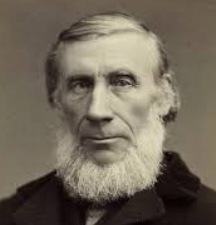
Some years ago I found myself in discussion with a friend who entertained the notion that the general tendency of things in this world is towards equilibrium, the result of which would be peace and blessedness to the human race. My notion, was that equilibrium meant... death. No motive power is to be got from heat, save during its fall from a higher to a lower temperature, as no power is to be got from water save during its descent from a higher to a lower level. Thus also life consists, not in equilibrium, but in the passage towards equilibrium. In man it is the leap from the potential through the actual to repose.
3 months 3 weeks ago
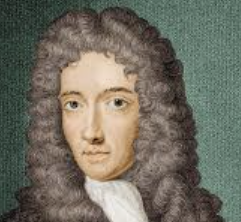
Since a great part of those Learned Men, especially Physicians who have discerned the defects of the vulgar Philosophy, but are not yet come to understand and relish the Corpuscularian, have slid into the Doctrine of the Chymists; and since the Spagyrists are wont to pretend to make out all the Qualities of bodies from the Predominancy of some one of their three Hypostatical Principles, I suppose it may both keep my opinion from appearing too presumptuous, and (which is far more considerable) may make way for the fairer Reception of the Mechanical Hypothesis about Qualities, if I here intimate (though but briefly and in general) some of those defects, that I have observed in Chymists Explications of Qualities.

3 months 3 weeks ago
Each of us must pay for the slightest damage he inflicts upon a universe created for indifference and stagnation, sooner or later, he will regret not having left it intact.

3 months 3 weeks ago
At the age of forty he was, for the first time, introduced to the works of Euclid, and at once 'fell in love with geometry,' being attracted, he says, more by the rigorous manner of proof employed than by the matter of the science. (Mathematics... were then only beginning to be seriously studied in England. Hobbes tells us that in his undergraduate days geometry was still looked upon generally as a form of the 'Black Art,' and it was not until 1619 that the will of Sir Henry Savile, Warden of Merton College, established the first Professorships of Geometry and Astronomy at Oxford.)
▼
Source
Alfred Edward Taylor, Thomas Hobbes (1908)
3 months 3 weeks ago
Sure enough, America is a great, and in many respects a blessed and hopeful phenomenon. Sure enough, these hardy millions of Anglo-Saxon men prove themselves worthy of their genealogy; and, with the axe and plough and hammer, if not yet with any much finer kind of implements, are triumphantly clearing out wide spaces, seedfields for the sustenance and refuge of mankind, arenas for the future history of the world; doing, in their day and generation, a creditable and cheering feat under the sun. But as to a Model Republic, or a model anything, the wise among themselves know too well that there is nothing to be said.
3 months 3 weeks ago
Suppose we encounter an advanced civilization that has engineered a happy biosphere. Population sizes are controlled by cross-species immunocontraception. Free-living herbivores lead idyllic lives in their wildlife parks. Should we urge the reintroduction of starvation, asphyxiation, disemboweling and being eaten alive by predators? Is their regime of compassionate stewardship of the biosphere best abandoned in favour of "re-wilding"? I suspect the advanced civilization would regard human pleas to restore the old Darwinian regime of "Nature, red in tooth and claw" as callous if not borderline sociopathic.
▼
Source
Reply to "[https://freethoughtblogs.com/pharyngula/2015/09/10/i-am-horrified-at-what-goes-on-in-philosophy-departments-personally/#comment-971596 I am horrified at what goes on in philosophy departments, personally]", Freethought Blogs, 10 Sept. 2015

3 months 3 weeks ago
British and American concepts of individual liberty are not universals that can be immediately understood and desired by everyone, as is often claimed. They are themselves the cultural inheritance of certain tribes and nations.
3 months 3 weeks ago
With regard to this question modern physics takes a definite stand against the materialism of Democritus and for Plato and the Pythagoreans. The elementary particles are certainly not eternal and indestructible units of matter, they can actually be transformed into each other. … The elementary particles in Plato's Timaeus are finally not substance but mathematical forms.
▼
Source
Werner Heisenberg, Physics and Philosophy (1958)
3 months 3 weeks ago
Leisure lives on affirmation. It […] includes within itself a celebratory, approving, lingering gaze of the inner eye on the reality of creation.The highest form of affirmation is the festival; and according to Karl Kerenyi, the historian of religion, to festival belong "peace, intensity of life, and contemplation all at once." The holding of a festival means: an affirmation of the basic meaning of the world, and an agreement with it, and in fact it means to live out and fulfil one's inclusion in the world, in an extraordinary manner, different from the everyday.The festival is the origin of leisure, its inmost and ever-central source. And this festive character is what makes leisure not only "effortless" but the very opposite of effort or toil.
▼
Source
pp. 33–34 | The Kerenyi quote is from Karl Kerenyi, Die antike Religion (Amsterdam, 1940), p. 66.
3 months 3 weeks ago
It is debasing to die the way one does; it is intolerable to be exposed to an end over which we have no control, an end which lies in wait for us, overthrows us, casts us into the unnameable.
3 months 3 weeks ago
It lies deep in our habits, confirmed by all manner of educational and other arrangements for several centuries back, to consider human talent as best of all evincing itself by the faculty of eloquent speech. Our earliest schoolmasters teach us, as the one gift of culture they have, the art of spelling and pronouncing, the rules of correct speech; rhetorics, logics follow, sublime mysteries of grammar, whereby we may not only speak but write. And onward to the last of our schoolmasters in the highest university, it is still intrinsically grammar, under various figures grammar. To speak in various languages, on various things, but on all of them to speak, and appropriately deliver ourselves by tongue or pen,—this is the sublime goal towards which all manner of beneficent preceptors and learned professors, from the lowest hornbook upwards, are continually urging and guiding us.
3 months 3 weeks ago
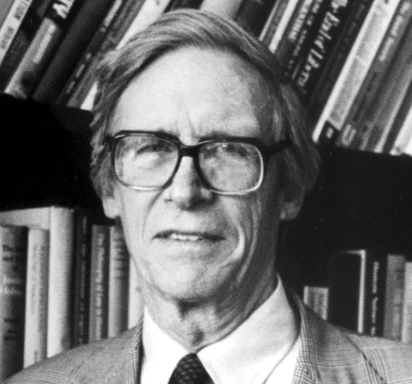
Justice is the first virtue of social institutions, as truth is of systems of thought. A theory however elegant and economical must be rejected or revised if it is untrue; likewise laws and institutions no matter how efficient and well-arranged must be reformed or abolished if they are unjust. Each person possesses an inviolability founded on justice that even the welfare of society as a whole cannot override. For this reason justice denies that the loss of freedom for some is made right by a greater good shared by others. It does not allow that the sacrifices imposed on a few are outweighed by the larger sum of advantages enjoyed by many. Therefore in a just society the liberties of equal citizenship are taken as settled; the rights secured by justice are not subject to political bargaining or to the calculus of social interests.
▼
Source
Chapter I, Section 1, pg. 3-4
3 months 3 weeks ago
Justice is a habit (habitus), whereby a man renders to each one his due with constant and perpetual will.
3 months 3 weeks ago
My faculty for disappointment surpasses understanding. It is what lets me comprehend Buddha, but also what keeps me from following him.
3 months 3 weeks ago
This great maxim of philosophy he had gathered by the teaching of nature alone — that man was created to work, not to speculate or feel or dream. Accordingly, he set his whole heart thitherwards. He did work wisely and unweariedly, and perhaps performed more with the tools he had than any man I now know.
3 months 3 weeks ago
When the basic structure of society is publicly known to satisfy its principles for an extended period of time, those subject to these arrangements tend to develop a desire to act in accordance with these principles and to do their part in institutions which exemplify them
▼
Source
Chapter III, Section 29, pg.177
3 months 3 weeks ago
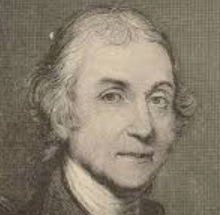
Having thought it right to leave behind me some account of my friends and benefactors, it is in a manner necessary that I also give some account of myself; and as the like has been done by many persons, and for reasons which posterity has approved, I make no further apology for following their example. If my writings in general have been useful to my contemporaries, I hope that this account of myself will not be without its use to those who may come after me, and especially in promoting virtue and piety, which, I hope I may say, it has been my care to practise myself, as it has been my business to inculcate them upon others.
▼
Source
Memoirs of the Rev. Dr. Joseph Priestly (1809). p. 1
3 months 3 weeks ago
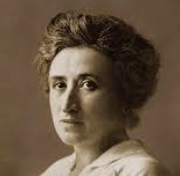
Militarism in both its forms — as war and as armed peace — is a legitimate child, a logical result of capitalism, which can only be overcome with the destruction of capitalism, and that hence whoever honestly desires world peace and liberation from the tremendous burden of armaments must also desire Socialism. Only in this way can real Social Democratic enlightenment and recruiting be carried on in connection with the armaments debate.

3 months 3 weeks ago
For what is modesty but hypocritical humility, by means of which, in a world swelling with vile envy, a man seeks to beg pardon for his excellences and merits from those who have none? For whoever attributes no merit to himself because he really has none is not modest, but merely honest.
▼
Source
Vol. I, Ch. III, The World As Representation: Second Aspect
3 months 3 weeks ago
I was walking late one night along a tree-lined path; a chestnut fell at my feet. The noise it made as it burst, the resonance it provoked in me, and an upheaval out of all proportion to this insignificant event thrust me into miracle, into the rapture of the definitive, as if there were no more questions — only answers. I was drunk on a thousand unexpected discoveries, none of which I could make use of. This is how I nearly reached the Supreme. But instead I went on with my walk.
3 months 3 weeks ago
The next group of reactionaries or romantics or whatever we elect to call them, gathers roughly around one great name. Scotland, from which had come so many of those harsh economists who made the first Radical philosophies of the Victorian Age, was destined also to fling forth (I had almost said to spit forth) their fiercest and most extraordinary enemy. The two primary things in Thomas Carlyle were his early Scotch education and his later German culture. The first was in almost all respects his strength; the latter in some respects his weakness. As an ordinary lowland peasant, he inherited the really valuable historic property of the Scots, their independence, their fighting spirit, and their instinctive philosophic consideration of men merely as men. But he was not an ordinary peasant. If he had laboured obscurely in his village till death, he would have been yet locally a marked man; a man with a wild eye, a man with an air of silent anger; perhaps a man at whom stones were sometimes thrown. A strain of disease and suffering ran athwart both his body and his soul. In spite of his praise of silence, it was only through his gift of utterance that he escaped madness. But while his fellow-peasants would have seen this in him and perhaps mocked it, they would also have seen something which they always expect in such men, and they would have got it: vision, a power in the mind akin to second sight.' Like many ungainly or otherwise unattractive Scotchmen, he was a seer. By which I do not mean to refer so much to his transcendental rhapsodies about the World-soul or the Nature-garment or the Mysteries and Eternities generally, these seem to me to belong more to his German side and to be less sincere and vital. I mean a real power of seeing things suddenly, not apparently reached by any process; a grand power of guessing. He saw the crowd of the new States General, Danton with his "rude flattened face," Robespierre peering mistily through his spectacles. He saw the English charge at Dunbar. He guessed that Mirabeau, however dissipated and diseased, had something sturdy inside him. He guessed that Lafayette, however brave and victorious, had nothing inside him. He supported the lawlessness of Cromwell, because across two centuries he almost physically felt the feebleness and hopelessness of the moderate Parliamentarians. He said a word of sympathy for the universally vituperated Jacobins of the Mountain, because through thick veils of national prejudice and misrepresentation, he felt the impossibility of the Gironde. He was wrong in denying to Scott the power of being inside his characters: but he really had a good deal of that power himself. It was one of his innumerable and rather provincial crotchets to encourage prose as against poetry. But, as a matter of fact, he himself was much greater considered as a kind of poet than considered as anything else; and the central idea of poetry is the idea of guessing right, like a child.
▼
Source
G. K. Chesterton in The Victorian Age in Literature.
3 months 3 weeks ago
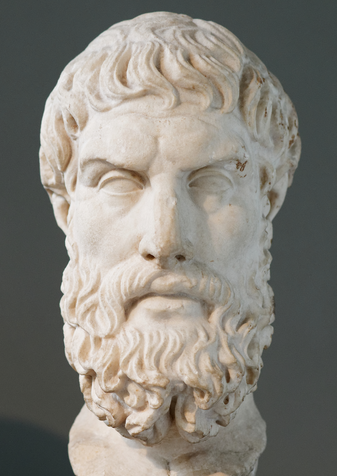
Let no one be slow to seek wisdom when he is young nor weary in the search of it when he has grown old. For no age is too early or too late for the health of the soul. And to say that the season for studying philosophy has not yet come, or that it is past and gone, is like saying that the season for happiness is not yet or that it is now no more. Therefore, both old and young alike ought to seek wisdom, the former in order that, as age comes over him, he may be young in good things because of the grace of what has been, and the latter in order that, while he is young, he may at the same time be old, because he has no fear of the things which are to come. So we must exercise ourselves in the things which bring happiness, since, if that be present, we have everything, and, if that be absent, all our actions are directed towards attaining it.
▼
Source
[http://www.epicurus.net/en/menoeceus.html "Letter to Menoeceus"], as translated in Stoic and Epicurean (1910) by Robert Drew Hicks, p. 167 | Variant translation: Let no one delay to study philosophy while he is young, and when he is old let him not becom
3 months 3 weeks ago
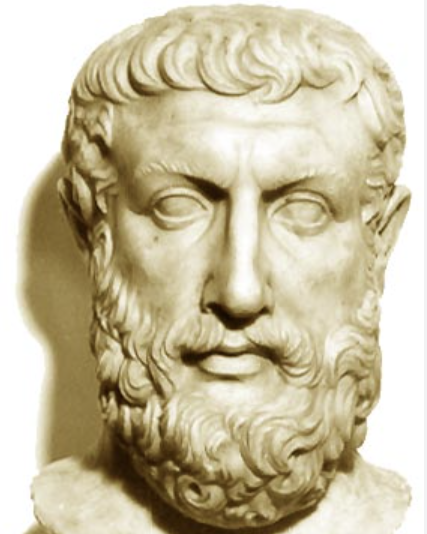
Greek philosophy returned for some time to the concept of the One in the teachings of Parmenides... His most important contribution... was, perhaps, that he introduced a purely logical argument into metaphysics. "One cannot know what is not—that is impossible—nor utter it; for it is the same thing that can be thought and that can be." Therefore, only the One is, and there is no becoming or passing away. Parmenides denied the existence of empty space for logical reasons. Since all change requires empty space... he dismissed change as an illusion.
▼
Source
Werner Heisenberg, Physics and Philosophy (1958) [https://archive.org/details/physicsphilosoph0000heis_n9m9/page/63/mode/1up?view=theater pp. 63-64.]
3 months 3 weeks ago
Indeed, if any man can say, that it is not an interesting question, whether his existence terminate at death, or is to be resumed at a future period, and then to continue for ever, he must be of a low and abject mind. To a rational being, capable of contemplating the wonders of nature, and of investigating the laws of it, and to a being of a social disposition, his existence, and the continuance of his rational faculties, must be an object of unspeakable value to him; and consequently he must ardently wish that christianity... may be true. For to a philosopher, who forms his judgment by what he actually observes, the doctrine of soul, capable of subsisting and acting when the body is in the grave, will never give any satisfaction. To every person, therefore, who is capable of enjoying his existence, the christian doctrine of a resurrection opens a glorious and transporting prospect.
▼
Source
General Conclusions, Part I : Containing Considerations addressed to Unbelievers and especially to Mr. Gibbon

3 months 3 weeks ago
Natural science does not consist in ratifying what others have said, but in seeking the causes of phenomena.
▼
Source
Attributed to Albertus Magnus in: Albertus Magnus; cited in: Morris Bishop (1968) The Middle Ages. p. 252.
3 months 3 weeks ago
A mother gave her children Aesop’s fables to read, in the hope of educating and improving their minds; but they very soon brought the book back, and the eldest, wise beyond his years, delivered himself as follows: This is no book for us; it’s much too childish and stupid. You can’t make us believe that foxes and wolves and ravens are able to talk; we’ve got beyond stories of that kind! In these young hopefuls you have the enlightened Rationalists of the future.
▼
Source
“Similes, Parables and Fables” Parerga and Paralipomena
3 months 3 weeks ago
One cannot live without motives. I have no motives left, and I am living.
3 months 3 weeks ago
Never had beauty been so forgotten; style was poisoned at the fount of thought by Carlyle, whose sentences were confused disasters like railway accidents, and by Herbert Spencer, who wrote as though he were the offspring of two Times leaders; among novelists only Robert Louis Stevenson loved words...
▼
Source
Rebecca West, "Transition", in Henry James. London, 1916.
3 months 3 weeks ago
Gentleness, as opposed to an irascible temper, greatly contributes to the tranquility and happiness of life, by preserving the mind from perturbation, and arming it against the assaults of calumny and malice.
3 months 3 weeks ago
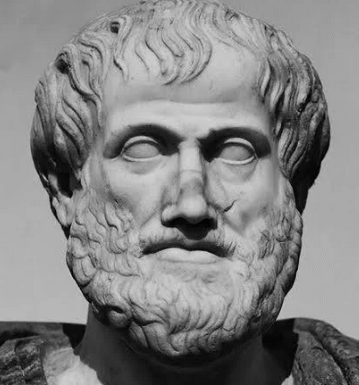
But it is better to assume principles less in number and finite, as Empedocles makes them to be. All philosophers... make principles to be contraries... (for Parmenides makes principles to be hot and cold, and these he demominates fire and earth) as those who introduce as principles the rare and the dense. But Democritus makes the principles to be the solid and the void; of which the former, he says, has the relation of being, and the latter of non-being. ...it is necessary that principles should be neither produced from each other, nor from other things; and that from these all things should be generated. But these requisites are inherent in the first contraries: for, because they are first, they are not from other things; and because they are contraries, they are not from each other.
▼
Source
Book I, Ch. VI, pp. 53-55.
3 months 3 weeks ago
Cuba and Belgium are both countries of modest size, surrounded by large, powerful and often hostile powers.
▼
Source
[https://www.the-low-countries.com/article/our-man-in-havana-and-other-facts-about-the-belgo-cuban-connection Our Man in Havana and Other Facts about the Belgo-Cuban Connection]

3 months 3 weeks ago
Without mathematics, we are blind.
▼
Source
Original French: Hors les mathématiques, nous sommes aveugles. | From Court traité d'ontologie transitoire. Paris: Éditions du Seuil, 1998. .
3 months 3 weeks ago
The teaching of my philosophy... that our whole existence is something which had better not have been, and that to disown and disclaim it is the highest wisdom.
▼
Source
Ch 1
3 months 3 weeks ago
The more you live, the less useful it seems to have lived.
3 months 3 weeks ago
Hatred and anger are the greatest poison to the happiness of a good mind.
▼
Source
Section II, Chap. III.
3 months 3 weeks ago
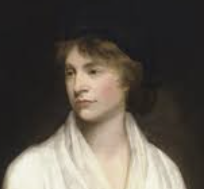
Nothing could be more natural than the developement of the passions, nor more striking than the views of the human heart. What delicate struggles! and uncommonly pretty turns of thought!
▼
Source
Mary: A Fiction (1788)
3 months 3 weeks ago
If a demarcation criterion exists (we must not, I think, seek a sharp or decisive one), it may lie just in that part of science which Sir Karl ignores.
▼
Source
"Logic of Discovery or Psychology of Research?", Criticism and the growth of knowledge edited by Imre Lakatos and Alan Musgrave (1970)
3 months 3 weeks ago
Nature flies from the infinite, for the infinite is unending or imperfect, and Nature ever seeks an end.
▼
Source
Book I, 715b.15
3 months 3 weeks ago
Liberty the essence of life. Whatever is done without it is imperfect.

3 months 3 weeks ago
For reasons mentioned at the beginning of this section, we cannot offer here a precise structural definition of semantical category and will content ourselves with the following approximate formulation: two expressions belong to the same semantical category if (I) there is a sentential function which contains one of these expressions, and if (2) no sentential function which contains one of these expressions ceases to be a sentential function if this expression is replaced in it by the other. It follows from this that the relation of belonging to the same category is reflective, symmetrical and transitive. By applying the principle of abstraction, all the expressions of the language which are parts of sentential functions can be divided into mutually exclusive classes, for two expressions are put into one and the same class if and only if they belong to the same semantical category, and each of these classes is called a semantical category. Among the simplest examples of semantical categories it suffices to mention the category of the sentential functions, together with the categories which include respectively the names of individuals, of classes of individuals, of two-termed relations between individuals, and so on. Variables (or expressions with variables) which represent names of the given categories likewise belong to the same category.
▼
Source
p. 45; as cited in: Schaff (1962) pp. 36-37.
3 months 3 weeks ago
Writers may be classified as meteors, planets, and fixed stars. A meteor makes a striking effect for a moment. You look up and cry “There!” and it is gone forever. Planets and wandering stars last a much longer time. They often outshine the fixed stars and are confounded by them by the inexperienced; but this only because they are near. It is not long before they must yield their place; nay, the light they give is reflected only, and the sphere of their influence is confined to their orbit — their contemporaries. Their path is one of change and movement, and with the circuit of a few years their tale is told. Fixed stars are the only ones that are constant; their position in the firmament is secure; they shine with a light of their own; their effect today is the same as it was yesterday, because, having no parallax, their appearance does not alter with a difference in our standpoint. They belong not to one system, one nation only, but to the universe. And just because they are so very far away, it is usually many years before their light is visible to the inhabitants of this earth.
▼
Source
Vol. 2 "The Art of Literature" as translated in Essays and Aphorisms (1970), as translated by R. J. Hollingdale
3 months 3 weeks ago
Get hold of yourself, be confident once more, don't forget that it is not given to just anyone to have idolized discouragement without succumbing to it.
3 months 3 weeks ago
But man has almost constant occasion for the help of his brethren, and it is in vain for him to expect it from their benevolence only. He will be more likely to prevail if he can interest their self-love in his favour, and shew them that it is for their own advantage to do for him what he requires of them. Whoever offers to another a bargain of any kind, proposes to do this. Give me that which I want, and you shall have this which you want, is the meaning of every such offer; and it is in this manner that we obtain from one another the far greater part of those good offices which we stand in need of. It is not from the benevolence of the butcher, the brewer, or the baker that we expect our dinner, but from their regard to their own interest. We address ourselves, not to their humanity, but to their self-love, and never talk to them of our own necessities, but of their advantages. Nobody but a beggar chooses to depend chiefly upon the benevolence of his fellow-citizens. Even a beggar does not depend upon it entirely.
▼
Source
Chapter II, p. 19.
3 months 3 weeks ago
Executions, far from being useful examples to the survivors, have, I am persuaded, a quite contrary effect, by hardening the heart they ought to terrify. Besides, the fear of an ignominious death, I believe, never deterred anyone from the commission of a crime, because in committing it the mind is roused to activity about present circumstances.
▼
Source
Letter 19
3 months 3 weeks ago
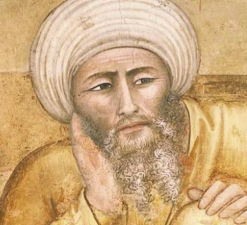
The Asharites have expressed a very peculiar opinion, both with regard to reason and religion; about this problem they have explained it in a way in which religion has not, but have adopted quite an opposite method.
▼
Source
Part 4: Divine Justice and Injustice; Opening sentence
3 months 3 weeks ago
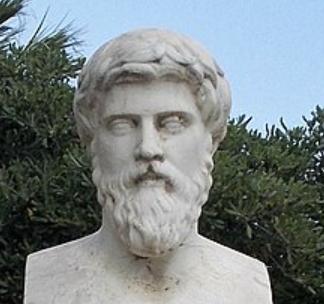
Scilurus on his death-bed, being about to leave four-score sons surviving, offered a bundle of darts to each of them, and bade them break them. When all refused, drawing out one by one, he easily broke them,—thus teaching them that if they held together, they would continue strong; but if they fell out and were divided, they would become weak.
▼
Source
31 Scilurus
CivilSimian.com created by AxiomaticPanic, CivilSimian, Kalokagathia