
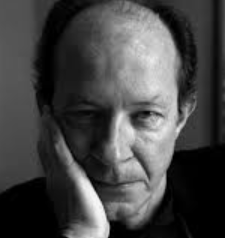
Giorgio Agamben
Member for
5 months 1 weekGiorgio Agamben — Homo Sacer, Bare Life, and the State of Exception as the Paradigm of Modern Politics (b. 1942)
Giorgio Agamben is an Italian philosopher — born in Rome on 22 April 1942, educated in law and philosophy, who attended seminars by Heidegger in Le Thor in 1966 and 1968, edited works for the Italian translation of Walter Benjamin, became deeply immersed in Benjamin's engagement with Carl Schmitt and in Foucault's theory of biopolitics, and taught philosophy at the University of Venice while producing a body of work of unusual erudition spanning Aristotle, Roman law, medieval theology, Christian mysticism, Heidegger, Benjamin, Schmitt, Foucault, Debord, and Kafka — all in the service of a sustained attempt to understand what had happened to Western politics and what the concentration camp revealed about its deepest structure.
He is best known for the multi-volume "Homo Sacer" project — nine books published out of chronological order between 1995 and 2015 — which developed the concepts of the state of exception, homo sacer, and bare life as the diagnostic framework for understanding why liberal democracy and totalitarianism appeared so different yet shared, at their structural foundation, the same relationship between sovereign power and naked human life. He is also known, in later life, for controversies: his response to the COVID-19 pandemic in 2020 was widely criticized as treating public health measures as paradigm cases of biopolitical control — a application of his conceptual apparatus that many found politically irresponsible.
His central concern: that the Western political tradition had constituted itself, from its origins in Greek thought through to the present, on the exclusion of bare life from the political community — and that this exclusion, whose concealed logic the camp made visible, was not a departure from Western politics but its secret foundation.
The Aristotelian Starting Point — Zoē and Bios
Agamben's argument begins from a distinction in ancient Greek between two words for life: zoē — bare biological life, the fact of being alive, shared by all living things — and bios — a particular way of life, the qualified existence of a being who has a specific mode of living. Aristotle had defined the human being as the animal with the "additional capacity for political existence" — as the living thing whose distinctive characteristic was that it also had a political life, a bios politikos. Agamben's thesis: the Western political tradition, from its Aristotelian foundations forward, has constituted itself by including biological life (zoē) in the political realm only through excluding it — by making "bare life" the threshold on which the political community simultaneously depends and which it must expel.
This was the philosophical content behind the Greek distinction between the oikos (household, the realm of bare life and necessity) and the polis (the public sphere, the realm of genuine political life). The household was where life was sustained — food, reproduction, labor. The polis was where the good life was lived. The two were constitutively separate. What Agamben argued was that this separation was not a clean division but a structural exclusion — the polis was possible only by drawing a line that left bare life on one side and political existence on the other, and this line was the ongoing operation that constituted political community.
"For millennia, man remained what he was for Aristotle: a living animal with the additional capacity for political existence; modern man is an animal whose politics calls his existence as a living being into question."
— Foucault, cited and developed by Agamben, Homo Sacer
The Sovereign Exception — Schmitt and Benjamin
Carl Schmitt had famously defined the sovereign as "he who decides on the exception" — the one who determines when the normal legal order could be suspended. The state of exception was, for Schmitt, the constitutive moment of sovereignty: the law was founded not on its own positive content but on the power of the sovereign to suspend it. Walter Benjamin, in his "Theses on the Philosophy of History," had responded that the "state of exception" had become the rule — that what was supposed to be a temporary suspension of normal order had become the permanent structure of modernity.
Agamben took Benjamin's insight and combined it with Schmitt's analysis to argue that the sovereign exception was not the external limit of the legal order but its hidden foundation — the point at which law and bare life were joined in the most intimate and most violent way. In the state of exception, the law was "in force without significance" — it applied to individuals by no longer applying to them, included them by excluding them. The figure of homo sacer from Roman law was the ancient embodiment of this logic.
"The sovereign exception is the figure in which singularity is represented as such — insofar as it is unrepresentable. What cannot be included in any way is included in the form of the exception."
— Agamben, Homo Sacer
Homo Sacer — Sacred and Killable
The homo sacer ("sacred man") was a figure from archaic Roman law: a person condemned for a certain kind of crime who was excluded from all normal legal protections and religious rites. He could be killed by anyone — his killing was not murder. Yet he could not be ritually sacrificed — he was sacred, but in a way that made him untouchable for religious purposes. He existed in a zone of absolute legal indistinction — neither within nor outside the law, neither protected nor properly executed, killable without legal consequence but not sacrificeable without religious violation.
Agamben's argument: the homo sacer figure revealed the logical structure at the heart of sovereign power. "Human life is included in the juridical order solely in the form of its exclusion — that is, of its capacity to be killed." The sacredness of the homo sacer did not denote a higher status but the status of the one who has been reduced to bare life — life stripped of all its qualities, its roles, its protections — and in this reduction, paradoxically, made available to sovereign violence in a way that even condemned criminals were not.
"Human life is included in the juridical order solely in the form of its exclusion — that is, of its capacity to be killed. The homo sacer can be killed and yet not sacrificed — a paradox operative in the status of the modern individual living in a system that exerts control over the collective naked life of all individuals."
The Camp — The Paradigm of Modern Politics
The most controversial and most influential claim of the Homo Sacer project was Agamben's identification of the concentration camp as "the nomos of the modern" — the fundamental political space of modernity, not as an aberration from liberal democracy but as the logical endpoint of its constitutive logic. The camp was the space in which the state of exception was no longer a temporary suspension of normal order but the permanent and explicit spatial organization of power — the place where bare life was directly exposed to sovereign violence without any of the protections that normal legal order provided.
Agamben did not argue that liberal democracies were equivalent to Nazi Germany. His argument was more structural and more disturbing: that insofar as liberal democracies rested on the same foundational logic — the production of bare life as the threshold of sovereign power — they contained within themselves the conditions from which camps could emerge. Wherever law was suspended and people were reduced to bare life — refugee camps, detention centers, stateless persons, those held indefinitely without charge — the "camp" logic was operative. Auschwitz was not simply a horror of the past but the revelation of a structure that persisted in every context where human beings were stripped to bare life.
"Insofar as its inhabitants were stripped of every political status and wholly reduced to bare life, the camp was the most absolute biopolitical space ever to have been realized, in which power confronts nothing but pure life, without any mediation."
— Agamben, Homo Sacer
Remnants of Auschwitz — The Witness and the Archive
"Remnants of Auschwitz" (1999) engaged directly with the testimonial literature of the Holocaust — particularly with the figure of the Muselmann, the concentration camp prisoner reduced to a state of complete apathy and physical deterioration, no longer capable of ordinary human responses, who occupied a zone between life and death that made bearing witness to the Holocaust structurally impossible: those who had experienced the extreme had mostly not survived, and those who survived had not fully experienced the extreme. The survivor spoke on behalf of those who could not speak, bearing witness for a witnessing that could not take place.
This was Agamben's most direct engagement with the philosophical dimensions of bearing witness to atrocity — and his most careful ethical work. The Muselmann was the limit-figure of homo sacer: the person reduced so completely to bare life that even the human capacity for dignity, shame, and testimony had been stripped away. The challenge to philosophy was to think what this reduction meant — not to incorporate it into an existing framework but to allow it to challenge every framework available.
"The Muselmann is the limit of what can be borne witness to: the person who has seen the Gorgon — who has experienced the extreme — cannot bear witness precisely because the experience has dissolved the capacity for testimony. The survivor bears witness for the Muselmann who cannot."
The COVID Controversy — When the Framework Misfired
In early 2020, as Italy became the first major European country to confront the COVID-19 pandemic, Agamben published a series of short interventions describing the public health measures — lockdowns, vaccination requirements — as the paradigm case of biopolitical control, a manufactured emergency used to normalize the permanent state of exception. He questioned whether the virus was as dangerous as claimed. He described the abandonment of normal life for "bare survival" as the culmination of the logic his entire career had analyzed.
The response from other philosophers — including Jean-Luc Nancy and Roberto Esposito — was immediate and largely critical. Nancy, who had himself received a heart transplant and lived under immunosuppression, replied that the pandemic was a real biological threat, not a manufactured emergency. The criticism was not only empirical but philosophical: that Agamben had applied his framework so mechanically that he could not distinguish between a genuine public health crisis and a state-manufactured exception, between measures that protected bare life and measures that exploited it. The controversy raised genuine questions about the limits of his framework — whether a theory that treated the camp as the paradigm of modern politics could avoid seeing every exercise of public power as camplification.
"While Agamben's comments have been criticized as exaggerated and conspiratorial, they arise from the conceptual constellation he has developed starting from the first volume of the Homo Sacer series — raising genuine questions about whether any framework that treats the camp as the paradigm of modernity can retain the discriminatory power needed to distinguish between different kinds of exception."
Legacy — The Structure That Liberal Democracy Would Rather Not See
Agamben's work has had unusual influence across disciplines — political theory, legal philosophy, literary studies, theology, architecture — precisely because his concepts of bare life and the state of exception provide a vocabulary for thinking about power that goes beneath the level of specific policies and institutions to their structural conditions. The framework has been criticized for being too abstract, for eliding differences between political regimes that matter enormously, and for the COVID controversy's demonstration that it could generate politically irresponsible conclusions when applied mechanically. These are genuine limitations. The framework has also illuminated dimensions of liberal democracy's relationship to its own exceptions — refugees, detainees, stateless persons — that more optimistic political theories tend to treat as peripheral problems rather than structural revelations.
"The production of a biopolitical body is the original activity of sovereign power. In this sense, biopolitics is at least as old as the sovereign exception. Placing biological life at the center of its calculations, the modern State therefore does nothing other than bring to light the secret tie uniting power and bare life."
— Agamben, Homo Sacer
CivilSimian.com created by AxiomaticPanic, CivilSimian, Kalokagathia