
4 months ago
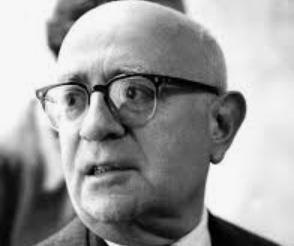
We cannot think any true thought unless we want the true. Thinking is itself an aspect of practice.
▼
Source
p. 45

4 months ago
Virtue is the health of the soul.
▼
Source
Stoicorum veterum fragmenta, fragment 359
4 months ago
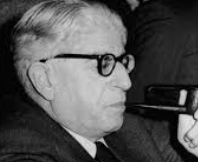
In death too, there is always something of the rich cat that lets the mouse run before devouring it
▼
Source
Traces (1930), p. 30
4 months ago
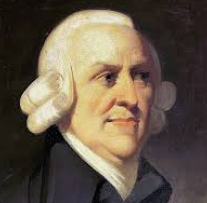
In generating the first ever systematic account of the market mechanism in commercial society, Smith's political economy drew not only on his critical reflections of the unsytematic nature of earlier economic writing, but equally on his didactic revisions of earlier natural law and natural jurisprudence traditions as well as the empirically suggestive but unsystematic historical inductive method of tracing the progress of civil society previously introduced by thinkers such as the great Montesquieu. These revisions can be linked directly to Smith's political thinking. It may be questioned whether Adam Smith can be said to have developed a political theory. Certainly, it has been and yet remains a subject of debate. Unquestionably, however, Smith isolated important political concerns and made political conceptual contributions which he linked systematically to his theory of commercial society and the conduct of the market.
▼
Source
Shannon C. Stimson, "Classical Political Economy", in Coole, Diana H.; Gibbons, Michael; Ellis, Elisabeth et al., The encyclopedia of political thought (2014)

4 months ago
King Esarhaddon was thinking how he should execute Lailie, when suddenly he heard a rustling near his bed, and opening his eyes saw an old man with a long gray beard and mild eyes. You wish to execute Lailie? asked the old man. Yes, answered the King. But I cannot make up my mind how to do it. But you are Lailie, said the old man. That's not true, replied the King. Lailie is Lailie, and I am I. You and Lailie are one, said the old man. You only imagine you are not Lailie, and that Lailie is not you.... You cannot destroy his life.
▼
Source
Part VII: Stories Given to Aid Persecuted Jews (1903) Esarhaddon, King of Assyria

4 months ago
The Torah sage ... does not encroach upon another's occupation, nor does he ever cause someone discomfort. The rule is that he should be among the pursued and not the pursuers, among those who accept humiliation but not among those who humiliate others.
▼
Source
Chapter 5, Section 13

4 months ago
If a man own land, the land owns him.
▼
Source
Wealth

4 months ago
The basic drive behind real philosophy is curiosity about the world, not interest in the writings of philosophers. Each of us emerges from the preconsciousness of babyhood and simply finds himself here, in it, in the world. That experience alone astonishes some people. What is all this — what is the world? And what are we? From the beginning of humanity some have been under a compulsion to ask these questions, and have felt a craving for the answers. This is what is really meant by any such phrase as "mankind's need for metaphysics."
▼
Source
p. 232

4 months ago
If the world is a precipitation of human nature, so to speak, then the divine world is a sublimation of the same. Both occur in one act. No precipitation without sublimation. What goes lost there in agility, is won here.
▼
Source
Fragment No. 96
4 months ago
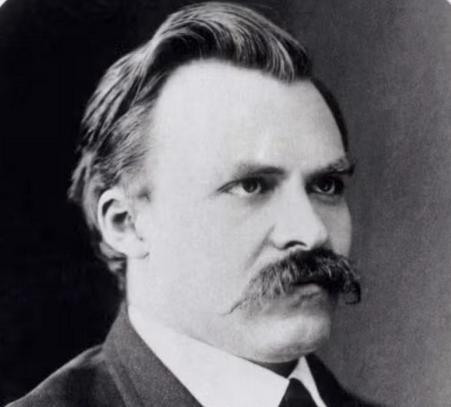
Not one of these nobly equipped young men has escaped the restless, exhausting, confusing, debilitating crisis of education. ... He feels that he cannot guide himself, cannot help himself—and then he dives hopelessly into the world of everyday life and daily routine, he is immersed in the most trivial activity possible, and his limbs grow weak and weary.
4 months ago
Wealth is a great sin in the eyes of God. Poverty is a great sin in the eyes of man.
▼
Source
p. 86
4 months ago
Through the constant revolution of the fifth element, with all contained therein, the four elements are forced to move and to change their respective positions, so that fire and air are driven into the water, and again these three elements enter the depth of the earth. Thus are the elements mixed together; and when they return to their respective places, parts of the earth, in quitting their places, move together with the water, the air and the fire. In this whole process the elements act and react upon each other. The elements intermixed, are then combined, and form at first various kinds of vapours; afterwards the several kinds of minerals, every species of plants, and many species of living beings, according to the relative proportion of the constituent parts. All transient beings have their origin in the elements, into which again they resolve when their existence comes to an end. The elements themselves are subject to being transformed from one into another; for although one substance is common to all, substance without form is in reality impossible, just as the physical form of these transient beings cannot exist without substance.
4 months ago
The alleged power to charm down insanity, or ferocity in beasts, is a power behind the eye.
▼
Source
Behavior
4 months ago
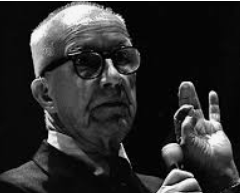
Nature is entirely synergetic and because your problems of representing a society ignorant of such fundamentals are greatly increased you need to pay great attention to learning how to comprehend synergy and thereafter how to educate all of humanity in the shortest time how to comprehend and usefully cope with omni-synergetic universe
4 months ago
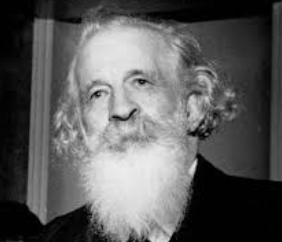
Words … are little houses, each with its cellar and garret. Common sense lives on the ground floor, always ready to engage in ‘foreign commerce’ on the same level as the others, as the passers-by, who are never dreamers. To go upstairs in the word house is to withdraw step by step; while to go down to the cellar is to dream, it is losing oneself in the distant corridors of an obscure etymology, looking for treasures that cannot be found in words. To mount and descend in the words themselves—this is a poet’s life. To mount too high or descend too low is allowed in the case of poets, who bring earth and sky together.
▼
Source
Ch. 6
4 months ago
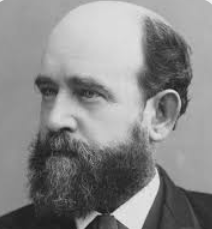
No amount of force will break an egg-shell if exerted on one side alone. So capital could not squeeze labor as long as labor was free to natural opportunities, and in a world where these natural materials and opportunities were as free to all as is the air to us, there could be no difficulty in finding employment, no willing hands conjoined with hungry stomachs, no tendency of wages toward the minimum on which the worker could barely live. In such a world we would no more think of thanking anybody for furnishing us employment than we here think of thanking anybody for furnishing us with appetites. That the Creator might have put us in the kind of world I have sought to imagine, as readily as in this kind of a world, I have no doubt. Why he has not done so may, however, I think, be seen. That kind of a world would be best for fools. This is the best for men who will use the intelligence with which they have been gifted. Of this, however, I shall speak hereafter. What I am now trying to do by asking my readers to endeavor to imagine a world in which natural opportunities were "as free as air," is to show that the barrier which prevents labor from freely using land is the nether millstone against which labor is ground, the true cause of the difficulties which are apparent through the whole industrial organization.
▼
Source
Ch. 13 : Unemployed Labor
4 months ago
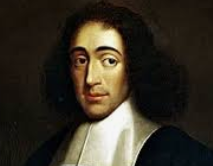
If slavery, barbarism and desolation are to be called peace, men can have no worse misfortune. No doubt there are usually more and sharper quarrels between parents and children, than between masters and slaves ; yet it advances not the art of household management to change a father's right into a right of property, and count children but as slaves. Slavery, then, and not peace, is furthered by handing the whole authority to one man.
▼
Source
Ch. 6, On Monarchy
4 months ago
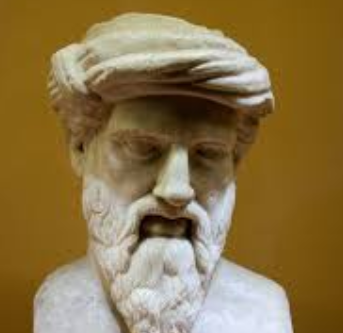
There is but one Temple in the World; and that is the Body of Man. Nothing is holier than this high form. Bending before men is a reverence done to this Revelation in the Flesh. We touch Heaven, when we lay our hand on a human body.
▼
Source
Variant translation: There is but one temple in the Universe and that is the Body of Man. | As inscribed on the Library of Congress, quoted in Handbook of the New Library of Congress (1897) by Herbert Small, p. 53
4 months ago
Philosophy leaps ahead on tiny toeholds; hope and intuition lend wings to its feet. Calculating reason lumbers heavily behind, looking for better footholds, for reason too wants to reach that alluring goal which its divine comrade has long since reached.
▼
Source
p. 40
4 months ago
"Garrison was the first to proclaim this principle as a rule for the organization of man's life," Tolstoy acknowledged, and described the "spiritual joy" with which he discovered the existence of kindred thinkers in Garrison, Ballou and the earlier pacifist William Dymond. Later in his life Tolstoy added to the list of Americans who had influenced him, the names of Emerson, Thoreau and Walt Whitman, among others. He was also influenced in his economic views by Henry George's Progress and Poverty. In turn, Tolstoy exerted a considerable influence on American intellectuals, and his ideas inspired a revitalization of the American peace movement.
▼
Source
Gerda Lerner, Why History Matters: Life and Thought (1997)
4 months ago
The first kind of evil is that which is caused to man by the circumstance that he is subject to genesis and destruction, or that he possesses a body.
▼
Source
Ch.12
4 months ago
A ruddy drop of manly blood The surging sea outweighs, The world uncertain comes and goes; The lover rooted stays.
▼
Source
Friendship
4 months ago
There is nothing that a single massive sphere will or can ever do by itself that says it will both exert and yield attractively with a neighboring massive sphere and that it yields progressively: every time the distance between the two is halved, the attraction will be fourfolded. This unpredicted, only mutual behavior is synergy.
▼
Source
[http://www.rwgrayprojects.com/synergetics/s01/p0100.html 103.00]
4 months ago
I have already read Henry George's great book and really learnt a great deal from it. Yesterday evening I read with admiration the address about Moses. Men like Henry George are rare unfortunately. One cannot imagine a more beautiful combination of intellectual keenness, artistic form and fervent love of justice. Every line is written as if for our generation. The spreading of these works is a really deserving cause, for our generation especially has many and important things to learn from Henry George.
▼
Source
Albert Einstein, in a [http://www.cooperativeindividualism.org/einstein-albert_letters-to-anna-george-demille-1934.html letter to Anna George De Mille, published in Land and Freedom (May-June 1934)]
4 months ago
Wind indeed increases fire, but custom love.
▼
Source
"Pythagorean Ethical Sentences From Stobæus" (1904)
4 months ago
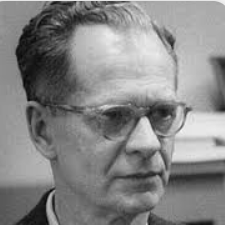
Let men be happy, informed, skillful, well behaved, and productive.
▼
Source
Freedom and the control of men (1955/1956) American Scholar, 25 (1), 47-65

4 months ago
I work quite diligently and wish that I were better and smarter. And these both are one and the same.
▼
Source
In a letter to Paul Engelmann (1917) as quoted in The Idea of Justice (2010) by Amartya Sen, p. 31
4 months ago
Fourth Theory.—Man has free will; it is therefore intelligible that the Law contains commands and prohibitions, with announcements of reward and punishment. All acts of God are due to wisdom; no injustice is found in him, and he does not afflict the good. The Mu'tazila profess this theory, although they do not believe in man's absolute free will. They hold that God takes notice of the falling of the leaf and the destruction of the ant, and that his Providence extends over all beings.
▼
Source
Ch.17
4 months ago
Never read any book that is not a year old.
▼
Source
Books
4 months ago
This book is written with the conviction that there are no "good" or "bad" people, no matter how offensive or eccentric to society they may seem. . . You and I didn't design people. God designed people. What I am trying to do is to discover why God included humans in Universe.

4 months ago
As we all gratefully acknowledge, it is to the genius and labours of Faraday—Davy's successor in this place—that the astonishing development of the application of electrical energy which characterises this age has taken rise.
4 months ago
Envy has been, is, and shall be, the destruction of many. What is there, that Envy hath not defamed, or Malice left undefiled? Truly, no good thing.
4 months ago
The limits of my language mean the limits of my world. (5.6)
▼
Source
Variant translations: | The limits of my language stand for the limits of my world. | The limits of my language are the limits of my mind. All I know is what I have words for. | Original German: Die Grenzen meiner Sprache bedeuten die Grenzen meiner Welt.
4 months ago
Whatever God desires to do is necessarily done; there is nothing that could prevent the realisation of His will. The object of His will is only that which is possible, and of the things possible only such as His wisdom decrees upon. When God desires to produce the best work, no obstacle or hindrance intervenes between Him and that work. This is the opinion held by all religious people, also by the philosophers; it is also our opinion. For although we believe that God created the Universe from nothing, most of our wise and learned men believe that the Creation was not the exclusive result of His will; but His wisdom, which we are unable to comprehend, made the actual existence of the Universe necessary. The same unchangeable wisdom found it as necessary that non-existence should precede the existence of the Universe. Our Sages frequently express this idea in the explanation of the words, "He hath made everything beautiful in his time" (Eccl. iii. 11)... This is the belief of most of our Theologians; and in a similar manner have the Prophets expressed the idea that all parts of natural products are well arranged, in good order, connected with each other, and stand to each other in the relation of cause and effect; nothing of them is purposeless, trivial, or vain; they are all the result of great wisdom. ...This idea occurs frequently; there is no necessity to believe otherwise; philosophic speculation leads to the same result; viz., that in the whole of Nature there is nothing purposeless, trivial, or unnecessary, especially in the nature of the spheres, which are in the best condition and order, in accordance with their superior substance.
▼
Source
Ch.25
4 months ago
To live without duties is obscene.
▼
Source
Aristocracy
4 months ago
The new human networks' emergence represents the natural evolutionary expansion into the just completed, thirty-years-in-its-buildings world-embracing, physical communications network. The new reorienting of human networking constitutes the heart-and-mind-pumped flow of life and intellect into the world arteries.
4 months ago
Furthermore, the monad produces itself and is produced from itself, since it is self-sufficient and has no power set over it and is everlasting; and it is evidently the cause of permanence, just as God is thought to be in the case of actual physical things, and to be the preserver and maintainer of natures.
▼
Source
On the Monad
4 months ago
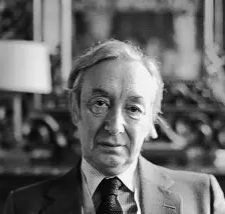
Freddie became so much nicer after he died. He was not nearly so boastful. He took an interest in other people.
▼
Source
[http://www.guardian.co.uk/news/2003/jul/23/guardianobituaries.books Dee Wells], his widow, on his changed dispositions after his near-death experience in June 1988, as quoted in "Did atheist philosopher see God when he 'died'?" by William Cash, in Nation

4 months ago
Look now, this is the starting point of philosophy: the recognition that different people have conflicting opinions, the rejection of mere opinion so that it comes to be viewed with mistrust, an investigation of opinion to determine whether it is rightly held, and the discovery of a standard of judgement, comparable to the balance that we have devised for the determining of weights, or the carpenter's rule for determining whether things are straight or crooked.
▼
Source
Book II, ch. 11, § 13.
4 months ago
The apparently ancient reports of the importance of Pythagoras and his pupils in laying the foundations of mathematics crumble on touch, and what we can get hold of is not authentic testimony by the efforts latecomers to paper over a crack, which they obviously found surprising, by the use of various kinds of reconstruction and reinterpretation. On the other hand, there are ancient and unassailable indications of a Greek mathematics antedating Pythagoras and quite outside his sphere of influence.
▼
Source
Walter Burkert, Lore and Science in Ancient Pythagoreanism (1972)
4 months ago
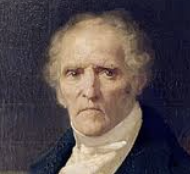
There is no idea more novel, more surprising, than that of associating three hundred families of different degrees of fortune, knowledge and capacity.
▼
Source
The Theory of Social Organization. Harmonian Man: Selected Writings of Charles Fourier, p. 5.
4 months ago
What makes a subject difficult to understand — if it is significant, important — is not that some special instruction about abstruse things is necessary to understand it. Rather it is the contrast between the understanding of the subject and what most people want to see. Because of this the very things that are most obvious can become the most difficult to understand. What has to be overcome is not difficulty of the intellect but of the will. [Nicht eine Schwierigkeit des Verstandes, sondern des Willens ist zu überwinden.]
▼
Source
Ch. 9 : Philosophy (chapters 86–93 of the so called Big Typescript), p. 161 | Corresponding to TS 213, Kapitel 86

4 months ago
I think it is possible to speak of “a Christian philosophy” as long as it is understood in the sense in which the Fathers of the Greek Church, Origen, or Gregory of Nyssa could understand it. Certainly, Christianity, in the strong sense, is itself philosophy, but not because there is a Christian philosophy ideologically placed alongside others, but because the life of the Christian as such is profoundly “philosophy.” The expression “Christian philosophy,” therefore, taken in a certain sense, does not bother me at all, precisely because I believe that Christianity is the true philosophy, without prejudice to the universal and absolute value given to both terms, Christianity and philosophy.
4 months ago
His heart was as great as the world, but there was no room in it to hold the memory of a wrong.
▼
Source
Greatness
4 months ago
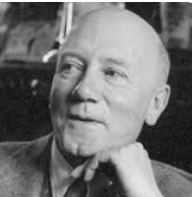
Although people cannot define existence and do use the term with some looseness, yet it is possible to give an extensive definition by pointing to the sorts of things that everyone believes to exist. It is still easier to point to the sort of entities that people agree in believing not to exist, and happily, this is really what concerns us most. People mean by saying that causation only applies to things that exist that it applies, if at all, to what can change; and they believe that, if anything can change, it is things like chairs and tables and minds, and not those like the propositions of Euclid and the multiplication table. What would be agreed then is that, if causal laws apply to anything it is to what can change in so far as it changes.
▼
Source
Perception, Physics, and Reality : An Enquiry into the Information that Physical Science can Supply about the Real (1914), Ch. 2 : On Causation; and on the Arguments that have been used against Causal Laws
4 months ago
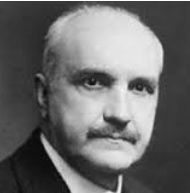
Fashion is something barbarous, for it produces innovation without reason and imitation without benefit.
▼
Source
Ch. VII
4 months ago
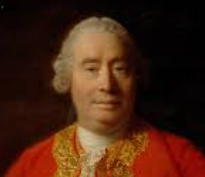
At present they [philosophers] seem to be in a very lamentable condition, and such as the poets have given us but a faint notion of in their descriptions of the punishment of Sisyphus and Tantalus. For what can be imagin'd more tormenting, than to seek with eagerness, what for ever flies us; and seek for it in a place, where 'tis impossible it can ever exist?
▼
Source
Part 4, Section 3
4 months ago
Remember that it is not he who gives abuse or blows who affronts, but the view we take of these things as insulting. When, therefore, any one provokes you, be assured that it is your own opinion which provokes you. (20).
4 months ago
Personal religion is derived from ecstasy, theology from mathematics, and both are to be found in Pythagoras.
▼
Source
Bertrand Russell, in A History of Western Philosophy (1945), Book One, Part I, Chapter III, Pythagoras, p. 36
CivilSimian.com created by AxiomaticPanic, CivilSimian, Kalokagathia