

4 months ago
All agreed in rejecting that blasphemy, that Greece was ever a province of Asia, that the Greek spirit, so free, so objective, so limpid, could contain any element of the vague and obscure spirit of the Orient.
▼
Source
“Des Religions de l’antiquité et leurs derniers historiens”, Mondes, vol. 23, no. 2 (1853) p. 835, quoted in Suzanne L. Marchand, German Orientalism in the Age of Empire: Religion, Race, and Scholarship (Cambridge University Press, 2009)

4 months ago
My aim is: to teach you to pass from a piece of disguised nonsense to something that is patent nonsense.
▼
Source
§ 464

4 months ago
The Art of Peace begins with you. Work on yourself and your appointed task in the Art of Peace. Everyone has a spirit that can be refined, a body that can be trained in some manner, a suitable path to follow. You are here to realize your inner divinity and manifest your innate enlightenment. Foster peace in your own life and then apply the Art to all than you encounter.
▼
Source
As quoted in Inspire! What Great Leaders Do (2004) by Lance Secretan, p. 45

4 months ago
To laugh often and much; To win the respect of intelligent people and the affection of children; To earn the appreciation of honest critics and endure the betrayal of false friends; To appreciate beauty, to find the best in others; To leave the world a bit better, whether by a healthy child, a garden patch or a redeemed social condition; To know even one life has breathed easier because you have lived. This is to have succeeded.
▼
Source
Widely attributed to Emerson on the internet, this actually originates with [http://www.cas.sc.edu/engl/emerson/Ephemera/Success.html "What is Success?"] by Bessie Anderson Stanley in Heart Throbs Volume Two (1911) edited by Joseph Mitchell Chapple.
4 months ago
The ultimate meaning of the systems approach, therefore, lies in the creation of a theory of deception and in a fuller understanding of the ways in which the human being can be deceived about his world and in an interaction between these different viewpoints.
▼
Source
p. 29
4 months ago
Liberal philosophy, at this point, ceases to be empirical and British in order to become German and transcendental. Moral life, it now believes, is not the pursuit of liberty and happiness of all sorts by all sorts of different creatures; it is the development of a single spirit in all life through a series of necessary phases, each higher than the preceding one. No man, accordingly, can really or ultimately desire anything but what the best people desire. This is the principle of the higher snobbery; and in fact, all earnest liberals are higher snobs.
▼
Source
"The Irony of Liberalism"
4 months ago
Hypothetical liberty is allowed to everyone who is not a prisoner and in chains
▼
Source
§ 8.23
4 months ago
At the dawn of our century, scientists were proclaiming that our understanding of the world was almost complete. Only one or two small problems in physics remained to be solved. One of these problems had to do with black body radiation and was solved by Max Planck. His solution, however, formed the foundation for quantum mechanics which was to sweep aside almost the whole edifice of fundamental assumptions in physics, and with it our understanding of the world. A hundred years later we are faced with a similar situation. The mechanistic viewpoint that began to dominate our world view in the seventeenth century has almost completed its hegemony. This paradigm, as historian Hugh Kearney points out, stems from only one of three main systems of thought that flowed from Greek thought into the modern world, each of which has dominated our world view at different points in our history. … In spite of the dominance of mechanistic thought in the contemporary world, a perplexing residue of the magical tradition still survives in the form of several issues, solutions to which do not appear possible within the context of a purely mechanical view of the world.
4 months ago
A confession has to be part of your new life.
▼
Source
p. 18e
4 months ago
May the Kami of Earth and Heaven watch our acts of purification.
4 months ago
American self-confidence, Emerson argued, should be grounded not in a narrow chauvinistic claim about the superiority of the American way but rather in a mature affirmation of America's gifts to the world as well as candid acknowledgment of the "most un-handsome part of our condition." Cheap American patriotism not only reflects an immaturity and insecurity, he warned, but also is an adolescent defense mechanism that reveals a fear to engage the world and learn from others. Narrow nationalism is a handmaiden of imperial rule, he argues-it keeps the populace deferential and complacent. Hence it abhors critics and dissenters like Emerson who unsettle and awaken the people. His shining example of democratic intellectual work is a challenge to us today. This challenge has been taken up through the years by a stream of Emersonian voices-from Walt Whitman to William James, Gertrude Stein. W. E. B. Du Bois, and Muriel Rukeyser.
▼
Source
Cornel West Democracy Matters: Winning the Fight Against Imperialism (2004)
4 months ago
If the story of my early years with Russ sound like they were years of battle, then the sound is correct.
▼
Source
C. West Churchman (1990, p. 130) cited in: Magnus Ramage, Karen Shipp (2009) Systems Thinkers. p. 140
4 months ago
Religions are not true or false, but better or worse.
▼
Source
This statement is presented in quotes in The Philosophy of Religion and Advaita Vedanta (2008) by Arvind Sharma, p. 216, as a "Santayanan point", but earlier publications by the same author, such as in A Primal Perspective on the Philosophy of Religion (
4 months ago
In all ages of the world, priests have been enemies to liberty; and it is certain, that this steady conduct of theirs must have been founded on fixed reasons of interest and ambition. Liberty of thinking, and of expressing our thoughts, is always fatal to priestly power, and to those pious frauds, on which it is commonly founded; and, by an infallible connexion, which prevails among all kinds of liberty, this privilege can never be enjoyed, at least has never yet been enjoyed, but in a free government.
▼
Source
Part I, Essay 9: Of The Parties of Great Britain
4 months ago
Don't for heaven's sake, be afraid of talking nonsense! But you must pay attention to your nonsense.
▼
Source
p. 56e
4 months ago
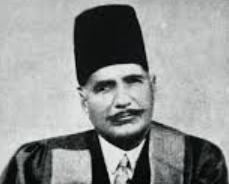
And even the Angels could not tell what was that voice so strange, Whose secret seemed to lie beyond Celestial wisdom’s range.
▼
Source
Shikwa. [https://archive.org/details/ShikwaJawabIShikwaIqbalsDialogueWithAllahTrKhushwantSinghIqbal
4 months ago
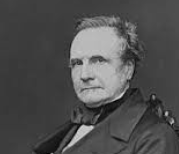
The whole of arithmetic now appeared within the grasp of mechanism.
▼
Source
Passages from the Life of a Philosopher (1864), ch. 8 "Of the Analytical Engine"

4 months ago
This makes me think that the French Revolution is a great epoch and that its consequences, in all kinds of ways, will be felt far beyond the time of its explosion and the limits of its birthplace.
▼
Source
Chapter II, p. 21
4 months ago
And why should man, added he, pretend to an exemption from the lot of all other animals? The whole earth, believe me, PHILO, is cursed and polluted. A perpetual war is kindled amongst all living creatures. Necessity, hunger, want, stimulate the strong and courageous: Fear, anxiety, terror, agitate the weak and infirm. The first entrance into life gives anguish to the new-born infant and to its wretched parent: Weakness, impotence, distress, attend each stage of that life: and it is at last finished in agony and horror.
▼
Source
Demea to Philo, Part X
4 months ago
My wife gave him some Swiss cheese and rye bread for lunch, which he greatly liked. Thereafter he more or less insisted on eating bread and cheese at all meals, largely ignoring the various dishes that my wife prepared. Wittgenstein declared that it did not much matter to him what he ate, so long as it always remained the same. When a dish that looked especially appetizing was brought to the table, I sometimes exclaimed "Hot Ziggety!" — a slang phrase that I learned as a boy in Kansas. Wittgenstein picked up this expression from me. It was inconceivably droll to hear him exclaim "Hot Ziggety!" when my wife put the bread and cheese before him.
▼
Source
Norman Malcolm, in Ludwig Wittgenstein : A Memoir (1966), p. 85

4 months ago
The best exponent of anarchist philosophy in ancient Greece was Zeno (342-267 or 270 B.C.), from Crete, the founder of the Stoic philosophy, who distinctly opposed his conception of a free community without government to the state-Utopia of Plato. He repudiated the omnipotence of the State, its intervention and regimentation, and proclaimed the sovereignty of the moral law of the individual — remarking already that, while the necessary instinct of self-preservation leads man to egotism, nature has supplied a corrective to it by providing man with another instinct — that of sociability. When men are reasonable enough to follow their natural instincts, they will unite across the frontiers and constitute the Cosmos. They will have no need of law-courts or police, will have no temples and no public worship, and use no money — free gifts taking the place of the exchanges. Unfortunately, the writings of Zeno have not reached us and are only known through fragmentary quotations. However, the fact that his very wording is similar to the wording now in use, shows how deeply is laid the tendency of human nature of which he was the mouthpiece.
▼
Source
"Anarchism" article in Encyclopedia Britannica (1910) "The Historical Development of Anarchism", as quoted in Anarchism: A Collection of Revolutionary Writings (1927), p. 288
4 months ago
The only sure mode of acquiring sound ideas of our relation to the Creator is to begin with the study of ourselves, and to view God as a Father and Friend, dealing with us in precisely the same way as we would deal with others over whom we exercise authority. Conscience, that infallible Mentor "that sticketh closer than a brother," tells us that we are responsible beings; and in the domestic, as well as the social circle, we speedily feel the discipline and learn the lesson of rewards and punishments. The law written in man's heart points to the past as pregnant with events which may affect the future; and in the earnestness of his aspirations, and the activity of his search, he is gradually led to the mysterious history of his race. He learns that on tables of stone have been engraven the same law to which his heart responded; -that when all were dead, one died for all; and in the contemplation of the great sacrifice, he obtains a solution of the interesting problem of his individual destiny. The Sacred record which is now his guide, speaks to him of fore-knowledge and predestination, while, in perfect consistency, it records the ministration of descending spirits, and the holier communings of God with man. The Divine decrees no longer perplex him. They transcend, indeed, his Reason - but that Reason, the faithful interpreter of Conscience, does not falter in proclaiming the Freedom of his Will, and the Responsibility of his Actions.
4 months ago
In the immense sphere of living things, the obvious rule is violence, a kind of inevitable frenzy which arms all things in mutua funera. Once you leave the world of insensible substances, you find the decree of violent death written on the very frontiers of life. Even in the vegetable kingdom, this law can be perceived: from the huge catalpa to the smallest of grasses, how many plants die and how many are killed!

4 months ago
People almost invariably arrive at their beliefs not on the basis of proof but on the basis of what they find attractive.
▼
Source
De l'Art de persuader ["On the Art of Persuasion"], written 1658; published posthumously.
4 months ago
While in the course of ages the nucleus of social custom inscribed in law has been subjected to but slight and gradual modifications, the other portion has been largely developed in directions indicated by the interests of the dominant classes, and to the injury of the classes they oppress.
▼
Source
III
4 months ago
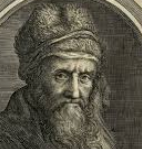
The apophthegm "Know thyself" is his.
▼
Source
Thales, 13. Compare" "There are two sentences inscribed upon the Delphic oracle, hugely accommodated to the usages of man’s life: 'Know thyself', and 'Nothing too much'; and upon these all other precepts depend", Plutarch, Consolation to Apollonius.
4 months ago
Behind the classical mask, behind the classical façade, behind the air of the Grand Seigneur, behind the orthodox Thomism, behind the official complete subservience to the monarchy of his day, which was nothing very splendid or impressive, there is in Maistre something much wilder, much more romantic, much more terrifying. He reminds one of someone like d'Annunzio or Nietzsche – not to seek for later examples. In that way he resembled Rousseau. Just as Rousseau imposed a kind of Calvinist logical strait-jacket upon what was really a kind of burning private lunacy, so Maistre imposes an official legitimist Catholic framework upon what is really a deeply violent, deeply revolutionary inner passion.
▼
Source
Isaiah Berlin, "Introduction" in Considerations on France (1994), xxxii–xxxiii
4 months ago
Of the truths within our reach... the mind and the heart are as doors by which they are received into the soul, but... few enter by the mind, whilst they are brought in crowds by the rash caprices of the will, without the council of reason.
4 months ago
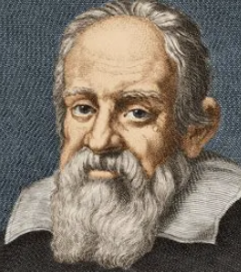
If you could see the earth illuminated when you were in a place as dark as night, it would look to you more splendid than the moon.
▼
Source
Salviati, p. 88
4 months ago
The third element alone remains — the institution itself, acting in such a way as to make social acts a state of habit and instinct. This element — history proves it — has never missed its aim, never has it acted as a double-bladed sword; and its influence has only been weakened when custom strove to become immovable, crystallized, to become in its turn a religion not to be questioned when it endeavored to absorb the individual, taking all freedom of action from him and compelling him to revolt against that which had become, through its crystallization, an enemy to progress.
4 months ago
Time is the image of eternity.
▼
Source
Plato, 41.
4 months ago
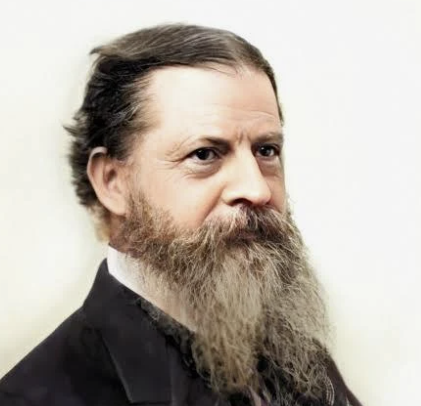
If the sign were not related to its object except by the mind thinking of them separately, it would not fulfil the function of a sign at all. Supposing, then, the relation of the sign to its object does not lie in a mental association, there must be a direct dual relation of the sign to its object independent of the mind using the sign. In the second of the three cases just spoken of, this dual relation is not degenerate, and the sign signifies its object solely by virtue of being really connected with it. Of this nature are all natural signs and physical symptoms. I call such a sign an index, a pointing finger being the type of the class. The index asserts nothing; it only says "There!" It takes hold of our eyes, as it were, and forcibly directs them to a particular object, and there it stops. Demonstrative and relative pronouns are nearly pure indices, because they denote things without describing them; so are the letters on a geometrical diagram, and the subscript numbers which in algebra distinguish one value from another without saying what those values are.
4 months ago
I make no doubt... that these rules are simple, artless, and natural.
4 months ago
Mathematics is the key and door to the sciences.
▼
Source
As quoted in Building Fluency Through Practice and Performance (2008) by Timothy Rasinski and Lorraine Griffith, p. 64, but in fact a quotation by Roger Bacon: Et harum scientiarum porta et clavis est Mathematica, "And of these sciences the door and key i
4 months ago
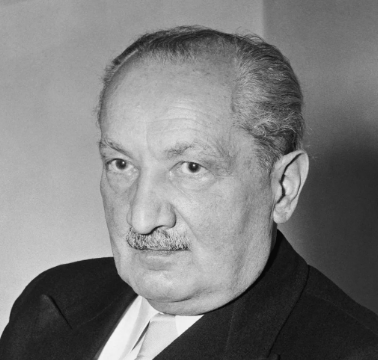
Kant stands in the tradition of the Leibniz-Wolffian school. He made the thinking through of English philosophy, especially Hume, fruitful for the formation of his own questioning. On the whole, however, the school-philosophy of Leibniz-Wolffian stamp remained predominant in Kant. He used Metaphysica 1739, by Alexander Baumgarten (1714-1762) in his lectures in metaphysics and appreciated this textbook "especially for the richness and precision of its teaching method." p. 114
4 months ago
To emancipate woman is not only to open the gates of the university, the law courts, or the parliaments, for her, for the "emancipated" woman will always throw domestic toil on to another woman. To emancipate woman is to free her from the brutalizing toil of kitchen and washhouse; it is to organize your household in such a way as to enable her to rear her children, if she be so minded, while still retaining sufficient leisure to take her share of social life. It will come to pass. As we have said, things are already improving. Only let us fully understand that a revolution, intoxicated with the beautiful words Liberty, Equality, Solidarity would not be a revolution if it maintained slavery at home. Half humanity subjected to the slavery of the hearth would still have to rebel against the other half.
▼
Source
Ch. 10 : Agreeable Work
4 months ago
"Be of good cheer," said Diogenes; "I see land."
▼
Source
Diogenes, 6.

4 months ago
Man... whatever the origin of his soul, if it is pure, noble, and lofty, it is a beautiful soul which dignifies the man endowed with it.
4 months ago
One of the most marked features about the law of mind is that it makes time to have a definite direction of flow from past to future. ...This makes one of the great contrasts between the law of mind and the law of physical force, where there is no more distinction between the two opposite directions in time than between moving northward and moving southward.
4 months ago
The thing I object to the most about Heidegger was that he was a guru. He practiced philosophy not as a Socratic practice of exchange, where you and I are equal, and it's just a matter of who has the better argument. But no, he was an authority figure, and he fed people's desire to submit themselves to authority. So I think actually his way of teaching was anti-philosophical.
▼
Source
Martha Nussbaum as stated in "[http://philosophybites.com/2010/12/martha-nussbaum-on-the-value-of-the-humanities.htmlhttp://philosophybites.com/2010/12/martha-nussbaum-on-the-value-of-the-humanities.html Martha Nussbaum on the Value of the Humanities]", P
4 months ago
It is especially in the domain of ethics that the dominating importance of the mutual-aid principle appears in full. That mutual aid is the real foundation of our ethical conceptions seems evident enough. But whatever the opinions as to the first origin of the mutual-aid feeling or instinct may be whether a biological or a supernatural cause is ascribed to it — we must trace its existence as far back as to the lowest stages of the animal world; and from these stages we can follow its uninterrupted evolution, in opposition to a number of contrary agencies, through all degrees of human development, up to the present times. Even the new religions which were born from time to time — always at epochs when the mutual-aid principle was falling into decay in the theocracies and despotic States of the East, or at the decline of the Roman Empire — even the new religions have only reaffirmed that same principle. They found their first supporters among the humble, in the lowest, downtrodden layers of society, where the mutual-aid principle is the necessary foundation of every-day life; and the new forms of union which were introduced in the earliest Buddhist and Christian communities, in the Moravian brotherhoods and so on, took the character of a return to the best aspects of mutual aid in early tribal life. Each time, however, that an attempt to return to this old principle was made, its fundamental idea itself was widened. From the clan it was extended to the stem, to the federation of stems, to the nation, and finally — in ideal, at least — to the whole of mankind.
4 months ago
He alludes to the appearance of a face in the orb of the moon.
▼
Source
Epicurus, 25.
4 months ago
Saint-Simon, like Hegel, begins with the assertion that the social order engendered by the French Revolution proved that mankind has reached the adult state. In contrast to Hegel, however, he described this stage primarily in terms of its economy; the industrial process was the sole integrating factor in the new social order. P. 330
4 months ago
Very ingeniously Lamettrie observes that at bottom I am immediately certain only of my own feeling. That other men also feel, I conclude with very much stronger conviction from the expression of their feelings in gestures and cries than from their articulate speech. That energetic language of the emotions is, however, the same in the animals as in men, and it carries with it much stronger proof than all the sophisms of Descartes. ...[T]he internal organisation of man and of the animals offers a perfect analogy. If it remains for the present incomprehensible how the capability of feeling can be an attribute of matter, it is with this, as with a thousand other puzzles, in which, according to an idea of Leibniz, instead of the thing itself we see only the veil that hides it. ...[S]ensation, like motion, must at all events potentially belong to all matter. So thought the ancients, whose philosophy is preferred by all capable minds to the inadequate attempts of the moderns. After this Lamettrie passes to the doctrine of substantial forms...
4 months ago
Understand me well. My appeal is to observation — observation that each of you must make for himself.
▼
Source
Lecture II : The Universal Categories, § 2 : Struggle, CP 5.53
4 months ago
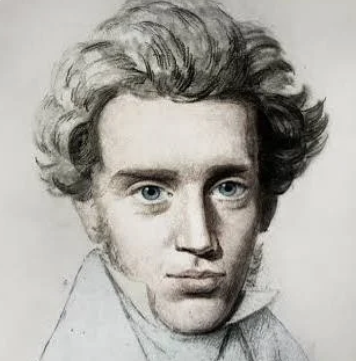
What I really need is to get clear about what I must do, not what I must know, except insofar as knowledge must precede every act. What matters is to find a purpose, to see what it really is that God wills that I shall do; the crucial thing is to find a truth which is truth for me, to find the idea for which I am willing to live and die.
▼
Source
Journal entry, Gilleleie (1 August 1835) Journals 1A; this is considered to be one of the earliest statements of existentialist thought. | Variant translation: My focus should be on what I do in life, not knowing everything, excluding knowledge on what yo

4 months ago
The first law is the same for both light and material bodies; they both move in a straight line, as long as they are not deflected by an outside force.The second law is also the same as that governing the reflection of an elastic ball from an impenetrable surface. Mechanics shows that such a ball is reflected from such a surface so that its angle of reflection equals its angle of incidence, as observed for light.But the third law still requires a plausible explanation. The passage of light from one medium to another exhibits behavior that is totally different from a ball moving through different media.
4 months ago
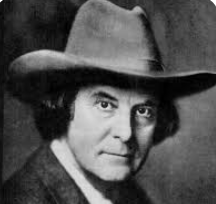
Have I put the matter too strongly? Possibly I have; but when all the world has gone a-slumming I wish to speak a word of sympathy for the man who succeeds — the man who, against great odds, has directed the efforts of others, and having succeeded, finds there's nothing in it: nothing but bare board and clothes. I have carried a dinner pail and worked for day's wages, and I have also been an employer of labor, and I know there is something to be said on both sides. There is no excellence, per se, in poverty; rags are no recommendation; and all employers are not rapacious and high-handed, any more than all poor men are virtuous. My heart goes out to the man who does his work when the "boss" is away, as well as when he is at home. And the man who, when given a letter for Garcia, quietly takes the missive, without asking any idiotic questions, and with no lurking intention of chucking it into the nearest sewer, or of doing aught else but deliver it, never gets "laid off" nor has to go on a strike for higher wages.
4 months ago
Outside the academic establishment, the “far-reaching change in all our habits of thought” is more serious. It serves to coordinate ideas and goals with those exacted by the prevailing system, to enclose them in the system, and to repel those which are irreconcilable with the system. The reign of such a one-dimensional reality does not mean that materialism rules, and that the spiritual, metaphysical, and bohemian occupations are petering out. On the contrary, there is a great deal of “Worship together this week,” “Why not try God,” Zen, existentialism, and beat ways of life, etc. But such modes of protest and transcendence are no longer contradictory to the status quo and no longer negative. They are rather the ceremonial part of practical behaviorism, its harmless negation, and are quickly digested by the status quo as part of its healthy diet.
▼
Source
pp. 13-14
4 months ago
The thought of every group is seen as arising out of its life conditions. Thus, it becomes the task of the sociological history of thought to anlayse without regard for party biases all the factors in the actually existing social situation which may influence thought. This sociologically oriented history of ideas is destined to provide modern men with a revised view of the whole historical process.
CivilSimian.com created by AxiomaticPanic, CivilSimian, Kalokagathia