
3 months 4 weeks ago
To understand oneself in existence is the Christian principle, except that this self has received much richer and much more profound qualifications that are even more difficult to understand together with existing. The believer is a subjective thinker, and the difference, is only between the simple person and the simple wise person. Here again the oneself is not humanity in general, subjectivity in general, and other such things, whereas everything becomes easy inasmuch as the difficulty is removed and the whole matter is shifted over into the shadow play of abstraction.
▼
Source
Concluding Unscientific Postscript to Philosophical Fragments, Vol. I, Hong p. 353
3 months 4 weeks ago
To laugh, if but for an instant only, has never been granted to man before the fortieth day from his birth, and then it is looked upon as a miracle of precocity.
▼
Source
Book VII, sec. 2.

3 months 4 weeks ago
Stupidity or reason? Oh, there was no choice now. It was imbecility every time.
▼
Source
The Gioconda smile, in Mortal Coils (1921)
3 months 4 weeks ago
Kant in fact seems to have begun his reflections on moral theory as an adherent of Francis Hutcheson’s moral sense theory. Even after abandoning it, he persists in maintaining the importance of “moral feeling” and tries consistently to make a place for it within his moral psychology.
▼
Source
Allen W. Wood, Kantian Ethics (2008), Ch. 2. Moral Worth
3 months 4 weeks ago
Marcuse, Sartre, Colletti and Althusser were style-maestros of turgidity and never tried to rise to the flights of Marx and Engels in their inspired moments. Not one of them would choose a monosyllable if a longer word could be discovered or devised. Their Marxism, if not exactly pessimistic, was cramped and cautious. What is more, they were philosophers writing mainly for other philosophers. Only Marcuse became a genuine favourite of the thousands of students who rebelled in 1968 against ‘bourgeois society’ and university discipline, as well as the American war in Vietnam. He and his ideas were accorded a profile in Playboy magazine. (It is hard to imagine another Marxist theorist, except perhaps Marx himself, tolerating this without complaint.) Marcuse had grown popular because of the significance he attached to the students; it also did him no harm that he was willing to discuss the erotic as well as the socio-political.
▼
Source
Robert Service, Comrades: A History of World Communism (1968)
3 months 4 weeks ago
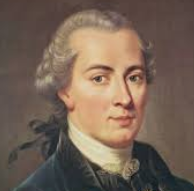
I maintain that in every special natural doctrine only so much science proper is to be met with as mathematics; for... science proper, especially of nature, requires a pure portion, lying at the foundation of the empirical, and based upon à priori knowledge of natural things. ...the conception should be constructed. But the cognition of the reason through construction of conceptions is mathematical. A pure philosophy of nature in general, namely, one that only investigates what constitutes a nature in general, may thus be possible without mathematics; but a pure doctrine of nature respecting determinate natural things (corporeal doctrine and mental doctrine), is only possible by means of mathematics; and as in every natural doctrine only so much science proper is to be met with therein as there is cognition à priori, a doctrine of nature can only contain so much science proper as there is in it of applied mathematics.
▼
Source
Preface, [https://books.google.com/books?id=OCJLAAAAMAAJ Tr.] Ernest Belfort Bax (1883)
3 months 4 weeks ago
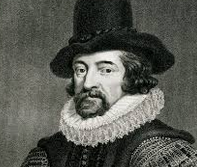
My mind is calm, for my fortune is not my felicity. I know I have clean hands and a clean heart, and I hope a clean house for friends or servants; but Job himself, or whoever was the justest judge, by such hunting for matters against him as hath been used against me, may for a time seem foul, especially in a time when greatness is the mark and accusation is the game.
▼
Source
Quoted by Thomas Fowler in "Francis Bacon 1561–1626 (1885)
3 months 4 weeks ago
He was extremely important to his contemporaries, who wanted nothing more than to see in him the Expected One; they wanted almost to press it upon him and and to force him into the role - but that he then refuses to be that!
▼
Source
p. 60
3 months 4 weeks ago
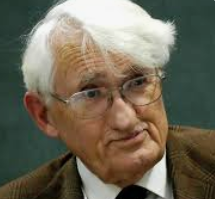
Critical systems thinkers like Gerald Midgley identify three waves of systems thinking over the last 50 years or so. Early systems theorists (e.g. Bertalanffy) described systems in physical terms, resorting to metaphors from electronic computation or biology. This 'hard systems' tradition still has its advocates and practitioners... Subsequently the limits of the physical metaphor... were reached, and the secondwave of systems thinking developed. This 'soft systems thinking' employed social metaphors to develop appropriate systems approaches for human systems. The move to a more phenomenological, interpretative understanding of human systems, where meaning is central and is negotiated intersubjectively, parallels the new paradigm / crisis of social psychology of the 1970s. The Third wave, or critical systems school, in which Midgley locates himself, has drawn on the critical theory of Habermas, particularly in relation to theories of knowledge and of communicative rationality, and on the work of Foucault and followers on the nature of power.
▼
Source
Mark Burton (2003) "[http://users.cooptel.net/mark.burton/ReviewMidg.pdf Review Systemic Intervention: Philosophy, Methodology, and Practice MIDGLEY, G. (2000)]" in: Journal of Community and Applied Psychology 2003 13 (4) 330-333
3 months 4 weeks ago
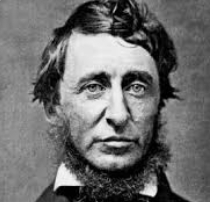
He believed that liberalism had saved the intellect at the cost of the repudiating the great historical phenomenon of religion.
▼
Source
"The Thought and Character of William James" (1935), Vol 2, ch. LXIX
3 months 4 weeks ago
Words are good servants but bad masters.
▼
Source
As quoted by Laura Huxley, in conversation with Alan Watts about her memoir This Timeless Moment (1968), in Pacifica Archives #BB2037 [sometime between 1968-1973])
3 months 4 weeks ago
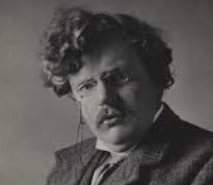
I object to a quarrel because it always interrupts an argument.
▼
Source
Magic: A Fantastic Comedy (1913)
3 months 4 weeks ago
Morality is not properly the doctrine of how we may make ourselves happy, but how we may make ourselves worthy of happiness.
3 months 4 weeks ago
This misplacing hath caused a deficience, or at least a great improficience in the sciences themselves. For the handling of final causes, mixed with the rest in physical inquiries, hath intercepted the severe and diligent inquiry of all real and physical causes, and given men the occasion to stay upon these satisfactory and specious causes, to the great arrest and prejudice of further discovery. For this I find done not only by Plato, who ever anchoreth upon that shore, but by Aristotle, Galen, and others which do usually likewise fall upon these flats of discoursing causes.
▼
Source
Book VII, 7
3 months 4 weeks ago
To the contemporary, Christ can only say: I will offer myself as a sacrifice for the sins of the world and for yours also. Is this easier to believe now than when he has done it, has offered himself? Or is the comfort greater because of his saying that he will do it than it is because of his having done it? There is no greater love than this, that someone lays down his life for another, but when is it easier to believe, and when is the comfort greater: when the loving one says he will do it – or when he has done it? P. 159
3 months 4 weeks ago
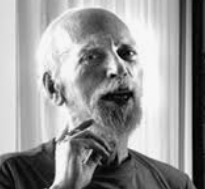
"Every national border in Europe," El Eswad added ironically, "marks the place where two gangs of bandits got too exhausted to kill each other anymore and signed a treaty. Patriotism is the delusion that one of these gangs of bandits is better than all the others."
▼
Source
The Earth Will Shake: The History of the Early Illuminati (The Historical Illuminatus Chronicles Vol. 1) (1982), p. 100
3 months 4 weeks ago
Ever since his mother's second marriage Spandrell had always perversely made the worst of things, chosen the worst course, deliberately encouraged his own worst tendencies. It was with debauchery that he distracted his endless leisures. He was taking his revenge on her... He was spiting her, spiting himself, spiting God. He hoped there was a hell for him to go to and regretted his inability to believe in its existence. ...it was even exciting in those early days to know that one was doing something bad and wrong. But there is in debauchery something so intrinsically dull, something so absolutely and hopelessly dismal, that it is only the rarest beings, gifted with much less than the usual amount of intelligence and much more than the usual intensity of appetite, who can go on actively enjoying a regular course of vice or continue actively to believe in its wickedness. Most habitual debauchees are debauchees not because they enjoy debauchery, but because they are uncomfortable when deprived of it. Habit converts luxurious enjoyments into dull and daily necessities.
▼
Source
Ch. 17
3 months 4 weeks ago
In our time the blasphemies are threadbare. Pessimism is now patently, as it always was essentially, more commonplace than piety. Profanity is now more than an affectation — it is a convention. The curse against God is Exercise I in the primer of minor poetry.
▼
Source
"Introduction"
3 months 4 weeks ago
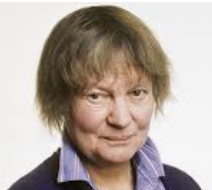
Serious reflexion about one's own character will often induce a curious sense of emptiness; and if one knows another person well, one may sometimes intuit a similar void in him. (This is one of the strange privileges of friendship.)
▼
Source
Ch. 8, p. 119
3 months 4 weeks ago
The woman wants to dominate, the man wants to be dominated.
▼
Source
Kant, Immanuel (1996), page 220
3 months 4 weeks ago
Those who have handled sciences have been either men of experiment or men of dogmas. The men of experiment are like the ant, they only collect and use; the reasoners resemble spiders, who make cobwebs out of their own substance. But the bee takes a middle course: it gathers its material from the flowers of the garden and of the field, but transforms and digests it by a power of its own. Not unlike this is the true business of philosophy; for it neither relies solely or chiefly on the powers of the mind, nor does it take the matter which it gathers from natural history and mechanical experiments and lay it up in the memory whole, as it finds it, but lays it up in the understanding altered and digested. Therefore from a closer and purer league between these two faculties, the experimental and the rational (such as has never yet been made), much may be hoped.
▼
Source
Aphorism 95
3 months 4 weeks ago
Is not “Christendom” the most colossal attempt at serving God, not by following Christ, as He required, and suffering for the doctrine, but instead of that, by “building the sepulchers of the prophets and garnishing the tombs of the righteous.”
▼
Source
p. 121
3 months 4 weeks ago
The individual act of obedience is the cornerstone not only of the strength of authoritarian society but also of its weakness.
3 months 4 weeks ago
Suso has even left a diagrammatic picture of the relations subsisting between Godhead, triune God and creatures. In this very curious and interesting drawing a chain of manifestation connects the mysterious symbol of the Divine Ground with the three Persons of the Trinity, and the Trinity in turn is connected in a descending scale with angels and human beings. These last, as the drawing vividly shows, may make one of two choices. They can either live the life of the outer man, the life of the separative selfhood; in which case they are lost (for, in the words of the Theologia Germanica, “nothing burns in hell but the self”). Or else they can identify themselves with the inner man, in which case it becomes possible for them, as Suso shows, to ascend again, through unitive knowledge, to the Trinity and even, beyond the Trinity, to the ultimate Unity of the Divine Ground.
3 months 4 weeks ago
Whatever the word "great" means, Dickens was what it means.
▼
Source
Ch 1: "The Dickens Period"
3 months 4 weeks ago
Immanuel Kant was the first hippie in history.
▼
Source
Ayn Rand, [http://arc-tv.com/apollo-and-dionysus/ Apollo and Dionysus], Ford Hall Forum (1969)
3 months 4 weeks ago
For behavior, men learn it, as they take diseases, one of another.
▼
Source
In an essay by Ralph Waldo Emerson, "Solitude and Society" in The Atlantic Monthly, Vol. 1, (December 1857), p. 228, this follows a statement clearly attributed to Bacon, which might be a paraphrase. Without explicit citation, this is added to the parapgr
3 months 4 weeks ago
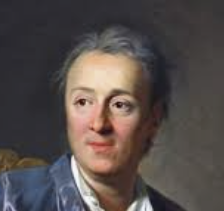
The wisest among us is very lucky never to have met the woman, be she beautiful or ugly, intelligent or stupid, who could drive him crazy enough to be fit to be put into an asylum.
▼
Source
Ceci n’est pas un conte [This Is No Tale] (1796),

3 months 4 weeks ago
Philosophy is to be replaced by the logic of science -- that is to say, by the logical analysis of the concepts and sentences of the sciences, for the logic of science is nothing other than the logical syntax of the language of science.
▼
Source
Foreword
3 months 4 weeks ago
Reflecting on my experience, I find myself agreeing with the eminent Cambridge philosopher, Dr. C. D. Broad, “that we should do well to consider much more seriously than we have hitherto been inclined to do the type of theory which Bergson put forward in connection with memory and sense perception. The suggestion is that the function of the brain and nervous system and sense organs is in the main eliminative and not productive. Each person is at each moment capable of remembering all that has ever happened to him and of perceiving everything that is happening everywhere in the universe. The function of the brain and nervous system is to protect us from being overwhelmed and confused by this mass of largely useless and irrelevant knowledge, by shutting out most of what we should otherwise perceive or remember at any moment, and leaving only that very small and special selection which is likely to be practically useful.” According to such a theory, each one of us is potentially Mind at Large. But in so far as we are animals, our business is at all costs to survive. To make biological survival possible, Mind at Large has to be funneled through the reducing valve of the brain and nervous system. What comes out at the other end is a measly trickle of the kind of consciousness which will help us to stay alive on the surface of this particular planet. To formulate and express the contents of this reduced awareness, man has invented and endlessly elaborated those symbol-systems and implicit philosophies which we call languages. Every individual is at once the beneficiary and the victim of the linguistic tradition into which he has been born—the beneficiary inasmuch as language gives access to the accumulated records of other people's experience, the victim in so far as it confirms him in the belief that reduced awareness is the only awareness and as it bedevils his sense of reality, so that he is all too apt to take his concepts for data, his words for actual things. That which, in the language of religion, is called “this world” is the universe of reduced awareness, expressed, and, as it were, petrified by language. The various “other worlds,” with which human beings erratically make contact are so many elements in the totality of the awareness belonging to Mind at Large. Most people, most of the time, know only what comes through the reducing valve and is consecrated as genuinely real by the local language. Certain persons, however, seem to be born with a kind of by-pass that circumvents the reducing valve. In others temporary by-passes may be acquired either spontaneously, or as the result of deliberate “spiritual exercises,” or through hypnosis, or by means of drugs. Through these permanent or temporary by-passes there flows, not indeed the perception “of everything that is happening everywhere in the universe” (for the by-pass does not abolish the reducing valve, which still excludes the total content of Mind at Large), but something more than, and above all something different from, the carefully selected utilitarian material which our narrowed, individual minds regard as a complete, or at least sufficient, picture of reality.
▼
Source
describing his experiment with mescaline, p. 22-24
3 months 4 weeks ago
We all know that constancy, jealousy, and the personal pledge are natural and inevitable in sex; we do not feel any surprise when we see them either in a murder or in a valentine.
▼
Source
[https://en.wikisource.org/wiki/Page:George_Bernard_Shaw_(IA_cu31924013547645).pdf/187 "The Philosopher" pg. 181]
3 months 4 weeks ago
If exclusive privileges were not granted, and if the financial system would not tend to concentrate wealth, there would be few great fortunes and no quick wealth. When the means of growing rich is divided between a greater number of citizens, wealth will also be more evenly distributed; extreme poverty and extreme wealth would be also rare.
▼
Source
Article on Wealth

3 months 4 weeks ago
Navigation brought man face to face with the uncertainty of destiny, where each is left to himself and every departure might always be the last. The madman on his crazy boat sets sail for the other world, and it is from the other world that he comes when he disembarks. This enforced navigation is both rigorous division and absolute Passage, serving to underline in real and imaginary terms the liminal situation of the mad in medieval society. It was a highly symbolic role, made clear by the mental geography involved, where the madman was confined at the gates of the cities. His exclusion was his confinement, and if he had no prison other than the threshold itself he was still detained at this place of passage. In a highly symbolic position he is placed on the inside of the outside, or vice versa. A posture that is still his today, if we admit that what was once the visible fortress of social order is now the castle of our own consciousness.
▼
Source
Part One: 1. Stultifera Navis
3 months 4 weeks ago
Conservatives have no intention of compromising with socialists, but even such an alliance, ridiculous though it would be, is more conceivable than the coalition of conservatives and libertarians.
3 months 4 weeks ago
An unexciting truth may be eclipsed by a thrilling falsehood.
▼
Source
Chapter 11 (p. 104)
3 months 4 weeks ago
In the city set upon slime and loam,They cry in their Parliament, "Who goes home?"And there comes no answer in arch or dome,For none in the city of graves goes home.Yet these shall perish and understand,For God has pity on this great land.
▼
Source
Ch. XXI: "The Road to Roundabout"
3 months 4 weeks ago
How did they meet? By chance, like everybody … Where did they come from? From the nearest place. Where were they going? Do we know where we are going?
▼
Source
Prologue
3 months 4 weeks ago
If torture was so strongly embedded in legal practice, it was because it revealed truth and showed the operation of power. It assured the articulation of the written on the oral, the secret on the public, the procedure of investigation on the operation of the confession; it made it possible to reproduce the crime on the visible body of the criminal.
▼
Source
Chapter One, pp.55

3 months 4 weeks ago
No woman should be authorized to stay at home to raise her children. Society should be totally different. Women should not have that choice, precisely because if there is such a choice, too many women will make that one. It is a way of forcing women in a certain direction.
▼
Source
“A Dialogue with Simone de Beauvoir,” in Betty Friedan, It Changed My Life: Writings on the Women’s Movement, (New York: Random House, 1976), [https://books.google.com/books?id=iv4-Qy82BJ0C&pg=PA397&lpg=PA397 p. 397].
3 months 4 weeks ago
To have seen you and your unforgotten face, Brave as a blast of trumpets for the fray, Pure as white lilies in a watery space, It were something, though you went from me today. To have known the things that from the weak are furled, Perilous ancient passions, strange and high; It is something to be wiser than the world, It is something to be older than the sky.
▼
Source
The Great Minimum
3 months 4 weeks ago
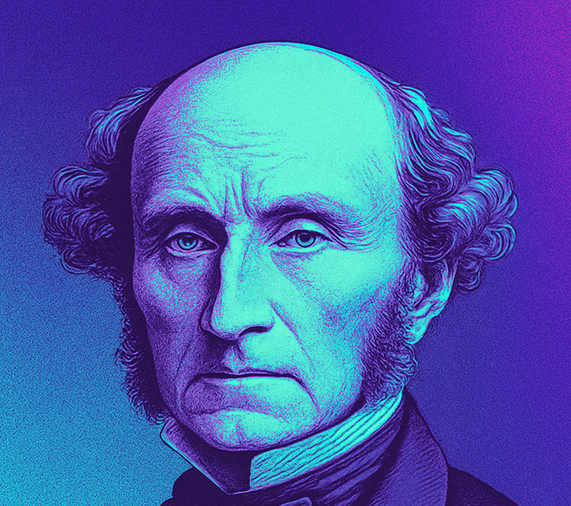
If all mankind minus one, were of one opinion, and only one person were of the contrary opinion, mankind would be no more justified in silencing that one person, than he, if he had the power, would be justified in silencing mankind.
▼
Source
Ch. II: Of the Liberty of Thought and Discussion
3 months 4 weeks ago
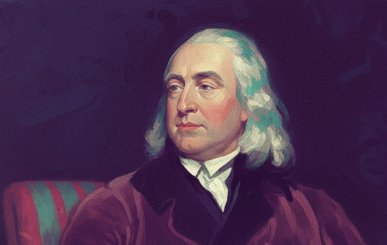
Pleasure is in itself a good; nay, even setting aside immunity from pain, the only good: pain is in itself an evil; and, indeed, without exception, the only evil; or else the words good and evil have no meaning. And this is alike true of every sort of pain, and of every sort of pleasure.
▼
Source
Ch. 10: Of Motives
3 months 4 weeks ago
The appearance in nineteenth-century psychiatry, jurisprudence, and literature of a whole series of discourses on the species and subspecies of homosexuality, inversion, pederasty, and "psychic hermaphroditism" made possible a strong advance of social controls into this area of "perversity"; but it also made possible the formation of a "reverse" discourse: homosexuality began to speak in its own behalf, to demand that its legitimacy or "naturality" be acknowledged, often in the same vocabulary, using the same categories by which it was medically disqualified.
▼
Source
Vol. I, p. 101
3 months 4 weeks ago
One is not born a genius, one becomes a genius; and the feminine situation has up to the present rendered this becoming practically impossible.
▼
Source
Bk. I, Pt. 2, Ch. 8: Since the French Revolution: the Job and the Vote, p. 133
3 months 4 weeks ago
Those dry Deists and hard-headed Utilitarians who stalked the streets of Edinburgh and Glasgow in the eighteenth and early nineteenth centuries were very obviously the products of the national religious spirit. The Scottish atheists were unmistakable children of the Kirk. And though they often seemed absurdly detached and dehumanised, the world is now rather suffering for want of such dull lucidity.
▼
Source
Ch. V: "The Scottish Stories"
3 months 4 weeks ago
May it not be the fact that mankind, who after all are made up of single human beings, obtain a greater sum of happiness when each pursues his own, under the rules and conditions required by the good of the rest, than when each makes the good of the rest his only object, and allows himself no personal pleasures not indispensable to the preservation of his faculties? The regimen of a blockaded town should be cheerfully submitted to when high purposes require it, but is it the ideal perfection of human existence?
▼
Source
Auguste Comte and Positivism, p. 142
3 months 4 weeks ago
Ion is... a parrhesiastes, i.e., the sort... so valuable to democracy or monarchy since he is courageous enough to explain either to the demos or to the king just what the short-comings of their life really are.
3 months 4 weeks ago
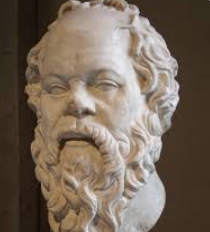
Each of these private teachers who work for pay ... inculcates nothing else than these opinions of the multitude which they opine when they are assembled and calls this knowledge wisdom.
▼
Source
Plato, Republic, 493a
3 months 4 weeks ago
And yet it is clear that the normal development of a human being implies an increasingly precise and, as it were, automatic division between what concerns him and what does not, between things for which he is responsible and those for which he is not. Each one of us becomes the centre of a sort of mental space arranged in concentric zones of decreasing interest and participat ion. It is as though each one of us secreted a kind of shell which gradually hardened and imprisoned him; and this sclerosis is bound up with the hardening of the categories in accordance with which we conceive and evaluate the world.
3 months 4 weeks ago
I consequently remained long, and in a less degree have always remained, inexpert in anything requiring manual dexterity; my mind as well as my hands, did its work very lamely when it was applied, or ought to have been applied, to the practical details which, as they are the chief interest of life to the majority of men, are also the things in which whatever mental capacity they have, chiefly shows itself: I was constantly meriting reproof by inattention, inobservance, and general slackness of mind in matters of daily life. My father was the extreme opposite in these particulars: his senses and mental faculties were always on the alert; he carried decision and energy of character in his whole manner and into every action of life: and this, as much as his talents, contributed to the strong impression which he always made upon those with whom he came into personal contact. But the children of energetic parents, frequently grow up unenergetic, because they lean on their parents, and the parents are energetic for them.
▼
Source
([https://archive.org/details/autobiography01mill/page/36/mode/1up pp. 36–37])
CivilSimian.com created by AxiomaticPanic, CivilSimian, Kalokagathia