
3 months 4 weeks ago
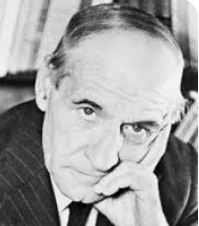
The mass-man would never have accepted authority external to himself had not his surroundings violently forced him to do so. As to-day, his surroundings do not so force him, the everlasting mass-man, true to his character, ceases to appeal to other authority and feels himself lord of his own existence. On the contrary the select man, the excellent man is urged, by interior necessity, to appeal from himself to some standard beyond himself, superior to himself, whose service he freely accepts.… Contrary to what is usually thought, it is the man of excellence, and not the common man who lives in essential servitude. Life has no savour for him unless he makes it consist in service to something transcendental. Hence he does not look upon the necessity of serving as an oppression. When, by chance, such necessity is lacking, he grows restless and invents some new standard, more difficult, more exigent, with which to coerce himself. This is life lived as a discipline — the noble life.
▼
Source
Chap. VII: Noble Life And Common Life, Or Effort And Inertia
3 months 4 weeks ago
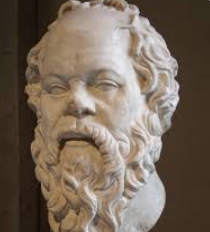
They who have a care of their souls, and do not merely live in the fashions of the body, say farewell to all this; they will not walk in the ways of the blind: and when philosophy offers them purification and release from evil, they feel that they ought not resist her influence, and to her they incline, and whither she leads they follow her.

3 months 4 weeks ago
Only what is fated to die is capable of living. Only what dies lives. Why do you think Christ was killed? They killed him to prove that he wasn’t a god. But in killing him, they immortalized the perishable and transformed man into a god.

3 months 4 weeks ago
In vain I sought relief from my favourite books; those memorials of past nobleness and greatness from which I had always hitherto drawn strength and animation. I read them now without feeling, or with the accustomed feeling minus all its charm; and I became persuaded, that my love of mankind, and of excellence for its own sake, had worn itself out. I sought no comfort by speaking to others of what I felt. If I had loved any one sufficiently to make confiding my griefs a necessity, I should not have been in the condition.
▼
Source
([https://archive.org/details/autobiography01mill/page/134/mode/1up pp. 134-135])
3 months 4 weeks ago
What, by a word lacking even in grammar, is called amorality, is a thing that does not exist. If you are unwilling to submit to any norm, you have, nolens volens, to submit to the norm of denying all morality, and this is not amoral, but immoral. It is a negative morality which preserves the empty form of the other.
▼
Source
Chapter XV: We Arrive At The Real Question

3 months 4 weeks ago
Of Fronto, to how much envy and fraud and hypocrisy the state of a tyrannous king is subject unto, and how they who are commonly called [Eupatridas Gk.], i.e. nobly born, are in some sort incapable, or void of natural affection.
▼
Source
I, 8
3 months 4 weeks ago
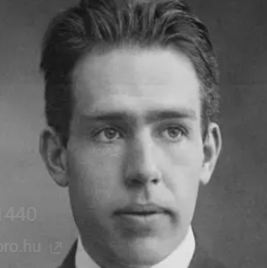
We are all agreed that your theory is crazy. The question that divides us is whether it is crazy enough to have a chance of being correct.
▼
Source
Said to Wolfgang Pauli after his presentation of Heisenberg's and Pauli's nonlinear field theory of elementary particles, at Columbia University (1958), as reported by F. J. Dyson in his paper "Innovation in Physics" (Scientific American, 199, No. 3, Sept
3 months 4 weeks ago
I do not mean to affirm that the description which I have given of the soul and her missions is exactly true—a man of sense ought hardly say that. But I do say that, inasmuch as the soul is shown to be immortal, he may venture to think, not improperly or unworthily, that something of this kind is true.
3 months 4 weeks ago
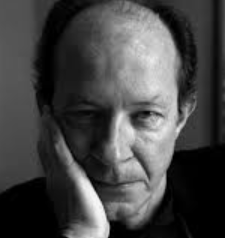
Modern totalitarianism can be defined as the establishment, by means of the state of exception, of a legal civil war that allows for the physical elimination not only of political adversaries but of entire categories of citizens who for some reason cannot be integrated into the political system.
▼
Source
Chapter One, p. 2.
3 months 4 weeks ago
These considerations did not make us overlook the folly of premature attempts to dispense with the inducements of private interest in social affairs, while no substitute for them has been or can be provided: but we regarded all existing institutions and social arrangements as being (in a phrase I once heard from Austin) "merely provisional," and we welcomed with the greatest pleasure and interest all socialistic experiments by select individuals (such as the Co-operative Societies), which, whether they succeeded or failed, could not but operate as a most useful education of those who took part in them, by cultivating their capacity of acting upon motives pointing directly to the general good, or making them aware of the defects which render them and others incapable of doing so.
▼
Source
([https://archive.org/details/autobiography01mill/page/233/mode/1up pp. 233-234])
3 months 4 weeks ago
Remember that man lives only in the present, in this fleeting instant; all the rest of his life is either past and gone, or not yet revealed. Short, therefore, is man's life, and narrow is the corner of the earth wherein he dwells.
▼
Source
III, 10

3 months 4 weeks ago
If evolution is a struggle for survival, why hasn't it ruthlessly eliminated altruists, who seem to increase another's prospects of survival at the cost of their own?
▼
Source
Chapter 1, The Origins Of Altruism, p. 5
3 months 4 weeks ago
The really important thing is not to live, but to live well. And to live well meant, along with more enjoyable things in life, to live according to your principles.
▼
Source
Presented as a full Socrates quote by various sources like [https://www.goodreads.com/quotes/106034-the-really-important-thing-is-not-to-live-but-to this page], the first sentence of the quote is indeed attributed to Socrates in Plato's dialogue The Apolo
3 months 4 weeks ago
There is a great affinity in me with the Hindu genius - that mind, vast, imaginative, loving, dreamy and speculative, but destitute of ambition, personality and will. Pantheistic disinterestedness, the effacement of the self in the great whole, womanish gentleness, a horror of slaughter, antipathy to action - these are all present in my nature, in the nature at least which has been developed by years and circumstances. Still the West has also its part in me. What I have found difficult to keep up a prejudice in favor of my form, nationality or individuality whatever. Hence my indifference to my own person, my own usefulness, interest or opinions of the moment. What does it all matter? It is not perhaps not a bad thing,' he says, 'that in the midst of the devouring activities of the Western world there should be a few Brahmanical souls.
▼
Source
Amiel, Henri-Frederic Amiel's journal: The Journal Intime of Henri-Frederic Amiel, p. 159 161,224. and 269. Quoted in Londhe, S. (2008). A tribute to Hinduism: Thoughts and wisdom spanning continents and time about India and her culture. New Delhi: Pragun
3 months 4 weeks ago
In his collective influence he made innumerable pulses of knowledge and thought vibrate in his generation. Respect for him became an element of men's own self-respect. How of wit or humour, you ask? He was perfectly patient of a playful sally levelled at bad reasoning, or perverse feeling, or questionable act; but for himself, we were content with his swift detection of a sophism or trenchant exposure of a fallacy, performed with a neatness, finish, and celerity that was a very passable substitute for wit.
▼
Source
pp. 53-54
3 months 4 weeks ago
At the parting of ways in the life-order, where the question is between the new creation or decay, that man will be decisive for new creation who is able on his own initiative to seize the helm and steer a course of his own choosing — even if that course be opposed to the will of the masses. Should the emergence of such persons become impossible a lamentable shipwreck will be inevitable.
3 months 4 weeks ago
All that is harmony for you, my Universe, is in harmony with me as well. Nothing that comes at the right time for you is too early or too late for me. Everything is fruit to me that your seasons bring, Nature. All things come of you, have their being in you, and return to you.
▼
Source
Πᾶν μοι συναρμόζει ὃ σοὶ εὐάρμοστόν ἐστιν, ὦ κόσμε· οὐδέν μοι πρόωρον οὐδὲ ὄψιμον ὃ σοὶ εὔκαιρον. πᾶν μοι καρπὸς ὃ φέρουσιν αἱ σαὶ ὧραι, ὦ φύσις· ἐκ σοῦ πάντα, ἐν σοὶ πάντα, εἰς σὲ πάντα. ἐκεῖνος μέν φησιν· | IV, 23

3 months 4 weeks ago
Let nothing disturb thee; Let nothing dismay thee: All things pass; God never changes. Patience attains All that it strives for. He who has God Finds he lacks nothing: God alone suffices.
▼
Source
"Poem IX", in Complete Works St. Teresa of Avila (1963) edited by E. Allison Peers, Vol. 3, p. 288
3 months 4 weeks ago
The spirit of sarcasm lives and thrives in the midst of universal wreck; its balls are enchanted and itself invulnerable, and it braves retaliations and reprisals because itself is a mere flash, a bodiless and magical nothing.
▼
Source
16 February 1868
3 months 4 weeks ago
It is crazy to want what is impossible. And impossible for the wicked not to do so.
▼
Source
To seek what is impossible is madness: and it is impossible that the bad should not do something of this kind. | | V, 17(Hays translation)

3 months 4 weeks ago
The Public is an old woman. Let her maunder and mumble.
▼
Source
Journal (1835).
3 months 4 weeks ago
Kripke tries to sober us up by denying that meaning determines reference. Rather, we name things by confronting them and baptising them, not by creating them out of a list of qualities. Names are not, pace Russell, shorthand for such lists. They are not abbreviations for descriptions, but (in Kripke’s coinage) ‘rigid designators’ – that is, they would name the same things in any possible world, including worlds in which their bearers did not have the properties we, in this world, use to identify them.
▼
Source
Kripke versus Kant. Lrb.com, september 1980.

3 months 4 weeks ago
The dead bodies of their parents they cut up with their sheep, and devour at their feasts. They who have not died so as to become food for others, are thought to have died an accursed death. Their women are not by their sex softened to modesty. They uncover the breast, from which they suspend their battle-axes, and prefer warfare to marriage.
▼
Source
Book I, Chapter I.—Preface. Reason for a New Work. Pontus Lends Its Rough Character to the Heretic Marcion, a Native. His Heresy Characterized in a Brief Invective.

3 months 4 weeks ago
No human institution can arrive at perfection, and the most that human wisdom can do, is to procure the same or greater good, at the expence of less evil.
▼
Source
p. 45
3 months 4 weeks ago
..If you are troubled by external circumstances, it is not the circumstances that trouble you, but your own perception of them - and they are in your power to change at any time.
3 months 4 weeks ago
Everywhere the human soul stands between a hemisphere of light and another of darkness on the confines of two everlasting hostile empires, — Necessity and Free Will.
▼
Source
Essays, Goethe's Works.
3 months 4 weeks ago
This (even) broader assertion we make: that even if the Paraclete had in this our day definitely prescribed a virginity or continence total and absolute, so as not to permit the heat of the flesh to foam itself down even in single marriage, even thus He would seem to be introducing nothing of “novelty;” seeing that the Lord Himself opens “the kingdoms of the heavens” to “eunuchs,” as being Himself, withal, a virgin; to whom looking, the apostle also—himself too for this reason abstinent—gives the preference to continence.
▼
Source
Chapter 3

3 months 4 weeks ago
I have studied these things — you have not.
▼
Source
Reported as Newton's response, whenever Edmond Halley would say anything disrespectful of religion, by Sir David Brewster in The Life of Sir Isaac Newton (1831). This has often been quoted in recent years as having been a statement specifically defending
3 months 4 weeks ago
With the signing of the Treaties of Utrecht, Bolingbroke's one great achievement in the world of action was accomplished. The rest of his political career, after a Niagara leap into rebellion, was to be lost in shallows and in miseries. But he stands in history as the man who, by courses however devious and questionable, negotiated a Peace which proved in the working more satisfactory than any other that has ended a general European conflict in modern times.
▼
Source
G. M. Trevelyan, England Under Queen Anne: The Peace and the Protestant Succession (1934), p. 230
3 months 4 weeks ago
The art of life is more like the wrestler's art than the dancer's, in respect of this, that it should stand ready and firm to meet onsets which are sudden and unexpected.
▼
Source
VII, 61
3 months 4 weeks ago
Our “Theories of Taste,” as they are called, wherein the deep, infinite, unspeakable Love of Wisdom and Beauty, which dwells in all men, is “explained,” made mechanically visible, from “Association” and the like, ...
3 months 4 weeks ago
To have time was at once the most magnificent and the most dangerous of experiments. Idleness is fatal only to the mediocre.

3 months 4 weeks ago
They wonder much to hear that gold, which in itself is so useless a thing, should be everywhere so much esteemed, that even men for whom it was made, and by whom it has its value, should yet be thought of less value than it is.
▼
Source
Ch. 6 : Of the Travelling of the Utopians
3 months 4 weeks ago
Do not all charms fly at the mere touch of cold philosophy? There was an awful rainbow once in heaven: We knew her woof, her texture: she is given in the dull catalogue of common things. Philosophy will clip an Angel's wings, conquer all mysteries by rule of line. Empty the haunted air, and gnomed mine—unweave a rainbow, as it erewhile made. The tender-person'd Lamia melt into a shade.
▼
Source
A response to Newton, over a century after his theory was proposed in Optiks (1714) | John Keats, [http://books.google.com/books?id=B748AAAAYAAJ Lamia] (1820) Part II, 229-238
3 months 4 weeks ago
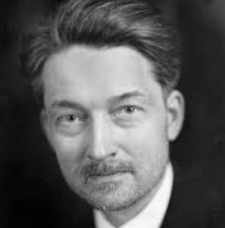
Not only does the democratic state of mind stem from the inspiration of the Gospel, but it cannot exist without it.
▼
Source
p. 49.
3 months 4 weeks ago
No carelessness in your actions. No confusion in your words. No imprecision in your thoughts. (Hays translation)
▼
Source
Be not careless in deeds, nor confused in words, nor rambling in thought. | VIII, 51

3 months 4 weeks ago
We are fulfilled only when we aspire to nothing, when we are impregnated by that nothing to the point of intoxication.
3 months 4 weeks ago
Innumerable are the illusions and legerdemain-tricks of Custom: but of all these, perhaps the cleverest is her knack of persuading us that the Miraculous, by simple repetition, ceases to be Miraculous.
▼
Source
Bk. III, ch. 8.
3 months 4 weeks ago
This heart within me I can feel, and I judge that it exists. This world I can touch, and I likewise judge that it exists. There ends all my knowledge, and the rest is construction. For if I try to seize this self of which I feel sure, if I try to define and to summarize it, it is nothing but water slipping through my fingers. I can sketch one by one all the aspects it is able to assume, all those likewise that have been attributed to it, this upbringing, this origin, this ardor or these silences, this nobility or this vileness. But aspects cannot be added up. This very heart which is mine will forever remain indefinable to me. Between the certainty I have of my existence and the content I try to give to that assurance, the gap will never be filled. Forever I shall be a stranger to myself.

3 months 4 weeks ago
It is an age wherein truth is near a miscarriage, and it is enough for me that I have appeared thus far for it, in a day of necessity.
3 months 4 weeks ago
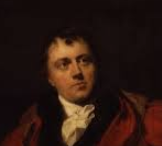
The frivolous work of polished idleness.
▼
Source
Dissertation on the Progress of Ethical Philosophy (1830), Section VI: Foundation of a More Just Theory of Ethics — "Thomas Brown", paragraph 3.
3 months 4 weeks ago
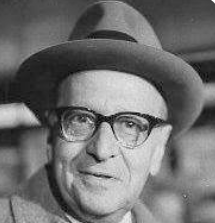
No criticism can be brought against a branch of technical science from outside; no thought fitted out with the knowledge of a period and setting its course by definite historical aims could have anything to say to the specialist. Such thought and the critical, dialectical element it communicates to the process of cognition, thereby maintaining conscious connection between that process and historical life, do not exist for empiricism; nor do the associated categories, such as the distinction between essence and appearance, identity in change, and rationality of ends, indeed, the concept of man, of personality, even of society and class taken in the sense that presupposes specific viewpoints and directions of interest.
▼
Source
p. 145.
3 months 4 weeks ago
One man prays thus: How shall I be able to lie with that woman? Do thou pray thus: How shall I not desire to lie with her? Another prays: How shall I be released from this? Another prays: How shall I not desire to be released? Another thus: How shall I not lose my little son? Thou thus: How shall I not be afraid to lose him? In fine, turn thy prayers this way, and see what comes.
▼
Source
IX, 40
3 months 4 weeks ago
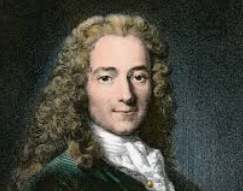
Go into the London Stock Exchange – a more respectable place than many a court – and you will see representatives from all nations gathered together for the utility of men. Here Jew, Mohammedan and Christian deal with each other as though they were all of the same faith, and only apply the word infidel to people who go bankrupt. Here the Presbyterian trusts the Anabaptist and the Anglican accepts a promise from the Quaker.
▼
Source
Letters on England, letter 6, "On the Presbyterians" as quoted in Richard H. Dees, Trust and Tolerance (London and New York: Routledge, 2004) p. 92, published first in English in 1733
3 months 4 weeks ago
As long as one believes in philosophy, one is healthy; sickness begins when one starts to think.

3 months 4 weeks ago
So blind is the curiosity by which mortals are possessed, that they often conduct their minds along unexplored routes, having no reason to hope for success, but merely being willing to risk the experiment of finding whether the truth they seek lies there.
▼
Source
Rules for the Direction of the Mind: IV
3 months 4 weeks ago
O reader, to what shifts is poor Society reduced, struggling to give still some account of herself, in epochs when Cash Payment has become the sole nexus of man to men!
▼
Source
Ch. 6, Laissez-Faire.
3 months 4 weeks ago
This was her finest role and the hardest one to play. Choosing between heaven and a ridiculous fidelity, preferring oneself to eternity or losing oneself in God is the age-old tragedy in which each must play his part.

3 months 4 weeks ago
So little pains do the vulgar take in the investigation of truth, accepting readily the first story that comes to hand.
▼
Source
Variant translation: "...the search for truth strains the patience of most people, who would rather believe the first things that come to hand." Translation by Paul Woodruff. | Book I, 1.20-[3]

3 months 4 weeks ago
To speak and to offend is with some people but one and the same thing; they are biting and bitter; their words are steeped in gall and wormwood; sneers as well as insolent and insulting words flow from their lips. It had been well for them had they been born mute or stupid; the little vivacity and intelligence they have prejudices them more than dullness does others; they are not always satisfied with giving sharp answers, they often attack arrogantly those who are present, and damage the reputation of those who are absent; they butt all round like rams — for rams, of course, must use their horns. We therefore do not expect, by our sketch of them, to change such coarse, restless, and stubborn individuals. The best thing a man can do is to take to his heels as soon as he perceives them, without even turning round to look behind him.
▼
Source
27
CivilSimian.com created by AxiomaticPanic, CivilSimian, Kalokagathia