
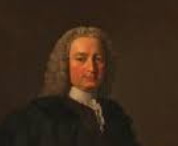
Francis Hutcheson
Member for
6 months 2 weeksFrancis Hutcheson — Moral Sense, Benevolence, and the Scottish Enlightenment (1694–1746)
Francis Hutcheson was an Irish-born philosopher and one of the founding figures of the Scottish Enlightenment — born in County Down in 1694, educated at the University of Glasgow, where he would later return as Professor of Moral Philosophy, transforming the university into a center of intellectual innovation. He was a teacher of Adam Smith, a major influence on David Hume, and a central architect of modern moral philosophy — remembered for arguing that human beings possess an innate moral sense, a natural faculty that perceives virtue and vice as immediately as the eye perceives light.
Against the austere rationalism of Samuel Clarke and the egoistic psychology of Thomas Hobbes, Hutcheson proposed that morality was neither a matter of cold deduction nor a disguised form of self-interest, but rooted in a genuine capacity for benevolence — a spontaneous orientation toward the happiness of others. Virtue, in this account, was not obedience to law but the expression of an internal harmony between feeling and reason.
His central claim: that human nature is fundamentally social and sympathetic — that we are equipped not only to pursue our own good but to take pleasure in the good of others, and that this capacity is the foundation of both morality and political society.
The Moral Sense — Ethics as Perception
Hutcheson's most distinctive contribution was his theory of the moral sense — developed in his "Inquiry into the Original of Our Ideas of Beauty and Virtue" (1725). He argued that moral judgments are not derived from reason alone, nor imposed by external authority, but arise from an internal sense that approves of benevolence and disapproves of cruelty.
This sense functions analogously to the aesthetic sense: just as we perceive beauty without calculation, we perceive virtue without inference. Moral knowledge is therefore immediate rather than discursive — grounded in human psychology rather than metaphysical abstraction. This was a radical departure from dominant ethical theories of the time, and it opened the way for a more empirical and humane moral philosophy.
"That action is best, which procures the greatest happiness for the greatest numbers; and that worst, which, in like manner, occasions misery."
— Francis Hutcheson
Benevolence — The Core of Virtue
At the center of Hutcheson's system is the concept of benevolence — the disinterested desire for the happiness of others. Against Hobbes's claim that all human action is ultimately self-interested, Hutcheson insisted that we are capable of genuine altruism. We do not merely help others because it benefits us; we often help them precisely because it benefits them.
This insight had far-reaching consequences. It meant that moral life could not be reduced to contracts or calculations, and that social order depended not only on institutions but on cultivated dispositions of sympathy and goodwill. In this sense, Hutcheson stands at the origin of a tradition that runs through Adam Smith's "Theory of Moral Sentiments" and into modern theories of empathy and prosocial behavior.
"The ultimate end of all our actions is the greatest happiness of others — and in promoting it, we find our own."
Glasgow — The Birthplace of the Scottish Enlightenment
Hutcheson's tenure at the University of Glasgow marked a turning point in the intellectual life of Britain. His lectures — delivered in English rather than Latin, and open to a wider audience than traditional scholastic teaching — helped establish a new model of philosophical education: accessible, engaged, and oriented toward practical life.
Among his students was Adam Smith, who would carry forward Hutcheson's emphasis on sympathy and moral psychology, developing it into a comprehensive account of economic and social order. David Hume, though not his student, was deeply influenced by Hutcheson's rejection of rationalist ethics and his turn toward sentiment as the basis of morality.
Through these figures, Hutcheson's ideas became foundational to the Scottish Enlightenment — a movement that integrated philosophy, economics, history, and social theory into a unified inquiry into human nature and society.
"He was the teacher who made moral philosophy human — replacing abstraction with observation, and severity with sympathy."
Religion and Liberty — A Liberal Theology
Hutcheson's moral philosophy was inseparable from his religious commitments, but these commitments were notably liberal for his time. He rejected the harsher doctrines of Calvinism — particularly the idea of total depravity — and emphasized instead the benevolence of God and the moral dignity of human beings.
This theological position supported a broader political outlook: a defense of religious tolerance, opposition to tyranny, and support for individual liberty. His philosophy helped articulate the moral foundations of a more open and pluralistic society, in which authority was justified not by tradition alone but by its contribution to human well-being.
"If moral goodness arises from benevolence, then any system that suppresses human flourishing stands in contradiction to the very structure of virtue."
Legacy — The Architect of Sympathy
Francis Hutcheson died in 1746, leaving behind a philosophical framework that would shape the development of modern ethics, economics, and political theory. He transformed moral philosophy from a discipline of rules into a study of human nature — grounding ethics in psychology, emotion, and social life.
His influence can be traced in the rise of utilitarian thought, in the sentimentalist tradition of moral philosophy, and in contemporary discussions of empathy and cooperation. His insistence that human beings are naturally oriented toward the good of others remains a counterpoint to more cynical accounts of human nature — a reminder that morality is not imposed from outside but emerges from within.
a capacity that is as natural as perception itself.
"Moral philosophy begins not in law or logic, but in the quiet recognition that another's happiness matters."
School Certificates: 0
No certificates shown yet.
CivilSimian.com created by AxiomaticPanic, CivilSimian, Kalokagathia