

3 months 4 weeks ago
We measure the earth, sun, stars, and ocean depths. We burrow into the depths of the earth for gold. We search for rivers and mountains on the moon. We discover new stars and know their magnitudes. We sound the depths of gorges and build clever machines. Each day brings a new invention. What don't we think of! What can't we do! But there is something else, the most important thing of all, that we are missing. We do not know exactly what it is. We are like a small child who knows he does not feel well but cannot explain why. We are uneasy, because we know a lot of superfluous facts; but we do not know what is really important—ourselves.
▼
Source
p. 10

3 months 4 weeks ago
There are seven causes of inconsistencies and contradictions to be met with in a literary work. The first cause arises from the fact that the author collects the opinions of various men, each differing from the other, but neglects to mention the name of the author of any particular opinion. In such a work contradictions or inconsistencies must occur, since any two statements may belong to two different authors. Second cause: The author holds at first one opinion which he subsequently rejects: in his work, however, both his original and altered views are retained. Third cause: The passages in question are not all to be taken literally: some only are to be understood in their literal sense, while in others figurative language is employed, which includes another meaning besides the literal one: or, in the apparently inconsistent passages, figurative language is employed which, if taken literally, would seem to be contradictories or contraries. Fourth cause: The premises are not identical in both statements, but for certain reasons they are not fully stated in these passages: or two propositions with different subjects which are expressed by the same term without having the difference in meaning pointed out, occur in two passages. The contradiction is therefore only apparent, but there is no contradiction in reality. The fifth cause is traceable to the use of a certain method adopted in teaching and expounding profound problems. Namely, a difficult and obscure theorem must sometimes be mentioned and assumed as known, for the illustration of some elementary and intelligible subject which must be taught beforehand the commencement being always made with the easier thing. The teacher must therefore facilitate, in any manner which he can devise, the explanation of those theorems, which have to be assumed as known, and he must content himself with giving a general though somewhat inaccurate notion on the subject. It is, for the present, explained according to the capacity of the students, that they may comprehend it as far as they are required to understand the subject. Later on, the same subject is thoroughly treated and fully developed in its right place. Sixth cause: The contradiction is not apparent, and only becomes evident through a series of premises. The larger the number of premises necessary to prove the contradiction between the two conclusions, the greater is the chance that it will escape detection, and that the author will not perceive his own inconsistency. Only when from each conclusion, by means of suitable premises, an inference is made, and from the enunciation thus inferred, by means of proper arguments, other conclusions are formed, and after that process has been repeated many times, then it becomes clear that the original conclusions are contradictories or contraries. Even able writers are liable to overlook such inconsistencies. If, however, the contradiction between the original statements can at once be discovered, and the author, while writing the second, does not think of the first, he evinces a greater deficiency, and his words deserve no notice whatever. Seventh cause: It is sometimes necessary to introduce such metaphysical matter as may partly be disclosed, but must partly be concealed: while, therefore, on one occasion the object which the author has in view may demand that the metaphysical problem be treated as solved in one way, it may be convenient on another occasion to treat it as solved in the opposite way. The author must endeavour, by concealing the fact as much as possible, to prevent the uneducated reader from perceiving the contradiction.

3 months 4 weeks ago
If I could put my hand on the north star, would it be as beautiful? The sea is lovely, but when we bathe in it, the beauty forsakes all the near water. For the imagination and senses cannot be gratified at the same time.
▼
Source
Beauty
3 months 4 weeks ago
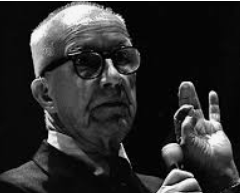
While all the foregoing seems far too formidable to be coped with by an individual or cooperative groups of individuals, operating entirely outside the great national sovereignty establishments I was able, in 1927, to realize that these great capabilities could be mounted to all humanity’s advantage if adequate economic support were mustered. What struck me profoundly at that time was that man’s greatest productive and scientifically informed capability was being focused only on war simply because all the governments in the world were convinced that Earth could not sustain the lives of the many humans that were born on the planet and, in fact, could sustain but a minority. The great sovereign powers’ world struggle game was that of “musical chairs” to decide, by warfaring at its ever most modernly lethal, who would be the fortunate ones to survive.
3 months 4 weeks ago
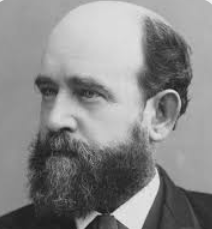
This strange and unnatural spectacle of large numbers of willing men who cannot find employment is enough to suggest the true cause to whosoever can think consecutively. For, though custom has dulled us to it, it is a strange and unnatural thing that men who wish to labor, in order to satisfy their wants, cannot find the opportunity — as, since labor is that which produces wealth, the man who seeks to exchange labor for food, clothing, or any other form of wealth, is like one who proposes to give bullion for coin, or wheat for flour. We talk about the supply of labor and the demand for labor, but, evidently, these are only relative terms. The supply of labor is everywhere the same — two hands always come into the world with one mouth, twenty-one boys to every twenty girls; and the demand for labor must always exist as long as men want things which labor alone can procure. We talk about the "want of work," but, evidently, it is not work that is short while want continues; evidently, the supply of labor cannot be too great, nor the demand for labor too small, when people suffer for the lack of things that labor produces. The real trouble must be that supply is somehow prevented from satisfying demand, that somewhere there is an obstacle which prevents labor from producing the things that laborers want. Take the case of any one of these vast masses of unemployed men, to whom, though he never heard of Malthus, it today seems that there are too many people in the world. In his own wants, in the needs of his anxious wife, in the demands of his half-cared-for, perhaps even hungry and shivering children, there is demand enough for labor, Heaven knows! In his own willing hands is the supply. Put him on a solitary island, and though cut off from all the enormous advantages which the co-operation, combination, and machinery of a civilized community give to the productive powers of man yet his two hands can fill the mouths and keep warm the backs that depend upon them. Yet where productive power is at its highest development they cannot. Why? Is it not because in the one case he has access to the material and forces of nature, and in the other this access is denied? Is it not the fact that labor is thus shut off from nature which can alone explain the state of things that compels men to stand idle who would willingly supply their wants by their labor? The proximate cause of enforced idleness with one set of men may be the cessation of demand on the part of other men for the particular things they produce, but trace this cause from point to point, from occupation to occupation, and you will find that enforced idleness in one trade is caused by enforced idleness in another, and that the paralysis which produces dullness in all trades cannot be said to spring from too great a supply of labor or too small a demand for labor, but must proceed from the fact that supply cannot meet demand by producing the things which satisfy want and are the object of labor.
3 months 4 weeks ago
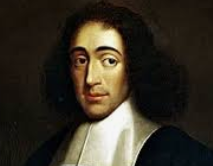
A definition, if it is to be called perfect, must explain the inmost essence of a thing, and must take care not to substitute for this any of its properties. In order to illustrate my meaning, without taking an example which would seem to show a desire to expose other people's errors, I will choose the case of something abstract, the definition of which is of little moment. Such is a circle. If a circle be defined as a figure, such that all straight lines drawn from the center to the circumference are equal, every one can see that such a definition does not in the least explain the essence of a circle, but solely one of its properties. Though, as I have said, this is of no importance in the case of figures and other abstractions, it is of great importance in the case of physical beings and realities, for the properties of things are not understood so long as their essences are unknown. If the latter be passed over, there is necessarily a perversion of the succession of ideas which should reflect the succession of nature, and we go far astray from our object.
▼
Source
XII, 95
3 months 4 weeks ago
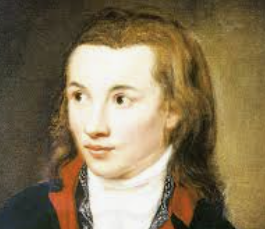
We are near awakening when we dream that we dream.
▼
Source
Variants:
3 months 4 weeks ago
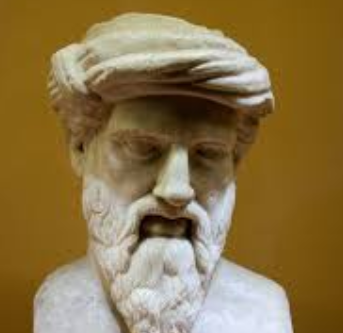
As long as Man continues to be the ruthless destroyer of lower living beings, he will never know health or peace. For as long as men massacre animals, they will kill each other. Indeed, he who sows the seed of murder and pain cannot reap joy and love.
▼
Source
Attribution to Pythagoras by Ovid, as quoted in The Extended Circle: A Dictionary of Humane Thought (1985) by Jon Wynne-Tyson, p. 260; also in Vegetarian Times, No. 168 (August 1991), p. 4
3 months 4 weeks ago
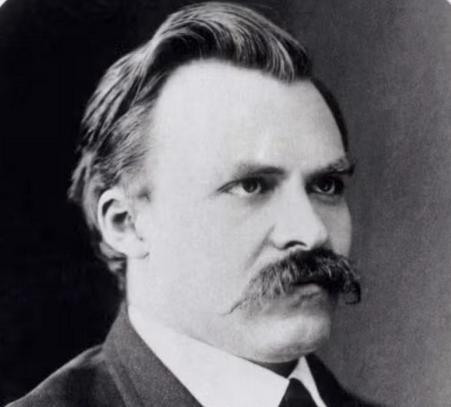
I tell the story of these philosophers in simplified form: I merely wish to bring out in each system that point which represents a piece of the personality, and which history must preserve as a part of what is irrefutable and indisputable.
3 months 4 weeks ago
As I read his different ethical books, 'What to Do,' 'My Confession,' and 'My Religion,' I recognized their truth with a rapture such as I have known in no other reading, and I rendered them my allegiance, heart and soul, with whatever sickness of the one and despair of the other. They have it yet, and I believe they will have it while I live. It is with inexpressible astonishment that I hear them attainted of pessimism, as if the teaching of a man whose ideal was simple goodness must mean the prevalence of evil. The way he showed me seemed indeed impossible to my will, but to my conscience it was and is the only possible way. If there, is any point on which he has not convinced my reason it is that of our ability to walk this narrow way alone. Even there he is logical, but as Zola subtly distinguishes in speaking of Tolstoy's essay on "Money," he is not reasonable. Solitude enfeebles and palsies, and it is as comrades and brothers that men must save the world from itself, rather than themselves from the world. It was so the earliest Christians, who had all things common, understood the life of Christ, and I believe that the latest will understand it so. I have spoken first of the ethical works of Tolstoy, because they are of the first importance to me, but I think that his aesthetical works are as perfect. To my thinking they transcend in truth, which is the highest beauty, all other works of fiction that have been written, and I believe that they do this because they obey the law of the author's own life.
▼
Source
William Dean Howells, My Literary Passions (1895), Ch. XXXV Tolstoy
3 months 4 weeks ago
Even the existence of this corporeal element, low as it in reality is, because it is the source of death and all evils, is likewise good for the permanence of the Universe and the continuation of the order of things, so that one thing departs and the other succeeds.
▼
Source
Ch.10
3 months 4 weeks ago
Though love repine, and reason chafe, There came a voice without reply, — "'T is man's perdition to be safe When for the truth he ought to die."
▼
Source
Sacrifice
3 months 4 weeks ago
The physical is inherently entropic, giving off energy in ever more disorderly ways. The metaphysical is antientropic, methodically marshalling energy. Life is antientropic. It is spontaneously inquisitive. It sorts out and endeavors to understand.
3 months 4 weeks ago
I care nothing for creeds. I am not concerned with any one's religious belief. But I would have men think for themselves. If we do not, we can only abandon one superstition to take up another, and it may be a worse one. It is as bad for a man to think that he can know nothing as to think he knows all. There are things which it is given to all possessing reason to know, if they will but use that reason. And some things it may be there are, that — as was said by one whom the learning of the time sneered at, and the high priests persecuted, and polite society, speaking through the voice of those who knew not what they did, crucified — are hidden from the wise and prudent and revealed unto babes.
▼
Source
Conclusion : The Moral of this Examination
3 months 4 weeks ago
Choose rather to be strong in soul than in body.
▼
Source
"Pythagorean Ethical Sentences From Stobæus" (1904) | Choose rather to be strong of soul than strong of body. | As quoted in Florilegium, I.22, as translated in Dictionary of Quotations (1906) by Thomas Benfield Harbottle, p. 396
3 months 4 weeks ago
I think he sets a certain standard, let's say a standard of seriousness. (Q: Doesn't he seem intolerant to you, even merciless?) Sontag: He's very vehement, yes. Kafka too was very vehement, and he excluded a great deal, in his life and in his work. These are people whose lives I find exemplary in some respect-their thoughts, their ideas, their work, their seriousness.
▼
Source
1987 interview in Conversations with Susan Sontag edited by Leland Poague (1995)
3 months 4 weeks ago
The philosophers have uttered very perverse ideas as regards God's Omniscience of everything besides Himself; they have stumbled in such a manner that they cannot rise again, nor can those who adopt their views. ...They continued thus: If he perceives and knows all individual things, one of the following three cases must take place: (1.) God arranges and manages human affairs well, perfectly, and faultlessly; (2.) He is overcome by obstacles, and is too weak and powerless to manage human affairs; (3.) He knows [all things] and can arrange and manage them, but leaves and abandons them, as too base, low, and vile... Those who have a knowledge of a certain thing necessarily either (1.) take care of the thing they know, and manage it, or (2.) neglect it; or (3.) while taking care of it, have not sufficient power and strength for its management, although they have the will to do so. ...the philosophers emphatically decided that of the three cases... two are inadmissible in reference to God—viz., want of power, or absence of will... Consequently there remains only the alternative that God is altogether ignorant of human affairs, or that He knows them and manages them well. ...we conclude that God has no knowledge of them in any way of for any reason. This is the argument which led philosophers to speak such blasphemous words.
▼
Source
Ch.16
3 months 4 weeks ago
Every genuine work of art has as much reason for being as the earth and the sun.
▼
Source
Art
3 months 4 weeks ago
Are you spontaneously enthusiastic about everyone having everything you can have?

3 months 4 weeks ago
He has just returned from Italy, and delights to talk of it,—thinks it, next to England, the finest country in the world, and the society of Rome surpassed only by that of London, and says he should not die contented without going there again.
3 months 4 weeks ago
If thou intend to do any good; tarry not till to-morrow! for thou knowest not what may chance thee this night.

3 months 4 weeks ago
The logical picture of the facts is the thought. (3)
▼
Source
Original German: Das logische Bild der Tatsachen ist der Gedanke.
3 months 4 weeks ago
Scripture says:—If a man should rise, pretend to be a prophet, and show you his signs by which he desired to convince you that his words are true, know that God intends thereby to prove to the nations how firmly you believe in the truth of God's Word, and how well you have comprehended the true Essence of God; that you cannot be misled by any tempter to corrupt your faith in God. Your religion will then afford a guidance to all who seek the truth, and of all religions man will choose that which is so firmly established that it is not shaken by the performance of a miracle. For a miracle cannot prove that which is impossible; it is useful only as a confirmation of that which is possible, as we have explained in our Mishneh-torah.
▼
Source
Ch.24
3 months 4 weeks ago
A great man quotes bravely, and will not draw on his invention when his memory serves him with a word just as good.
▼
Source
Quotation and Originality
3 months 4 weeks ago
But it can hardly be read in a week. It takes some study.
3 months 4 weeks ago
Since wise people are in the habit of invoking the divinities at the beginning of any philosophic consideration, this is all the more necessary on studying that one which is justly named after the divine Pythagoras. Inasmuch as it emanated from the divinities it could not be apprehended without their inspiration and assistance. Besides, its beauty and majesty so surpasses human capacity, that it cannot be comprehended in one glance. Gradually only can some details of it be mastered when, under divine guidance we approach the subject with a quiet mind. Having therefore invoked the divine guidance, and adapted ourselves and our style to the divine circumstances, we shall acquiesce in all the suggestions that come to us. Therefore we shall not begin with any excuses for the long neglect of this sect, nor by any explanations about its having been concealed by foreign disciplines, or mystic symbols, nor insist that it has been obscured by false and spurious writings, nor make apologies for any special hindrances to its progress. For us it is sufficient that this is the will of the Gods, which all enable us to undertake tasks even more arduous than these. Having thus acknowledged our primary submission to the divinities, our secondary devotion shall be to the prince and father of this philosophy as a leader.
▼
Source
Ch. 1 : Importance of the Subject
3 months 4 weeks ago
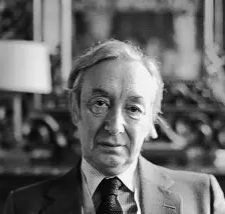
If now I…say "Stealing money is wrong," I produce a sentence which has no factual meaning — that is, expresses no proposition which can be either true or false. It is as if I had written "Stealing money!!" — where the shape and thickness of the exclamation marks show, by a suitable convention, that a special sort of moral disapproval is the feeling which is being expressed.
▼
Source
p. 107.
3 months 4 weeks ago
For what is lacking now is not quibbles; nay, the books of the Stoics are full of quibbles
▼
Source
Book I, ch. 29, § 56
3 months 4 weeks ago
The school of the Pythagoras and those of the Neo-Platonists kept up the tradition for Greece, and we know that Pythagoras gained some of his learning in India, while Plato studied, and was initiated in the schools of Egypt. More precise information has been published of the Grecian schools than of others; the Pythagorean had pledged disciples as well as an outer discipline, the inner circle passing through three degrees during five years of probation.
▼
Source
Annie Besant, The Ancient Wisdom, p. 21 (1897)
3 months 4 weeks ago
To speak frankly, the family bond in the civilizee regime causes fathers to desire the death of their children and children to desire the death of their fathers.
3 months 4 weeks ago
Every explanation is after all an hypothesis.
▼
Source
Ch. 7 : Remarks on Frazer's Golden Bough, p. 123
3 months 4 weeks ago
Maimonides states that the intention of his work is to explain the meaning of Biblical words of various kinds, as well as of Biblical parables. Such an explanation is necessary, because the external meaning of both lends itself to grave misunderstanding. Since the internal meaning, being hidden, is a secret, the explanation of each such word or parable is the revelation of a secret.
▼
Source
Leo Strauss, Persecution and the Art of Writing (1952), 3. Literary Character of the Guide for the Perplexed
3 months 4 weeks ago
We do not count a man's years until he has nothing else to count.
▼
Source
Old Age
3 months 4 weeks ago
In the meanwhile I retire to my well-earned bath-chair, from which I shall watch with a fatherly eye the philosophic gambols of my younger friends as they dance to the highly syncopated pipings of Herr Wittgenstein's flute.
▼
Source
From the Preface to Mind and Its Place in Nature (1925)
3 months 4 weeks ago
Injustice in this world is not something comparative; the wrong is deep, clear, and absolute in each private fate.
▼
Source
Ch. IV: The Aristocratic Ideal
3 months 4 weeks ago
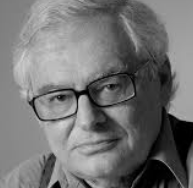
The degree of confirmation assigned to any given hypothesis is sensitive to properties of the entire belief system … simplicity, plausibility, and conservatism are properties that theories have in virtue of their relation to the whole structure of scientific beliefs taken collectively. A measure of conservatism or simplicity would be a metric over global properties of belief systems.
▼
Source
p. 107–108 as cited in: Philip Robbins, "[http://plato.stanford.edu/entries/modularity-mind/ Modularity of Mind]", The Stanford Encyclopedia of Philosophy (Summer 2010 Edition), Edward N. Zalta (ed.)
3 months 4 weeks ago
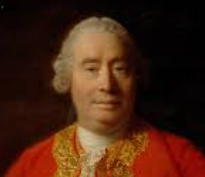
The admirers and followers of the Alcoran insist on the excellent moral precepts interspersed through that wild and absurd performance. But it is to be supposed, that the Arabic words, which correspond to the English, equity, justice, temperance, meekness, charity were such as, from the constant use of that tongue, must always be taken in a good sense; and it would have argued the greatest ignorance, not of morals, but of language, to have mentioned them with any epithets, besides those of applause and approbation. But would we know, whether the pretended prophet had really attained a just sentiment of morals? Let us attend to his narration; and we shall soon find, that he bestows praise on such instances of treachery, inhumanity, cruelty, revenge, bigotry, as are utterly incompatible with civilized society. No steady rule of right seems there to be attended to; and every action is blamed or praised, so far only as it is beneficial or hurtful to the true believers.
▼
Source
David Hume, Of the Standard of Taste, 1760
3 months 4 weeks ago
For what is it that everyone is seeking? To live securely, to be happy, to do everything as they wish to do, not to be hindered, not to be subject to compulsion.
▼
Source
Book IV, ch. 1, § 46.
3 months 4 weeks ago
The votaries of Pythagoras of Samos have this story to tell of him, that he was not an Ionian at all, but that, once on a time in Troy, he had been Euphorbus, and that he had come to life after death, but had died as the songs of Homer relate. And they say that he declined to wear apparel made from dead animal products and, to guard his purity, abstained from all flesh diet, and from the offering of animals in sacrifice. For that he would not stain the altars with blood; nay, rather the honey-cake and frankincense and the hymn of praise, these they say were the offerings made to the Gods by this man, who realized that they welcome such tribute more than they do the hecatombs note and the knife laid upon the sacrificial basket. For they say that he had of a certainty social intercourse with the gods, and learnt from them the conditions under which they take pleasure in men or are disgusted, and on this intercourse he based his account of nature.
▼
Source
Philostratus, Life of Apollonius, translation by F.C. Conybeare, [http://www.livius.org/sources/content/philostratus-life-of-apollonius/philostratus-life-of-apollonius-1.1-5/#1.1 Book 1, § 1]
3 months 4 weeks ago
Your questions refer to words; so I have to talk about words. You say: The point isn't the word, but its meaning, and you think of the meaning as a thing of the same kind as the word, though also different from the word. Here the word, there the meaning.
▼
Source
§ 120

3 months 4 weeks ago
Writers who opted out of the referential system and who avoided or escaped the common experience are not part of the Jewish political tradition, even if they are still Jews writing about politics. Karl Marx on class struggle, Sigmund Freud on transference and political leadership, Emile Durkheim on socialism and "moral education," George Simmel on the philosophy of money—these text do not fall within the tradition. Baruch Spinoza's political theology does, despite his excommunication, for Spinoza writes always with the tradition in mind: the Hebrew Bible is his first text; the greatest of medieval Jewish philosophers, Moses Maimonides, is his crucial reference. Modern secular writers like Ahad Ha-am (Asher Ginsberg) and Micha Josef Berdichevsky, schooled in the communities of eastern Europe, still know the tradition and work within it, or at least start from it—even if one of their purposes is an antitraditionalist critique: criticism is a form of engagement. Many of their successors, by contrast, are largely ignorant and entirely disengaged.
3 months 4 weeks ago
These preachers of beauty, which light the world with their admonishing smile.
▼
Source
p. 248 (Stars)
3 months 4 weeks ago
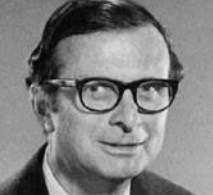
Deception, in turn , suggests morality: the morality of deceiving people into thinking something is so when it is not. The moral principle is this: whoever attempts to tame a part of a wicked problem, but not the whole, is morally wrong.
▼
Source
p. 142 cited in: Rob Hundman (2010) Weerbarstig veranderen. p. 38
3 months 4 weeks ago
Our dignity is not in what we do, but in what we understand. The whole world is doing things.
▼
Source
p. 199
3 months 4 weeks ago
Nature has pointed out a mixed kind of life as most suitable to the human race, and secretly admonished them to allow none of these biases to draw too much, so as to incapacitate them for other occupations and entertainments. Indulge your passion for science, says she, but let your science be human, and such as may have a direct reference to action and society. Abstruse thought and profound researches I prohibit, and will severely punish, by the pensive melancholy which they introduce, by the endless uncertainty in which they involve you, and by the cold reception which your pretended discoveries shall meet with, when communicated. Be a philosopher; but, amidst all your philosophy, be still a man.
▼
Source
Section 1 : Of The Different Species of Philosophy
3 months 4 weeks ago
It is certain that Pythagoras awakened the deepest intellectual sympathy of his age, and that his doctrines exerted a powerful influence upon the mind of Plato. His cardinal idea was that there existed a permanent principle 'of unity beneath the forms, changes, and other phenomena of the universe. Aristotle asserted that he taught that “ numbers are the first principles of all entities.” Ritter has expressed the opinion that the formula of Pythagoras should be taken symbolically, which is doubtless correct. (p. XV Before the Veil)
▼
Source
Before the Veil, xv.
3 months 4 weeks ago
612. At the end of reasons comes persuasion.

3 months 4 weeks ago
The Art of Peace is the principle of nonresistance. Because it is nonresistant, it is victorious from the beginning. Those with evil intentions or contentious thoughts are instantly vanquished. The Art of Peace is invincible because it contends with nothing.
3 months 4 weeks ago
Modern technics, even apart from the special arts that it fostered, had a cultural contribution to make in its own right. Just as science underlined the respect for fact, so technics emphasized the importance of function: in this domain, as Emerson pointed out, the beautiful rests on the foundation of the necessary.
▼
Source
Lewis Mumford, Technics and Civilization (1934) Ch. 7 "Assimilation of the Machine"
3 months 4 weeks ago
The enemies will be asking reasonable questions, like Isn't politics the way matters are really decided, and isn't the rational systems approach simply one political device, to be used when politically expedient? Or isn't morality essentially inexpressible in terms of concepts and words, and doesn't this essentially ineffable quality of our lives lead us humans to decide the way we do? Or, isn't religious imagery really the basis of all our perspectives and concepts, including the perspective of the systems approach? And what is it that carries the values we humans cherish? It is not the ego or the mind, but, say our basic aesthetic feeling, which cannot be conceptualized. And finally, and most generally, why is a rational, holistic approach desirable for the human species, especially since it so often gets out of hand, missing the vital essence of the specific and individual, the here and now, encompassing "everything" to the exclusion of every thing?
▼
Source
p. 69; As cited in: [http://phd-take-2.wikispaces.com/The+Systems+Approach+and+its+Enemies Book Review: The Systems Approach and its Enemies]
CivilSimian.com created by AxiomaticPanic, CivilSimian, Kalokagathia