
3 months 4 weeks ago
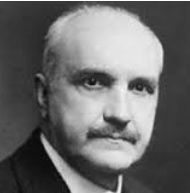
In the Gospels, for instance, we sometimes find the kingdom of heaven illustrated by principles drawn from observation of this world rather than from an ideal conception of justice; ... They remind us that the God we are seeking is present and active, that he is the living God; they are doubtless necessary if we are to keep religion from passing into a mere idealism and God into the vanishing point of our thought and endeavour.
▼
Source
[http://hdl.handle.net/2027/uc2.ark:/13960/t3028sf4m?urlappend=%3Bseq=72 Interpretations of Poetry and Religion] (1900), p. 54
3 months 4 weeks ago
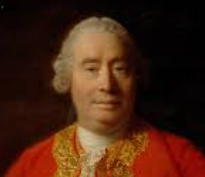
Hear the verbal protestations of all men: Nothing so certain as their religious tenets. Examine their lives: You will scarcely think that they repose the smallest confidence in them. The greatest and truest zeal gives us no security against hypocrisy: The most open impiety is attended with a secret dread and compunction. No theological absurdities so glaring that they have not, sometimes, been embraced by men of the greatest and most cultivated understanding. No religious precepts so rigorous that they have not been adopted by the most voluptuous and most abandoned of men.
▼
Source
Part XV - General corollary
3 months 4 weeks ago
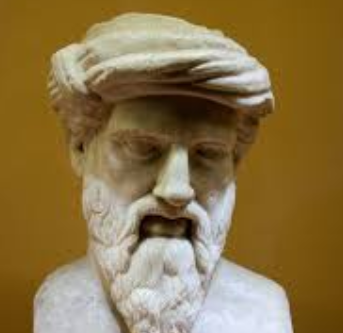
§1. The aim of Book X of Euclid's treatise on the Elements is to investigate the commensurable and incommensurable, the rational and irrational continuous quantities. This science (or knowledge) had its origin in the sect (or school) of Pythagoras, but underwent an important development at the hands of the Athenian, Theaetetus, who had a natural aptitude for this as for other branches of mathematics most worthy of admiration.
▼
Source
p. 63.

3 months 4 weeks ago
The less somebody knows and understands himself the less great he is, however great may be his talent. For this reason our scientists are not great.
▼
Source
p. 51e
3 months 4 weeks ago
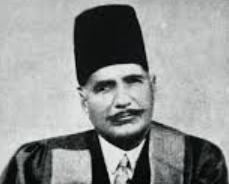
Overflowing with the wine of Truth is the cup of IndiaAll philosophers of the Western world have acknowledged IndiaIt is the result of the elegant thinking of IndiansThat higher than the sky is the position of IndiaThis country has had many people of angelic dispositionOn whose account world renowned is the name of IndiaIndia is proud of the existence of RamaSpiritual people consider him prelate of IndiaThis alone is the miracle of this light of righteousnessThat brighter than world’s morning is the evening of IndiaHe was expert in sword craft, was unique in braveryWas matchless in piety and in the enthusiasm of love.
▼
Source
[http://www.allamaiqbal.com/poetry.php?bookbup=22&orderno=112&lang_code=en&lang=2&conType=en Rama]. Translated by: M.A.K. Khalil. | Variant: "The cup of India is brimful of the wine of truth. All philosophers of the western world (have acknowleged) Rāma o
3 months 4 weeks ago
In the making both of lace and of statues, the to the artists can only be reduced by producing a larger number of them through more extended education. The expense of the raw material is small in both. The expense of labour in lacemaking is very large, and it is perhaps considerable also in sculpture. The discovery of more convenient localities yielding marble, may make some diminution in its cost; and the improved manufacture of thread may slightly reduce the price of lace. A reduction in the price of labour may to a very moderate extent reduce the cost of the raw material of both. But it is evident that any very great reduction is not to be expected.Let us now contrast this possible reduction with the past history of some industrial art. The plain made at , called patent net, will supply us with a good example. In the year 1813 that lace was sold in the piece at the rate of 218. a-yard. At the present time lace of the same kind, but of a better quality, is sold under the same circumstances at 3d. per yard. Thus, in less than forty years the price of the industrial produce has diminished to one eighty-fourth part of its original price.
3 months 4 weeks ago
The mixture of children and men is precisely one of the most beautiful features of aristocratic government. All roles are distributed wisely in the world: that of the young is to do good, and that of old age is to prevent evil. The impetuosity of young men, who demand only action and creation, is very useful to the State; but they are too likely to innovate and destroy, and they would do much evil without the elderly, who are there to stop them. The latter in their turn oppose even useful reforms; they are too inflexible, they do not know how to accommodate themselves to circumstances, and sometimes a twenty-year old senator can very well be placed beside another of eighty.
▼
Source
p. 137
3 months 4 weeks ago
Look round the world: contemplate the whole and every part of it: You will find it to be nothing but one great machine, subdivided into an infinite number of lesser machines, which again admit of subdivisions, to a degree beyond what human senses and faculties can trace and explain. All these various machines, and even their most minute parts, are adjusted to each other with an accuracy, which ravishes into admiration all men, who have ever contemplated them. The curious adapting of means to ends, throughout all nature, resembles exactly, though it much exceeds, the productions of human contrivance; of human design, thought, wisdom, and intelligence.
▼
Source
Philo to Cleanthes, Part II
3 months 4 weeks ago
It is so characteristic, that just when the mechanics of reproduction are so vastly improved, there are fewer and fewer people who know how the music should be played.
▼
Source
p. 96

3 months 4 weeks ago
I do not think the line of division runs between people with secular and those with transcendental creeds, but rather between people with a centralized and dominating zeal which may possibly lead to self-sacrifice and the sacrifice of others, without tolerance in principle, and people who are tolerant on principle, having perhaps some transcendental creed, or because they, as empiricists, see the multiplicity of all arguing.
▼
Source
Otto Neurath (1983) "The orchestration of the sciences by the encyclopedism of logical empiricism." In R. S. Cohen, M. Neurath, & C. R. Fawcett (Eds.), Otto Neurath: Philosophical papers, 1913–1946 (pp. 230–242). Boston: Riedel. (First published 1946); p.
3 months 4 weeks ago
Truths physical have an- origin as divine as truths religious, In the time of Galileo they triumphed over the casuistry and secular power of the Church ; and in our own day the incontrovertible truths of primeval life have won as noble a victory over the errors of a speculative theology, and a false interpretation of the word of God. Science ever has been, and ever must be the safeguard of religion. The grandeur of her truths may transcend our failing reason, but those who cherish and lean upon truths equally grand, but certainly more incomprehensible, ought to see in the marvels of the material world the best defence and illustration of the mysteries of their faith.
▼
Source
More Worlds Than One: The Creed of the Philosopher and the Hope of the Christian (1856), p. 132
3 months 4 weeks ago
If we do not return to the old maxims, if education is not restored into the hands of priests, and if science is not every where placed in the second rank, the evils which await us are incalculable: we shall become brutalized by science, and this is the lowest degree of brutality.
▼
Source
XXXIX, p. 112
3 months 4 weeks ago
It is therefore important to discover whether there is any answer to Hume within the framework of a philosophy that is wholly or mainly empirical. If not, there is no intellectual difference between sanity and insanity. The lunatic who believes that he is a poached egg is to be condemned solely on the ground that he is in a minority, or rather—since we must not assume democracy—on the ground that the government does not agree with him. This is a desperate point of view, and it must be hoped that there is some way of escaping from it.
▼
Source
Bertrand Russell; A History of Western Philosophy, Book Three, Part I, Chapter 17. Hume

3 months 4 weeks ago
The confused mass of rules of conduct called law, which has been bequeathed to us by slavery, serfdom, feudalism, and royalty, has taken the place of those stone monsters, before whom human victims used to be immolated, and whom slavish savages dared not even touch lest they should be slain by the thunderbolts of heaven.
▼
Source
I
3 months 4 weeks ago
When Diogenes observed how other men were harassed throughout their whole lives, ever plotting against one another, ever encompassed by a thousand ills and never able to enjoy a moment’s rest, nay, not even during the great festivals nor when they proclaimed a truce; and when he beheld that they did or suffered all this simply in order to keep themselves alive, and that their greatest fear was lest their so-called necessities should fail them, and how, furthermore, they planned and strove to leave great riches to their children, he marvelled that he too did not do the like, but was the only independent man in the world.
▼
Source
p. 268
3 months 4 weeks ago
A woman can only be superior as a woman; as soon as she wants to emulate man, she is nothing but an ape.
▼
Source
Letter to his daughter Constance de Maistre, Lettres, 146
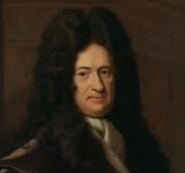
3 months 4 weeks ago
I have seen something of the project of M. de St. Pierre, for maintaining a perpetual peace in Europe. I am reminded of a device in a cemetery, with the words: Pax perpetua; for the dead do not fight any longer: but the living are of another humor; and the most powerful do not respect tribunals at all.
▼
Source
Letter 11 to Grimarest: Passages Concerning the Abbe de St. Pierre's 'Project for Perpetual Peace (June 1712). Taken from Leibniz: Political Writings (2nd Edition, 1988), Edited by Patrick Riley.

3 months 4 weeks ago
One, knowing the duties of man and being ignorant of his impotence, is lost in presumption, and that the other, knowing the impotence and being ignorant of the duty, falls into laxity; whence it seems that since the one leads to truth, the other to error, there would be formed from their alliance a perfect system of morals. But instead of this peace, nothing but war and a general ruin would result from their union; for the one establishing certainty, the other doubt, the one the greatness of man, the other his weakness, they would destroy the truths as well as the falsehoods of each other. So that they cannot subsist alone because of their defects, nor unite because of their opposition, and thus they break and destroy each other to give place to the truth of the Gospel. This it is that harmonizes the contrarieties by a wholly divine act, and uniting all that is true and expelling all that is false, thus makes of them a truly celestial wisdom in which those opposites accord that were incompatible in human doctrines.
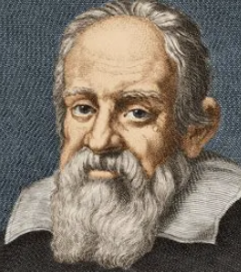
3 months 4 weeks ago
I would say here something that was heard from an ecclesiastic of the most eminent degree [probably Caesar Baronius]: "The intention of the Holy Ghost is to teach us how one goes to heaven, not how heaven goes."
▼
Source
Variant translation: I would say here something that was heard from an ecclesiastic of the most eminent degree: "That the intention of the Holy Spirit is to teach us how one goes to heaven, not how the heavens go."
3 months 4 weeks ago
Once a German jurist of great renown, Ihering, wanted to sum up the scientific work of his life and write a treatise, in which he proposed to analyze the factors that preserve social life in society. "Purpose in Law" (Der Zweck im Rechte), such is the title of that book, which enjoys a well-deserved reputation.He made an elaborate plan of his treatise, and, with much erudition, discussed both coercive factors which are used to maintain society: wagedom and the different forms of coercion which are sanctioned by law. At the end of his work he reserved two paragraphs only to mention the two non-coercive factors — the feeling of duty and the feeling of mutual sympathy — to which he attached little importance, as might be expected from a writer in law.But what happened? As he went on analyzing the coercive factors he realized their insufficiency. He consecrated a whole volume to their analysis, and the result was to lessen their importance! When he began the last two paragraphs, when he began to reflect upon the non-coercive factors of society, he perceived, on the contrary, their immense, outweighing importance; and instead of two paragraphs, he found himself obliged to write a second volume, twice as large as the first, on these two factors: voluntary restraint and mutual help; and yet, he analyzed but an infinitesimal part of these latter — those which result from personal sympathy — and hardly touched free agreement, which results from social institutions.
3 months 4 weeks ago
Epimenides was sent by his father into the field to look for a sheep, turned out of the road at mid-day and lay down in a certain cave and fell asleep, and slept there fifty-seven years; and after that, when awake, he went on looking for the sheep, thinking that he had been taking a short nap.
▼
Source
Epimenides, 2.
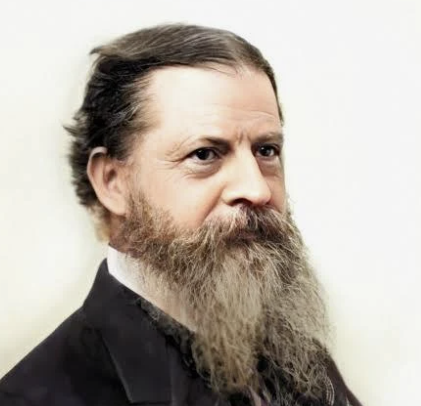
3 months 4 weeks ago
You are of all my friends the one who illustrates pragmatism in its most needful forms. You are a jewel of pragmatism.
▼
Source
Letter to William James (16 March 1903), published in The thought and character of William James, as revealed in unpublished correspondence and notes (1935) by Ralph Barton Perry, Vol. 2, p. 427
3 months 4 weeks ago
I would inquire of reasonable persons whether this principle: Matter is naturally wholly incapable of thought, and this other: I think, therefore I am, are in fact the same in the mind of Descartes, and in that of St. Augustine, who said the same thing twelve hundred years before. ...I am far from affirming that Descartes is not the real author of it, even if he may have learned it only in reading this distinguished saint; for I know how much difference there is between writing a word by chance without making a longer and more extended reflection on it, and perceiving in this word an admirable series of conclusions, which prove the distinction between material and spiritual natures, and making of it a firm and sustained principle of a complete metaphysical system, as Descartes has pretended to do. ...it is on this supposition that I say that this expression is as different in his writings from the saying in others who have said it by chance, as in a man full of life and strength, from a corpse.
▼
Source
see St. Augustine, Civitate Dei, 1. XI, c. xxvi
3 months 4 weeks ago
We seek not what God could have done but what He has done.… God could have caused birds to fly with bones of solid gold, with veins full of quicksilver, with flesh heavier than lead and very small and heavy wings, so as to better show His power … but He wanted to make their bones, flesh and feathers very light … to teach us that He likes simplicity and ease.
▼
Source
Notes in a copy of Jean-Baptiste Morin's "Famous and ancient problems of the earth's motion or rest, yet to be solved" (published 1631). Some English sources incorrectly attribute this to the Dialogue, concluding it (also inaccurately): "It is only to shi
3 months 4 weeks ago
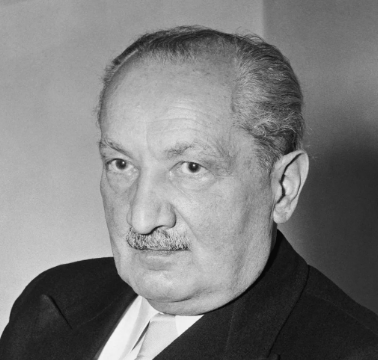
The human being is not the lord of beings, but the shepherd of Being.
▼
Source
Letter on Humanism (1947)
3 months 4 weeks ago
That we are Utopians is well known. So Utopian are we that we go the length of believing that the Revolution can and ought to assure shelter, food, and clothes to all — an idea extremely displeasing to middle-class citizens, whatever their party color, for they are quite alive to the fact that it is not easy to keep the upper hand of a people whose hunger is satisfied.
▼
Source
Ch. 5 : Food, p. 98
3 months 4 weeks ago
It was a favourite expression of Theophrastus that time was the most valuable thing that a man could spend.
▼
Source
Theophrastus, 10.
3 months 4 weeks ago
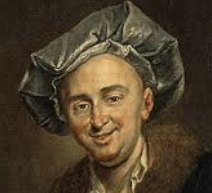
We have now but to prove a third attribute: I mean the faculty of feeling which the philosophers of all centuries have found in this same substance. ...[T]he Cartesians have made, in vain, to rob matter of this faculty. But in order to avoid insurmountable difficulties, they have flung themselves into a labyrinth from which they have thought to escape by this absurd system "that animals are pure machines."An opinion so absurd has never gained admittance among philosophers... Experience gives us no less proof of the faculty of feeling in animals than of feeling in men.
▼
Source
Ch. VI Concerning the Sensitive Faculty of Matter
3 months 4 weeks ago
How can a past idea be present?... it can only be going, infinitesimally past, less past than any assignable past date. We are thus brought to the conclusion that the present is connected to the past by a series of real infinitesimal steps.
3 months 4 weeks ago
It seems to be for the greater glory of Heidegger that all thinkers of the past twenty-five hundred years are found to have been so tragically off the track.
▼
Source
Marjorie Glicksman, "A Note on the Philosophy of Heidegger". The Journal of Philosophy, Vol 35 no 4, Feb 17, 1938, pp. 93-104.
3 months 4 weeks ago
Industrial wealth has grown at a rate which no possible increase of population could attain, and it can grow with still greater speed. But agriculture is still considered a stronghold of the Malthusian pseudophilosophy. The recent achievements of agriculture and are not sufficiently well known; and while our gardeners defy climate and latitude, acclimatise sub-tropical plants, raise several crops a year instead of one, and themselves make the soil they want for each special culture, the economists nevertheless continue saying that the surface of the soil is limited, and still more its productive powers; they still maintain that population which should double each thirty years would soon be confronted by a lack of the necessities of life!
3 months 4 weeks ago
Nothing can be produced out of nothing.
▼
Source
Diogenes of Apollonia, 2.
3 months 4 weeks ago
The concept of freedom, as the Philosophy of Right has shown, follows the pattern of free ownership. As a result, the history of the world that Hegel looks out upon exalts and enshrines the history of the middle-class, which based itself on this pattern. There is a stark truth in Hegel’s strangely certain announcement that history has reached its end. But it announces the funeral of a class, not of history. P. 227
3 months 4 weeks ago
He who has the most imagination should be regarded as having the most intelligence or genius, for all these words are synonymous...
3 months 4 weeks ago
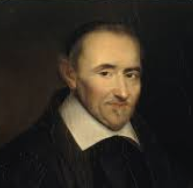
A difficulty which confronts the synechistic philosophy is this. In considering personality, that philosophy is forced to accept the doctrine of a personal God; but in considering communication, it cannot but admit that if there is a personal God, we must have a direct perception of that person and indeed be in personal communication with him. Now, if that be the case, the question arises how it is possible that the existence of this being should ever have been doubted by anybody. The only answer that I can at present make is that facts that stand before our face and eyes and stare us in the face are far from being, in all cases, the ones most easily discerned. That has been remarked since time immemorial.
3 months 4 weeks ago
The ancient Greek philosopher, Democritus, propounded an hypothesis of the constitution of matter, and gave the name of atoms to the ultimate unalterable parts of which he imagined all bodies to be constructed. In the 17th century, Gassendi revived this hypothesis, and attempted to develope it, while Newton used it with marked success in his reasonings on physical phenomena; but the first who formed a body of doctrine which would embrace all known facts in the constitution of matter, was Roger Joseph Boscovich, of Italy, who published at Vienna, in 1759, a most important and ingenious work, styled Theoria Philosophiæ Naturalis ad unicam legem virium, in Natura existentium redacta. This is one of the most profound contributions ever made to science; filled with curious and important information, and is well worthy of the attentive perusal of the modern student. In more recent days, the theory of Boscovich has received further confirmation and extension in the researches of Dalton, Joule, Thomson, Faraday, Tyndall, and others.
▼
Source
Alfred Marshall Mayer, Lecture-notes on Physics (1868) [https://books.google.com/books?id=hqsLAAAAYAAJ Part 1]
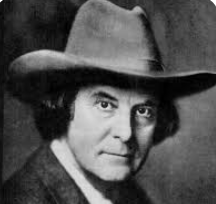
3 months 4 weeks ago
He picked up the lemons that Fate had sent him and started a lemonade-stand.
▼
Source
Selected Writings of Elbert Hubbard (1922) p. 237 | Often quoted as "When life gives you lemons, make lemonade" | Also: A genius is a man who takes the lemons that Fate hands him and starts a lemonade stand with them. (As quoted in [http://archive.org/det
3 months 4 weeks ago
If the individual were no longer compelled to prove himself on the market, as a free economic subject, the disappearance of this kind of freedom would be one of the greatest achievements of civilization. The technological processes of mechanization and standardization might release individual energy into a yet uncharted realm of freedom beyond necessity. The very structure of human existence would be altered; the individual would be liberated from the work world's imposing upon him alien needs and alien possibilities. The individual would be free to exert autonomy over a life that would be his own.
▼
Source
p. 2
3 months 4 weeks ago
Consider what effects that might conceivably have practical bearings you conceive the objects of your conception to have. Then, your conception of those effects is the whole of your conception of the object.
▼
Source
Vol. V, par. 438
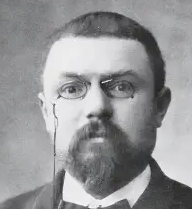
3 months 4 weeks ago
We have not a direct intuition of the equality of two intervals of time.
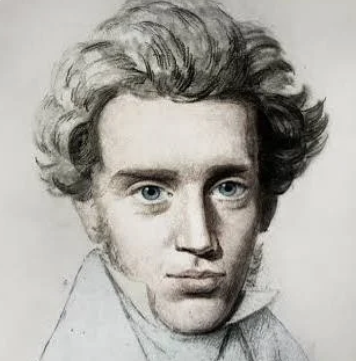
3 months 4 weeks ago
I have never worked as hard as now. I go for a brief walk in the morning. Then I come home and sit in my room without interruption until about three o'clock. My eyes can barely see. Then with my walking stick in hand I sneak off to the restaurant, but am so weak that I believe that if somebody were to call out my name, I would keel over and die. Then I go home and begin again. In my indolence during the past months I had pumped up a veritable shower bath, and now I have pulled the string and the ideas are cascading down upon me: healthy, happy, merry, gay, blessed children born with ease and yet all of them with the birthmark of my personality.
▼
Source
Letter from Berlin to Emil Boesen, May 25, 1843, Letter 82
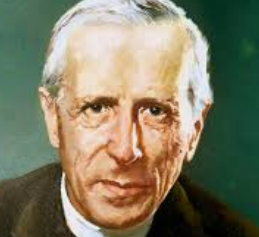
3 months 4 weeks ago
What paralyzes life is lack of faith and lack of audacity. The difficulty lies not in solving problems but expressing them. And so we cannot avoid this conclusion: it is biologically evident that to gain control of passion and so make it serve spirit must be a condition of progress. Sooner or later, then, the world will brush aside our incredulity and take this step : because whatever is the more true comes out into the open, and whatever is better is ultimately realized. The day will come when, after harnessing the ether, the winds, the tides, gravitation, we shall harness for God the energies of love. And, on that day, for the second time in the history of the world, man will have discovered fire.
▼
Source
"The Evolution of Chastity" (February 1934), as translated in Toward the Future (1975) edited by by René Hague, who also suggests "space" as an alternate translation of "the ether." | Variants: | "One day after mastering the winds, the waves, the tides an
3 months 4 weeks ago
One machine can do the work of fifty ordinary men. No machine can do the work of one extraordinary man.
▼
Source
p. 151
3 months 4 weeks ago
The avant-garde and the beatniks share in the function of entertaining without endangering the good conscience of the men of good will.
▼
Source
p. 70
3 months 4 weeks ago
The death of dogma is the birth of morality.
▼
Source
As quoted in Faith Or Fact (1897) by Henry Moorehouse Taber, p. 86
3 months 4 weeks ago
In the external, patience is some third element that must be added, and, humanly speaking, it would be better if it were not needed; some days it is needed more, some days less, all according to fortune, whose debtor a person becomes, even though he gained ever so little, because only when he wants to gain patience does he become one's debtor.
▼
Source
' p. 168
3 months 4 weeks ago
In writing what he does not speak, what he would never say and, in truth, would probably never even think, the author of the written speech is already entrenched in the posture of the sophist; the man of non-presence and non-truth. Writing is thus already on the scene. The incompatibility between written and the true is clearly announced at the moment Socrates starts to recount the way in which men are carried out themselves by pleasure, become absent from themselves, forget themselves and die in the thrill of song.
▼
Source
Plato's Pharmacy, Pharmacia
3 months 4 weeks ago
However convergent it be, evolution cannot attain to fulfilment on earth except through a point of dissociation.With this we are introduced to a fantastic and inevitable event which now begins to take shape in our perspective, the event which comes nearer with every day that passes: the end of all life on our globe, the death of the planet, the ultimate phase of the phenomenon of man.
3 months 4 weeks ago
The ineffable joy of forgiving and being forgiven forms an ecstasy that might well arouse the envy of the gods.
3 months 4 weeks ago
Thought is led, by the situation of its objects, to measure their truth in terms of another logic, another universe of discourse. And this logic projects another mode of existence: the realization of the truth in the words and deeds of man. And inasmuch as this project involves man as societal animal,” the polis, the movement of thought has a political content. Thus, the Socratic discourse is political discourse inasmuch as it contradicts the established political institutions. The search for the correct definition, for the “concept” of virtue, justice, piety, and knowledge becomes a subversive undertaking, for the concept intends a new polis.
▼
Source
pp. 133-134
CivilSimian.com created by AxiomaticPanic, CivilSimian, Kalokagathia