

3 months 4 weeks ago
By MANNERS, I mean not here Decency of behaviour; as how one man should salute another, or how a man should wash his mouth, or pick his teeth before company, and such other points of the Small Morals; But those qualities of mankind that concern their living together in Peace and Unity. To which end we are to consider that the Felicity of this life consisteth not in the repose of a mind satisfied. For there is no such Finis ultimus (utmost aim) nor Summum Bonum (greatest good) as is spoken of in the books of the old Moral Philosophers. Nor can a man any more live whose desires are at an end than he whose Senses and Imaginations are at a stand.
▼
Source
The First Part, Chapter 11, p. 47

3 months 4 weeks ago
All work, even cotton spinning, is noble; work is alone noble ... A life of ease is not for any man, nor for any god.
▼
Source
Bk. III, ch. 4.

3 months 4 weeks ago
Those who have a well-ordered character lead also a well-ordered life.

3 months 4 weeks ago
Criticism and prophecy must be the two categories that meet in the salvation of the past
▼
Source
p. 53-54 (trans. John Osborne (London: Verso, 1977)
3 months 4 weeks ago
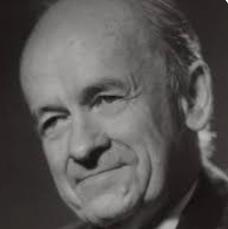
In the interests of the ideal of maximum output, [our society] judges men by their fitness for jobs, not jobs by their fitness for men.
▼
Source
p. 280.
3 months 4 weeks ago
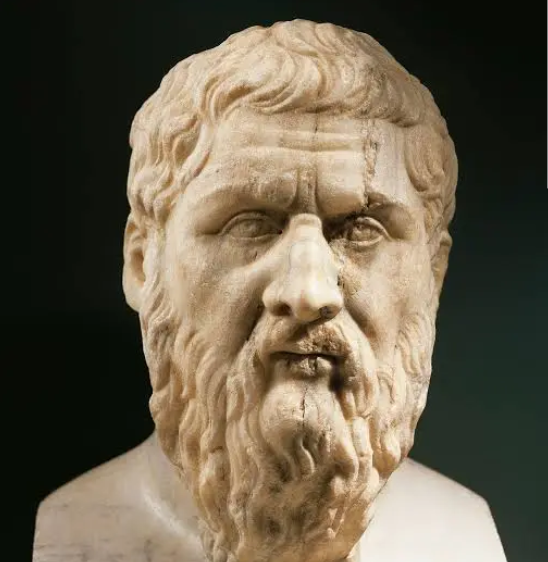
Then the case is the same in all the other arts for the orator and his rhetoric; there is no need to know the truth of the actual matters, but one merely needs to have discovered some device of persuasion which will make one appear to those who do not know to know better than those who know.
3 months 4 weeks ago
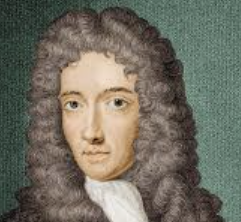
The phaenomena afforded by trades, are a part of the history of nature, and therefore may both challenge the naturalist's curiosity and add to his knowledge, Nor will it suffice to justify learned men in the neglect and contempt of this part of natural history, that the men, from whom it must be learned, are illiterate mechanicks... is indeed childish, and too unworthy of a philosopher, to be worthy of an honest answer.
▼
Source
"That the Goods of Mankind May be Much Increased by the Naturalist's Insight into Trades" in the Works of Robert Boyle, (1772) Vol.3 as quoted in Clifford D. Conner, A People's History of Science (2005) Note: Compare Francis Bacon's The Great Instauration

3 months 4 weeks ago
The only minds which seduce us are the minds which have destroyed themselves trying to give their life a meaning.
3 months 4 weeks ago
The source of every Crime, is some defect of the Understanding; or some error in Reasoning, or some sudden force of the Passions. Defect in the Understanding, is Ignorance; in Reasoning, Erroneous Opinion.
▼
Source
The Second Part, Chapter 27, p. 152
3 months 4 weeks ago
Of all the Nations in the world at present we English are the stupidest in speech, the wisest in action. As good as a 'dumb' Nation, I say, who cannot speak, and have never yet spoken,— spite of the Shakspeares and Miltons who skew us what possibilities there are!—O Mr. Bull, I look in that surly face of thine with a mixture of pity and laughter, yet also with wonder and veneration. Thou complainest not, my illustrious friend; and yet I believe the heart of thee is full of sorrow, of unspoken sadness, seriousness,—profound melancholy (as some have said) the basis of thy being. Unconsciously, for thou speakest of nothing, this great Universe is great to thee. Not by levity of floating, but by stubborn force of swimming, shalt thou make thy way. The Fates sing of thee that thou shalt many times be thought an ass and a dull ox, and shalt with a god-like indifference believe it. My friend,—and it is all untrue, nothing ever falser in point of fact! Thou art of those great ones whose greatness the small passer-by does not discern. Thy very stupidity is wiser than their wisdom. A grand vis inertiae is in thee; how many grand qualities unknown to small men! Nature alone knows thee, acknowledges the bulk and strength of thee: thy Epic, unsung in words, is written in huge characters on the face of this Planet,—sea-moles, cotton-trades, railways, fleets and cities, Indian Empires, Americas, New- Hollands; legible throughout the Solar System!

3 months 4 weeks ago
When one is gripped by excruciating physical pain, one is always shocked at just how frightful it can be.
▼
Source
"[https://www.abolitionist.com/ The Abolitionist Project]", Talks given at the FHI (Oxford University) and the Charity International Happiness Conference, 2007

3 months 4 weeks ago
Poets are witnesses to Being before the philosophers are able to bring it into thought.
▼
Source
Chapter Five, Christian sources, p. 105
3 months 4 weeks ago
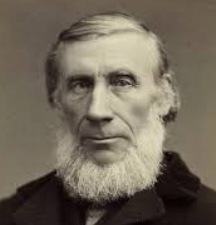
The enunciation of a thought in advance of the moment provokes dissent or evokes approval, and thus promotes action. The thought may be unwise; but it is only by discussion, checked by experience, that its value can be determined.
3 months 4 weeks ago
Let us assign the figures that have come into being in our theory to fire and earth and water and air. To earth let us give the cubical form; for earth is least mobile of the four and most plastic of bodies: and that substance must possess this nature in the highest degree which has its bases most stable. Now of the triangles which we assumed as our starting-point that with equal sides is more stable than that with unequal; and of the surfaces composed of the two triangles the equilateral quadrangle necessarily is more stable than the equilateral triangle... Now among all these that which has the fewest bases must naturally in all respects be the most cutting and keen of all, and also the most nimble, seeing it is composed of the smallest number of similar parts... Let it be determined then... that the solid body which has taken the form of the pyramid [tetrahedron] is the element and seed of fire; and the second in order of generation let [octahedron] us say to be that of air, and the third [icosahedron] that of water. Now all these bodies we must conceive as being so small that each single body in the several kinds cannot for its smallness be seen by us at all; but when many are heaped together, their united mass is seen...
▼
Source
Section 55e–56c, Tr. R. D. Archer-Hind, The Timaeus of Plato (1888) [https://books.google.com/books?id=q2YMAAAAIAAJ&pg=PA199 pp. 199-201.]
3 months 4 weeks ago
And first the Doctrine that all their Theory is grounded on, seems to me Inevident and undemonstrated, not to say precarious.
3 months 4 weeks ago
Crime in full glory consolidates authority by the sacred fear it inspires.
3 months 4 weeks ago
Friend!—Will the ballot-box raise the Noblest to the chief place; does any sane man deliberately believe such a thing?
3 months 4 weeks ago
It's easy to support the status quo if one is not another of its victims.
▼
Source
Reply to [https://www.treehugger.com/natural-sciences/meet-the-people-who-want-to-turn-predators-into-vegans.html#comment-2393432394 Meet the people who want to turn predators into herbivores], TreeHugger, 4 Dec. 2015

3 months 4 weeks ago
Enlightenment rationalism, to the extent that its program is taken seriously, is an engine of perpetual revolution, which brings about the progressive destruction of every inherited institution, yet without ever being able to consolidate a stable consensus around any new ones.
▼
Source
p. 147
3 months 4 weeks ago
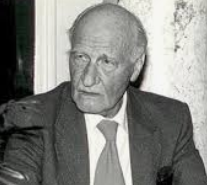
In leisure — not only there, but certainly there, if anywhere — the truly human is rescued and preserved precisely because the area of the "just human" is left behind over and over again — and this is not brought about through the application of extreme efforts but rather as with a kind of "moving away" (and this "moving" is of course more difficult than the extreme, active effort; it is "more difficult" because it is less at one's own disposal; the condition of utmost exertion is more easily to be realized than the condition of relaxation and detachment, even though the latter is effortless: this is the paradox that reigns over the attainment of leisure, which is at once a human and superhuman condition). As Aristotle said of it: "man cannot live this way insofar as he is man, but only insofar as something divine dwells in him." [Nichomachean Ethics X, 7 (1177b27–28)]
▼
Source
p. 36
3 months 4 weeks ago
Until the eleventh century, when the thinking of Aristotle reached Western Europe, men had believed along with Plato that man had three ways of knowing:1. He knew by sense experience.2. He knew by reason.3. And he knew by what Plato called Divine madness, or a direct contact with nonphysical reality; myths were one result of this last kind of knowing.
▼
Source
Morton Kelsey, Myth, History & Faith: The Mysteries of Christian Myth & Imagination (1974)
3 months 4 weeks ago
In order to conceive, and to steep ourselves in, unreality, we must have it constantly present to our minds. The day we feel it, see it, everything becomes unreal, except that unreality which alone makes existence tolerable.
3 months 4 weeks ago
To such a one, already filled with intellectual substance, and possessing what we may call the practical gold-bullion of human culture, it was an obvious improvement that he should be taught to speak it out of him on occasion; that he should carry a spiritual banknote producible on demand for what of "gold-bullion" he had, not so negotiable otherwise, stored in the cellars of his mind. A man, with wisdom, insight and heroic worth already acquired for him, naturally demanded of the schoolmaster this one new faculty, the faculty of uttering in fit words what he had. A valuable superaddition of faculty:—and yet we are to remember it was scarcely a new faculty; it was but the tangible sign of what other faculties the man had in the silent state.
3 months 4 weeks ago
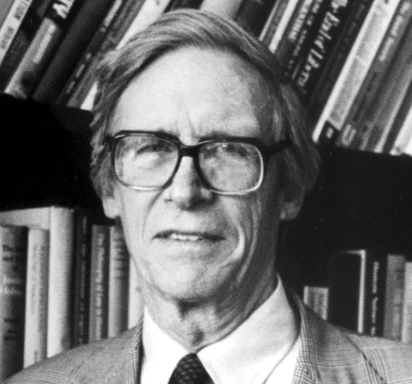
The principles of justice are chosen behind a veil of ignorance.
▼
Source
Chapter I, Section 3, pg. 12
3 months 4 weeks ago
All just order in the world is based on this, that man give man what is his due.
▼
Source
[http://books.google.com/books?id=XjYbAAAAIAAJ&q=%22All+just+order+in+the+world+is+based+on+this+that+man+give+man+what+is+his+due%22&pg=PA10#v=onepage Justice] (1955)
3 months 4 weeks ago
In the fact of being born there is such an absence of necessity that when you think about it a little more than usual, you are left—ignorant how to react—with a foolish grin
3 months 4 weeks ago
On the whole, ought I not to rejoice that God was pleased to give me such a father; that from earliest years I had the example of a real man of God's own making continually before me? Let me learn of him. Let me write my books as he built his houses, and walk as blamelessly through this shadow world; if God so will, to rejoin him at last. Amen.
3 months 4 weeks ago
The fault of the utilitarian doctrine is that it mistakes impersonality for impartiality.
▼
Source
Chapter III, Section 30, pg. 190
3 months 4 weeks ago
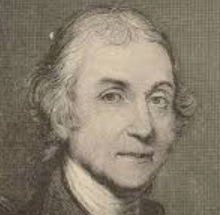
The History of Electricity is a field full of pleasing objects, according to all the genuine and universal principles of taste, deduced from a knowledge of human nature. Scenes like these, in which we see a gradual rise and progress in things, always exhibit a pleasing spectacle to the human mind. Nature, in all her delightful walks, abounds with such views, and they are in a more especial manner connected with every thing that relates to human life and happiness; things, in their own nature, the most interesting to us. Hence it is, that the power of association has annexed crowds of pleasing sensations to the contemplation of every object, in which this property is apparent. This pleasure, likewise, bears a considerable resemblance to that of the sublime, which is one of the most exquisite of all those that affect the human imagination. For an object in which we see a perpetual progress and improvement is, as it were, continually rising in its magnitude; and moreover, when we see an actual increase, in a long period of time past, we cannot help forming an idea of an unlimited increase in futurity; which is a prospect really boundless, and sublime.
▼
Source
Preface, p. i.
3 months 4 weeks ago
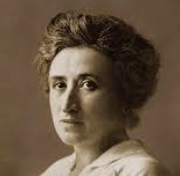
Plausible as the idea of the United States of Europe as a peace arrangement may seem to some at first glance, it has on closer examination not the least thing in common with the method of thought and the standpoint of social democracy . . . At the present stage of development of the world market and of world economy, the conception of Europe as an isolated economic unit is a sterile concoction of the brain. Europe no more forms a special unit within world economy than does Asia or America.

3 months 4 weeks ago
This actual world of what is knowable, in which we are and which is in us, remains both the material and the limit of our consideration.
▼
Source
Vol I, Ch. 4, The World As Will: Second Aspect, § 53, as translated by Eric F. J. Payne (1958)
3 months 4 weeks ago
I know that my birth is fortuitous, a laughable accident, and yet, as soon as I forget myself, I behave as if it were a capital event, indispensable to the progress and equilibrium of the world.
3 months 4 weeks ago
Because he frowned at the cockney cheerfulness of the cheaper economists, they and others represented him as a pessimist, and reduced all his azure infinities to a fit of the blues. But Carlyle's philosophy, more carefully considered, will be found to be dangerously optimist rather than pessimist. As a thinker Carlyle is not sad, but recklessly and rather unscrupulously satisfied. For he seems to have held the theory that good could not be definitely defeated in this world; and that everything in the long run finds its right level.
▼
Source
G. K. Chesterton in The Victorian Age in Literature.
3 months 4 weeks ago
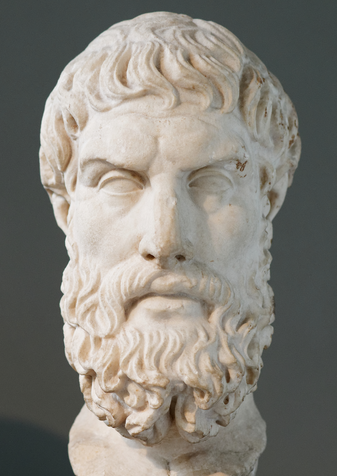
Self-sufficiency is the greatest of all wealth.
▼
Source
The Essential Epicurus : Letters, Principal Doctrines, Vatican sayings, and fragments (1993) edited by Eugene Michael O'Connor, p. 99
3 months 4 weeks ago
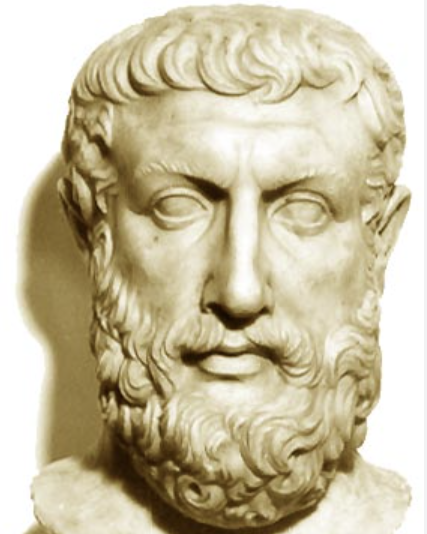
Of the philosophers, Thales is vaguely reported to have taught that souls are immortal. But neither he nor his immediate successors... believed in the immortality of particular souls... This doctrine belongs to the Orphic tradition. In Heracleitus and Parmenides we find the two doctrines of immortality... implicit in mysticism, separated... for the first time. Heracleitus is the champion of the Dionysiac... life and death... in an unending cycle; Parmenides, under Orphic influence, teaches... Soul has fallen from... light and reality to the dark and unreal... bodily existence. This, however, is... only 'the way of opinion'... [Parmenides] feels.... that... substantiality... is not so easily got rid of. But he will not give up... eternal substance. The most interesting fragment of Parmenides... seems to enunciate, for the first time in Greek thought, the mystical doctrine of eternity as a timeless Now, as opposed to the popular... unending succession. 'There remains then only to give an account of one way—that real Being exists. Many signs... showing... it is unborn, indestructible, entire, unique, unshakable, and unending. It never was, and it never will be, since it is all together present in the Now, one and indivisible.' Empedocles... repudiates... Parmenides, probably on the ground that he reduces the world of time and change to nullity... thus leaves no pathway from appearance to reality. His doctrine of the soul’s exile and wanderings is... Orphic doctrine, which Pindar also gives... in the second Olympian Ode. The Soul sins by separating itself from God... from love and a choice of ' strife ’ in the place of harmony. The immortal Soul is... love and strife blended; the body... only an 'alien garment'... perishes at death. ...Empedocles describes the Soul as a ratio, or harmony ...the complex of...'strife'... bound... by the principle of unity...'love'...Parmenides ...may be ...rejects the Pytdhagorean doctrines ...finds truth in static materialism.
▼
Source
William Ralph Inge, Philosophy Of Plotinus: The at St. Andrews, 1917-1918 (1918) Lectures XII, XIII Immortality of the Soul, Vol.2, [https://archive.org/details/in.ernet.dli.2015.533523/page/n17/mode/1up?view=theater pp. 3-5.]
3 months 4 weeks ago
Too many christians have been chargeable with... confounding the Logos of Plato with that of John, and making of it a second person in the trinity, than which no two things can be more different.
▼
Source
General Conclusions, Part I : Containing Considerations addressed to Unbelievers and especially to Mr. Gibbon

3 months 4 weeks ago
A just city should favor justice and the just, hate tyranny and injustice, and give them both their just desserts.
▼
Source
H. Gibb et al., eds., "Mazalim", The Dictionary of Islam vol. IV (Leiden: Brill, 1991)
3 months 4 weeks ago
The charlatan takes very different shapes according to circumstances; but at bottom he is a man who cares nothing about knowledge for its own sake, and only strives to gain the semblance of it that he may use it for his own personal ends, which are always selfish and material.
▼
Source
“Similes, Parables and Fables” Parerga and Paralipomena, vol. 2, § 394
3 months 4 weeks ago
As art sinks into paralysis, artists multiply. This anomaly ceases to be one if we realize that art, on its way to exhaustion, has become both impossible and easy.
3 months 4 weeks ago
He had already written several articles and essays, and a few of them had appeared in print; but they gave little promise or indication of the power he was afterwards to exhibit.
▼
Source
With White, Andrew Dickson. [https://ia600302.us.archive.org/33/items/cu31924029541640/cu31924029541640.pdf On the Choice of Books: The Inaugural Address of Thomas Carlyle, Lord Rector of the University of Edinburgh, Reprinted From the Times, With Additio
3 months 4 weeks ago
Moderation, in the pursuit of honors or riches, is the only security against disappointment and vexation. A wise man, therefore, will prefer the simplicity of rustic life to the magnificence of courts.
3 months 4 weeks ago
Barricades of ideas are worth more than barricades of stones. There is no prow that can cut through a cloudbank of ideas. A powerful idea, waved before the world at the proper time, can stop a squadron of iron-clad ships, like the mystical flag of the Last judgement.
3 months 4 weeks ago
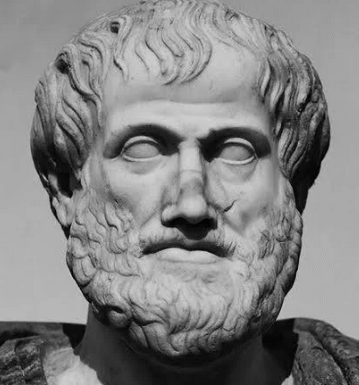
The ancient philosophers... all of them assert that the elements, and those things which are called by them principles, are contraries, though they establish them without reason, as if they were compelled to assert this by truth itself. They differ, however... that some of them assume prior, and others posterior principles; and some of them things more known according to reason, but others such as are more known according to sense: for some establish the hot and the cold, others the moist and the dry, others the odd and the even, and others strife and friendship, as the causes of generation. ...in a certain respect they assert the same things, and speak differently from each other. They assert different things... but the same things, so far as they speak analogously. For they assume principles from the same co-ordination; since, of contraries, some contain, and others are contained.
▼
Source
Book I, Ch. VI, pp. 57-59.

3 months 4 weeks ago
The cinema is a place of intrinsic indiscernibility between art and non-art.
▼
Source
From Considérations sur l'état actuel du cinéma (1999), translated as Philosophy and Cinema in Infinite Thought: truth and the return of philosophy. London: Continuum, 2003. .
3 months 4 weeks ago
Do not shorten the morning by getting up late, or waste it in unworthy occupations or in talk; look upon it as the quintessence of life, as to a certain extent sacred. Evening is like old age: we are languid, talkative, silly. Each day is a little life: every waking and rising a little birth, every fresh morning a little youth, every going to rest and sleep a little death.
▼
Source
Vol. 2, Ch. 2: [http://ebooks.adelaide.edu.au/s/schopenhauer/arthur/counsels/chapter2.html Our Relation To Ourselves]
3 months 4 weeks ago
Only one thing matters: learning to be the loser.
3 months 4 weeks ago
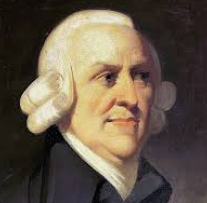
The man who barely abstains from violating either the person, or the estate, or the reputation of his neighbours, has surely very little positive merit. He fulfils, however, all the rules of what is peculiarly called justice, and does every thing which his equals can with propriety force him to do, or which they can punish him for not doing. We may often fulfil all the rules of justice by sitting still and doing nothing.
▼
Source
Section II, Chap. I.
3 months 4 weeks ago
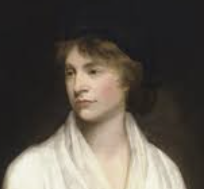
Tyrants and sensualists are in the right when they endeavour to keep women in the dark, because the former want only slaves, and the latter a play-thing.
▼
Source
Introduction
3 months 4 weeks ago
I suggest that scientific knowledge, though logically more articulate and far more complex, is of this sort. The books and teachers from whom it is acquired present concrete examples together with a multitude of theoretical generalizations. Both are essential carriers of knowledge, and it is therefore Pickwickian to seek a methodological criterion that supposes the scientist can specify in advance whether each imaginable instance fits or would falsify his theory.
▼
Source
"Logic of Discovery or Psychology of Research?", Criticism and the growth of knowledge edited by Imre Lakatos and Alan Musgrave (1970)
3 months 4 weeks ago
Perhaps the enemies of liberty are such only because they judge it by its loud voice. If they knew its charms, the dignity that accompanies it, how much a free man feels like a king, the perpetual inner light that is produced by decorous self-awareness and realization, perhaps there would be no greater friends of freedom than those who are its worst enemies.
CivilSimian.com created by AxiomaticPanic, CivilSimian, Kalokagathia