
3 months 4 weeks ago
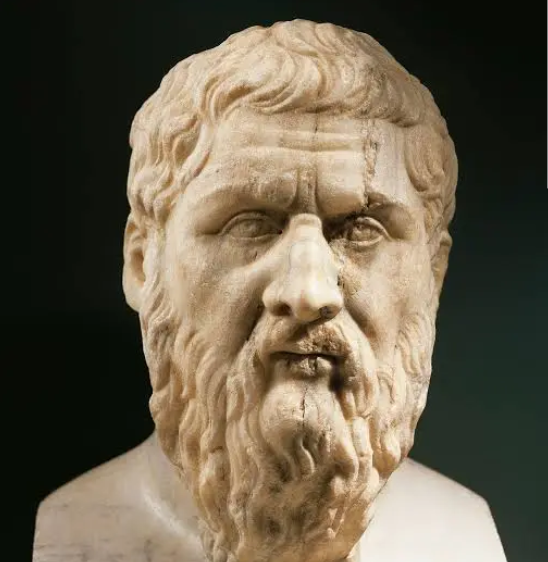
Until the eleventh century, when the thinking of Aristotle reached Western Europe, men had believed along with Plato that man had three ways of knowing:1. He knew by sense experience.2. He knew by reason.3. And he knew by what Plato called Divine madness, or a direct contact with nonphysical reality; myths were one result of this last kind of knowing.
▼
Source
Morton Kelsey, Myth, History & Faith: The Mysteries of Christian Myth & Imagination (1974)

3 months 4 weeks ago
In order to conceive, and to steep ourselves in, unreality, we must have it constantly present to our minds. The day we feel it, see it, everything becomes unreal, except that unreality which alone makes existence tolerable.

3 months 4 weeks ago
To such a one, already filled with intellectual substance, and possessing what we may call the practical gold-bullion of human culture, it was an obvious improvement that he should be taught to speak it out of him on occasion; that he should carry a spiritual banknote producible on demand for what of "gold-bullion" he had, not so negotiable otherwise, stored in the cellars of his mind. A man, with wisdom, insight and heroic worth already acquired for him, naturally demanded of the schoolmaster this one new faculty, the faculty of uttering in fit words what he had. A valuable superaddition of faculty:—and yet we are to remember it was scarcely a new faculty; it was but the tangible sign of what other faculties the man had in the silent state.
3 months 4 weeks ago
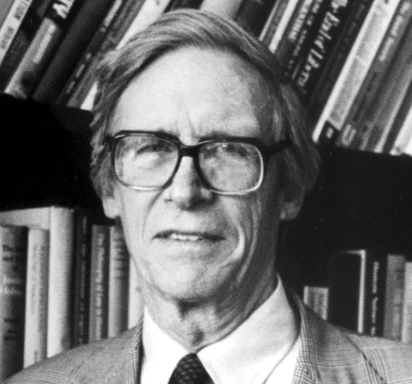
The principles of justice are chosen behind a veil of ignorance.
▼
Source
Chapter I, Section 3, pg. 12
3 months 4 weeks ago
All just order in the world is based on this, that man give man what is his due.
▼
Source
[http://books.google.com/books?id=XjYbAAAAIAAJ&q=%22All+just+order+in+the+world+is+based+on+this+that+man+give+man+what+is+his+due%22&pg=PA10#v=onepage Justice] (1955)
3 months 4 weeks ago
In the fact of being born there is such an absence of necessity that when you think about it a little more than usual, you are left—ignorant how to react—with a foolish grin
3 months 4 weeks ago
On the whole, ought I not to rejoice that God was pleased to give me such a father; that from earliest years I had the example of a real man of God's own making continually before me? Let me learn of him. Let me write my books as he built his houses, and walk as blamelessly through this shadow world; if God so will, to rejoin him at last. Amen.
3 months 4 weeks ago
The fault of the utilitarian doctrine is that it mistakes impersonality for impartiality.
▼
Source
Chapter III, Section 30, pg. 190
3 months 4 weeks ago
The History of Electricity is a field full of pleasing objects, according to all the genuine and universal principles of taste, deduced from a knowledge of human nature. Scenes like these, in which we see a gradual rise and progress in things, always exhibit a pleasing spectacle to the human mind. Nature, in all her delightful walks, abounds with such views, and they are in a more especial manner connected with every thing that relates to human life and happiness; things, in their own nature, the most interesting to us. Hence it is, that the power of association has annexed crowds of pleasing sensations to the contemplation of every object, in which this property is apparent. This pleasure, likewise, bears a considerable resemblance to that of the sublime, which is one of the most exquisite of all those that affect the human imagination. For an object in which we see a perpetual progress and improvement is, as it were, continually rising in its magnitude; and moreover, when we see an actual increase, in a long period of time past, we cannot help forming an idea of an unlimited increase in futurity; which is a prospect really boundless, and sublime.
▼
Source
Preface, p. i.
3 months 4 weeks ago
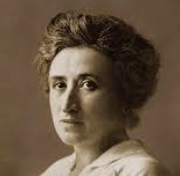
Plausible as the idea of the United States of Europe as a peace arrangement may seem to some at first glance, it has on closer examination not the least thing in common with the method of thought and the standpoint of social democracy . . . At the present stage of development of the world market and of world economy, the conception of Europe as an isolated economic unit is a sterile concoction of the brain. Europe no more forms a special unit within world economy than does Asia or America.

3 months 4 weeks ago
This actual world of what is knowable, in which we are and which is in us, remains both the material and the limit of our consideration.
▼
Source
Vol I, Ch. 4, The World As Will: Second Aspect, § 53, as translated by Eric F. J. Payne (1958)
3 months 4 weeks ago
I know that my birth is fortuitous, a laughable accident, and yet, as soon as I forget myself, I behave as if it were a capital event, indispensable to the progress and equilibrium of the world.
3 months 4 weeks ago
Because he frowned at the cockney cheerfulness of the cheaper economists, they and others represented him as a pessimist, and reduced all his azure infinities to a fit of the blues. But Carlyle's philosophy, more carefully considered, will be found to be dangerously optimist rather than pessimist. As a thinker Carlyle is not sad, but recklessly and rather unscrupulously satisfied. For he seems to have held the theory that good could not be definitely defeated in this world; and that everything in the long run finds its right level.
▼
Source
G. K. Chesterton in The Victorian Age in Literature.
3 months 4 weeks ago
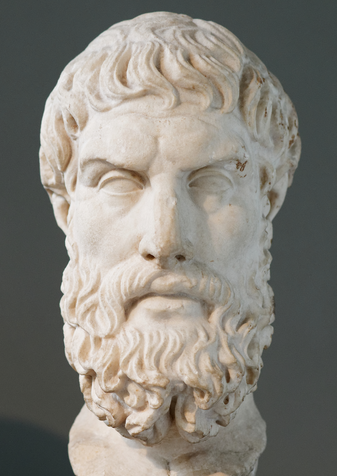
Self-sufficiency is the greatest of all wealth.
▼
Source
The Essential Epicurus : Letters, Principal Doctrines, Vatican sayings, and fragments (1993) edited by Eugene Michael O'Connor, p. 99
3 months 4 weeks ago
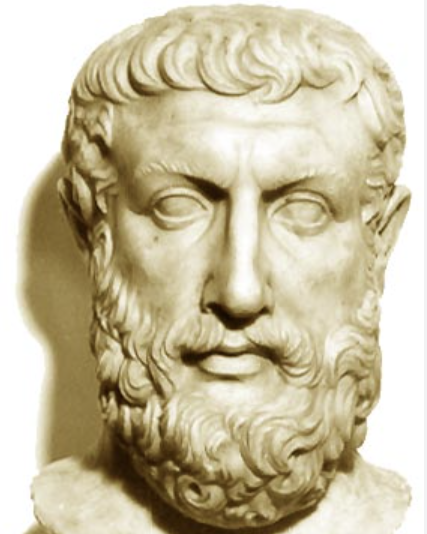
Of the philosophers, Thales is vaguely reported to have taught that souls are immortal. But neither he nor his immediate successors... believed in the immortality of particular souls... This doctrine belongs to the Orphic tradition. In Heracleitus and Parmenides we find the two doctrines of immortality... implicit in mysticism, separated... for the first time. Heracleitus is the champion of the Dionysiac... life and death... in an unending cycle; Parmenides, under Orphic influence, teaches... Soul has fallen from... light and reality to the dark and unreal... bodily existence. This, however, is... only 'the way of opinion'... [Parmenides] feels.... that... substantiality... is not so easily got rid of. But he will not give up... eternal substance. The most interesting fragment of Parmenides... seems to enunciate, for the first time in Greek thought, the mystical doctrine of eternity as a timeless Now, as opposed to the popular... unending succession. 'There remains then only to give an account of one way—that real Being exists. Many signs... showing... it is unborn, indestructible, entire, unique, unshakable, and unending. It never was, and it never will be, since it is all together present in the Now, one and indivisible.' Empedocles... repudiates... Parmenides, probably on the ground that he reduces the world of time and change to nullity... thus leaves no pathway from appearance to reality. His doctrine of the soul’s exile and wanderings is... Orphic doctrine, which Pindar also gives... in the second Olympian Ode. The Soul sins by separating itself from God... from love and a choice of ' strife ’ in the place of harmony. The immortal Soul is... love and strife blended; the body... only an 'alien garment'... perishes at death. ...Empedocles describes the Soul as a ratio, or harmony ...the complex of...'strife'... bound... by the principle of unity...'love'...Parmenides ...may be ...rejects the Pytdhagorean doctrines ...finds truth in static materialism.
▼
Source
William Ralph Inge, Philosophy Of Plotinus: The at St. Andrews, 1917-1918 (1918) Lectures XII, XIII Immortality of the Soul, Vol.2, [https://archive.org/details/in.ernet.dli.2015.533523/page/n17/mode/1up?view=theater pp. 3-5.]
3 months 4 weeks ago
Too many christians have been chargeable with... confounding the Logos of Plato with that of John, and making of it a second person in the trinity, than which no two things can be more different.
▼
Source
General Conclusions, Part I : Containing Considerations addressed to Unbelievers and especially to Mr. Gibbon

3 months 4 weeks ago
A just city should favor justice and the just, hate tyranny and injustice, and give them both their just desserts.
▼
Source
H. Gibb et al., eds., "Mazalim", The Dictionary of Islam vol. IV (Leiden: Brill, 1991)
3 months 4 weeks ago
The charlatan takes very different shapes according to circumstances; but at bottom he is a man who cares nothing about knowledge for its own sake, and only strives to gain the semblance of it that he may use it for his own personal ends, which are always selfish and material.
▼
Source
“Similes, Parables and Fables” Parerga and Paralipomena, vol. 2, § 394
3 months 4 weeks ago
As art sinks into paralysis, artists multiply. This anomaly ceases to be one if we realize that art, on its way to exhaustion, has become both impossible and easy.
3 months 4 weeks ago
He had already written several articles and essays, and a few of them had appeared in print; but they gave little promise or indication of the power he was afterwards to exhibit.
▼
Source
With White, Andrew Dickson. [https://ia600302.us.archive.org/33/items/cu31924029541640/cu31924029541640.pdf On the Choice of Books: The Inaugural Address of Thomas Carlyle, Lord Rector of the University of Edinburgh, Reprinted From the Times, With Additio
3 months 4 weeks ago
On the other hand, the cheapest form of pride is national pride; for the man affected therewith betrays a want of individual qualities of which he might be proud, since he would not otherwise resort to that which he shares with so many millions. The man who possesses outstanding personal qualities will rather see most clearly the faults of his own nation, for he has them constantly before his eyes. But every miserable fool, who has nothing in the world whereof he could be proud, resorts finally to being proud of the very nation to which he belongs. In this he finds compensation and is now ready and thankful to defend, … all the faults and follies peculiar to it. (From 'Parerga and Paralipomena', Vol. 1, Aphorisms on the Wisdom of Life, 'What A Man Represents', pp. 360)
3 months 4 weeks ago
Each of us believes, quite unconsciously of course, that we alone pursue the truth, which the rest are incapable of seeking out and unworthy of attaining. This madness is so deep-rooted and so useful that it is impossible to realize what would become of each of us if it were someday to disappear.
3 months 4 weeks ago
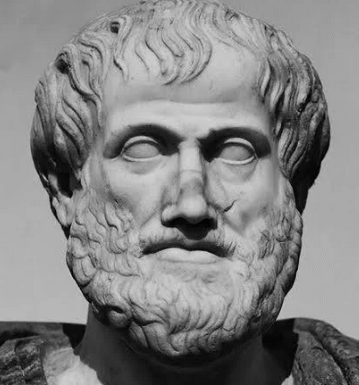
All those... who discourse concerning nature, always subject a certain other nature of... elements, to the infinite... But no one of those who make the elements to be finite introduces infinity. Such, however, as make infinite elements, as Anaxagoras and Democritus, say that the infinite is continuous by contact. ...Rationally, too, do all philosophers consider the infinite as a principle; for it cannot be in vain, nor can any other power be present with it than that of a principle: for all things are either the principle, or from the principle; but of the infinite there is no principle, since otherwise it would have an end. ...it is also unbegotten and uncorruptible, as being a certain principle: for... end is the corruption of everything. ...It likewise appears to comprehend and govern all things, as those assert who do not introduce other causes beside the infinite... It would seem also that this is divine: for it is immortal and indestructible, as Anaximander says, and most of the physiologists.
▼
Source
Book III, Ch. IV, pp. 152-155.
3 months 4 weeks ago
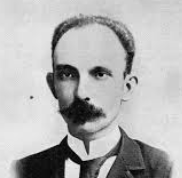
There can be no racial animosity, because there are no races. The theorist and feeble thinkers string together and warm over the bookshelf races which the well-disposed observer and the fair-minded traveller vainly seek in the justice of Nature where man's universal identity springs forth from triumphant love and the turbulent hunger for life. The soul, equal and eternal, emanates from bodies of different shapes and colors. Whoever foments and spreads antagonism and hate between the races, sins against humanity.

3 months 4 weeks ago
Justice is a virtue, but not one that makes people lovable.
3 months 4 weeks ago
Hatred is a thing of the heart, contempt a thing of the head. Hatred and contempt are decidedly antagonistic towards one another and mutually exclusive. A great deal of hatred, indeed, has no other source than a compelled respect for the superior qualities of some other person; conversely, if you were to consider hating every miserable wretch you met you would have your work cut out: it is much easier to despise them one and all. True, genuine contempt, which is the obverse of true, genuine pride, stays hidden away in secret and lets no one suspect its existence: for if you let a person you despise notice the fact, you thereby reveal a certain respect for him, inasmuch as you want him to know how low you rate him — which betrays not contempt but hatred, which excludes contempt and only affects it. Genuine contempt, on the other hand, is the unsullied conviction of the worthlessness of another.
▼
Source
Vol. 2, Ch. 24, § 324 | Variant translation: Hatred is an affair of the heart; contempt that of the head. | As translated by Eric F. J. Payne
3 months 4 weeks ago
Existing is plagiarism.
3 months 4 weeks ago
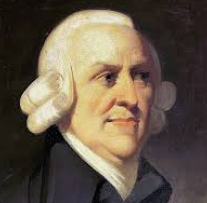
The qualities most useful to ourselves are, first of all, superior reason and understanding, by which we are capable of discerning the remote consequences of all our actions, and of foreseeing the advantage or detriment which is likely to result from them: and secondly, self-command, by which we are enabled to abstain from present pleasure or to endure present pain, in order to obtain a greater pleasure or to avoid a greater pain in some future time. In the union of those two qualities consists the virtue of prudence, of all the virtues that which is most useful to the individual
▼
Source
Chap. II.
3 months 4 weeks ago
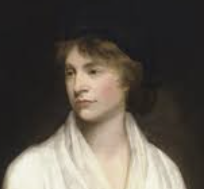
It would be an endless task to trace the variety of meannesses, cares, and sorrows, into which women are plunged by the prevailing opinion that they were created rather to feel than reason, and that all the power they obtain, must be obtained by their charms and weakness.
▼
Source
Ch. 4
3 months 4 weeks ago
We must now ask how changes of this sort can come about, considering first discoveries, or novelties of fact, and then inventions, or novelties of theory. That distinction between discovery and invention or between fact and theory will, however, immediately prove to be exceedingly artificial.
▼
Source
p. 52 (2012 ed.)

3 months 4 weeks ago
Their minds befogged by fashionable nonsense about globalisation, western leaders believe liberal democracy is spreading unstoppably. The reality is continuing political diversity. Republics, empires, liberal and illiberal democracies, and a wide variety of authoritarian regimes will be with us for the foreseeable future. Globalisation is nothing more than the industrialisation of the planet, and increasing resource nationalism is an integral part of the process. (So is accelerating climate change, but that's another story.) As industrialisation spreads, countries that control natural resources use these resources to advance their strategic objectives.
▼
Source
[http://www.guardian.co.uk/commentisfree/2008/sep/09/russia "Folly of the progressive fairytale,"] The Observer (2008-09-08)
3 months 4 weeks ago
As for him who neither possesses nor can acquire them, let him take to heart the words of Hesiod: ‘ He is the best of all who thinks for himself in all things. He, too, is good who takes advice from a wiser (person). But he who neither thinks for himself, nor lays to heart another's wisdom, this is a useless man.’
▼
Source
(Bk. 1, Chapter II)

3 months 4 weeks ago
The vocation of every man and woman is to serve other people.
▼
Source
What Is To Be Done? (1886) Chap. XL, as translated in The Novels and Other Works of Lyof N. Tolstoï (1902) edited by Nathan Haskell Dole, p. 281
3 months 4 weeks ago
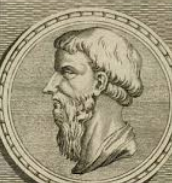
Talent is a gift that brings with it an obligation to serve the world, and not ourselves, for it is not of our making. To use for our exclusive benefit what is not ours is theft. Culture, which makes talent shine, is not completely ours either, nor can we place it solely at our disposal. Rather, it belongs mainly to our country, which gave it to us, and to humanity, from which we receive it as a birthright. A selfish man is a thief.
3 months 4 weeks ago
Under which head do you class those who are at sea?
▼
Source
Having been asked whether the dead or the living were more numerous., as quoted in The Lives and Opinions of Eminent Philosophers by Diogenes Laërtius, as translated by C. D. Yonge, (1853), "Anacharsis" sect. 5, p. 48
3 months 4 weeks ago
There are 80,000 prostitutes in London alone and what are they, if not bloody sacrifices on the altar of monogamy?
▼
Source
"Of Women"
3 months 4 weeks ago
Woe to the book you can read without constantly wondering about the author!
3 months 4 weeks ago
Marriage is encouraged in China, not by the profitableness of children, but by the liberty of destroying them.
▼
Source
Chapter VIII, p. 87.
3 months 4 weeks ago
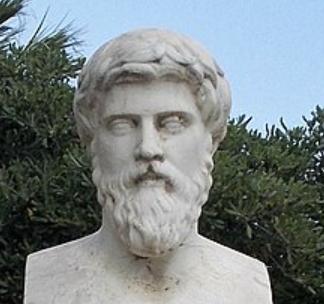
Themistocles being asked whether he would rather be Achilles or Homer, said, "Which would you rather be,—a conqueror in the Olympic games, or the crier that proclaims who are conquerors?"
▼
Source
48 Themistocles
3 months 4 weeks ago
The belief in unity that has fuelled so many utopian dreams is an effort to reconcile the irreconcilable that ends in repression. Berlin suggests we renounce this venerable faith, and learn how to live with intractable conflict.
▼
Source
'Isaiah Berlin: The Value of Decency' (p.106-7)
3 months 4 weeks ago
After these matters we ought perhaps next to discuss pleasure. For it is thought to be most intimately connected with our human nature, which is the reason why in educating the young we steer them by the rudders of pleasure and pain; it is thought, too, that to enjoy the things we ought and to hate the things we ought has the greatest bearing on virtue of character. For these things extend right through life, with a weight and power of their own in respect both to virtue and to the happy life, since men choose what is pleasant and avoid what is painful; and such things, it will be thought, we should least of all omit to discuss, especially since they admit of much dispute.
▼
Source
Book X, 1172a.17

3 months 4 weeks ago
This book raises issues that might not be apparent from the table of contents. It sketches some of the difficulties faced by our civilization — a civilization which might be perhaps described as aiming at humanness and reasonableness, at equality and freedom; a civilization which is still in its infancy, as it were, and which continues to grow in spite of the fact that it has been so often betrayed by so many of the intellectual leaders of mankind. It attempts to show that this civilization has not yet fully recovered from the shock of its birth — the transition from the tribal or "enclosed society," with its submission to magical forces, to the 'open society' which sets free the critical powers of man. It attempts to show that the shock of this transition is one of the factors that have made possible the rise of those reactionary movements which have tried, and still try, to overthrow civilization and to return to tribalism.
▼
Source
Introduction; part of this has sometimes been paraphrased : Our civilization has not yet fully recovered from the shock of its birth — the transition from the tribal or 'closed society', with its submission to magical forces, to the 'open society' which s
3 months 4 weeks ago
Just then another visitor entered the drawing room: Prince Andrew Bolkónski, the little princess' husband. He was a very handsome young man, of medium height, with firm, clearcut features. Everything about him, from his weary, bored expression to his quiet, measured step, offered a most striking contrast to his quiet, little wife. It was evident that he not only knew everyone in the drawing room, but had found them to be so tiresome that it wearied him to look at or listen to them. And among all these faces that he found so tedious, none seemed to bore him so much as that of his pretty wife. He turned away from her with a grimace that distorted his handsome face, kissed Anna Pávlovna's hand, and screwing up his eyes scanned the whole company.
▼
Source
Bk. I, Ch. IV

3 months 4 weeks ago
But yet, since He knew that it would be good, He created both angels and men free to do that which is righteous, and He appointed periods of time during which He knew it would be good for them to have the exercise of free-will; and because He likewise knew it would be good, He made general and particular judgments; each one’s freedom of will, however, being guarded.
▼
Source
Dialogue with Trypho, chapter CII. In ANF1, that is, Roberts A, Donaldson J and Coxe AC (1885) Ante-Nicene Fathers, Vol 1. [Cf chapter LXXXVIII.]

3 months 4 weeks ago
Poetry teaches the enormous force of a few words, and, in proportion to the inspiration, checks loquacity.
▼
Source
Parnassus (1874) Preface

3 months 4 weeks ago
The vicious circle linking poverty, police, courts and prison is an integral element of ghetto existence.
3 months 4 weeks ago
You are not an evil human; you are not without intellect and education; you have everything that could make you a credit to human society. Moreover, I am acquainted with your heart and know that few are better, but you are nevertheless irritating and unbearable, and I consider it most difficult to live with you.All of your good qualities become obscured by your super-cleverness and are made useless to the world merely because of your rage at wanting to know everything better than others; of wanting to improve and master what you cannot command. With this you embitter the people around you, since no one wants to be improved or enlightened in such a forceful way, least of all by such an insignificant individual as you still are; no one can tolerate being reproved by you, who also still show so many weaknesses yourself, least of all in your adverse manner, which in oracular tones, proclaims this is so and so, without ever supposing an objection.If you were less like you, you would only be ridiculous, but thus as you are, you are highly annoying.
▼
Source
Letter from Schopenhauer's mother, Johanna Schopenhauer, to her son. November 6, 1807.
3 months 4 weeks ago
The more one has suffered, the less one demands. To protest is a sign one has traversed no hell.
3 months 4 weeks ago
Avarice and injustice are always shortsighted, and they did not foresee how much this regulation must obstruct improvement, and thereby hurt in the long-run the real interest of the landlord.
▼
Source
Chapter II, p. 426-427.
3 months 4 weeks ago
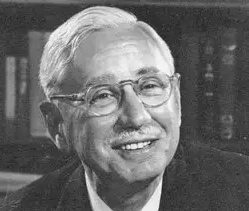
I felt more keenly than before the need of a philosophy that would do justice to the infinite vitality of nature. In the inexhaustible activity of the atom, in the endless resourcefulness of plants, in the teeming fertility of animals, in the hunger and movement of infants, in the laughter and play of children, in the love and devotion of youth, in the restless ambition of fathers and the lifelong sacrifice of mothers, in the undiscourageable researches of scientists and the sufferings of genius, in the crucifixion of prophets and the martyrdom of saints — in all things I saw the passion of life for growth and greatness, the drama of everlasting creation. I came to think of myself, not as a dance and chaos of molecules, but as a brief and minute portion of that majestic process... I became almost reconciled to mortality, knowing that my spirit would survive me enshrined in a fairer mold... and that my little worth would somehow be preserved in the heritage of men. In a measure the Great Sadness was lifted from me, and, where I had seen omnipresent death, I saw now everywhere the pageant and triumph of life.
▼
Source
Transition (1927)
CivilSimian.com created by AxiomaticPanic, CivilSimian, Kalokagathia