
3 months 4 weeks ago
Agesilaus was very fond of his children; and it is reported that once toying with them he got astride upon a reed as upon a horse, and rode about the room; and being seen by one of his friends, he desired him not to speak of it till he had children of his own.
▼
Source
Of Agesilaus the Great

3 months 4 weeks ago
Echoing the Christian faith in free will, humanists hold that human beings are – or may someday become – free to choose their lives. They forget that the self that does the choosing has not itself been chosen.
▼
Source
Beyond the Last Thought: Freud's cigars and the long way round to Nirvana (p. 86)
3 months 4 weeks ago
Suffering becomes beautiful when anyone bears great calamities with cheerfulness, not through insensibility but through greatness of mind.
▼
Source
Widely attributed since the mid to late 19th century, this apparently derives from a gloss or commentary on the following passage from Aristotle's Nicomachean Ethics (c. 325 BC), Book 1, Ch. XI (Bekker No. 1100b.13–14): | ὅμως δὲ καὶ ἐν τούτοις διαλάμπει

3 months 4 weeks ago
Besides, we should never attempt to balance anybody's misery against somebody else's happiness.
▼
Source
pp. 486-487

3 months 4 weeks ago
All his life Alexey Alexandrovitch had lived and worked in official spheres, having to do with the reflection of life. And every time he had stumbled against life itself he had shrunk away from it. Now he experienced a feeling akin to that of a man who, wile calmly crossing a precipice by a bridge, should suddenly discover that the bridge is broken, and that there is a chasm below. That chasm was life itself, the bridge that artificial life in which Alexey Alexandrovitch had lived.
▼
Source
Part II, Chapter 8

3 months 4 weeks ago
Nothing ought to be said or done which could create the impression that unbiased reconsideration of the most elementary premises of philosophy is a merely academic or historical affair.
▼
Source
p. 31

3 months 4 weeks ago
I owed a magnificent day to the Bhagavad Gita. It was the first of books; it was as if an empire spoke to us, nothing small or unworthy, but large, serene, consistent, the voice of an old intelligence which in another age and climate had pondered and thus disposed of the same questions which exercise us.
▼
Source
October 1, 1848

3 months 4 weeks ago
Paradoxically, demands for parity with men's prisons, instead of creating greater educational, vocational, and health opportunities for women prisoners, often have led to more repressive conditions for women. This is not only a consequence of deploying liberal - that is, formalistic - notions of equality, but of, more dangerous, allowing male prisons to function as the punishment norm.
▼
Source
Chapter Four

3 months 4 weeks ago
If you don't want to explode with rage, leave your memory alone, abstain from burrowing there.
3 months 4 weeks ago
In public, as well as in private expences, great wealth may, perhaps, frequently be admitted as an apology for great folly.
▼
Source
Chapter V, p. 563.
3 months 4 weeks ago
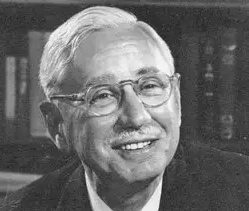
As we are convinced that the real attainment of liberty, of justice, and of peace in the world will be impossible so long as the immense majority of the populations are dispossessed of property, deprived of education and condemned to political and social nonbeing and a de facto if not a de jure slavery, through their state of misery as well as their need to labor without rest or leisure, in producing all the wealth in which the world is glorying today, and receiving in return but a small portion hardly sufficient for their daily bread; As we are convinced that for all these populations, hitherto so terribly maltreated through the centuries, the question of bread is the question of intellectual emancipation, of liberty, and of humanity; As we are convinced that liberty without socialism is privilege, injustice; and that socialism without liberty is slavery and brutality; Now therefore, the League highly proclaims the need for a radical social and economic reform, whose aim shall be the deliverance of the people's labor from the yoke of capital and property, upon a foundation of the strictest justice — not juridical, not theological, not metaphysical, but simply human justice, of positive science and the most absolute liberty.
▼
Source
Variant translation: We are convinced that freedom without Socialism is privilege and injustice, and that Socialism without freedom is slavery and brutality. | As quoted in The Political Philosophy of Bakunin: Scientific Anarchism (1953) edited by Grigori
3 months 4 weeks ago
The news of this barbaric orgy of military sadism was kept from the world for half a year. A belated commission of inquiry was appointed by the Government. A committee appointed by the Indian National Congress made a more through investigation and reported 1,200 killed, and 3,600 wounded. Gen. Dyer was censured by the House of Commons, exonerated by the House of Lords, and was retired on a pension. Thinking this was insufficient the militarists of the Empire raised a fund of $150,000 for him and presented him with a jeweled sword of honor. (source: The Case for India - By Will Durant Simon and Schuster, New York. 1930 p. This book was banned by the British Government. Durant held the view that no part of the world suffered so much poverty andoppression as India did and that this was largely due to British imperialism).

3 months 4 weeks ago
Charity, by which God and neighbor are loved, is the most perfect friendship.
▼
Source
[http://dhspriory.org/thomas/QDdeVirtutibus2.htm#4 Quaestiones disputatae: De caritate] (Disputed Questions: On Charity, c. 1270)

3 months 4 weeks ago
I think that when friendship and perception of kinship ruled everything, no one killed any creature, because people thought the other animals were related to them.
▼
Source
2, 22, 1
3 months 4 weeks ago
Ignorance is not a simple lack of knowledge but an active aversion to knowledge, the refusal to know, issuing from cowardice, pride or laziness of mind.
▼
Source
Principle attributed to Popper by Ryszard Kapiscinski in New York Times obituary, 1995.
3 months 4 weeks ago
Science may fall back on its stupid excuse that science works for science, and that when it has been developed by the scientists it will become accessible to the people also; but art, if it be art, should be accessible to all, and particularly to those for whom it is produced. And the position of our art strikingly arraigns the producers of art for not wishing, not knowing how, and being unable, to serve the people.
3 months 4 weeks ago
Education to perfect gentlemanship, to human excellence, liberal education consists in reminding oneself of human excellence, of human greatness.
▼
Source
“What is liberal education,” p. 6
3 months 4 weeks ago
Of course, he who has put forth his total strength in fit actions, has the richest return of wisdom.
▼
Source
par. 28
3 months 4 weeks ago
every person in this country, from high school to the postgraduate level, should read W. E. B. Du Bois's Black Reconstruction in America. In the 1960s we confronted issues that should have been resolved in the 1860s. And I'm making this point because what happens when 2060 rolls around? Will people still be addressing these same issues?
3 months 4 weeks ago
IV. Every tax ought to be contrived as both to take out and to keep out of the pockets of the people as little as possible, over and above what it brings into the public treasury of the state.
▼
Source
Chapter II, Part II, p. 893.
3 months 4 weeks ago
On the first day of a revolution, he is a perfect treasure; on the second, he ought to be shot.
▼
Source
Marc Caussidière, Préfecture de Police, in early 1848, as quoted in Michael Bakunin (1961) by E.H. Carr, p. 150.
3 months 4 weeks ago
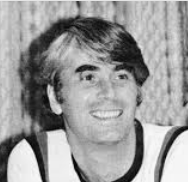
No state more extensive than the minimal state can be justified.
▼
Source
Ch. 10 : A Framework for Utopia; The Framework, p. 297
3 months 4 weeks ago
The whole life of the upper classes is a constant inconsistency. The more delicate a man's conscience is, the more painful this contradiction is to him.
▼
Source
Chapter V, Contradiction Between our Life and our Christian Conscience

3 months 4 weeks ago
To become 'ideologists of the working class' (Lenin), 'organic intellectuals' of the proletariat (Gramsci), intellectuals have to carry out a radical revolution in their ideas: a long, painful and difficult re-education. An endless external and internal struggle.
▼
Source
p. 2
3 months 4 weeks ago
Good bye, proud world! I'm going home; Thou art not my friend; I am not thine.
▼
Source
Good-bye, st. 1
3 months 4 weeks ago
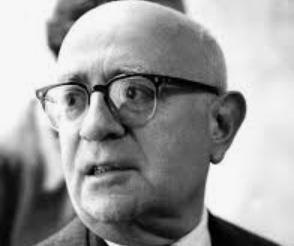
The dressing up and puffing up of the individual erases the lineaments of protest.
▼
Source
p. 283

3 months 4 weeks ago
Truth is the most powerful thing in the world, since even fiction itself must be governed by it, and can only please by its resemblance.
▼
Source
Vol. 1, p. 8; "A Letter Concerning Enthusiasm".
3 months 4 weeks ago
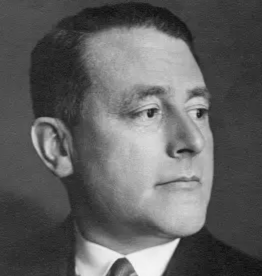
The enemy is not merely any competitor or just any partner of a conflict in general. He is also not the private adversary whom one hates. An enemy exists only when, at least potentially, one fighting collectivity of people confronts a similar collectivity. The enemy is solely the public enemy, because everything that has a relationship to such a collectivity of men, particularly to a whole nation, becomes public by virtue of such a relationship.
3 months 4 weeks ago
Adam Smith’s laws of the market are basically simple. They tell us that the outcome of a certain kind of behavior in a certain social framework will bring about perfectly definite and foreseeable results. Specifically they show us how the drive of individual self-interest in an environment of similarly motivated individuals will result in competition; and they further demonstrate how competition will result in the provision of those goods that society wants, in the quantities that society desires, and at the prices society is prepared to pay. […] But self-interest is only half the picture. It drives men to action. Something else must prevent the pushing of profit-hungry individuals from holding society up to exorbitant ransom: a community activated only by self-interest would be a community of ruthless profiteers. This regulator is competition, the conflict of the self-interested actors on the marketplace. For each man, out to do his best for himself with no thought of social consequences, is faced with a flock of similarly motivated individuals who are engaged in exactly the same pursuit. Hence, each is only too eager to take advantage of his neighbor’s greed. A man who permits his self-interest to run away with him will find that competitors have slipped in to take his trade away; if he charges too much for his wares or if he refuses to pay as much as everybody else for his workers, he will find himself without buyers in the one case and without employees in the other. Thus very much as in The Theory of Moral Sentiments, the selfish motives of men are transmuted by interaction to yield the most unexpected of results: social harmony.
▼
Source
Robert Heilbroner, The Worldly Philosophers 7th ed. (1999), Chapter III. The Wonderful World of Adam Smith
3 months 4 weeks ago
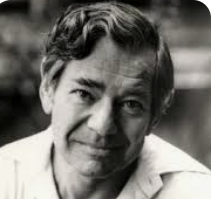
The most obvious failure of organized religions is surely that almost all of them have made a mockery of what their founders taught.
▼
Source
p. 267
3 months 4 weeks ago
Some teachers of mankind — as Plato... the first Christians, the orthodox Muslims, and the Buddhists — have gone so far as to repudiate art. ...[They consider it] so highly dangerous in its power to infect people against their wills, that mankind will lose far less by banishing all art than by tolerating each and every art. ...such people were wrong in repudiating all art, for they denied that which cannot be denied — one of the indispensable means of communication, without which mankind could not exist. ...Now there is only fear, lest we should be deprived of any pleasures art can afford, so any type of art is patronized. And I think the last error is much grosser than the first and that its consequences are far more harmful.

3 months 4 weeks ago
That those who will take his money, without his consent, in the first place, will use it for his further robbery and enslavement, if he presumes to resist their demands in the future.
3 months 4 weeks ago
The world is upheld by the veracity of good men: they make the earth wholesome.
▼
Source
Uses of Great Men
3 months 4 weeks ago
The thesis of the identity of concept and thing is in general the vital nerve of idealist thought, and indeed traditional thought in general. ... Negative dialectics as critique means above all criticism of precisely this claim to identity.
▼
Source
p. 20

3 months 4 weeks ago
To speak falsely is the mark of a slave, but the truth is noble.
▼
Source
to Euphrates, Epp. Apoll. 83
3 months 4 weeks ago
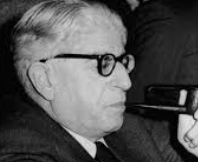
Only an atheist can be a good Christian.
▼
Source
Atheismus im Christentum 1968, english translation: Atheism in Christianity: The Religion of the Exodus and the Kingdom 1972
3 months 4 weeks ago
Today, classical political economy is often identified by contemporary economists with the quantity theory of money and the so-called “doctrine of free trade,” but historically there was in fact a large and variable set of positions on both within the classical orbit. And, in contrast to Marx's characterization of its scope and origins, the beginnings of a systematic classical political economy have been associated first and foremost with the work of the eighteenth-century Scottish philosopher, Adam Smith. In terms of illuminating our understanding of the significance of classical political economy for the history of political thought, its origins are identified with the time period roughly between 1750 and 1867, and with a group of economic thinkers drawing upon and revising Smith's Wealth of Nations as a basis for analyzing the production, distribution, and exchange of commodities in the market of commercial society, and later within industrial capitalism.
▼
Source
Shannon C. Stimson, "Classical Political Economy", in Coole, Diana H.; Gibbons, Michael; Ellis, Elisabeth et al., The encyclopedia of political thought (2014)
3 months 4 weeks ago
The pilot, who was an intelligent man, had listened in silence to the talk till he was asked to speak. Now every one turned to him, and he said: You are all misleading one another, and are yourselves deceived. The sun does not go round the earth, but the earth goes round the sun, revolving as it goes, and turning towards the sun in the course of each twenty-four hours, not only Japan, and the Philippines, and Sumatra where we now are, but Africa, and Europe, and America, and many lands besides. The sun does not shine for some one mountain, or for some one island, or for some one sea, nor even for one earth alone, but for other planets as well as our earth. If you would only look up at the heavens, instead of at the ground beneath your own feet, you might all understand this, and would then no longer suppose that the sun shines for you, or for your country alone. Thus spoke the wise pilot, who had voyaged much about the world, and had gazed much upon the heavens above.
▼
Source
Part VI: The Coffee-House of Surat (1893) Adaptions from the French

3 months 4 weeks ago
No matter how small his portion, let him rejoice in it.
▼
Source
Chapter 2, Section 7, p. 33
3 months 4 weeks ago
The world is his, who has money to go over it.
▼
Source
Wealth

3 months 4 weeks ago
I have very strongly this feeling... that our everyday life is at one and the same time banal, overfamiliar, platitudinous and yet mysterious and extraordinary.
▼
Source
Heidegger and Modern Existentialism (1977), BBC Productions
3 months 4 weeks ago
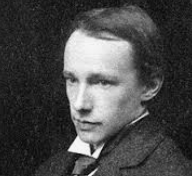
I can prove now, for instance, that two human hands exist. How? By holding up my two hands, and saying, as I make a certain gesture with the right hand, "Here is one hand," and adding, as I make a certain gesture with the left, "and here is another." And if, by doing this, I have proved ipso facto the existence of external things, you will all see that I can also do it now in numbers of other ways: there is no need to multiply examples.
▼
Source
"Proof of an External World," Proceedings of the British Academy 25 (1939).
3 months 4 weeks ago
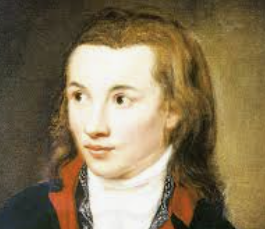
Building worlds is not enough for the deeper urging mind; but a loving heart sates the striving spirit.
▼
Source
Fragment No. 91

3 months 4 weeks ago
The straightening board was created because of warped wood, and the plumb line came into being because of things that are not straight. Rulers are established and ritual and rightness are illuminated because the nature is evil.
▼
Source
Sources of Chinese Tradition (1999), vol. 1, p. 182
3 months 4 weeks ago
The true aim is [...] reaching nature with this deception
▼
Source
page 39-38
3 months 4 weeks ago
Honest work is much better than a mansion.
▼
Source
p. 82
3 months 4 weeks ago
Time is composed of time-atoms, i.e., of many parts, which on account of their short duration, cannot be divided. The Mutakallemim undoubtedly saw how Aristotle proved that time, space, and locomotion are of the same nature. ...They, therefore, knew that if time were continuous and divisible ad infinitum, their assumed atom of space would of necessity likewise be divisible. Similarly, if it were supposed that space were continuous... the time-element... could also be divided. This has been shown by Aristotle in... Acroasis [Aristotelis stagyritae acroases physicae]. ...An hour is, e.g., divided into sixty minutes, the second into sixty parts and so on; at last after ten or more successive divisions by sixty, time-elements are obtained which are not subjected to division, and in fact are indivisible.
3 months 4 weeks ago
The highest compact we can make with our fellow, is, — "Let there be truth between us two forevermore".
▼
Source
Behavior
3 months 4 weeks ago
Synergy is to energy as integration is to differentiation. The word “synergy” means “Behavior of whole systems unpredicted by behavior of any of the systems parts.” Nature is comprehensively synergetic. Since synergy is the only word having that meaning and we have proven experimentally that it is not used by the public, we may conclude that society does not understand nature
3 months 4 weeks ago
The reflected world is the conquest of calm
▼
Source
"Clear Waters, Springtime Waters"
CivilSimian.com created by AxiomaticPanic, CivilSimian, Kalokagathia