
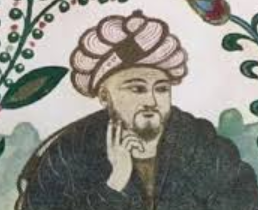
Al-Farabi
Member for
4 months 3 weeksAl-Farabi — The Second Teacher, the Virtuous City, and the Founding of Islamic Philosophy (c. 870–950)
Abu Nasr al-Farabi was a tenth-century philosopher, logician, political theorist, and music theorist — born in the province of Farab in what is now Kazakhstan, educated in Baghdad under Nestorian Christian teachers of Greek philosophy, and known to posterity as "the Second Teacher" (al-Mu'allim al-Thani), with Aristotle being the first — who founded Islamic philosophy as a systematic discipline, transmitted the Platonic and Aristotelian traditions into Arabic, and created the first serious synthesis of Greek political philosophy with Islamic theological and jurisprudential concerns.
Avicenna, Averroes, and Maimonides all acknowledged their debt to him. Leo Strauss made him the hidden center of his account of political philosophy and esoteric writing. He was the indispensable intermediary through whom the philosophical heritage of antiquity reached the medieval Islamic world — and through that world, eventually, the Latin West.
His central concern: how the demands of Greek philosophical reason — with its insistence on demonstration, its account of the good life, its vision of the ideal state — could be reconciled with the claims of Islamic revelation; and how the philosopher could serve a society that was organized around religious law rather than around philosophical education.
The Baghdad Milieu — Philosophy Through Translation
Al-Farabi's philosophical career was shaped by the extraordinary intellectual infrastructure of Abbasid Baghdad — the House of Wisdom and the translation movement that had made Plato, Aristotle, Ptolemy, and Galen available in Arabic for the first time. He studied logic with Abu Bishr Matta ibn Yunus, a Christian Aristotelian scholar, and with Yuhanna ibn Haylan, a Nestorian Christian logician — routes that connected him to the Alexandrian philosophical tradition that had preserved and transmitted Greek learning through the Syriac intermediary.
His commentaries on Aristotle's logic — on the Categories, De Interpretatione, Prior and Posterior Analytics — were so authoritative that Avicenna said he had read the Posterior Analytics forty times without understanding it until he read al-Farabi's commentary. He did not simply transmit Aristotle but reformulated his logic to fit the premises and language of his own Arabic-speaking audience — recognizing that translation required philosophical adaptation, not merely linguistic equivalence.
"Avicenna said he had read the Posterior Analytics forty times without understanding it — until he read al-Farabi's commentary, which opened it to him completely."
The Harmonization of Plato and Aristotle
One of al-Farabi's most philosophically ambitious projects was his attempt to show that Plato and Aristotle were not fundamentally opposed — that their apparent disagreements were either on matters where both were right (approaching the same truth from different angles) or on rhetorical and pedagogical rather than substantive grounds.
His "Harmonization of the Opinions of the Two Sages" argued that the two traditions were ultimately compatible — that Plato's dialectical method and Aristotle's demonstrative logic were complementary tools for approaching the same philosophical truths, and that the apparent conflicts between them were largely artifacts of different modes of presentation for different audiences. This was a philosophically contentious claim — many scholars have found it implausible — but it was strategically important: it meant the Islamic world could inherit both traditions as a unified philosophical heritage rather than having to choose between them.
His "Philosophy of Plato and Aristotle" — in three parts covering the Attainment of Happiness, the Philosophy of Plato, and the Philosophy of Aristotle — provided the most systematic account available of Greek philosophy as a whole for Arabic-speaking readers, and shaped how subsequent Islamic philosophers understood the classical tradition.
"Al-Farabi is not simply the bridge for carrying over the thought of Aristotle and Plato into Western thought but a man of great originality — a man of great subtlety of thought who discerns the significance of Plato unmixed with Neoplatonic philosophy."
The Virtuous City — Philosophy and Political Theology
Al-Farabi's most original philosophical achievement was his systematic political philosophy — developed in "The Opinions of the People of the Virtuous City," "The Political Regime," and the "Selected Aphorisms" — which created a framework for thinking about the ideal state in terms that were simultaneously Platonic and Islamic.
His account of the virtuous city began with Aristotelian social anthropology: no individual could achieve perfection alone — human beings required community and cooperation to develop their intellectual and moral capacities. The good city was one organized to promote this development, with a hierarchical social structure in which each person contributed according to their capacities and received according to their needs.
The ruler of the virtuous city was, ideally, a philosopher-prophet — someone who combined the philosopher's access to truth through demonstrative reason with the prophet's ability to convey that truth in the symbolic and imaginative language that ordinary people could receive and act on. This was al-Farabi's most original contribution to political theory: the claim that religion was the philosopher's tool for governing the non-philosophical majority — that revelation was, in effect, philosophy translated into images and narratives accessible to those who could not follow demonstrations.
"The philosopher gets knowledge from the mind whereas the prophet gets it through Gabriel — but both are receiving the same truth through different channels, and the philosopher's task is to govern with that truth as his foundation."
The Imperfect Cities — A Taxonomy of Political Failure
Against the ideal of the virtuous city, al-Farabi developed a typology of imperfect cities — communities organized around the wrong ends, falling short of the virtuous city in different ways.
The city of ignorance pursued wealth, power, pleasure, or honor rather than virtue and knowledge. The city of wickedness had once known the truth but its rulers and citizens had deliberately abandoned it. The city of error accepted false beliefs about God and happiness and organized social life around those false beliefs. The city of weeds was nominally a virtuous city but contained, beneath its surface, citizens who pursued their private ends at the expense of the common good.
This taxonomy was more than descriptive: it was a political diagnostic tool. Al-Farabi was analyzing the conditions under which communities could fail to achieve their proper ends — and his analysis was relevant to the actual political situation of the Islamic world in his time, riven by conflicts between Abbasid caliphs and independent rulers, between philosophical rationalism and theological orthodoxy, between the ideal of a unified Islamic community and the fragmented reality of its political life.
"To accept something on mere presumption, and likewise to fail to investigate it, may cover over, blind, and lead astray."
Religion, Philosophy, and the Question of Esotericism
Al-Farabi's relationship to religion is one of the most contested questions in the scholarship on Islamic philosophy — and the debate is philosophically important.
His position, as scholars have reconstructed it: religion (milla) and philosophy (falsafa) address the same truths but at different epistemological levels. Philosophy accesses truth through demonstration. Religion accesses it through symbols, narratives, and persuasion — through the imaginative representation of truths that the majority of people cannot reach by reasoning alone. The philosopher therefore stands in a particular relationship to religion: he understands its symbolic content from the inside, knowing what the symbols represent, while also recognizing that the majority requires the symbolic form to live well.
Leo Strauss made this aspect of al-Farabi's thought central to his account of esotericism — arguing that al-Farabi exemplified the art of writing between the lines, concealing his most philosophically radical positions behind surfaces that were acceptable to theological orthodoxy. Whether Strauss's reading is correct remains disputed, but the underlying question it raises is genuine: whether al-Farabi believed that philosophy and religion were ultimately compatible or whether religion was, for him, a useful fiction for governing those who could not reason their way to truth.
"Al-Farabi is neither a Muslim nor a Platonist or Aristotelian simply, but an original thinker who first explored the questions raised by the intersection of Islam and classical philosophy — and who left the answers deliberately open."
Legacy — The Foundation That Made Everything Else Possible
Al-Farabi died in Damascus around 950 — having spent his later years under the patronage of the Hamdanid ruler Sayf al-Dawla in Aleppo, where he is said to have lived simply despite the brilliant intellectual court that surrounded him. The biographical record is thin and unreliable — all surviving sources date from at least three centuries after his death — but his philosophical legacy is undisputed.
He was the philosopher who made Islamic philosophy possible — who created the conceptual infrastructure through which Avicenna, Averroes, and Maimonides could pursue their more elaborate syntheses. His transmission of Aristotelian logic was authoritative enough to shape how all subsequent Islamic thinkers approached philosophical argument. His political philosophy provided the framework within which the relationship between philosopher and prophet, reason and revelation, was debated for centuries.
On CivSim he belongs alongside al-Ghazali, Avicenna, and Maimonides — the great thinkers of medieval Islamic and Jewish philosophy who pressed most seriously on the question of how philosophical reason and religious revelation could coexist within a single intellectual tradition. His vision of the virtuous city — organized to enable every citizen to develop their intellectual and moral capacities — is one of the earliest sustained philosophical arguments for what Universal Humanism would call the conditions of genuine human flourishing: a community designed not merely to sustain life but to make the best human life possible.
"The purpose of the virtuous city is to enable every citizen to achieve the highest happiness of which they are capable — and a city that falls short of this has fallen short of its own nature."
CivilSimian.com created by AxiomaticPanic, CivilSimian, Kalokagathia