
5 months 1 week ago
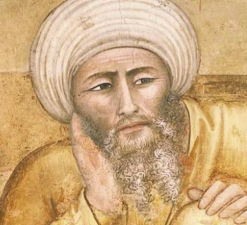
Come the Day of Judgment, some believe that the body will be different from our present body. This is only transient, that will be eternal. For this also there are religious arguments.
▼
Source
Pat 5: The Day of Judgment; Opening sentence
5 months 1 week ago
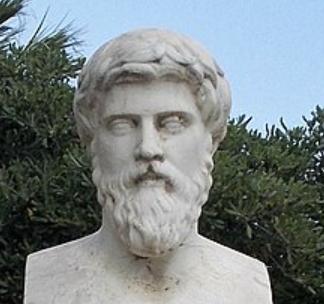
Dionysius the Elder, being asked whether he was at leisure, he replied, "God forbid that it should ever befall me!"
▼
Source
32 Dionysius

5 months 1 week ago
Not everything in religion is precious or deserving of reverence. There is an inheritance of anthropocentrism, the ugly fantasy that the Earth exists to serve humans, which most secular humanists share. There is the claim of religious authorities, also made by atheist regimes, to decide how people can express their sexuality, control their fertility and end their lives, which should be rejected categorically. Nobody should be allowed to curtail freedom in these ways, and no religion has the right to break the peace.
5 months 1 week ago
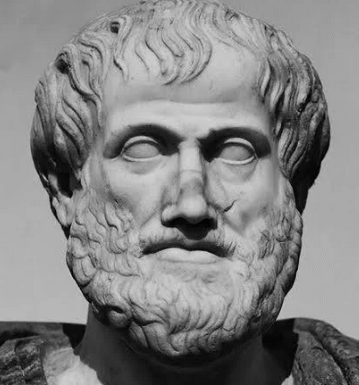
Everything that depends on the action of nature is by nature as good as it can be, and similarly everything that depends on art or any rational cause, and especially if it depends on the best of all causes. To entrust to chance what is greatest and most noble would be a very defective arrangement.
▼
Source
Book I, 1099b.22: Quoted in Oxford Dictionary of Scientific Quotations (2005), 21:8.

5 months 1 week ago
When I speak of reason or rationalism, all I mean is the conviction that we can learn through criticism of our mistakes and errors, especially through criticism by others, and eventually also through self-criticism. A rationalist is simply someone for whom it is more important to learn than to be proved right; someone who is willing to learn from others — not by simply taking over another's opinions, but by gladly allowing others to criticize his ideas and by gladly criticizing the ideas of others. The emphasis here is on the idea of criticism or, to be more precise, critical discussion. The genuine rationalist does not think that he or anyone else is in possession of the truth; nor does he think that mere criticism as such helps us achieve new ideas. But he does think that, in the sphere of ideas, only critical discussion can help us sort the wheat from the chaff. He is well aware that acceptance or rejection of an idea is never a purely rational matter; but he thinks that only critical discussion can give us the maturity to see an idea from more and more sides and to make a correct judgement of it.
▼
Source
"On Freedom" in All Life is Problem Solving (1999)
5 months 1 week ago
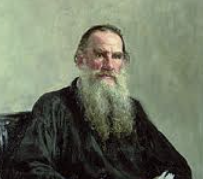
Men think it right to eat animals, because they are led to believe that God sanctions it. This is untrue. No matter in what books it may be written that it is not sinful to slay animals and to eat them, it is more clearly written in the heart of man than in any books that animals are to be pitied and should not be slain any more than human beings. We all know this if we do not choke the voice of our conscience.
▼
Source
The Pathway of Life: Teaching Love and Wisdom (posthumous), Part I, International Book Publishing Company, New York, 1919, p. 68

5 months 1 week ago
Nothing ought to be said or done which could create the impression that unbiased reconsideration of the most elementary premises of philosophy is a merely academic or historical affair.
▼
Source
p. 31

5 months 1 week ago
Paradoxically, demands for parity with men's prisons, instead of creating greater educational, vocational, and health opportunities for women prisoners, often have led to more repressive conditions for women. This is not only a consequence of deploying liberal - that is, formalistic - notions of equality, but of, more dangerous, allowing male prisons to function as the punishment norm.
▼
Source
Chapter Four

5 months 1 week ago
No greater mistake can be made than to imagine that what has been written latest is always the more correct; that what is written later on is an improvement on what was written previously; and that every change means progress. Men who think and have correct judgment, and people who treat their subject earnestly, are all exceptions only. Vermin is the rule everywhere in the world: it is always at hand and busily engaged in trying to improve in its own way upon the mature deliberations of the thinkers.

5 months 1 week ago
Criticism is a misconception: we must read not to understand others but to understand ourselves.
5 months 1 week ago
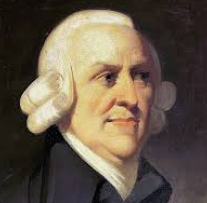
Corn is a necessary, silver is only a superfluity.
▼
Source
Chapter XI, Part III, (First Period) p. 223.
5 months 1 week ago
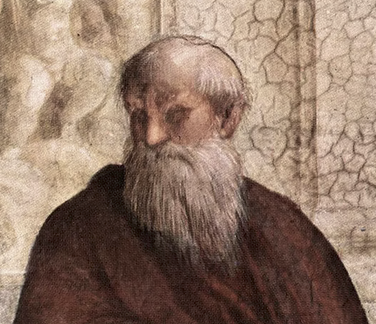
It is now time, leaving every object of sense far behind, to contemplate, by a certain ascent, a beauty of a much higher order; a beauty not visible to the corporeal eye, but alone manifest to the brighter eye of the soul, independent of all corporeal aid. However, since, without some previous perception of beauty it is impossible to express by words the beauties of sense, but we must remain in the state of the blind, so neither can we ever speak of the beauty of offices and sciences, and whatever is allied to these, if deprived of their intimate possession. Thus we shall never be able to tell of virtue's brightness, unless by looking inward we perceive the fair countenance of justice and temperance, and are convinced that neither the evening nor morning star are half so beautiful and bright. But it is requisite to perceive objects of this kind by that eye by which the soul beholds such real beauties. Besides it is necessary that whoever perceives this species of beauty, should be seized with much greater delight, and more vehement admiration, than any corporeal beauty can excite; as now embracing beauty real and substantial. Such affections, I say, ought to be excited about true beauty, as admiration and sweet astonishment; desire also and love and a pleasant trepidation. For all souls, as I may say, are affected in this manner about invisible objects, but those the most who have the strongest propensity to their love; as it likewise happens about corporeal beauty; for all equally perceive beautiful corporeal forms, yet all are not equally excited, but lovers in the greatest degree.
5 months 1 week ago
Cicero said loud-bawling orators were driven by their weakness to noise, as lame men to take horse.
▼
Source
Cicero
5 months 1 week ago
For those who live inside a myth, it seems a self-evident fact. Human progress is a fact of this kind. If you accept it you have a place in the grand march of humanity. Humankind is, of course, not marching anywhere. ‘Humanity’ is a fiction composed from billions of individuals for each of whom life is singular and final. But the myth of progress is extremely potent. When it loses its power those who have lived by it are – as Conrad put it, describing Kayerts and Carlier – ‘like those lifelong prisoners who, liberated after many years, do not know what use to make of their freedoms’. When faith in the future is taken from them, so is the image they have of themselves. If they then opt for death, it is because without that faith they can no longer make sense of living.
▼
Source
An Old Chaos: The Call of Progress (pp. 6-7)
5 months 1 week ago
I have gained this by philosophy ... I do without being ordered what some are constrained to do by their fear of the law.
5 months 1 week ago
Do not allow your dreams of a beautiful world to lure you away from the claims of men who suffer here and now. Our fellow men have a claim to our help; no generation must be sacrificed for the sake of future generations, for the sake of an ideal of happiness that may never be realised.
5 months 1 week ago
Love hinders death. Love is life. All, everything that I understand, I understand only because I love. Everything is, everything exists, only because I love. Everything is united by it alone. Love is God, and to die means that I, a particle of love, shall return to the general and eternal source.
▼
Source
Thoughts of Prince Andrew Bk XII, Ch. 16
5 months 1 week ago
Education to perfect gentlemanship, to human excellence, liberal education consists in reminding oneself of human excellence, of human greatness.
▼
Source
“What is liberal education,” p. 6

5 months 1 week ago
Children are all foreigners.
▼
Source
September 25, 1839
5 months 1 week ago
every person in this country, from high school to the postgraduate level, should read W. E. B. Du Bois's Black Reconstruction in America. In the 1960s we confronted issues that should have been resolved in the 1860s. And I'm making this point because what happens when 2060 rolls around? Will people still be addressing these same issues?
5 months 1 week ago
Beware of thinkers whose minds function only when they are fueled by a quotation.
5 months 1 week ago
What is prudence in the conduct of every private family, can scarce be folly in that of a great kingdom.
▼
Source
Chapter II, p. 490.
5 months 1 week ago
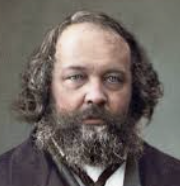
To revolt is a natural tendency of life. Even a worm turns against the foot that crushes it. In general, the vitality and relative dignity of an animal can be measured by the intensity of its instinct to revolt.
▼
Source
[https://www.marxists.org/reference/archive/bakunin/works/1872/karl-marx.htm "On the International Workingmen's Association and Karl Marx"] (1872)
5 months 1 week ago
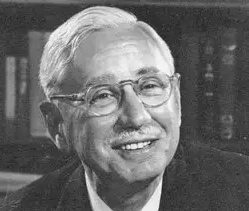
...Lucretius talked epicureanism stoically (like Heine’s Englishman taking his pleasures sadly), and concluded on his stren gospel of pleasure by committing suicide. His noble epic “on the Nature of Things", follows Epicurus in damning pleasure with faint praise. Almost contemporary with Caesar and Pompey, he lived in the midst of turmoil and alarms; his nervous pen is forever inditing prayers to tranquility and peace. One pictures him as a timid soul whose youth had been darkened with religious fears; for he never tires of telling his readers that there's no hell, except here, and there are no gods except gentlemanly ones who live in a garden of Epicurus in the clouds, and never intrude in the affairs of men.
5 months 1 week ago
How we come to have the world-views we do is an interesting question. No doubt reason plays a part, but human needs for meaning and purpose are usually more important. At times personal taste may be what decides the issue. There is nothing to say that, when all the work of reason is done, only one view of the world will remain. There may be many that fit everything that can be known. In that case you might as well choose the view of the world you find most interesting or beautiful. Adopting a world-view is more like selecting a painting to furnish a room than testing a scientific theory. The test is how it fits with your life.
▼
Source
Freedom for Über-Marionettes: What Science Won't Tell You (p. 150)
5 months 1 week ago
I... believe in the rationalist tradition of a commonwealth of learning, and in the urgent need to preserve this tradition.
5 months 1 week ago
Several times I asked myself, "Can it be that I have overlooked something, that there is something which I have failed to understand? Is it not possible that this state of despair is common to everyone?" And I searched for an answer to my questions in every area of knowledge acquired by man. For a long time I carried on my painstaking search; I did not search casually, out of mere curiosity, but painfully, persistently, day and night, like a dying man seeking salvation. I found nothing.
▼
Source
Pt. I, ch. 5

5 months 1 week ago
To become 'ideologists of the working class' (Lenin), 'organic intellectuals' of the proletariat (Gramsci), intellectuals have to carry out a radical revolution in their ideas: a long, painful and difficult re-education. An endless external and internal struggle.
▼
Source
p. 2
5 months 1 week ago
Beauty is the mark God sets upon virtue.
▼
Source
Beauty

5 months 1 week ago
Truth is the most powerful thing in the world, since even fiction itself must be governed by it, and can only please by its resemblance.
▼
Source
Vol. 1, p. 8; "A Letter Concerning Enthusiasm".
5 months 1 week ago
As Cioran correctly points out, a principal danger of being overcivilized is that one all too easily relapses, out of sheer exhaustion and the unsatisfied need to be "stimulated," into a vulgar and passive barbarism. Thus, "the man who unmasks his fictions" through an indiscriminate pursuit of the lucidity that is promoted by modern liberal culture "renounces his own resources and, in a sense, himself. Consequently, he will accept other fictions which will deny him, since they will not have cropped up from his own depth." There, he concludes, "no man concerned with his own equilibrium may exceed a certain degree of lucidity and analysis."
▼
Source
Susan Sontag, "'Thinking against oneself’: reflections on Cioran," Styles of Radical Will (New York: 1966), p. 85
5 months 1 week ago
The essence of liberalism is negotiation, a cautious half measure, in the hope that the definitive dispute, the decisive bloody battle, can be transformed into a parliamentary debate and permit the decision to be suspended forever in an everlasting discussion.
5 months 1 week ago
That a joint stock company should be able to carry on successfully any branch of foreign trade, when private adventurers can come into any sort of open and fair competition with them, seems contrary to all experience.
▼
Source
Chapter I, Part III, Article I, p. 810.
5 months 1 week ago
Nothing, in fact, is as universal or as ancient as the iniquitous and absurd; truth and justice, on the contrary, are the least universal, the youngest features in the development of human society.
5 months 1 week ago
Wisdom, if it were young, would cherish love, nursing it with devotion, deepening it with sacrifice, vitalizing with parentage, making all things subordinate to it till the end. Even though it consumes us in its service and overwhelms us with tragedy, even though it breaks us down with separations, let it be first. How can it matter what price we pay for love?
▼
Source
Ch. 2 : On Youth

5 months 1 week ago
To become like God is the ultimate end of all.
5 months 1 week ago
Our main conclusions about the state are that a minimal state, limited, to the narrow functions of protection against force, theft, fraud, enforcement of contracts, and so on, is justified, but any more extensive state will violate persons' rights not to be forced to do certain things, and is unjustified; and that the minimal state is inspiring as well as right.
▼
Source
Preface, p. ix
5 months 1 week ago
I know—as we all do—very little of the practice and the spoken and written doctrine of former times on the subject of non-resistance to evil. I knew what had been said on the subject by the fathers of the Church—Origen, Tertullian, and others—I knew too of the existence of some so-called sects of Mennonites, Herrnhuters, and Quakers, who do not allow a Christian the use of weapons, and do not enter military service; but I knew little of what had been done by these so-called sects toward expounding the question.
▼
Source
Preface

5 months 1 week ago
That those who will take his money, without his consent, in the first place, will use it for his further robbery and enslavement, if he presumes to resist their demands in the future.
5 months 1 week ago
It will never make any difference to a hero what the laws are. His greatness will shine and accomplish itself unto the end, whether they second him or not. If he have earned his bread by drudgery, and in the narrow and crooked ways which were all an evil law had left him, he will make it at least honorable by his expenditure. Of the past he will take no heed; for its wrongs he will not hold himself responsible: he will say, All the meanness of my progenitors shall not bereave me of the power to make this hour and company fair and fortunate. Whatsoever streams of power and commodity flow to me, shall of me acquire healing virtue, and become fountains of safety. Cannot I too descend a Redeemer into nature? Whosoever hereafter shall name my name, shall not record a malefactor, but a benefactor in the earth. If there be power in good intention, in fidelity, and in toil, the north wind shall be purer, the stars in heaven shall glow with a kindlier beam, that I have lived. I am primarily engaged to myself to be a public servant of all the gods, to demonstrate to all men that there is intelligence and good will at the heart of things, and ever higher and yet higher leadings. These are my engagements; how can your law further or hinder me in what I shall do to men? On the other hand, these dispositions establish their relations to me. Wherever there is worth, I shall be greeted. Wherever there are men, are the objects of my study and love. Sooner of later all men will be my friends, and will testify in all methods the energy of their regard. I cannot thank your law for my protection. I protect it. It is not in its power to protect me. It is my business to make myself revered. I depend on my honor, my labor, and my dispositions for my place in the affections of mankind, and not on any conventions or parchments of yours.
5 months 1 week ago
Both are torn halves of an integral freedom, to which however they do not add up.
▼
Source
[http://www.scribd.com/doc/11510904/Adorno-Letters-to-Walter-Benjamin On high culture and popular culture, in a letter] to Walter Benjamin (18 March 1936)

5 months 1 week ago
To speak falsely is the mark of a slave, but the truth is noble.
▼
Source
to Euphrates, Epp. Apoll. 83
5 months 1 week ago
An excellent digest of all that is valuable in former Oeconomical writers with many valuable corrective Observations.
▼
Source
Edmund Burke, remark on The Wealth of Nations as recorded by Dugald Stewart (8 April 1784), quoted in Ian Simpson Ross, The Life of Adam Smith (1995; 2nd ed. 2010), p. 376
5 months 1 week ago
One free man will say with truth what he thinks and feels amongst thousands of men who by their acts and words attest exactly the opposite. It would seem that he who sincerely expressed his thought must remain alone, whereas it generally happens that every one else, or the majority at least, have been thinking and feeling the same things but without expressing them. And that which yesterday was the novel opinion of one man, to-day becomes the general opinion of the majority. And as soon as this opinion is established, immediately by imperceptible degrees, but beyond power of frustration, the conduct of mankind begins to alter. Whereas at present, every man, even, if free, asks himself, "What can I do alone against all this ocean of evil and deceit which overwhelms us? Why should I express my opinion? Why indeed possess one? It is better not to reflect on these misty and involved questions. Perhaps these contradictions are an inevitable condition of our existence. And why should I struggle alone with all the evil in the world? Is it not better to go with the stream which carries me along ? If anything can be done, it must be done not alone but in company with others." And leaving the most powerful of weapons — thought and its expression — which move the world, each man employs the weapon of social activity, not noticing that every social activity is based on the very foundations against which he is bound to fight, and that upon entering the social activity which exists in our world every man is obliged, if only in part, to deviate from the truth and to make concessions which destroy the force of the powerful weapon which should assist him in the struggle. It is as if a man, who was given a blade so marvelously keen that it would sever anything, should use its edge for driving in nails. We all complain of the senseless order of life, which is at variance with our being, and yet we refuse to use the unique and powerful weapon within our hands — the consciousness of truth and its expression; but on the contrary, under the pretext of struggling with evil, we destroy the weapon, and sacrifice it to the exigencies of an imaginary conflict'.
▼
Source
Ch. 17

5 months 1 week ago
No matter how small his portion, let him rejoice in it.
▼
Source
Chapter 2, Section 7, p. 33
5 months 1 week ago
Though thou loved her as thyself, As a self of purer clay, Tho' her parting dims the day, Stealing grace from all alive, Heartily know, When half-gods go, The gods arrive.
▼
Source
Give All to Love, st. 4
5 months 1 week ago
The more reified the world becomes, the thicker the veil cast upon nature, the more the thinking weaving that veil in its turn claims ideologically to be nature, primordial experience.
▼
Source
p. 7

5 months 1 week ago
I have very strongly this feeling... that our everyday life is at one and the same time banal, overfamiliar, platitudinous and yet mysterious and extraordinary.
▼
Source
Heidegger and Modern Existentialism (1977), BBC Productions
5 months 1 week ago
It appears... that a work similar in its object and general conception to that of Adam Smith, but adapted to the more extended knowledge and improved ideas of the present age, is the kind of contribution which Political Economy at present requires. The Wealth of Nations is in many parts obsolete, and in all, imperfect. Political Economy... has grown up almost from infancy since the time of Adam Smith; and the philosophy of society... has advanced many steps beyond the point at which he left it.
▼
Source
John Stuart Mill, ' (1848) Preface
5 months 1 week ago
In Nekhludoff, as in all people, there were two beings; one spiritual, who sought only such happiness for himself as also benefited others; and the animal being, seeking his own happiness for the sake of which he is willing to sacrifice that of the world.
▼
Source
Ch. 14
CivilSimian.com created by AxiomaticPanic, CivilSimian, Kalokagathia