

5 months 1 week ago
Time is composed of time-atoms, i.e., of many parts, which on account of their short duration, cannot be divided. The Mutakallemim undoubtedly saw how Aristotle proved that time, space, and locomotion are of the same nature. ...They, therefore, knew that if time were continuous and divisible ad infinitum, their assumed atom of space would of necessity likewise be divisible. Similarly, if it were supposed that space were continuous... the time-element... could also be divided. This has been shown by Aristotle in... Acroasis [Aristotelis stagyritae acroases physicae]. ...An hour is, e.g., divided into sixty minutes, the second into sixty parts and so on; at last after ten or more successive divisions by sixty, time-elements are obtained which are not subjected to division, and in fact are indivisible.

5 months 1 week ago
Solvency is maintained by means of the national debt, on the principle, "If you will not lend me the money, how can I pay you?"
▼
Source
Ability
5 months 1 week ago
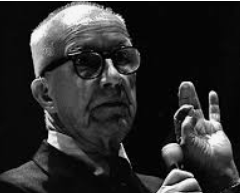
Synergy is to energy as integration is to differentiation. The word “synergy” means “Behavior of whole systems unpredicted by behavior of any of the systems parts.” Nature is comprehensively synergetic. Since synergy is the only word having that meaning and we have proven experimentally that it is not used by the public, we may conclude that society does not understand nature
5 months 1 week ago
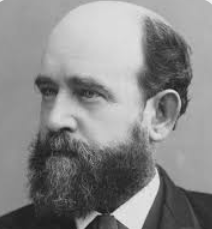
This strange and unnatural spectacle of large numbers of willing men who cannot find employment is enough to suggest the true cause to whosoever can think consecutively. For, though custom has dulled us to it, it is a strange and unnatural thing that men who wish to labor, in order to satisfy their wants, cannot find the opportunity — as, since labor is that which produces wealth, the man who seeks to exchange labor for food, clothing, or any other form of wealth, is like one who proposes to give bullion for coin, or wheat for flour. We talk about the supply of labor and the demand for labor, but, evidently, these are only relative terms. The supply of labor is everywhere the same — two hands always come into the world with one mouth, twenty-one boys to every twenty girls; and the demand for labor must always exist as long as men want things which labor alone can procure. We talk about the "want of work," but, evidently, it is not work that is short while want continues; evidently, the supply of labor cannot be too great, nor the demand for labor too small, when people suffer for the lack of things that labor produces. The real trouble must be that supply is somehow prevented from satisfying demand, that somewhere there is an obstacle which prevents labor from producing the things that laborers want. Take the case of any one of these vast masses of unemployed men, to whom, though he never heard of Malthus, it today seems that there are too many people in the world. In his own wants, in the needs of his anxious wife, in the demands of his half-cared-for, perhaps even hungry and shivering children, there is demand enough for labor, Heaven knows! In his own willing hands is the supply. Put him on a solitary island, and though cut off from all the enormous advantages which the co-operation, combination, and machinery of a civilized community give to the productive powers of man yet his two hands can fill the mouths and keep warm the backs that depend upon them. Yet where productive power is at its highest development they cannot. Why? Is it not because in the one case he has access to the material and forces of nature, and in the other this access is denied? Is it not the fact that labor is thus shut off from nature which can alone explain the state of things that compels men to stand idle who would willingly supply their wants by their labor? The proximate cause of enforced idleness with one set of men may be the cessation of demand on the part of other men for the particular things they produce, but trace this cause from point to point, from occupation to occupation, and you will find that enforced idleness in one trade is caused by enforced idleness in another, and that the paralysis which produces dullness in all trades cannot be said to spring from too great a supply of labor or too small a demand for labor, but must proceed from the fact that supply cannot meet demand by producing the things which satisfy want and are the object of labor.
5 months 1 week ago
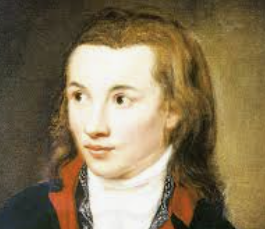
Every stage of education begins with childhood. That is why the most educated person on earth so much resembles a child.
▼
Source
“Miscellaneous Observations,” Philosophical Writings, M. Stolijar, trans. (Albany: 1997) #48
5 months 1 week ago
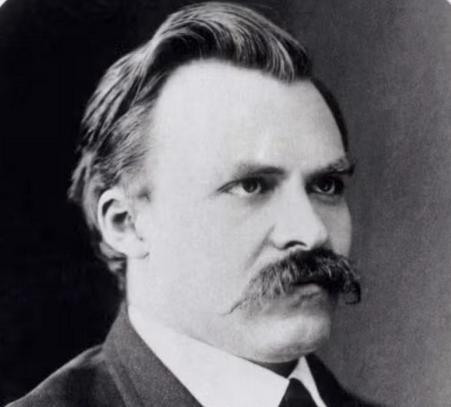
Style ought to prove that one believes in an idea; not only that one thinks it but also feels it.
▼
Source
Letter to Lou Andreas-Salomé (August 1881), in Salomé's biography of Nietzsche, tr. Siegfried Mandel (1988)

5 months 1 week ago
When an individual passes from one period of life to another a time comes when he cannot go on in senseless activity and excitement as before, but has to understand that although he has out-grown what before used to direct him, this does not mean that he must live without any reasonable guidance, but rather that he must formulate for himself an understanding of life corresponding to his age, and having elucidated it must be guided by it. And in the same way a similar time must come in the growth and development of humanity.
▼
Source
VI
5 months 1 week ago
It is of great advantage that man should know his station, and not imagine that the whole universe exists only for him. We hold that the universe exists because the Creator wills it so; that mankind is low in rank as compared with the uppermost portion of the universe, viz., with the spheres and the stars; but, as regards the angels, there cannot be any real comparison between man and angels, although man is the highest of all beings on earth; i.e., of all the beings formed of the four elements.
▼
Source
Ch.12
5 months 1 week ago
Bad times have a scientific value. [...] We learn geology the morning after the earthquake, on ghastly diagrams of cloven mountains, upheaved plains, and the dry bed of the sea.
▼
Source
Considerations by the Way
5 months 1 week ago
Synergy means behavior of whole systems unpredicted by the behavior of their parts taken separately.
▼
Source
[http://www.rwgrayprojects.com/synergetics/s01/p0100.html 101.00]
5 months 1 week ago
I care nothing for creeds. I am not concerned with any one's religious belief. But I would have men think for themselves. If we do not, we can only abandon one superstition to take up another, and it may be a worse one. It is as bad for a man to think that he can know nothing as to think he knows all. There are things which it is given to all possessing reason to know, if they will but use that reason. And some things it may be there are, that — as was said by one whom the learning of the time sneered at, and the high priests persecuted, and polite society, speaking through the voice of those who knew not what they did, crucified — are hidden from the wise and prudent and revealed unto babes.
▼
Source
Conclusion : The Moral of this Examination

5 months 1 week ago
I make this chief distinction between religion and superstition, that the latter is founded on ignorance, the former on knowledge; this, I take it, is the reason why Christians are distinguished from the rest of the world, not by faith, nor by charity, nor by the other fruits of the Holy Spirit, but solely by their opinions, inasmuch as they defend their cause, like everyone else, by miracles, that is by ignorance, which is the source of all malice; thus they turn a faith, which may be true, into superstition.
▼
Source
Letter 21 (73) to Henry Oldenburg , November (1675)
5 months 1 week ago
Now to Some it appears not at all worth while to follow out the endless divisions of Nature; and moreover a dangerous undertaking, without fruit and issue. As we can never reach, say they, the absolutely smallest grain of material bodies, never find their simplest compartments, since all magnitude loses itself, forwards and backwards, in infinitude; so likewise is it with the species of bodies and powers; here too one comes on new species, new combinations, new appearances, even to infinitude. These seem only to stop, continue they, when our diligence tires; and so it is spending precious time with idle contemplations and tedious enumerations; and this becomes at last a true delirium, a real vertigo over the horrid Deep
5 months 1 week ago
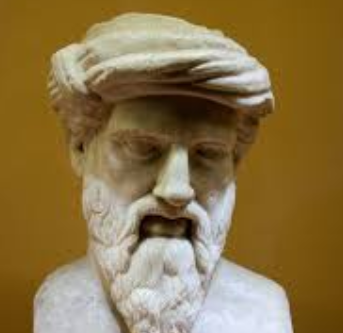
Friends are as companions on a journey, who ought to aid each other to persevere in the road to a happier life.
▼
Source
As quoted in Gems of Thought: Being a Collection of More Than a Thousand Choice Selections, Or Aphorisms, from Nearly Four Hundred and Fifty Different Authors, and on One Hundred and Forty Different Subjects (1888). p. 97 by Charles Northend
5 months 1 week ago
The states in which we infuse a transfiguration and a fullness into things and poetize about them until they reflect back our fullness and joy in life...three elements principally: sexuality, intoxication and cruelty — all belonging to the oldest festal joys.
▼
Source
Sec. 801 (Notebook W II 1. Fall 1887, KGW VIII, 2.57-8, KSA 12.393-4)
5 months 1 week ago
If the world could write by itself, it would write like Tolstoy.
▼
Source
Isaak Babel, as quoted in The Literary 100 : A Ranking of the Most Influential Novelists, Playwrights, and Poets of All Time (2009) edited by Daniel S. Burt, Infobase Publishing, p. 15
5 months 1 week ago
In short, the opinion of Aristotle is this: Everything is the result of management which is constant, which does not come to an end and does not change any of its properties, as e.g., the heavenly beings, and everything which continues according to a certain rule... But that which is not constant, and does not follow a certain rule... is due to chance and not to management; it is in no relation to Divine Providence. Aristotle holds that it is even impossible to ascribe to Providence that management of these things. ...It is the belief of those who turned away from our Law and said: "God hath forsaken the earth." (Ezek. ix. 9)
▼
Source
Ch.17
5 months 1 week ago
Fear not, then, thou child infirm, There's no god dare wrong a worm.
▼
Source
Compensation, st. 2
5 months 1 week ago
It is a matter of converting the high technology from weaponry to livingry. The essence of livingry is human-life advantaging and environment controlling. With the highest aeronautical and engineering facilities of the world redirected from weaponry to livingry production, all humanity would have the option of becoming enduringly successful.
5 months 1 week ago
A special kind of beauty exists which is born in language, of language, and for language.
▼
Source
A Retrospective Glance at the Lifework of a Master of Books

5 months 1 week ago
The general properties and chemical activities of potassium and sodium are so very similar that as a matter of commercial production that metal which can be most economically obtained is necessarily the one most largely manufactured, and of the two that metal is sodium. To-day, sodium is made by thousands of tons, and by a process which in principle is identical with that by which it was first made by Davy, i.e., by the of fused caustic soda.
5 months 1 week ago
When we speak of the aim and Art observable in Shakespeare's works, we must not forget that Art belongs to Nature; that it is, so to speak, self-viewing, self-imitating, self-fashioning Nature. The Art of a well-developed genius is far different from the Artfulness of the Understanding, of the merely reasoning mind. Shakspeare was no calculator, no learned thinker; he was a mighty, many-gifted soul, whose feelings and works, like products of Nature, bear the stamp of the same spirit; and in which the last and deepest of observers will still find new harmonies with the infinite structure of the Universe; concurrences with later ideas, affinities with the higher powers and senses of man. They are emblematic, have many meanings, are simple and inexhaustible, like products of Nature; and nothing more unsuitable could be said of them than that they are works of Art, in that narrow mechanical acceptation of the word.
5 months 1 week ago
Know that death comes to everyone, and that wealth will sometimes be acquired, sometimes lost. Whatever griefs mortals suffer by divine chance, whatever destiny you have, endure it and do not complain. But it is right to improve it as much as you can, and remember this: Fate does not give very many of these griefs to good people.
▼
Source
As quoted in Divine Harmony: The Life and Teachings of Pythagoras by John Strohmeier and Peter Westbrook. (1999)
5 months 1 week ago
Most people are not seeking truth; they are searching for comfort in illusions.
5 months 1 week ago
Anna Karenina
5 months 1 week ago
After having explained this division, I contend that no intelligent person can assume that any of the actions of God can be vain, purposeless, or unimportant. According to our view and the view of all that follow the Law of Moses, all actions of God are "exceedingly good."
▼
Source
Ch.25
5 months 1 week ago
Everything in the universe goes by indirection. There are no straight lines.
▼
Source
Works and Days
5 months 1 week ago
I do know that technologically humanity now has the opportunity, for the first time in its history, to operate our planet in such a manner as to support and accommodate all humanity at a substantially more advanced standard of living than any humans have ever experienced.

5 months 1 week ago
Likewise, they call it "Chaos," which is Hesiod's first generator, because Chaos gives rise to everything else, as the monad does. It is also thought to be both "mixture" and "blending," "obscurity" and "darkness" thanks to the lack of articulation and distinction of everything which ensues from it. Anatolius says that it is called "matrix" and "matter," on the grounds that without it there is no number. The mark which signifies the monad is the source of all things.
▼
Source
On the Monad
5 months 1 week ago
If thy fellows hurt thee in small things, suffer it! and be as bold with them!
5 months 1 week ago
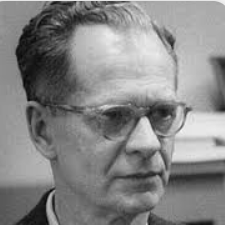
I loved my father dearly. He was fantastically devoted and affectionate. But perhaps the stories about me would never have started if he had done a better job with his public image. He believed that, although our genes determine who we are, it is mostly our environment that shapes our personality. A Time magazine cover story ran the headline "BF Skinner says we can't afford freedom". All he had said was that controls are an everyday reality — traffic lights and a police force, for instance — and that we need to organise our social structures in ways that create more positive controls and fewer aversive ones. As is clear from his utopian novel, Walden Two, the furthest thing from his mind was a totalitarian or fascist state. His careless descriptions of the aircrib might have contributed to the public's common misconception as well. He was too much the scientist and too little the self-publicist — especially hazardous when you are already a controversial figure.
▼
Source
Deborah Skinner Buzan, in "I was not a lab rat" in The Guardian (12 March 2004)

5 months 1 week ago
What cannot be imagined cannot even be talked about.
▼
Source
Journal entry (12 October 1916), p. 84e

5 months 1 week ago
Interviewer: Professor Vannini, how did your interest in mysticism come about? Vannini: It arose spontaneously, from the religious education I received in childhood (this was before the Council!) and, at the same time, from my encounter with and passion for philosophy, which developed during my adolescence. It was precisely by following my own disordered but passionate paths of research that I discovered, in the Marucelliana Library in Florence, the little book edited by Professor Giuseppe Faggin, La nascita eterna (The Eternal Birth), which was the only anthology of Eckhart available in Italian at the time. Although I was only a high school student, I was certain that I had stumbled upon something extraordinary, infinitely deeper (or higher) than anything I had known – or been taught – until then, a certainty that today, half a century later, is, if possible, even stronger for me. Obviously, I did not understand everything, and in order to understand, I began to study philosophy and then theology, devoting myself in particular to the authors and currents that most related to this field. Thus, little by little, I became familiar with that world which, somewhat improperly and, above all, unfortunately in a very ambiguous way, is called “mysticism.”
5 months 1 week ago
The perception of the comic is a tie of sympathy with other men, a pledge of sanity, and protection from those perverse tendencies and gloomy insanities in which fine intellects sometimes lose themselves. A rogue alive to the ludicrous is still convertible.
▼
Source
The Comic
5 months 1 week ago
There certainly are changes of fashion in philosophy. When a new kind is in vogue, many things in the philosophy of an earlier day, which are of permanent value and perhaps highly relevant to contemporary problems, tend to be altogether forgotten or carelessly and ignorantly dismissed, simply because they occur in an out-of-date setting and are clad in an unfashionable dress. It is now quite certain that much of permanent value in Scholastic philosophy was ignored or contemned from this cause by Locke, Berkeley, Hume, and their followers. I have little doubt that the same is true mutatis mutandis of the attitude of many present-day philosophers towards the systems of monistic idealism which were fashionable at the beginning of this century. It is consoling to a philosopher's vanity not to pry too closely into the history of his subject, for otherwise he is liable to find that his discoveries have been anticipated and his fallacies refuted in advance by predecessors whom he has ignored or despised.
▼
Source
From Philosophy (I), in Inquiry (1), (1958)
5 months 1 week ago
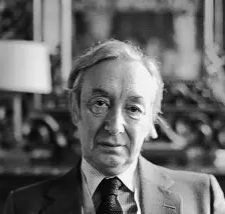
I saw a Divine Being. I'm afraid I'm going to have to revise all my various books and opinions.
▼
Source
A statement he made soon after recovering from his near-death experience, as reported by Dr. Jeremy George, in [http://gonsalves.org/favorite/atheist.htm "Did atheist philosopher see God when he 'died'?" by William Cash, in National Post (3 March 2001)].
5 months 1 week ago
If it is my interest to have a farm, it is my interest to take it away from my neighbour; if it is my interest to have a cloak, it is my interest also to steal it from a bath. This is the source of wars, seditions, tyrannies, plots.
▼
Source
Book I, ch. 22, § 14.
5 months 1 week ago
Let us not link ourselves with the vilifiers of Plato and the persecutors of Confucius. They were oppressed by citizens who were considered the pride of the country. Thus has the world raised its hand against the great Servitors. Be assured that the Brotherhood formed by Pythagoras appeared dangerous in the eyes of the city guard. Paracelsus was a target for mockery and malignance. Thomas Vaughan seemed to be an outcast, and few wished to meet with him. Thus was the reign of darkness manifested.
▼
Source
Agni Yoga, Brotherhood (1937), 175.
5 months 1 week ago
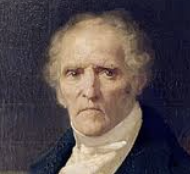
Wisdom, virtue, morality, all these have fallen out of fashion: everybody worships at the shrine of commerce.
▼
Source
The Theory of the Four Movements (1808), G. Jones, ed. (1966), p. 269
5 months 1 week ago
The idea that in order to get clear about the meaning of a general term one had to find the common element in all its applications has shackled philosophical investigation; for it has not only led to no result, but also made the philosopher dismiss as irrelevant the concrete cases, which alone could have helped him understand the usage of the general term.
▼
Source
p. 19

5 months 1 week ago
Aiki is not a technique to fight with or defeat an enemy. It is the way to reconcile the world and make human beings one family.
▼
Source
As quoted in It's A Lot Like Dancing… : An Aikido Journey (1993 by Terry Dobson Riki Moss, and Jan E. Watson -
5 months 1 week ago
What is there in 'Paradise Lost' to elevate and astonish like Herschel or Somerville?
▼
Source
Quoted in Robert D. Richardson, Jr., Emerson, the Mind On Fire (Univ. of Calif Press 1995), p. 124
5 months 1 week ago
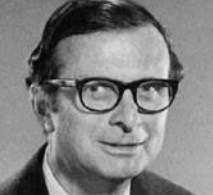
The idea of a ‘system approach’ is both quite popular and quite unpopular. It’s popular because it sounds good to say that the whole system is being considered, but it’s quite unpopular because it sounds either like a lot of nonsense or else downright dangerous – so much evil can be created under the guise of serving the whole.
▼
Source
p. 11
5 months 1 week ago
Happiness is the only sanction of life; where happiness fails, existence remains a mad and lamentable experiment.
5 months 1 week ago
A wise man's kingdom is his own breast: or, if he ever looks farther, it will only be to the judgment of a select few, who are free from prejudices, and capable of examining his work. Nothing indeed can be a stronger presumption of falsehood than the approbation of the multitude; and Phocion, you know, always suspected himself of some blunder when he was attended with the applauses of the populace.
▼
Source
Playfully ironic letter to Adam Smith regarding the positive reception of "The Theory of Moral Sentiments"
5 months 1 week ago
Two principles we should always have ready — that there is nothing good or evil save in the will; and that we are not to lead events, but to follow them.
▼
Source
Book III, ch. 10, § 18.
5 months 1 week ago
Pythagoras conceived that the first attention that should be given to men should be addressed to the senses, as when one perceives beautiful figures and forms, or hears beautiful rhythms and melodies. Consequently he laid down that the first erudition was that which subsists through music's melodies and rhythms, and from these he obtained remedies of human manners and passions, and restored the pristine harmony of the faculties of the soul.
▼
Source
Iamblichus of Chalcis in Life of Pythagoras
5 months 1 week ago
A good guide will take you through the more important streets more often than he takes you down side streets; a bad guide will do the opposite. In philosophy I'm a rather bad guide.
▼
Source
As quoted in Wittgenstein and the Philosophy of Information (2008) edited by Alois Pichler and Herbert Hrachovec, p. 140
5 months 1 week ago
When life is victorious, there is birth; when it is thwarted, there is death. A warrior is always engaged in a life-and-death struggle for Peace.
5 months 1 week ago
The activity of to-day and the assurance of to-morrow.
▼
Source
p. 215
CivilSimian.com created by AxiomaticPanic, CivilSimian, Kalokagathia