
5 months 1 week ago
Understanding finds nothing but itself when it seeks the essence behind the appearance of things. ‘It is manifest that behind the so-called curtain, which is to hide the inner world, there is nothing to be seen unless we ourselves go behind there, as much in order that we may thereby see, as that there may be something behind there which can be seen.’ P. 111
5 months 1 week ago
As long as one does not call his own position into question but regards it as absolute, while interpreting his opponents' ideas as a mere function of the social positions they occupy, the decisive step forward has not yet been taken.
5 months 1 week ago
First then, we find that when we regard ideas from a nominalistic, individualistic, sensualistic way, the simplest facts of mind become utterly meaningless. That one idea should resemble another or influence another, or that one state of mind should so much as be thought of in another is, from that standpoint, sheer nonsense.
5 months 1 week ago
Above all I feel that you must resign yourself to taking me as I am, that is, with the congenital quality (or weakness) which ever since my childhood has caused my spiritual life to be completely dominated by a sort of profound 'feeling' for the organic realness of the World. At first it was an ill-defined feeling in my mind and heart, but as the years have gone by it has gradually become a precise, compelling sense of the Universe's general convergence upon itself; a convergence which coincides with, and culminates at its zenith in, him in quo omina constant, and whom the Society has taught me to love.
▼
Source
Letter from Cape Town to Father General, Jean-Baptiste Janssens (12 October 1951)
5 months 1 week ago
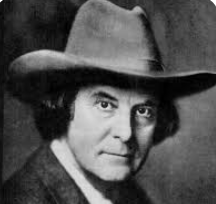
If your religion does not change you, then you had better change your religion.
5 months 1 week ago
Our mass media have little difficulty in selling particular interests as those of all sensible men. The political needs of society become individual needs and aspirations, their satisfaction promotes business and the commonweal, and the whole appeals to be the very embodiment of Reason.
▼
Source
p. xli
5 months 1 week ago
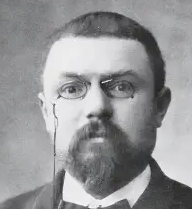
Do not block the way of inquiry.
▼
Source
Vol. I, par. 135
5 months 1 week ago
If we study the history of science we see happen two inverse phenomena... Sometimes simplicity hides under complex appearances; sometimes it is the simplicity which is apparent, and which disguises extremely complicated realities....No doubt, if our means of investigation should become more and more penetrating, we should discover the simple under the complex, then the complex under the simple, then again the simple under the complex, and so on, without our being able to foresee what will be the last term. We must stop somewhere, and that science may be possible, we must stop when we have found simplicity. This is the only ground on which we can rear the edifice of our generalizations.
5 months 1 week ago
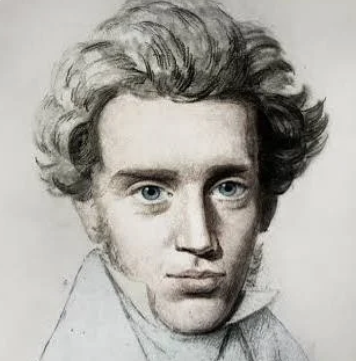
It belongs to the imperfection of everything human that man can only attain his desire by passing through its opposite.
▼
Source
1841
5 months 1 week ago
God is inexhaustibly attainable in the totality of our action.
▼
Source
The Divinisation of Our Activities, p. 63
5 months 1 week ago
No man needs a vacation so much as the man who has just had one.
▼
Source
This quote is often misattributed to Hubbard. He helped popularize the quote, but never wrote it himself. The earliest instance that Quote Investigator could locate was in an article from The Boston Cooking-School Magazine titled "Out-of-Doors for the Hom
5 months 1 week ago
Art can speak its own language only as long as the images are alive which refuse and refute the established order.
▼
Source
p. 62
5 months 1 week ago
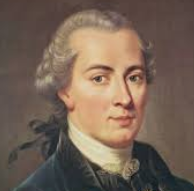
There are three juridical attributes that inseparably belong to the citizen by right. These are:
5 months 1 week ago
One of the enduring legacies of Napoleon was the French system of grandes écoles, the elite schools that train the country's top technocratic and managerial students even today. ... Biographies of French mathematicians often begin with awed accounts of how well they did on the entrance tests, and how they fared on various national exams and competitions. Poincaré was no exception. He obtained the first prize in several national competitions, and was among the highest-ranking applicants to the École Polytechnique and the École Normale Supérieure in Paris, schools especially famous for the quality of their mathematics.
▼
Source
Donal O'Shea,
5 months 1 week ago
Let others complain that the age is wicked; my complaint is that it is paltry; for it lacks passion. Men's thoughts are thin and flimsy like lace, they are themselves pitiable like the lacemakers. The thoughts of their hearts are too paltry to be sinful. For a worm it might be regarded as a sin to harbor such thoughts, but not for a being made in the image of God. Their lusts are dull and sluggish, their passions sleepy. They do their duty, these shopkeeping souls, but they clip the coin a trifle, like the Jews; they think that even if the Lord keeps ever so careful a set of books, they may still cheat Him a little. Out upon them! This is the reason my soul always turns back to the Old Testament and to Shakespeare. I feel that those who speak there are at least human beings; they hate, they love, they murder their enemies, and curse their descendants throughout all generations, they sin.
▼
Source
Swenson, 1959, p. 27
5 months 1 week ago
Whatever the poverty of our knowledge in this respect, it is certain that the question of the sign is itself more or less, or in any event something other, than a sign of the times. To dream of reducing it to a sign of the times is to dream of violence.
▼
Source
Force and Signification
5 months 1 week ago
It has been observed that the height of a man from the crown of the head to the sole of the foot is equal to the distance between the tips of the middle fingers of the two hands when extended in a straight line.
▼
Source
Book VII, sec. 77.
5 months 1 week ago
Fools! For I also had my hour; One far fierce hour and sweet:There was a shout about my ears, And palms before my feet.
▼
Source
"The Donkey", st. 4. The Wild Knight, &c. (1900)
5 months 1 week ago
If man has learned to see and know what really is, he will act in accordance with truth, Epistemology is in itself ethics, and ethics is epistemology.
▼
Source
p. 125
5 months 1 week ago
The use of the intellect in the sciences whose primitive concepts as well as axioms are given by sensuous intuition is only logical, that is, by it we only subordinate cognitions to one another according to their relative universality conformably to the principle of contradiction, phenomena to more general phenomena, and consequences of pure intuition to intuitive axioms. But in pure philosophy, such as metaphysics, in which the use of the intellect in respect to principles is real, that is to say, where the primary concept of things and relations and the very axioms are given originally by the pure intellect itself, and not being intuitions do not enjoy immunity from error, the method precedes the whole science, and whatever is attempted before its precepts are thoroughly discussed and firmly established is looked upon as rashly conceived and to be rejected among vain instances of mental playfulness.
5 months 1 week ago
Anxiety and nothing always correspond to each other. As soon as the actuality of freedom and of spirit is posited, anxiety is canceled. But what then does the nothing of anxiety signify more particularly in paganism. This is fate. Fate is a relation to spirit as external. It is the relation between spirit and something else that is not spirit and to which fate nevertheless stands in a spiritual relation. Fate may also signify exactly the opposite, because it is the unity of necessity and accidental. ... A necessity that is not conscious of itself is eo ipso the accidental in relation to the next moment. Fate, then, is the nothing of anxiety.
▼
Source
p. 96-97
5 months 1 week ago
There is the growing influence of biology and the application of biological principles to the human faculties, thought among the rest. Man is said to have brains because they enable him to survive. Intelligence is construed as an organic function and reason as developed or evolved intelligence.
▼
Source
[describing the historical causes of the modern tendency to make intellect the servant of alien interests]
5 months 1 week ago
When a politician is in opposition he is an expert on the means to some end; and when he is in office he is an expert on the obstacles to it.
▼
Source
In The Illustrated London News (6 April 1918)
5 months 1 week ago
His most accessible works-Reason and Revolution, One-Dimensional Man, and Eros and Civilization-synthesized the essence of the great nineteenth-century German thinkers-Hegel, Marx, and Freud. Every time I'd heard him speak at UCLA, Marcuse drew huge crowds and commanded rapt attention, speaking in a heavy German accent, somber and professorial...The San Diego authorities and the newly elected California governor, Ronald Reagan, did everything within legal limits to get Marcuse fired, and their terrorist kindred threatened his life and property. Marcuse never budged nor responded; he was a gift we may or may not have deserved.
▼
Source
Roxanne Dunbar-Ortiz Outlaw Woman (2001)
5 months 1 week ago
The history of mankind can be seen, in the large, as the realization of Nature’s secret plan to bring forth a perfectly constituted state as the only condition in which the capacities of mankind can be fully developed, and also bring forth that external relation among states which is perfectly adequate to this end.
▼
Source
Eighth Thesis
5 months 1 week ago
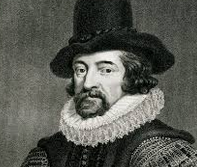
Credulity in arts and opinions (…) is likewise of two kinds viz., when men give too much belief to arts themselves, or to certain authors in any art. The sciences that sway the imagination more than the reason are principally three viz., astrology, natural magic, and alchemy (…). Alchemy may be compared to the man who told his sons that he had left them gold, buried somewhere in his vineyard; while they by digging found no gold, but by turning up the mould about the roots of the vines procured a plentiful vintage. So the search and endeavours to make gold have brought many useful inventions to light.
▼
Source
De Augmentis Scientiarum (1623) as quoted by Edward Thorpe, History of Chemistry, Vol. 1, p. 43.
5 months 1 week ago
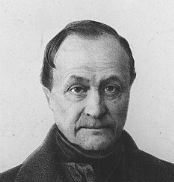
Language forms a kind of wealth, which all can make use of at once without causing any diminution of the store, and which thus admits a complete community of enjoyment; for all, freely participating in the general treasure, unconsciously aid in its preservation.
▼
Source
Volume II, p. 213
5 months 1 week ago
A man who but rarely, and then only cursorily, concerns himself with his relationship to God, hardly thinks or dreams that he has so closely to do with God, or that God is so close to him, that there exists a reciprocal relationship between him and God, the stronger a man is, the weaker God is, the weaker a man is, the stronger God is in him. Every one who assumes that a God exists naturally thinks of Him as the strongest, as He eternally is, being the Almighty who creates out of nothing, and for whom all the creation is as nothing; but such a man hardly thinks of the possibility of a reciprocal relationship. And yet for God, the infinitely strongest, there is an obstacle; He has posited it Himself, yea, He has lovingly, with incomprehensible love posited it Himself; for He posited it and posits it every time a man comes into existence, when He in His love makes to be something directly in [https://en.wiktionary.org/wiki/apposite apposition] to Himself. Oh, marvelous omnipotence of love! A man cannot bear that his ‘creations’ should be directly in apposition to Himself, and so he speaks of them in a tone of disparagement as his ‘creations’. But God who creates out of nothing, who almightily takes from nothing and says, ‘Be’, lovingly adjoins, ‘Be something even in apposition to me.’ Marvellous love, even His omnipotence is under the sway of love!
▼
Source
Søren Kierkegaard, Christian Discourses, 1848 Lowrie 1940, 1961 p. 132
5 months 1 week ago
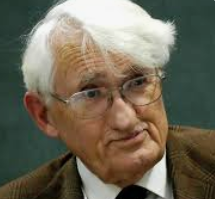
[Critical social science attempts] to determine when theoretical statements grasp invariant regularities of social action as such and when they express ideologically frozen relations of dependence that can in principle be transformed.
▼
Source
p. 310 as cited in: Dominick LaCapra (1983) Rethinking Intellectual History: Texts, Contexts, Language. p. 170
5 months 1 week ago
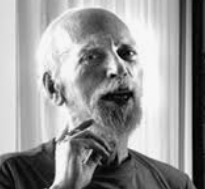
He {Wilhelm Reich} had a great capacity to arouse irrational hatred obviously, and that's because his ideas were radical in the most extreme sense of the word "radical." His ideas have something to offend everybody, and he ended up becoming the only heretic in American history whose books were literally burned by the government. Timothy Leary spent five years in prison for unorthodox scientific ideas. Ezra Pound spent 13 years in a nuthouse for unorthodox political and economic ideas. Their books were not burned. Reich was not only thrown in prison, but they chopped up all the scientific equipment in his laboratory with axes and burned all of his books in an incinerator. Now that interests me as a civil liberties issue. When I started studying Reich's works, I went through a period of enthusiasm, followed by a period of skepticism, followed by a period of just continued interest, but I think a lot of his ideas probably were sound. A lot probably were unsound. And, I'm not a Reichian in the sense of somebody who thinks he was the greatest scientist who ever lived and discovered the basic secrets of psychology, physics and everything else, all in one lifetime. But I think he has enough sound ideas that his unpopular ideas deserve further investigation.
▼
Source
"Robert Anton Wilson on Wilhelm Reich" (March 1995)

5 months 1 week ago
The trouble with fiction... is that it makes too much sense. Reality never makes sense.
▼
Source
"John Rivers" in The Genius and the Goddess (1955)
5 months 1 week ago
The act of defending any of the cardinal virtues has today all the exhilaration of a vice. Moral truisms have been so much disputed that they have begun to sparkle like so many brilliant paradoxes.
▼
Source
"A Defence of Humilities"
5 months 1 week ago
All human knowledge begins with intuitions, proceeds from thence to concepts, and ends with ideas.
▼
Source
B 730; Variant translation: All our knowledge begins with the senses, proceeds then to the understanding, and ends with reason. There is nothing higher than reason.
5 months 1 week ago
We are much beholden to Machiavel and others, that write what men do, and not what they ought to do.
▼
Source
Book II, xxi, 9
5 months 1 week ago
When God chooses to let himself be born in lowliness, when he who holds all possibilities in his hand takes upon himself the form of a lowly servant, when he goes about defenseless and lets people do with him what they will, he surely must know well enough what he is doing and why he wills it; but for all that it is he who has people in his power and not they who have power over him-so history ought not play by this wanting to make manifest who he was.
▼
Source
p. 34
5 months 1 week ago
"Mind" is a tool invented by the universe to see itself; but it can never see all of itself, for much the same reason that you can’t see your own back (without mirrors).
▼
Source
Ch. 14 : The Meta Programming Circuit, p. 224
5 months 1 week ago
this Jewish doctrine of the primacy of economic values has found the widest acceptance and been most whole-heartedly acted upon. From America it has begun to infect the rest of the worldWe may be pardoned for wishing that the Jews had remained not forty, but four thousand years in their repulsive wilderness.
▼
Source
"One and Many," pp. 18
5 months 1 week ago
The fierce poet of the Middle Ages wrote, "Abandon hope, all ye who enter here," over the gates of the lower world. The emancipated poets of to-day have written it over the gates of this world.
▼
Source
Ch 1: "The Dickens Period"
5 months 1 week ago
Perhaps misguided moral passion is better than confused indifference.
▼
Source
The Book and the Brotherhood (1987) p. 248.
5 months 1 week ago
Through failures one becomes intelligent; but the one who has trained himself in this subject so that he can make others wise through their own failures, has used his intelligence. Ignorance is not stupidity.
▼
Source
Kant, Immanuel (1996), page 100
5 months 1 week ago
The human understanding is moved by those things most which strike and enter the mind simultaneously and suddenly, and so fill the imagination; and then it feigns and supposes all other things to be somehow, though it cannot see how, similar to those few things by which it is surrounded.
▼
Source
Aphorism 47
5 months 1 week ago
The Spirit brings faith, the faith.
▼
Source
Soren Kierkegaard, For Self-Examination, Hong p. 81

5 months 1 week ago
The main purpose of this book is the development of a new method for the semantical analysis of meaning, that is, a new method for analyzing and describing the meanings of linguistic expressions. This method, called the method of extension and intension, is developed by modifying and extending certain customary concepts, especially those of class and property. The method will be contrasted with various other semantical methods used in traditional philosophy or by contemporary authors.
▼
Source
p. v: Preface
5 months 1 week ago
For myself as, no doubt, for most of my contemporaries, the philosophy of meaninglessness was essentially an instrument of liberation. The liberation we desired was simultaneously liberation from a certain political and economic system and liberation from a certain system of morality. We objected to the morality because it interfered with our sexual freedom; we objected to the political and economic system because it was unjust. The supporters of these systems claimed that in some way they embodied the meaning (a Christian meaning, they insisted) of the world. There was an admirably simple method of confuting these people and at the same time justifying ourselves in our political and erotic revolt: we could deny that the world had any meaning whatsoever. Similar tactics had been adopted during the eighteenth century and for the same reasons... The men of the new Enlightenment, which occurred in the middle years of the nineteenth century, once again used meaninglessness as a weapon against the reactionaries. The Victorian passion for respectability was, however, so great that, during the period when they were formulated, neither Positivism nor Darwinism was used as a justification for sexual indulgence.
▼
Source
Ch. 14, p. 316 [2012 reprint]
5 months 1 week ago
For my friend said that he opened his intellect as the sun opens the fans of a palm tree, opening for opening's sake, opening infinitely for ever. But I said that I opened my intellect as I opened my mouth, in order to shut it again on something solid. I was doing it at the moment. And as I truly pointed out, it would look uncommonly silly if I went on opening my mouth infinitely, for ever and ever.
▼
Source
Ch. V: "The Extraordinary Cabman"
5 months 1 week ago
The innocent sounding First Thesis, taken seriously, forces us to move our attention away from the individual toward humanity. Since there are no limits to the application of reason, and reason does not work instinctively, but requires "trial, practice, and instruction in order to gradually progress from one level of insight to another," individual human beings do not live long enough to learn the full use of reason. However, we find nature setting a short period for individual lives, but producing a series of generations in which each passes its own accomplishments onto its successor. The only way to make the capability of reasoning consistent with the First Thesis is to assume that rationality is to be fully developed only in the race, not in the individual.
▼
Source
Sidney Axinn, on the First Thesis of Kant's [http://www.marxists.org/reference/subject/ethics/kant/universal-history.htm Idea for a Universal History from a Cosmopolitan Point of View (1784)], in The Logic of Hope : Extensions of Kant's View of Religion (
5 months 1 week ago
One of the simplest and broadest aspects under which to view the physical world, is that of a system of final causes, or, on the other hand, of initial or effective causes. Bacon, having it in view to extend our power over nature, adopted the latter. He took firm hold of the idea of causation (in the common sense of the word) as contrasted with that of design, refusing to mix up the two ideas in one inquiry, and denouncing such traditional interpretations of facts, as did but obscure the simplicity of the aspect necessary for his purpose. He saw what others before him might have seen in what they saw, but who did not see as he saw it. In this achievement of intellect, which has been so fruitful in results, lie his genius and his fame.
▼
Source
John Henry Newman, A Grammar of Assent (London: Burns, Oates, & Co., 1870), p. 366
5 months 1 week ago
As to all the outward signs that awaken within us feelings of sympathy and compassion, the blind are only affected by crying; I suspect them in general of lacking humanity. What difference is there for a blind man, between a man who is urinating, and man who, without crying out, is bleeding? And we ourselves, do we not cease to commiserate, when the distance or the smallness of the objects in question produce the same effect on us as the lack of sight produces in the blind man? All our virtues depend on the faculty of the senses, and on the degree to which external things affect us. Thus I do not doubt that, except for the fear of punishment, many people would not feel any remorse for killing a man from a distance at which he appeared no larger than a swallow. No more, at any rate, than they would for slaughtering a cow up close. If we feel compassion for a horse that suffers, but if we squash an ant without any scruple, isn’t the same principle at work?
▼
Source
Lettre sur les aveugles [Letter on the Blind] (1749)

5 months 1 week ago
During a lecture, the Oxford linguistic philosopher J. L. Austin made the claim that although a in English implies a positive meaning, there is no language in which a double positive implies a negative. Morgenbesser responded in a dismissive tone, "Yeah, yeah."
▼
Source
The Independent, [http://www.independent.co.uk/news/obituaries/professor-sidney-morgenbesser-550224.html The Independent, Professor Sidney Morgenbesser: Philosopher celebrated for his withering New York Jewish humour], 6 August 2004. The Times, [https://w
5 months 1 week ago
I strongly suspect that most of the great knowers of Suchness paid very little attention to art.... (To a person whose transfigured and transfiguring mind can see the All in every this, the first-rateness or tenth-rateness of even a religious painting will be a matter of the most sovereign indifference.) Art, I suppose, is only for beginners, or else for those resolute dead-enders, who have made up their minds to be content with the ersatz of Suchness, with symbols rather than with what they signify, with the elegantly composed recipe in lieu of actual dinner.
CivilSimian.com created by AxiomaticPanic, CivilSimian, Kalokagathia