
6 months 2 weeks ago
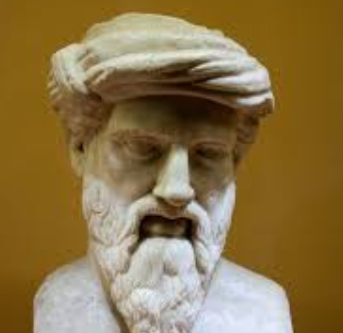
But it is, however, in the teachings of Pythagoras that we find the closest and most frequent identities of teachings and argumentation [about as to the nature and position of the Gods], explained as due to Pythagoras himself having visited India and learned his philosophy there, as tradition asserts. In later centuries we find some peculiarly Sânkhyan and Buddhist ideas playing a prominent part in Gnostic thought.
▼
Source
Annie Besant, [https://www.theosophy.world/resource/ebooks/ancient-wisdom-annie-besant The Ancient Wisdom], p. 17 (1897)
6 months 2 weeks ago
Those who have taken the planets to be inanimate bodies without function, limited to traveling geometric paths, resemble idiots who would believe that the brain is inanimate because it has no visible function, or that the stomach is idle because it does no visible work as do our limbs. Civilizees have always been reproached for believing nature to be limited to known effects. If the planets were not animate creatures endowed with functions, God would then appear to be an advocate of laziness. He would have created universes furnished with large inert bodies spending eternity in purposeless meandering as do the idlers in our society.
▼
Source
L'attraction passioneé

6 months 2 weeks ago
Frazer's account of the magical and religious views of mankind is unsatisfactory; it makes these views look like errors.
▼
Source
Ch. 7 : Remarks on Frazer's Golden Bough, p. 119

6 months 2 weeks ago
One does not need buildings, money, power, or status to practice the Art of Peace. Heaven is right where you are standing, and that is the place to train.
▼
Source
6 months 2 weeks ago
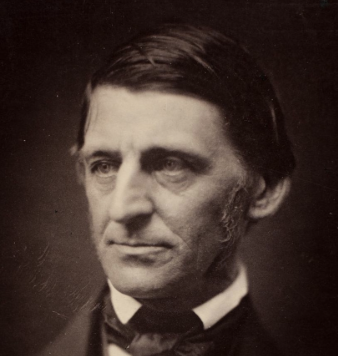
If the single man plant himself indomitably on his instincts, and there abide, the huge world will come round to him. 6.
▼
Source
Nature, Addresses and Lectures. The American Scholar
6 months 2 weeks ago
There are no experts in the systems approach.
▼
Source
p. 232
6 months 2 weeks ago
When men and women agree, it is only in their conclusions; their reasons are always different.
▼
Source
[http://books.google.com/books?id=ICAsAAAAYAAJ&q=%22When+men+and+women+agree+it+is+only+in+their+conclusions+their+reasons+are+always+different%22&pg=PA148#v=onepage Ch. VI: Free Society]
6 months 2 weeks ago
Here am I who have written on all sorts of subjects calculated to excite hostility, moral, political, and religious, and yet I have no enemies — except, indeed, all the Whigs, all the Tories, and all the Christians.
▼
Source
Statement to a friend shortly before his death, as recounted in Men of Letters by Lord Henry Brougham
6 months 2 weeks ago
But tell me this: did you never love any person... were you never commanded by the person beloved to do something which you did not wish to do? Have you never flattered your little slave? Have you never kissed her feet? And yet if any man compelled you to kiss Caesar's feet, you would think it an insult and excessive tyranny. What else then is slavery?
▼
Source
[https://books.google.com/books?id=7e0NAAAAYAAJ&newbks=1&newbks_redir=0&dq=epictetus%20caesar%20feet%20kiss&pg=PA296#v=onepage&q=epictetus%20caesar%20feet%20kiss&f=false Book IV, ch. 1, § 17.]
6 months 2 weeks ago
What appeared here, at the center of the Pythagorean tradition in philosophy, is another view of psyche that seems to owe little or nothing to the pan-vitalism or pan-deism (see theion) that is the legacy of the Milesians.
▼
Source
Francis E. Peters, in Greek Philosophical Terms: A Historical Lexicon (NYU Press 1967), p. 169 ISBN: 0814765521
6 months 2 weeks ago
What we are destroying is nothing but houses of cards and we are clearing up the ground of language on which they stood.
▼
Source
§ 118
6 months 2 weeks ago
Ends and purposes, whether they exist as conscious or subconscious tendencies, form the warp and woof of our conscious experience.
▼
Source
[https://www.google.com/books/edition/The_Reconstruction_of_Religious_Thought/uCh14nl09jkC?hl=en The Reconstruction of Religious Thought in Islam] (1930), p. 42
6 months 2 weeks ago
Society undergoes continual changes; it is barbarous, it is civilized, it is Christianized, it is rich, it is scientific; but this change is not amelioration. For everything that is given something is taken. Society acquires new arts, and loses old instincts. The civilized man has built a coach, but has lost the use of his feet; he has a fine Geneva watch, but cannot tell the hour by the sun.
▼
Source
p. 243
6 months 2 weeks ago
Seems so absurd to me that the laws, that are the expression of the public will, that hate and punish the murder, make one themselves, and, to dissuade citizens from the murder, order a public murder.
▼
Source
(Chapter XXVIII)
6 months 2 weeks ago
Never since the heroic days of Greece has the world had such a sweet, just, boyish master.
▼
Source
"The British Character"

6 months 2 weeks ago
Man is an enigma whose knot has not ceased to occupy observers. The contradictions that he contains astonish reason and impose silence on it. So what is this inconceivable being who carries within him powers that clash and who is obliged to hate himself in order to esteem himself?
▼
Source
6 months 2 weeks ago
Custom, then, is the great guide of human life. It is that principle alone which renders our experience useful to us, and makes us expect, for the future, a similar train of events with those which have appeared in the past. Without the influence of custom, we should be entirely ignorant of every matter of fact beyond what is immediately present to the memory and senses. We should never know how to adjust means to ends, or to employ our natural powers in the production of any effect. There would be an end at once of all action, as well as of the chief part of speculation.
▼
Source
Variant (perhaps a paraphrase of this passage): It is not reason which is the guide of life, but custom.
6 months 2 weeks ago
All was oracular and dogmatic in the school of Pythagoras. He prized and justly prized the greatness of his attainments and discoveries, and had no conception that any thing could go beyond them. He did not encourage, nay, he resolutely opposed, all true independence of mind, and that undaunted spirit of enterprise which is the atmosphere in which the sublimest thoughts are most naturally generated. He therefore did not throw open the gates of science and wisdom, and invite every comer; but on the contrary narrowed the entrance, and carefully reduced the number of aspirants. He thought not of the most likely methods to give strength and permanence and an extensive sphere to the progress of the human mind. For these reasons he wrote nothing; but consigned all to the frail and uncertain custody of tradition. And distant posterity has amply avenged itself upon the narrowness of his policy; and the name of Pythagoras, which would otherwise have been ranked with the first luminaries of mankind, and consigned to everlasting gratitude, has in consequence of a few radical and fatal mistakes, been often loaded with obloquy, and the hero who bore it been indiscriminately classed among the votaries of imposture and artifice.
▼
Source
6 months 2 weeks ago
467. I am sitting with a philosopher in the garden; he says again and again "I know that that's a tree", pointing to a tree that is near us. Someone else arrives and hears this, and I tell them: "This fellow isn't insane. We are only doing philosophy."
▼
Source

6 months 2 weeks ago
Science as a system of statements is always an object of discussion. Statements are to be compared with statements, and not with 'experience', or with 'the world', or with something else. All that meaningless doubling belongs to more or less subtle metaphysics and as such must be rejected. Every new statement is to be confronted with existing ones, already brought to a state of harmony between themselves. A statement will be considered correct if it can be joined to them.
▼
Source
Otto Neurath (1931), "Soziologie im Physikalismus", in Erkenntnis, Vol. 2. p. 403; as cited in: Schaff (1962;84)
6 months 2 weeks ago
There was a majesty about him beyond all other men I have known, and he habitually dwelt in that ampler and diviner air to which most of us, if ever, only rise in spurts.
▼
Source
James Russell Lowell, as quoted in Oliver Wendell Holmes's Ralph Waldo Emerson (1884)
6 months 2 weeks ago
Mill, in speaking of Hume's celebrated principle, "that nothing is credible which is contradictory to experience, or at variance with the laws of nature," calls it a very plain and harmless proposition, being, in effect, nothing more than that whatever is contradictory to a complete induction is incredible. Admit the existence of a Deity, and the possibility of a miracle is the natural consequence. No doubt our examination of the evidence which sustains an unusual phenomenon should be most carefully conducted; but we must not measure the credibility or incredibility of an event by the narrow sphere of our own experience, nor forget that there is a Divine energy which overrides what we familiarly call the laws of nature.
▼
Source
"Passages from the life of a philosopher", Appendix, p. 488
6 months 2 weeks ago
They [the wise spirits of antiquity in the first circle of Dante's Inferno] are condemned, Dante tells us, to no other penalty than to live in desire without hope, a fate appropriate to noble souls with a clear vision of life.
▼
Source
Obiter Scripta (1936)
6 months 2 weeks ago
There is the same difference between political theory and constitutional laws as there is between poetics and poetry. The illustrious Montesquieu is to Lycurgus, in the intellectual hierarchy, what Batteux is to Homer or Racine. Moreover, these two talents positively exclude each other, as can be seen by the example of Locke, who fumbled badly when he presumed to give laws to the Americans.
▼
Source
Chapter VI, p. 52
6 months 2 weeks ago
What a noble privilege is it of human reason to attain the knowledge of the supreme Being; and, from the visible works of nature, be enabled to infer so sublime a principle as its supreme Creator? But turn the reverse of the medal. Survey most nations and most ages. Examine the religious principles, which have, in fact, prevailed in the world. You will scarcely be persuaded, that they are any thing but sick men's dreams: Or perhaps will regard them more as the playsome whimsies of monkies in human shape, than the serious, positive, dogmatical asseverations of a being, who dignifies himself with the name of rational.
▼
Source
Part XV - General corollary
6 months 2 weeks ago
Not one of the philosophical ideas in Part I of the commentary is peculiarly Neoplatonic. The doctrine of the Threeness of things... is found in Aristotle and goes back to the early Pythagoreans or to Homer even; paragraph 8 is mathematical in content rather than philosophical... although there is an allusion in it to the Monad as the principle of finitudes, again a very early Pythagorean doctrine; and these two paragraphs are the source of [Heinrich] Sitter's suggestion of the authorship of Proclus. As a matter of fact, the philosophical notions in Part I have been borrowed for the most part directly from Plato, with two or three exceptions that are Aristotelian... Plato's Theaetetus, Parmenides, and the Laws, are specifically mentioned. The Timaeus forms the background of much of the thought. And the Platonism of a mathematician of the turn of the third century A. D. need not surprise us, if we but recall Aristotle's accusation that the Academy tended to turn philosophy into mathematics.
▼
Source
pp. 40-41.
6 months 2 weeks ago
A hero looks death in the face, real death, not just the image of death. Behaving honourably in a crisis doesn't mean being able to act the part of a hero well, as in the theatre, it means being able to look death itself in the eye. For an actor may play lots of different roles, but at the end of it all he himself, the human being, is the one who has to die.
▼
Source
p. 50e

6 months 2 weeks ago
Or, to go a step further, let us glance at what science has done to establish rational foundations for physical and moral health. Science tells us how we ought to live in order to preserve the health of our own bodies, how to maintain in good conditions of existence the crowded masses of our population. But does not all the vast amount of work done in these two directions remain a dead letter in our books? We know it does. And why? Because science today exists only for a handful of privileged persons, because social inequality which divides society into two classes — the wage-slaves and the grabbers of capital — renders all its teachings as to the conditions of a rational existence only the bitterest irony to nine-tenths of mankind.
▼
Source
6 months 2 weeks ago
A philosopher may try to prove the truth of something he believed before he was a philosopher, but even if he succeeds, his belief never regains the untroubled character, and the settled place in his mind, which it had at first.
▼
Source
The Rationality of Induction, Oxford: Clarendon, 1986. Page 99, first paragraph.
6 months 2 weeks ago
There is a great analogy between grace and genius, for genius is a grace. The real man of genius is the one who acts by grace or by impulsion, without ever contemplating himself and without ever saying to himself: Yes! It is by grace that I act.
▼
Source
p. 37
6 months 2 weeks ago
Afyer the union of philosophy with the popular religion, upon the first establishment of Christianity, nothing was more usual, among all religious teachers, than declarations against reason, against the senses, against every principle derived merely from human research and inquiry.
▼
Source
Cleanthes to Demea, Part I
6 months 2 weeks ago
You must always be puzzled by mental illness. The thing I would dread most, if I became mentally ill, would be your adopting a common sense attitude; that you could take it for granted that I was deluded.
▼
Source
Conversation of 1947 or 1948
6 months 2 weeks ago
A society to which preestablished forms, crystallized by law, are repugnant; which looks for harmony in an ever-changing and fugitive equilibrium between a multitude of varied forces and influences of every kind, following their own course, — these forces promoting themselves the energies which are favorable to their march toward progress, toward the liberty of developing in broad daylight and counter-balancing one another.This conception and ideal of society is certainly not new. On the contrary, when we analyze the history of popular institutions — the clan, the village community, the guild and even the urban commune of the Middle Ages in their first stages, — we find the same popular tendency to constitute a society according to this idea...
▼
Source
6 months 2 weeks ago
Another was, "Watch your opportunity."
▼
Source
Pittacus, 7.
6 months 2 weeks ago
Hume's philosophy, whether true or false, represents the bankruptcy of eighteenth-century reasonableness. He starts out, like Locke, with the intention of being sensible and empirical, taking nothing on trust, but seeking whatever instruction is to be obtained from experience and observation. But having a better intellect than Locke's, a greater acuteness in analysis, and a smaller capacity for accepting comfortable inconsistencies, he arrives at the disastrous conclusion that from experience and observation nothing is to be learnt. There is no such thing as a rational belief... We cannot help believing, but no belief can be grounded in reason. Nor can one line of action be more rational than another, since all alike are based upon irrational convictions. This last conclusion, however, Hume seems not to have drawn... It was inevitable that such a self-refutation of rationality should be followed by a great outburst of irrational faith. The quarrel between Hume and Rousseau is symbolic: Rousseau was mad but influential; Hume was sane but had no followers.
▼
Source
Bertrand Russell; A History of Western Philosophy, Book Three, Part I, Chapter 17. Hume
6 months 2 weeks ago
The means of production being the collective work of humanity, the product should be the collective property of the race. Individual appropriation is neither just nor serviceable. All belongs to all. All things are for all men, since all men have need of them, since all men have worked in the measure of their strength to produce them, and since it is not possible to evaluate every one's part in the production of the world's wealth. All things are for all. Here is an immense stock of tools and implements; here are all those iron slaves which we call machines, which saw and plane, spin and weave for us, unmaking and remaking, working up raw matter to produce the marvels of our time. But nobody has the right to seize a single one of these machines and say, "This is mine; if you want to use it you must pay me a tax on each of your products," any more than the feudal lord of medieval times had the right to say to the peasant, "This hill, this meadow belong to me, and you must pay me a tax on every sheaf of corn you reap, on every rick you build." All is for all! If the man and the woman bear their fair share of work, they have a right to their fair share of all that is produced by all, and that share is enough to secure them well-being. No more of such vague formulas as "The Right to work," or "To each the whole result of his labour." What we proclaim is The Right to Well-Being: Well-Being for All!
▼
Source
Variant: All things for all men, since all men have need of them, since all men worked to produce them in the measure of their strength, and since it is not possible to evaluate everyone's part in the production of the world's wealth... All is for all!
6 months 2 weeks ago
Old age is the harbor of all ills.
▼
Source
Bion, 47.
6 months 2 weeks ago
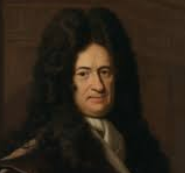
The consequences of beliefs that go against the providence of a perfectly good, wise, and just God, or against that immortality of souls which lays them open to the operations of justice.... I even find that somewhat similar opinions, by stealing gradually into the minds of men of high station who rule the rest and on whom affairs depend, and by slithering into fashionable books, are inclining everything toward the universal revolution with which Europe is threatened, and are completing the destruction of what still remains in the world of the generous Greeks and Romans who placed love of country and of the public good, and the welfare of before fortune and even before life.
▼
Source
Nouveaux essais sur l'entendement humain (1704)

6 months 2 weeks ago
These two states which it is necessary to know together in order to see the whole truth, being known separately, lead necessarily to one of these two vices, pride or indolence, in which all men are invariably led before grace, since if they do not remain in their disorders through laxity, they forsake them through vanity, so true is that which you have just repeated to me from St. Augustine, and which I find to a great extent; for in fact homage is rendered to them in many ways.
▼
Source
6 months 2 weeks ago
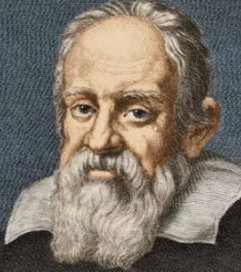
I tell you that if natural bodies have it from Nature to be moved by any movement, this can only be circular motion, nor is it possible that Nature has given to any of its integral bodies a propensity to be moved by straight motion. I have many confirmations of this proposition, but for the present one alone suffices, which is this. I suppose the parts of the universe to be in the best arrangement, so that none is out of its place, which is to say that Nature and God have perfectly arranged their structure. This being so, it is impossible for those parts to have it from Nature to be moved in straight, or in other than circular motion, because what moves straight changes place, and if it changes place naturally, then it was at first in a place preternatural to it, which goes against the supposition. Therefore, if the parts of the world are well ordered, straight motion is superfluous and not natural, and they can only have it when some body is forcibly removed from its natural place, to which it would then return by a straight line, for thus it appears that a part of the earth does [move] when separated from its whole. I said "it appears to us," because I am not against thinking that not even for such an effect does Nature make use of straight line motion.
▼
Source
A note on this statement is included by Stillman Drake in his Galileo at Work, His Scientific Biography (1981): Galileo adhered to this position in his Dialogue at least as to the "integral bodies of the universe." by which he meant stars and planets, her
6 months 2 weeks ago
All this wonderful culture has entirely developed in the second half of the nineteenth century. Before that, it was quite primitive. But now the Paris gardener not only defies the soil—he would grow the same crops on an ashphalt pavement—he defies the climate. His walls, which are built to reflect light and to protect the wall-trees from the northern winds, his wall-tree shades and glass protectors, his frames and pépinières have made a real garden, a rich Southern garden, out of the suburbs of Paris. He has given to Paris the 'two degrees less of latitude' after which a French scientific writer was longing; he supplies his city with mountains of grapes and fruit at any season; and in the early spring he inundates and perfumes it with flowers. But he does not only grow articles of luxury. The culture of plain vegetables on a large scale is spreading every year; and the results are so good that there are now practical maraîchers who venture to maintain that if all the food, animal and vegetable, necessary for 4,500,000 inhabitants of the departments of Seine and had to be grown in their own territory (3,520 square miles), it could be grown without resorting to any other methods of culture than those already in use—methods already tested on a large scale and proved to be successful.
▼
Source
6 months 2 weeks ago
When Zeno was asked what a friend was, he replied, "Another I."
▼
Source
Zeno, 19.

6 months 2 weeks ago
In general, the form and the structure of the brains of quadrupeds are almost the same as those of the brain of man...
▼
Source
6 months 2 weeks ago
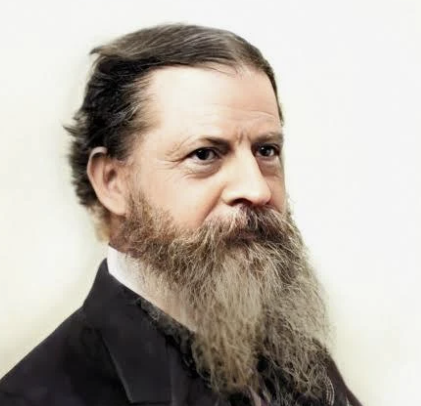
It has never been in my power to study anything, — mathematics, ethics, metaphysics, gravitation, thermodynamics, optics, chemistry, comparative anatomy, astronomy, psychology, phonetics, economics, the history of science, whist, men and women, wine, metrology, except as a study of semeiotic.
▼
Source
Letter to Victoria (23 December 1908)
6 months 2 weeks ago
All who say the same things do not possess them in the same manner; and hence the incomparable author of the pauses with so much care to make it understood that we must not judge of the capacity of a man by the excellence of a happy remark that we heard him make. ...let us penetrate, says he, the mind from which it proceeds... it will oftenest be seen that he will be made to disavow it on the spot, and will be drawn very far from this better thought in which he does not believe, to plunge himself into another, quite base and ridiculous.
▼
Source
Montaigne, Essais, liv. III, chap. viii.—Faugère
6 months 2 weeks ago
Wine is a mixture of moisture and light.
▼
Source
As quoted in Lorenzo Magalotti's Scientific and Scholarly Letter (1721)
6 months 2 weeks ago
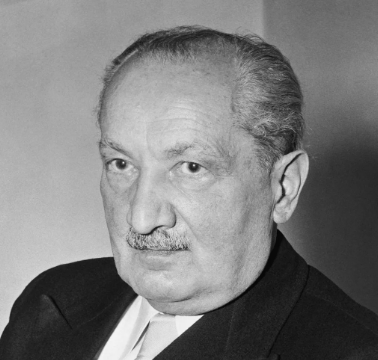
The human body is essentially something other than an animal organism.
▼
Source
Letter on Humanism (1947)

6 months 2 weeks ago
Despair is like forward children, who, when you take away one of their playthings, throw the rest into the fire for madness. It grows angry with itself, turns its own executioner, and revenges its misfortunes on its own head.
▼
Source
p. 123 (Despair)
6 months 2 weeks ago
There are three basic problems: how a mind can know the world of nature, how it is possible for one mind to know another, and how it is possible to know the contents of our own minds without resort to observation or evidence. It is a mistake, I shall urge, to suppose that these questions can be collapsed into two, or taken into isolation.
▼
Source
Davidson. Subjective, Intersubjective, Objective, (2001) p. 208, as cited in: Dermot Moran (ed). The Routledge Companion to Twentieth Century Philosophy, (2008), p. 681
6 months 2 weeks ago
In fact, this infinitesimally spread-out consciousness is a direct feeling of its contents as spread out. In an infinitesimal interval we directly perceive the temporal sequence of its beginning, middle, and end... Now upon this interval follows another, whose beginning is the middle of the former, and whose middle is the end of the former. Here we have an immediate perception of the temporal sequence of its beginning, middle and end, or say, of the second, third, and fourth instants.
▼
Source
CivilSimian.com created by AxiomaticPanic, CivilSimian, Kalokagathia