
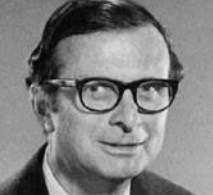
C. West Churchman
Member for
6 months 2 weeksC. West Churchman — Systems Thinking, Inquiring Systems, and the Moral Imperative of Comprehensiveness (1913–2004)
Charles West Churchman was an American philosopher and systems scientist — born in 1913 in Mount Airy, Philadelphia, educated at Quaker schools, earning all three degrees including his PhD in philosophy at the University of Pennsylvania, teaching philosophy at Penn before and after the Second World War during which he applied statistical methods to quality control at the Frankford Arsenal, co-founding the first academic program in operations research at the Case Institute of Technology in 1951 with Russell Ackoff, moving to UC Berkeley in 1957 as Professor of Business Administration and later also Professor of Peace and Conflict Studies, and dying in Bolinas, California in 2004 at ninety — one of the founding figures of both operations research and the broader systems movement, who spent his career in a sustained effort to reinsert ethical and philosophical dimensions into fields that kept trying to become purely technical.
He was driven, as he described it, by "moral outrage": the recognition that the human intellect was capable of organizing society to solve the great problems of the world — malnutrition, poverty, war — and that humanity nevertheless allowed these problems to persist. This moral outrage was not incidental to his intellectual work but its engine — the force that kept him swimming against the mainstream of each field he helped create, insisting that comprehensiveness, ethics, and the question of human values could not be separated from the technical analysis of systems, decisions, and inquiries.
His central concern: that any system of analysis or inquiry was incomplete if it failed to account for the whole system within which it operated — and ethically deficient if it did not take seriously the values and welfare of all the people affected by its conclusions.
From Philosophy to Operations Research — The Wartime Bridge
Churchman's trajectory from pure philosophy to applied systems science was shaped by the Second World War. He had been teaching philosophy at Penn — one of his students was Russell Ackoff, who became his first doctoral student and lifelong collaborator — when he chose to contribute to the war effort through statistical quality control at Frankford Arsenal. The work was specifically philosophical in its implications: how do you test the quality of millions of rounds of ammunition when you cannot test each one? The answer required both statistical theory and deep thinking about what "quality" meant and how it could be measured.
The experience convinced Churchman that the philosophical problems of knowledge, measurement, and value were not merely abstract but had immediate practical stakes. After the war, working with Ackoff at Case, he helped establish operations research as an academic discipline — and from the beginning insisted that OR was not merely a mathematical toolkit but a philosophical project: the application of rigorous thinking to the full complexity of human systems.
"He demanded that philosophy have meaning in the world. He wanted to insert an ethical dimension into science. And he really made it his job to remind all these CEOs that they had ethical responsibilities."
— Gloria Churchman
The Systems Approach — Comprehensiveness as Method and Ethic
Churchman's 1968 "The Systems Approach" — winner of the McKinsey Award — argued for a way of thinking that began with the whole rather than the part: any serious problem required understanding the larger system within which it sat, the purpose that system was supposed to serve, the resources it had available, the components it contained, the management responsible for it, and — crucially — the environment that lay outside the system's control.
His framework for analyzing a system included categories that mainstream OR consistently underemphasized: the real objectives of a system as opposed to its stated objectives; the performance measures that actually governed behavior rather than those formally endorsed; the clients and decision makers whose interests were at stake; and the ethical dimension — the values embedded in any system's design. He was particularly insistent that the "systems approach" was not a technique but a way of thinking — that its genuine application required the willingness to question the assumptions that defined the problem in the first place.
"Comprehensive anticipatory design science: the effective application of the principles of science to the conscious design of our total environment in order to help make the Earth's finite resources meet the needs of all humanity without disrupting ecological processes."
The Design of Inquiring Systems — Philosophical Foundations of Knowledge
Churchman's most philosophically ambitious work — "The Design of Inquiring Systems: Basic Concepts of Systems and Organization" (1971) — was an attempt to ground systems thinking in the history of epistemology. He examined five great philosophical frameworks for how knowledge is produced and organized — corresponding to Leibniz, Locke, Kant, Hegel, and his own teacher Edgar Singer — and asked what kind of "inquiring system" each framework implied.
A Leibnizian inquiring system derived knowledge from formal logical deduction — comprehensive in scope but limited by its axioms. A Lockean inquiring system aggregated individual observations and achieved objectivity through consensus among observers. A Kantian inquiring system used theoretical frameworks as the lens through which data was interpreted — introducing the question of which theoretical framework to adopt. A Hegelian inquiring system generated knowledge through the clash of opposing views — thesis and antithesis producing a more comprehensive synthesis. A Singerian inquiring system — the framework Churchman himself developed — treated all knowledge as provisional, embedded in a wider social and ethical context, and measured by its contribution to the improvement of the human condition.
The book argued that any real organization — a business, a government agency, a university — was itself an inquiring system, and that the type of inquiring system it embodied determined what knowledge it could produce and what it would systematically miss. The ethical implications were direct: an inquiring system that embedded the wrong values in its design would generate knowledge that served those values regardless of what it was nominally trying to accomplish.
"The Design of Inquiring Systems relates the principles of operations research and systems engineering to the philosophical systems of Leibniz, Locke, Kant, Hegel, and Singer — arguing that every organization is itself an inquiring system, and that the type of system it is determines what it can and cannot know."
The Systems Approach and Its Enemies — The Challenge of Comprehensiveness
Churchman's 1979 "The Systems Approach and Its Enemies" was his most philosophically provocative work — an examination of the forces that consistently undermined the attempt to think comprehensively about human problems. He identified four "enemies" of the systems approach: politics, morality, religion, and aesthetics — not because these were bad things but because they were the domains of human experience that most powerfully resisted being incorporated into a systematic framework.
The argument was not that systems thinking should ignore these domains but that the tension between systematic thinking and its enemies was itself philosophically productive. The enemy that could not be incorporated forced the systems thinker to become more comprehensive — to expand the system boundary further until the resisting element could be understood within a wider framework. The systems approach was therefore not a finished method but an endless process of expansion in the face of resistance.
"The systems idea, provided we take it seriously, urges us to recognize our constant failure to think and act rationally in a comprehensive sense. To Churchman, the systems idea poses a challenge to critical self-reflection — it compels us to acknowledge the limits of our own rationality."
The Moral Imperative — Ethics as the Foundation of Systems Thinking
What distinguished Churchman from most of his contemporaries in operations research was not his technical sophistication — it was substantial — but his insistence that ethics was not an optional add-on to systems analysis but its proper foundation. A system analysis that optimized for the wrong objectives — or that served some stakeholders while invisibly excluding others — was not a technically adequate analysis with an ethical problem. It was technically deficient, because it had failed to specify its objectives correctly.
He became internationally recognized for the then-radical concept of incorporating ethical values into operating systems — a concept that the mainstream OR community resisted for decades and that management consultants eventually discovered under the rebranded name of "stakeholder analysis." His friend Hasan Ozbekhan incorporated these ideas into the Club of Rome's "Predicament of Mankind" proposal — which was rejected, as Churchman ruefully noted, for being "too humanistic."
"West Churchman has devoted his life and his philosophy to securing improvements in the human condition by means of the human intellect. His is a calling that demands from us the most in compassion and consciousness. He pursues it with dignity fortified with contagious passion."
— Former student, cited in Mason (1988)
Legacy — The Philosopher Who Would Not Stop Asking Questions
Churchman retired from his Berkeley faculty position in the early 1990s but continued teaching courses in peace and ethics until 1996. He was a founding member of the Operations Research Society of America and long-time editor of "Philosophy of Science." His work influenced generations of systems thinkers — including Ian Mitroff, Richard Mason, Werner Ulrich, and Gerald Midgley — who developed his approach in directions he might not always have endorsed but that demonstrated the generativity of his framework.
On CivSim he belongs alongside Buckminster Fuller, Russell Ackoff, and Amartya Sen — thinkers who insisted that the technical and the ethical, the systematic and the humanistic, could not be separated without corrupting both. His specific challenge to Universal Humanism is the epistemological one: that a philosophy committed to "the good for all humanity" must ask, with rigorous seriousness, how it knows what that good is — what inquiring system it embeds in its own structure, whose values it incorporates, and which "enemies" — the experiences that resist systematic treatment — it has genuinely engaged rather than simply excluded.
"He was a pioneer who never allowed himself to become absorbed by the mainstream of his colleagues. He represents a rare case of a founding father who kept swimming against the stream of the very fields he had helped create."
School Certificates: 0
No certificates shown yet.
CivilSimian.com created by AxiomaticPanic, CivilSimian, Kalokagathia