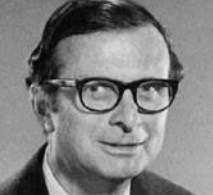
[https://csl4d.wordpress.com/2016/03/24/the-origins-of-the-systems-approach/ The origins of the systems approach, Churchman’s personal journey]
0
0
We must face the reality that the enemies offer: what's really happening in the human world is politics, or morality, or religion, or aesthetics. This confrontation with reality is totally different from the rational approach, because the reality of the enemies cannot be conceptualized, approximated, or measured.
0
0
Source
source
p. 53
Common to all these enemies is that none of them accepts the reality of the "whole system": we do not exist in such a system. Furthermore, in the case of morality, religion, and aesthetics, at least a part of our reality reality as human is not "in" any system, and yet it plays a central role in our lives. To me these enemies provide a powerful way of learning about the systems approach, precisely because they enable the rational mind to step outside itself and to observe itself (from the vantage point of the enemies).
0
0
Source
source
p. 24; Partly as cited in: Reynolds, Martin (2003). "Social and Ecological Responsibility: A Critical Systemic Perspective." In: Critical Management Studies Conference 'Critique and Inclusively: Opening the Agenda'; in the stream OR/Systems Thinking for S
Inquiry is the creation of knowledge or understanding; it is the reaching out of a human being beyond himself to a perception of what he may be or could be, or what the world could be or ought to be.
0
0
Source
source
Cited in: John Zeisel (1984) Inquiry by design: tools for environment-behavior research. p. 3
The religious Weltanschauung, … describes a certain kind of relationship – such as love, adoration and obedience – between men and other men, or between men and some superior being. or between men and "Nature".
0
0
Source
source
p. 238 as cited in: Charles François (2006) "Ethics and enlightened personal responsibility" in: Wisdom, Knowledge, and Management. C.West Churchman and Related Works Series Volume 2, 2006, pp 161-168
Design, properly viewed, is an enormous liberation of the intellectual spirit, for it challenges this spirit to an unbounded speculation about possibilities.
0
0
Source
source
p. 13; cited in Jong S. Jun, Frank P. Sherwood (2007) The Social Construction of Public Administration. p. 76
Knowledge is a potential for a certain type of action, by which we mean that the action would occur if certain tests were run. For example, a library plus its user has knowledge if a certain type of response will be evoked under a given set of stipulations.
0
0
Source
source
p. 11
To conceive of knowledge as a collection of information seems to rob the concept of all of its life. Knowledge resides in the user and not in the collection. It is how the user reacts to a collection of information that matters.
0
0
Source
source
p. 10; cited in Daniel J. Power (2004) Decision Support Systems: Frequently Asked Questions, p. 23
Knowledge can be considered as a collection of information, or as an activity, or as a potential. If we think of it as a collection of information, then the analogy of a computer's memory is helpful, for we can say that knowledge about something is like the storage of meaningful and true strings of symbols in a computer.
0
0
Source
source
p. 9; cited in Daniel J. Power (2004) Decision Support Systems: Frequently Asked Questions. p. 23
A system may actually exist as a natural aggregation of component parts found in Nature, or it may be a man-contrived aggregation – a way of looking at a problem which results from a deliberate decision to assume that a set of elements are related and constitute such a thing called ‘a system.
0
0
Source
source
C. West Churchman, , I. Auerbach, and Simcha Sadam (1975) Thinking for Decisions Deduction Quantitative Methods. Science Research Associates. cited in: John P. van Gigch (1978) Applied General Systems Theory. Harper & Row Publishers
The theory of the nature of mathematics is extremely reactionary. We do not subscribe to the fairly recent notion that mathematics is an abstract language based, say, on set theory. In many ways, it is unfortunate that philosophers and mathematicians like Russell and Hilbert were able to tell such a convincing story about the meaning-free formalism of mathematics. In Greek, mathematics simply meant learning, and we have adapted this... to define the term as "learing to decide." Mathematics is a way of preparing for decisions through thinking. Sets and classes provide one way to subdivide a problem for decision preparation; a set derives its meaning from decision making, and not vice versa.
0
0
Source
source
C. West Churchman, Leonard Auerbach, Simcha Sadan, Thinking for Decisions: Deductive Quantitative Methods (1975) Preface.
To know that we are measuring real change we need to have a strong theoretical base.
0
0
Source
source
C. West Churchman, (1970) in: Systems and management annual. Vol 1, p. 338
The systems approach goes on to discovering that every world-view is terribly restricted.
0
0
Source
source
C. West Churchman, (1970) cited in: Michael C. Jackson ( 1992) Systems Methodology for the Management Sciences. p. 137
Operations research '(OR) is the securing of improvement in social systems by means of scientific method
0
0
Source
source
C. West Churchman, "Operations research as a profession" (1970); cited in Arjang A. Assad, Saul I. Gass (2011) Profiles in Operations Research: Pioneers and Innovators. p. 181
The systems approach is not a bad idea
0
0
Source
source
p. 232
There are no experts in the systems approach
0
0
Source
source
p. 232
A systems approach begins when first you see the world through the eyes of another.
0
0
Source
source
p. 231; cited in Michael C. Jackson (2003) Systems Thinking: Creative Holism for Managers. p. 139
Finally we should note the basic assumption of the classical laboratory-namely, that nature is neither capricious nor secretive. If nature were capricious, she would tell one observer one thing and another observer a quite different thing... Also nature is not secretive, in the sense that she will not forever hide certain aspects of her being...
0
0
Source
source
p. 57; as cited in: Carolyn Merchant (1982) "Isis' Consciousness Raised", in: Isis, Vol. 73, No. 3. (1982), pp. 398-409
The enemies will be asking reasonable questions, like Isn't politics the way matters are really decided, and isn't the rational systems approach simply one political device, to be used when politically expedient? Or isn't morality essentially inexpressible in terms of concepts and words, and doesn't this essentially ineffable quality of our lives lead us humans to decide the way we do? Or, isn't religious imagery really the basis of all our perspectives and concepts, including the perspective of the systems approach? And what is it that carries the values we humans cherish? It is not the ego or the mind, but, say our basic aesthetic feeling, which cannot be conceptualized. And finally, and most generally, why is a rational, holistic approach desirable for the human species, especially since it so often gets out of hand, missing the vital essence of the specific and individual, the here and now, encompassing "everything" to the exclusion of every thing?
0
0
Source
source
p. 69; As cited in: [http://phd-take-2.wikispaces.com/The+Systems+Approach+and+its+Enemies Book Review: The Systems Approach and its Enemies]
[http://www.wulrich.com/cwc.html C. West Churchman] homepage by
0
0
Managers within organizations sometimes confront a type of problem that is difficult to solve, in part, because the problems involve many stakeholders with diverse perspectives. The different assumptions from each perspective result in differing views of the problem and potential solutions. It is difficult to produce a satisfactory potential solution when the formulation of the problem definition is the major concern and when applying a potential solution risks unintended consequences. Churchman (1967, p. 141) writes that the solutions proposed to solve these problems "often turned out to be worse than the symptoms"
0
0
Source
source
Quote from Lars Paul (2010) A method for developing Churchmanian Knowledge Management Systems. p. 2
Systems thinking, as written about and practiced by Russell Ackoff, C. West Churchman, Peter Checkland and others, contained within it many of the impulses that motivate the application of design ideas to strategy, organization, society, and management. Ideas such as engaging a broad set of stakeholders, moving beyond simple metrics and calculations, considering idealized options and using scenarios to explore them, shifting boundaries to reframe problems, iteration, the liberal use of diagrams and rich pictures, and tirelessly searching for a better set of alternatives were all there. If the business and management community had bought it, we would not be having the many discussions about design, design thinking, and expanding management education to engage the intuitive, to embrace values, to look beyond available choices.
0
0
Source
source
Fred Collopy (2009) "Lessons Learned -- Why the Failure of Systems Thinking Should Inform the Future of Design Thinking". In Fast Company blog, June 7, 2009
Churchman recognized in his critical systemic thinking that the human mind is not able to know the whole. … Yet the human mind, for Churchman, may appreciate the essential quality of the whole. For Churchman, appreciation of this essential quality begins … when first you see the world through the eyes of another. The systems approach, he says, then goes on to discover that every worldview is terribly restricted. Consequently, with Churchman, a rather different kind of question about practice surfaces. … That is, who is to judge that any one bounded appreciation is most relevant or acceptable? Each judgment is based on a rationality of its own that chooses where a boundary is to be drawn, which issues and dilemmas thus get on the agenda, and who will benefit from this. For each choice it is necessary to ask, What are the consequences to be expected insofar as we can evaluate them and, on reflection, how do we feel about that? As Churchman points out, each judgment of this sort is of an ethical nature since it cannot escape the choice of who is to be the client—the beneficiary—and thus which issues and dilemmas will be central to debate and future action. In this way, the spirit of C. West Churchman becomes our moral conscience. A key principle of systemic thinking, according to Churchman, is to remain ethically alert. Boundary judgments facilitate a debate in which we are sensitized to ethical issues and dilemmas.
0
0
Source
source
Robert L. Flood (1999, p. 252-253) as cited in: Michael H. G. Hoffmann (2007) Searching for Common Ground on Hamas Through Logical Argument Mapping. p. 5
General systems theory is considered as a formal theory (Mesarovic, Wymore), a methodology (Ashby, Klir), a way of thinking (Bertalanffy, Churchman), a way of looking at the world (Weinberg), a search for an optimal simplification (Ashby, Weinberg), didactic method (Boulding, Klir, Weinberg), metalanguage (Logren), and profession (Klir).
0
0
Source
source
George Klir cited in: James T. Ziegenfuss (1983) Patients' rights and organizational models: sociotechnical systems research on mental health programs. p. 104
Prediction of events is a central problem to which students of decision making have also addressed themselves. See, for example, Simon (1957), Churchman (1948), Bross (1953).
0
0
Source
source
Theodore R. Sarbin (1960) Clinical inference and cognitive theory. p. 68 This quote tells us that in 1960 Sarbin considered Churchman's Theory of Experimental Inference as a notable book about the theory of decision making.

I was an Editor-in-Chief of Philosophy of Science during its early years. Now, over a half century later, I have to admit that I was not very clear what the journal was about, except that it tried to reflect on the meaning of science and its relation to other human activities. At this time I am even less sure of its purposes.
0
0
Source
source
C. West Churchman "Guest editorial: what is philosophy of science" In: Philosophy of Science Vol. 61, No. 1 (Mar., 1994), p. 132-141
Everybody's daily life consists of problems arising from what you decided yesterday. Managers understand that. Mathematicians want to solve a theorem, publish the results and walk away clean. Managers never walk away clean. The real world is a very dirty place.Clarity is supposed to be the objective of science. I disagree. I think the objective of science is confusion, because confusions carries you into problems.
0
0
Source
source
C. West Churchman cited in: Peter R. Horner (1993). "TIMS Turns 40," in: OR/MS Today, Vol. 20, No. 2, p. 40-43
If the story of my early years with Russ sound like they were years of battle, then the sound is correct.
0
0
Source
source
C. West Churchman (1990, p. 130) cited in: Magnus Ramage, Karen Shipp (2009) Systems Thinkers. p. 140
The design of my philosophical life is based on an examination of the following question: is it possible to secure improvement in the human condition by means of the human intellect? The verb 'to secure' is (for me) terribly important, because problem solving often appears to produce improvement, but the so-called 'solution' often makes matters worse in the larger system (e.g., the many food programs of the last quarter century may well have made world-wide starvation even worse than no food programs would have done.) The verb ‘to secure' means that in the larger system over time the improvement persists.I have to admit that the philosophical question is much more difficult than my very limited intellect can handle. I don't know what 'human condition' and 'human intellect' mean, though I've done my best to tap the wisdom of such diverse fields as depth psychology, economics, sociology, anthropology, public health, management science, education, literature, and history. But to me the essence of philosophy is to pose serious and meaningful questions that are too difficult for any of us to answer in our lifetimes. Wisdom, or the love of wisdom, is just that: thought likes solutions, wisdom abhors them.
0
0
Source
source
p. 19; cited in Werner Ulrich (1998) '" C. West Churchman-75 years". in: Systems practice. December 1988, Volume 1, Issue 4, pp 341-350
It would be a good thing, if the systems planner's germination was moral outrage and not just a mild felt need. In other words, I do not think we should view the major problems of the world today with calm objectivity. We shouldn't first ask ourselves for a precise and operational definition of malnutrition. We should begin with 'kids are starving in great numbers, damn it all!
0
0
Source
source
p. 17
I am often inclined to put the implementation questions first, ie, "Can anything be changed?" Should the implementation question not accompany the whole process from its very beginning to its very end?
0
0
Source
source
C. West Churchman (1979, p. 21) as cited in: Interfaces (1982) Vol 12, p. 12
Suppose we consider, not the rationality of holism, but its spirituality. Holism traditionally says that a collection of beings may have a collective property that cannot be inferred from the properties of its members.
0
0
Source
source
p. 212; cited in Janet Judy McIntyre-Mills (2003) Critical Systemic Praxis for Social and Environmental Justice. p. 65
Enemies are hostile, out to stop you, to eliminate you and your ideas; they are also to be loved, even as yourself.
0
0
Source
source
p. 156
The story begins with a somewhat disgruntled hero, who perceived of the world as populated with stupid people, everywhere committing the environmental fallacy. The fallacy was a case not merely of the “mind’s falling into error,” but rather of the mind leading all of us into incredible dangers as it first builds crisis and then attacks crisis. Like all heroes, this one looked about for resources, for aids that would help in a dangerous battle, and he found plenty of support – in both the past and the present. It won’t hurt to summarize the story thus far. If the intellect is to engage in the heroic adventure of securing improvement in the human condition, it cannot rely on “approaches,” like politics and morality, which attempt to tackle problems head-on, within the narrow scope. Attempts to address problems in such a manner simply lead to other problems, to an amplification of difficulty away from real improvement. Thus the key to success in the hero’s attempt seems to be comprehensiveness. Never allow the temptation to be clear, or to use reliable data, or to “come up to the standards of excellence,” divert you from the relevant, even though the relevant may be elusive, weakly supported by data, and requiring loose methods. Thus the academic world of Western twentieth century society is a fearsome enemy of the systems approach, using as it does a politics to concentrate the scholars’ attention on matters that are scholastically respectable but disreputable from a systems-planning point of view.
0
0
Source
source
p. 145; cited in [http://filer.case.edu/nxb41/churchman.html C. WEST CHURCHMAN: CHAMPION OF THE SYSTEMS APPROACH], 2004-2007 Case Western Reserve University
For the goal planner, reality stops at the boundaries of the problem. For the objective- planner, it stops at the boundaries set by feasibility and to some extent by responsibility. For the ideal-planner, there are no "real" boundaries.
0
0
Source
source
p. 106
It's not as though we can expect that next year or a decade from now someone will find the correct systems approach and all deception will disappear. This, in my opinion, is not in the nature of systems. What is in the nature of systems is a continuing perception and deception, a continuing re-viewing of the world, of the whole system, and of its components. The essence of the systems approach, therefore, is confusion as well as enlightenment. The two are inseparable aspects of human living.
0
0
Source
source
p. 231; cited in Charles Smith (2007, p. 44)
However a systems problem is solved—by a planner, scientist, politician, antiplanner, or whomever—the solution is wrong, even dangerously wrong. There is bound to be deception in any approach to the system.
0
0
Source
source
p. 229; cited in Charles Smith (2007, p. 43)
The ultimate meaning of the systems approach . . . lies in the creation of a theory of deception and in a fuller understanding of the ways in which the human being can be deceived about (her) his world, and in the interaction between these different viewpoints.
0
0
Source
source
p. 229; cited in Charles Smith (2007) "Deception Meets Enlightenment: From a Viable Theory of Deception to a Quirk About Humanity's Potential". In: World Futures Vol 63, p. 42
The concern of OR with finding an optimum decision, policy, or design is one of its essential characteristics. It does not seek merely to define a better solution to a problem than the one in use; it seeks the best solution... [It] can be characterized as the application of scientific methods, techniques, and tools to problems involving the operations of systems so as to provide those in control of the operations with optimum solutions to the problems.
0
0
Source
source
p. 8, cited in: R.L. McCown (2001) "Learning to bridge the gap between science-based decision support and the practice of farming". In: Aust. J. Agric. Res., Vol 52, p. 560-561
The systems approach to problems does not mean that the most generally formulated problem must be solved in one research project. However desirable this may be, it is seldom possible to realize it in practice. In practice, parts of the total problem are usually solved in sequence. In many cases the total problem cannot be formulated in advance but the solution of one phase of it helps define the next phase. For example, a production control project may require determination of the most economic production quantities of different items. Once these are found it may turn out that these quantities cannot be produced on the available equipment in the available time. This, then, gives rise to a new problem whose solution will affect the solution obtained in the first phase.
0
0
Source
source
p. 7
This text is oriented toward human organizations since this has been the emphasis in the practice of O.R. in business and industry.
0
0
Source
source
p. 7
The comprehensiveness of OR’s aim is an example of a ‘systems’ approach, since ‘system’ implies an interconnected complex of functionally related components.
0
0
Source
source
p. 7; cited in (2004, p. 210)
An objective of O.R. as it emerged from this evolution of industrial organization, is to provide managers of the organizations with a scientific basis for solving problems involving the interaction of the components of the organization in the best interest of the organization as a whole. A decision which is best for the organization as a whole is called optimum decision.
0
0
Source
source
p. 6; Partly cited in: (2004) "[http://www.wulrich.com/downloads/ulrich_2004d.pdf In memory of C. West Churchman (1913–2004)]." Journal of Organisational Transformation and Social Change. Vol 1 (Nr. 2–3) p. 210
O.R.'s initial development began in the United Kingdom during World War II and was quickly taken up in the United States. This start took place in a military context. After the war O.R. moved into business, industry and civil government. This movement was slower in the United States than in the United Kingdom but in 1951 industrial O.R. took hold in this country and has since developed very rapidly.
0
0
Source
source
p. 3
No science has ever been born on a specific day. Each science emerges out of a convergence of an increased interest in some class of problems and the development of scientific methods, techniques, and tools which are adequate to solve these problems. Operations Research (O.R.) is no exception. Its roots are as old as science and the management function. Its name dates back only to 1940.
0
0
Source
source
p. 3; Partly cited in: Ivor Grattan-Guinness (2003) Companion encyclopedia of the history and philosophy of the mathematical sciences, Vol 1. p. 841
This text grew from the lecture material for the "Short Course in Operations Research" which has been offered annually (since 1952) by Case Institute of Technology.
0
0
Source
source
p. vii
Another way of emphasizing this diversity is to argue that if one cannot forecast (predict), one does not have a theory, and that forecasting is the weakest link in the chain of the management sciences at present. Indeed, if one cannot predict one cannot measure, and if one cannot measure, then there is no "theory."
0
0
One cannot help but be struck by the diversity that characterizes efforts to study the management process. If it is true that psychologists like to study personality traits in terms of a person's reactions to objects and events, they could not choose a better stimulus than management science. Some feel it is a technique, some feel it is a branch of mathematics, or of mathematical economics, or of the "behavioral sciences," or of consultation services, or just so much nonsense. Some feel it is for management (vs. labor), some feel it ought to be for the good of mankind — or for the good of underpaid professors.
0
0
[C. West Churchman exposed the indifferentist position of some researchers — planners belonging to this school in the following terms:] And if our clients blow up the world, land us in starvation or totalitarianism, that is too bad, but we remained pure in heart to the last, didn't we?
0
0
Source
source
p. 412 as cited in: Bogdan Mieczkowski, Oleg Zinam (1984) Bureaucracy, ideology, technology: quality of life East and West. p. 97
[Scientists whose work has no clear, practical implications would want to make their decisions considering such things as:] the relative worth of (1) more observations, (2) greater scope of his conceptual model, (3) simplicity, (4) precision of language, (5) accuracy of the probability assignment.
0
0
Source
source
p. 248 as cited in: Douglas, H.E. (2009) Science, Policy, and the Value-Free Ideal

CivilSimian.com created by AxiomaticPanic, CivilSimian, Kalokagathia