
6 months 2 weeks ago
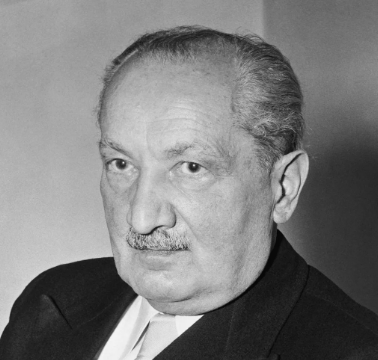
Later, after it was all over, the historian Friedrich Meinecke tried to explain 'the German catastrophe' by arguing that technical specialization had caused some educated Germans (not him, needless to say) to lose sight of the humanistic values of Goethe and Schiller; thus they were unable to resist Hitler's 'mass Machiavellianism'. Thomas Mann was unusual in being able to recognize even at the time that, in 'Brother Hitler', the entire German Bildungsburgertum possessed a monstrous younger sibling who embodied some of their deepest-rooted aspirations. An academic education, far from inoculating people against Nazism, made them more likely to embrace it. So much for the greatness of the German universities. Their fall from grace was personified by the readiness of Martin Heidegger, the greatest German philosopher of his generation, to jump on the Nazi bandwagon, a swastika pin in his lapel.
▼
Source
Niall Ferguson, The War of the World: Twentieth-Century Conflict and the Descent of the West (2006), p. xliii

6 months 2 weeks ago
One should not be deceived by philosophical works that pretend to be mathematical, but are merely dubious and murky metaphysics. Just because a philosopher can recite the words lemma, theorem and corollary doesn't mean that his work has the certainty of mathematics. That certainty does not derive from big words, or even from the method used by geometers, but rather from the utter simplicity of the objects considered by mathematics.
▼
Source
6 months 2 weeks ago
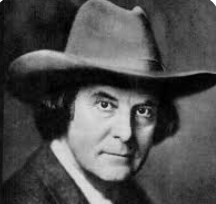
The sad thing about the optimist is his state of mind concerning himself.
▼
Source
6 months 2 weeks ago
Marx explains the alienation of labor as exemplified in, first, the relation of the worker to the product of his labor and, second, the relation of the worker to his own activity.
▼
Source
P. 276
6 months 2 weeks ago
At this point in history when all things which concern man and the structure and elements of history itself are suddenly revealed to us in a new light, it behooves us in our scientific thinking to become masters of the situation, for it is not inconceivable that sooner than we suspect, as has often been the case before in history, this vision may disappear, the opportunity may be lost, and the world will once again present a static, uniform, and inflexible countenance.
▼
Source
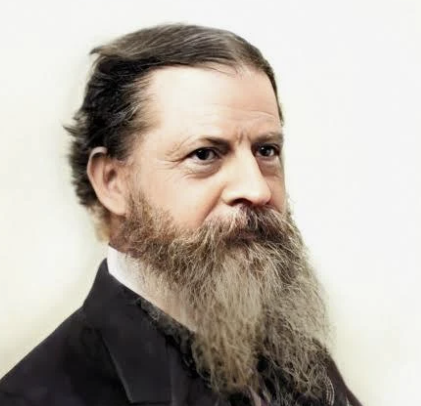
6 months 2 weeks ago
Be it understood, then, that what we have to do, as students of phenomenology, is simply to open our mental eyes and look well at the phenomenon and say what are the characteristics that are never wanting in it, whether that phenomenon be something that outward experience forces upon our attention, or whether it be the wildest of dreams, or whether it be the most abstract and general of the conclusions of science. The faculties which we must endeavor to gather for this work are three. The first and foremost is that rare faculty, the faculty of seeing what stares one in the face, just as it presents itself, unreplaced by any interpretation, unsophisticated by any allowance for this or for that supposed modifying circumstance. This is the faculty of the artist who sees for example the apparent colors of nature as they appear. When the ground is covered by snow on which the sun shines brightly except where shadows fall, if you ask any ordinary man what its color appears to be, he will tell you white, pure white, whiter in the sunlight, a little greyish in the shadow. But that is not what is before his eyes that he is describing; it is his theory of what ought to be seen. The artist will tell him that the shadows are not grey but a dull blue and that the snow in the sunshine is of a rich yellow. That artist's observational power is what is most wanted in the study of phenomenology. The second faculty we must strive to arm ourselves with is a resolute discrimination which fastens itself like a bulldog upon the particular feature that we are studying, follows it wherever it may lurk, and detects it beneath all its disguises. The third faculty we shall need is the generalizing power of the mathematician who produces the abstract formula that comprehends the very essence of the feature under examination purified from all admixture of extraneous and irrelevant accompaniments.
▼
Source
Lecture II : The Universal Categories, § 1 : Presentness, CP 5.41 - 42
6 months 2 weeks ago
To connect the two energies, of the body and the soul, in a coherent manner: science has provisionally decided to ignore the question... caught up as we are here in the logic of a system where the within of things has just as much or... more value than their without... we must advance.
▼
Source
6 months 2 weeks ago
I am not sure just what the unpardonable sin is, but I believe it is a disposition to evade the payment of small bills.
▼
Source
p. 146
6 months 2 weeks ago
The spontaneous reproduction of superimposed needs by the individual does not establish autonomy; it only testifies to the efficacy of the control.
▼
Source
p. 8
6 months 2 weeks ago
Our whole past experience is continually in our consciousness, though most of it sunk to a great depth of dimness. I think of consciousness as a bottomless lake, whose waters seem transparent, yet into which we can clearly see but a little way.
▼
Source
Vol. VII, par. 547
6 months 2 weeks ago
In physical reality one cause does not produce a given effect, but a multitude of distinct causes contribute to produce it, without our having any means of discriminating the part of each of them. ...Causes which have produced a certain effect will never be reproduced except approximately.
▼
Source
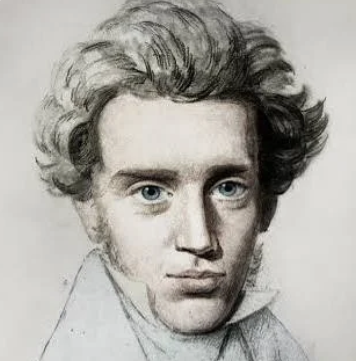
6 months 2 weeks ago
What is asked of a man that he may be able to pray for his enemies? To pray for one's enemies is the hardest thing of all. That is why it exasperates us so much in our present day situation.
▼
Source
Journals and Papers X4A 435
6 months 2 weeks ago
Joy is the most infallible sign of the presence of God.
▼
Source
Though often attributed to Chardin, it is found in Letters to His Fiancée (1937), by Léon Bloy, p. 57. "For the people who know the Bible and Tradition and the complete history of humanity, Joy is the most infallible sign of the presence of God and that i
6 months 2 weeks ago
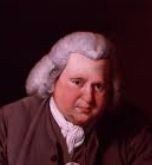
No radiant pearl which crested Fortune wears,No gem that twinkling hangs from Beauty's ears,Not the bright stars which Night's blue arch adorn,Nor rising suns that gild the vernal morn,Shine with such lustre as the tear that flowsDown Virtue's manly cheek for others' woes.
▼
Source
The Botanic Garden (1791), Part ii, Canto iii, l. 459.
6 months 2 weeks ago
Society … can afford to grant more than before because its interests have become the innermost drives of its citizens.
▼
Source
p. 72
6 months 2 weeks ago
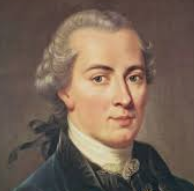
Have patience awhile; slanders are not long-lived. Truth is the child of time; erelong she shall appear to vindicate thee.
▼
Source
As quoted in Gems of Thought (1888) edited by Charles Northend
6 months 2 weeks ago
Every human being is tried this way in the active service of expectancy. Now comes the fulfillment and relieves him, but soon he is again placed on reconnaissance for expectancy; then he is again relieved, but as long as there is any future for him, he has not yet finished his service. And while human life goes on this way in very diverse expectancy, expecting very different things according to different times and occasions and in different frames of mind, all life is again one nightwatch of expectancy.
▼
Source
Eighteen Upbuilding Discourses: "Patience in Expectancy" (1844)

6 months 2 weeks ago
The dissimulation of the woven texture can in any case take centuries to undo its web: a web that envelops a web, undoing the web for centuries; reconstituting it too as an organism, indefinitely regenerating its own tissue behind the cutting trace, the decision of each reading. There is always a surprise in store for the anatomy or physiology of any criticism that might think it had mastered the game, surveyed all the threads at once, deluding itself, too, in wanting to look at the text without touching it, without laying a hand on the "object," without risking- which is the only chance of entering into the game, by getting a few fingers caught- the addition of some new thread.
▼
Source
Plato's Pharmacy
6 months 2 weeks ago
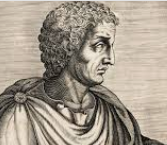
It was a custom with Apelles, to which he most tenaciously adhered, never to let any day pass, however busy he might be, without exercising himself by tracing some outline or other,—a practice which has now passed into a proverb. It was also a practice with him, when he had completed a work, to exhibit it to the view of the passers-by in his studio, while he himself, concealed behind the picture, would listen to the criticisms…. Under these circumstances, they say that he was censured by a shoemaker for having represented the shoes with one latchet too few. The next day, the shoemaker, quite proud at seeing the former error corrected, thanks to his advice, began to criticise the leg; upon which Apelles, full of indignation, popped his head out and reminded him that a shoemaker should give no opinion beyond the shoes, —a piece of advice which has equally passed into a proverbial saying.
▼
Source
Book XXXV, sec. 84.
6 months 2 weeks ago
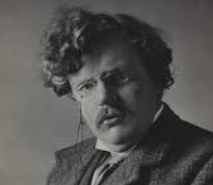
The Christ-child stood at Mary's knee, His hair was like a crown,And all the flowers looked up at him, And all the stars looked down.
▼
Source
A Christmas Carol, st. 4. The Wild Knight, &c., 2nd ed. (1906)
6 months 2 weeks ago
The supremacy of thought (consciousness) also pronounces the impotence of thought in an empirical world which philosophy transcends and corrects — in thought. The rationality in the name of which philosophy passed its judgments obtained that abstract and general purity” which made it immune against the world in which one had to live. With the exception of the materialistic “heretics,” philosophic thought was rarely afflicted by the afflictions of human existence. Paradoxically, it is precisely the critical intent in philosophic thought which leads to the idealistic purifications critical intent which aims at the empirical world as a whole, and not merely at certain modes of thinking or behaving within it. Defining its concepts in terms of potentialities which are of an essentially different order of thought and existence, the philosophic critique finds itself blocked by the reality from which it dissociates itself, and proceeds to construct a realm of Reason purged from empirical contingency. The two dimensions of thought — that of the essential and that of — the apparent truths — no longer interfere with each other, and their concrete dialectical relation becomes an abstract epistemological or ontological relation. The judgments passed on the given reality are replaced by propositions defining the general forms of thought, objects of thought, and relations between thought and its objects. The subject of thought becomes the pure and universal form of subjectivity, from which all particulars are removed.
▼
Source
pp. 135-136
6 months 2 weeks ago
The second is the partiality for unity proper to the philosophical mind, whence this wide-spread canon has flown forth: principles are not to be multiplied beyond supreme necessity, to which we give in our adhesion, not because we have insight into causal unity in the world either by reason or experience, but as seeking it by an impulse of the intellect which seems to itself to have by thus much advanced in the explication of phenomena, by as much as it is granted to it to descend from the same principle to a greater number of consequences,
▼
Source
6 months 2 weeks ago
A son is a mirror in which the father sees himself reflected, and the father is a mirror in which the son sees himself as he will be in the future.
▼
Source
Stages on Life's Way, 1845

6 months 2 weeks ago
I shall maintain that there simply is no such thing as philosophical knowledge, nor any philosophical way of knowing anything, and defend the humble point that philosophy is indeed the love of wisdom.
▼
Source
The Review of Metaphysics (June, 1968) [https://www.jstor.org/stable/20124689] p. 615

6 months 2 weeks ago
I suppose you imagined I was so insanely in love with you that I could commit any folly. When will you women understand that one isn't insanely in love? All one asks for is a quiet life, which you won't allow one to have. I don't know what the devil ever induced me to marry you. It was all a damned stupid, practical joke. And now you go about saying I'm a murderer. I won't stand it.
▼
Source
[http://www.online-literature.com/aldous_huxley/mortal-coils/1/ The Gioconda smile], in [http://www.online-literature.com/aldous_huxley/mortal-coils/ Mortal Coils (1921)]
6 months 2 weeks ago
The whole modern world has divided itself into Conservatives and Progressives. The business of Progressives is to go on making mistakes. The business of Conservatives is to prevent mistakes from being corrected. Even when the revolutionist might himself repent of his revolution, the traditionalist is already defending it as part of his tradition. Thus we have two great types — the advanced person who rushes us into ruin, and the retrospective person who admires the ruins. He admires them especially by moonlight, not to say moonshine. Each new blunder of the progressive or prig becomes instantly a legend of immemorial antiquity for the snob. This is called the balance, or mutual check, in our Constitution.
▼
Source
In The Illustrated London News (1924)
6 months 2 weeks ago
... happiness is not an ideal of reason, but of imagination, resting on merely empirical grounds,
▼
Source
4:418-19, p.29
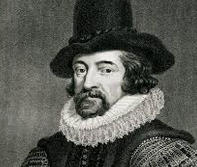
6 months 2 weeks ago
The law of nature teaches me to speak in my own defence: With respect to this charge of bribery I am as innocent as any man born on St. Innocents Day. I never had a bribe or reward in my eye or thought when pronouncing judgment or order (…). I am ready to make an oblation of myself to the King. (17 April 1621)
▼
Source
Quoted by Baron John Campbell (1818), J. Murray in "The Lives of the Lord Chancellors and Keepers of the Great Seal of England"
6 months 2 weeks ago
He lived year after year. He attended only to himself and to God and this picture-but he did not understand himself.
▼
Source
p. 57
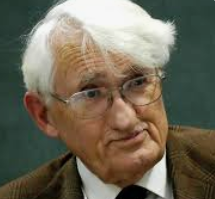
6 months 2 weeks ago
In Europe, you do philosophy by performing discourse on another guy's text, and so Derrida will go over Heidegger, and Habermas will extend Marx's corpus; but in America you could never get away with kinky stuff like that, for you have to generate philosophy from real things—like computers or television. You need to look at Omni magazine to get a feel for this new kind of mail-order, Popular Mechanics science of mind. It's full of articles about meditation helmets and downloading the soul into computers so that when your body wears out you can live forever. What is completely missing in Europe is precisely what you will find in America: namely, an electronic Umwelt in which history is replaced with movies, education is replaced with entertainment, and nature is replaced with technology. This peculiar wedding of low kitsch and high tech generates a posthistoric world that no European literary intellectual can quite fathom.
▼
Source
William Irwin Thompson (1991) Fast Foreword, from The American Replacement of Nature
6 months 2 weeks ago
Existence is larger than any model that is not itself the exact size of existence (which has no size...)
▼
Source
Nature's God
6 months 2 weeks ago
Brutes are merely brutal; men and women are capable of being devils and lunatics. They are no less capable of being fully human-even, occasionally, of being a bit more than fully human, of being saints, heroes and geniuses.
▼
Source
Introduction to You Are Not The Target by Laura Archera Huxley (1963)
6 months 2 weeks ago
When we reverence anything in the mature, it is their virtues or their wisdom, and this is an easy matter. But we reverence the faults and follies of children. We should probably come considerably nearer to the true conception of things if we treated all grown-up persons, of all titles and types, with precisely that dark affection and dazed respect with which we treat the infantile limitations.
▼
Source
A Defence of Baby-Worship
6 months 2 weeks ago
Two things fill the mind with ever new and increasing admiration and awe, the oftener and the more steadily we reflect on them: the starry heavens above and the moral law within. I have not to search for them and conjecture them as though they were veiled in darkness or were in the transcendent region beyond my horizon; I see them before me and connect them directly with the consciousness of my existence. The former begins from the place I occupy in the external world of sense, and enlarges my connection therein to an unbounded extent with worlds upon worlds and systems of systems, and moreover into limitless times of their periodic motion, its beginning and continuance. The second begins from my invisible self, my personality, and exhibits me in a world which has true infinity, but which is traceable only by the understanding, and with which I discern that I am not in a merely contingent but in a universal and necessary connection, as I am also thereby with all those visible worlds. The former view of a countless multitude of worlds annihilates as it were my importance as an animal creature, which after it has been for a short time provided with vital power, one knows not how, must again give back the matter of which it was formed to the planet it inhabits (a mere speck in the universe). The second, on the contrary, infinitely elevates my worth as an intelligence by my personality, in which the moral law reveals to me a life independent of animality and even of the whole sensible world, at least so far as may be inferred from the destination assigned to my existence by this law, a destination not restricted to conditions and limits of this life, but reaching into the infinite.
▼
Source
Translated by Thomas Kingsmill Abbott
6 months 2 weeks ago
As we divided natural philosophy in general into the inquiry of causes, and productions of effects: so that part which concerneth the inquiry of causes we do subdivide according to the received and sound division of causes. The one part, which is physic, inquireth and handleth the material and efficient causes; and the other, which is metaphysic, handleth the formal and final causes.
▼
Source
Book VII, 3
6 months 2 weeks ago
The next thing you can learn from the woman who was a sinner, something she herself understood, is that with regard to finding forgiveness she is able to do nothing at all. P. 155
▼
Source

6 months 2 weeks ago
It was capitalism that allowed the body itself to go from being understood as a dynamic organism to being a working or broken machine. And it was not just the fact that new machines were increasingly part of daily life, making it seem natural to use machines as metaphors for the sciences of the age. It was also that the mode of production itself favored a reduction of people to living machines, since they were seen as working or broken in relation to their productive potential.
▼
Source
p. 30
6 months 2 weeks ago
Lord Edward was not listening to his assistant. He had taken his pipe out of his mouth, he had lifted his head and at the same time slightly cocked it on one side. He was frowning, as though making an effort to seize and remember something. He raised his hand in a gesture that commanded silence; Illidge interrupted himself in the middle of his sentence and also listened. A pattern of melody faintly traced itself upon the silence...Pongileoni's bowing and the scraping of the anonymous fiddlers had shaken the air in the great hall, had set the glass of the windows looking onto it vibrating: and thus in turn had shaken the air in Lord Edward's apartment on the further side. The shaking air rattled Lord Edward's membrane tympani; the interlocked malleus, incus, and stirrup bones were set in motion so as to agitate the membrane of the oval window and raise an infinitesimal storm in the fluid of the labyrinth. The hairy endings of the auditory nerve shuddered like weeds in a rough sea; a vast number of obscure miracles were performed in the brain, and Lord Edwards ecstatically whispered "Bach!" He smiled with pleasure, his eyes lit up. The young girl was singing to herself in solitude under the floating clouds. And then the cloud-solitary philosopher began poetically to meditate. "We must really go downstairs and listen," said Lord Edward. He got up, "Come," he said. "Work can wait. One doesn't hear this sort of thing every night."
▼
Source
Ch. 3
6 months 2 weeks ago
A sober man may become a drunkard through being a coward. A brave man may become a coward through being a drunkard.
▼
Source
Ch. 8 "The Time of Transition"
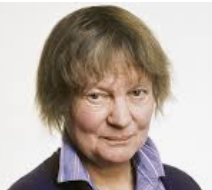
6 months 2 weeks ago
The novel, the novel proper that is, is about people's treatment of each other, and so it is about human values.
▼
Source
Ch. 10, p. 138
6 months 2 weeks ago
Nature made women mature early and had them demand gentle and polite treatment from men, so that they would find themselves imperceptibly fettered by a child due to their own magnanimity; and they would find themselves brought, if not quite to morality itself, then at least to that which cloaks it, moral behavior, which is the preparation and introduction to morality.
▼
Source
Kant, Immanuel (1996), pages 219-220
6 months 2 weeks ago
The beginning is from God: for the business which is in hand, having the character of good so strongly impressed upon it, appears manifestly to proceed from God, who is the author of good, and the Father of Lights. Now in divine operations even the smallest beginnings lead of a certainty to their end. And as it was said of spiritual things, "The kingdom of God cometh not with observation," so is it in all the greater works of Divine Providence; everything glides on smoothly and noiselessly, and the work is fairly going on "before men are aware that it has begun. Nor should the prophecy of Daniel be forgotten, touching the last ages of the world: —"Many shall go to and fro, and knowledge shall be increased;" clearly intimating that the thorough passage of the world (which now by so many distant voyages seems to be accomplished, or in course of accomplishment), and the advancement of the sciences, are destined by fate, that is, by Divine Providence, to meet in the same age.
▼
Source
Aphorism 93
6 months 2 weeks ago
When Christianity came into the world the task was simply to proclaim Christianity. The same is the case wherever Christianity is introduced into a country the religion of which is not Christianity.
▼
Source
6 months 2 weeks ago
Rousseau and his disciples were resolved to force men to be free; in most of the world, they triumphed; men are set free from family, church, town, class, guild; yet they wear, instead, the chains of the state, and they expire of ennui or stifling lonelines.
▼
Source
6 months 2 weeks ago
At the core of the Perennial Philosophy we find four fundamental doctrines.First: the phenomenal world of matter and of individualized consciousness — the world of things and animals and men and even gods — is the manifestation of a Divine Ground within which all partial realities have their being, and apart from which they would be non-existent.Second: human beings are capable not merely of knowing about the Divine Ground by inference; they can also realize its existence by a direct intuition, superior to discursive reasoning. This immediate knowledge unites the knower with that which is known.Third: man possesses a double nature, a phenomenal ego and an eternal Self, which is the inner man, the spirit, the spark of divinity within the soul. It is possible for a man, if he so desires, to identify himself with the spirit and therefore with the Divine Ground, which is of the same or like nature with the spirit.Fourth: man's life on earth has only one end and purpose: to identify himself with his eternal Self and so to come to unitive knowledge of the Divine Ground.
▼
Source
6 months 2 weeks ago
Atheism is indeed the most daring of all dogmas ... for it is the assertion of a universal negative
▼
Source
"Charles II", p. 59
6 months 2 weeks ago
I was shocked many years ago when a physicist said to me that Kant was the greatest astrophysicist in a hundred-year period. And I asked “Why do you say that? You talk about Kant-Lagrange hypothesis?” He said “No, that was only a hypothesis. Kant showed by a very eloquent geometrical argument that we live near the edge of landscape galaxy in the center of the sphere that resembles Andromeda nebula”. I never heard of that, no philosopher told me that, no historian of philosophy told me that, an astronomer told me that! It was Steven Weinberg; he then said that Kant was the only astrophysicist in about a hundred years who believed that star clustering could be accounted for by gravitation alone.
▼
Source
Hilary Putnam, in [https://www.hardproblem.ru/en/posts/interviews/interview-with-hilary-putnam/ interview] with Vadim Vasilyev and Dmitry Volkov (April 21, 2010)
6 months 2 weeks ago
Choose the best life; for habit will make it pleasant.
▼
Source
Epictetus, Fragment 144
6 months 2 weeks ago
As for our celebrated lawgivers, who have cast us in our present awkward mold, you may be sure that they have acted to serve their interests and not ours. Witness all our political, civil, and religious institutions — examine them thoroughly: unless I am very much mistaken, you will see how, through the ages, the human race has been broken to the halter that a handful of rascals were itching to impose. Watch out for the fellow who talks about putting things in order! Putting things in order always means getting other people under your control.
▼
Source
"Supplement to Bougainville's Voyage" (1796) | Variant translation: | Never allow yourselves to forget that it is for their own sakes and not for yours that all those wise lawgivers have forced you into your present unnatural and rigid molds. And as evide
6 months 2 weeks ago
To see a man as beautiful – means to make him really beautiful. There is no cunning, no deceit; this happens every time, everyone knows that.
▼
Source
Book 2 part 3, ch. 10
CivilSimian.com created by AxiomaticPanic, CivilSimian, Kalokagathia