
6 months 2 weeks ago
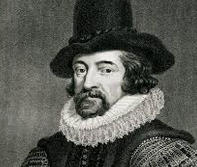
The law of nature teaches me to speak in my own defence: With respect to this charge of bribery I am as innocent as any man born on St. Innocents Day. I never had a bribe or reward in my eye or thought when pronouncing judgment or order (…). I am ready to make an oblation of myself to the King. (17 April 1621)
▼
Source
Quoted by Baron John Campbell (1818), J. Murray in "The Lives of the Lord Chancellors and Keepers of the Great Seal of England"
6 months 2 weeks ago
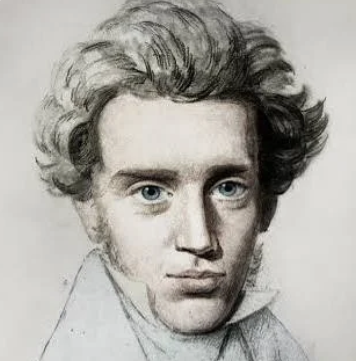
He lived year after year. He attended only to himself and to God and this picture-but he did not understand himself.
▼
Source
p. 57
6 months 2 weeks ago
In Europe, you do philosophy by performing discourse on another guy's text, and so Derrida will go over Heidegger, and Habermas will extend Marx's corpus; but in America you could never get away with kinky stuff like that, for you have to generate philosophy from real things—like computers or television. You need to look at Omni magazine to get a feel for this new kind of mail-order, Popular Mechanics science of mind. It's full of articles about meditation helmets and downloading the soul into computers so that when your body wears out you can live forever. What is completely missing in Europe is precisely what you will find in America: namely, an electronic Umwelt in which history is replaced with movies, education is replaced with entertainment, and nature is replaced with technology. This peculiar wedding of low kitsch and high tech generates a posthistoric world that no European literary intellectual can quite fathom.
▼
Source
William Irwin Thompson (1991) Fast Foreword, from The American Replacement of Nature
6 months 2 weeks ago
Existence is larger than any model that is not itself the exact size of existence (which has no size...)
▼
Source
Nature's God

6 months 2 weeks ago
Brutes are merely brutal; men and women are capable of being devils and lunatics. They are no less capable of being fully human-even, occasionally, of being a bit more than fully human, of being saints, heroes and geniuses.
▼
Source
Introduction to You Are Not The Target by Laura Archera Huxley (1963)
6 months 2 weeks ago
When we reverence anything in the mature, it is their virtues or their wisdom, and this is an easy matter. But we reverence the faults and follies of children. We should probably come considerably nearer to the true conception of things if we treated all grown-up persons, of all titles and types, with precisely that dark affection and dazed respect with which we treat the infantile limitations.
▼
Source
A Defence of Baby-Worship
6 months 2 weeks ago
Two things fill the mind with ever new and increasing admiration and awe, the oftener and the more steadily we reflect on them: the starry heavens above and the moral law within. I have not to search for them and conjecture them as though they were veiled in darkness or were in the transcendent region beyond my horizon; I see them before me and connect them directly with the consciousness of my existence. The former begins from the place I occupy in the external world of sense, and enlarges my connection therein to an unbounded extent with worlds upon worlds and systems of systems, and moreover into limitless times of their periodic motion, its beginning and continuance. The second begins from my invisible self, my personality, and exhibits me in a world which has true infinity, but which is traceable only by the understanding, and with which I discern that I am not in a merely contingent but in a universal and necessary connection, as I am also thereby with all those visible worlds. The former view of a countless multitude of worlds annihilates as it were my importance as an animal creature, which after it has been for a short time provided with vital power, one knows not how, must again give back the matter of which it was formed to the planet it inhabits (a mere speck in the universe). The second, on the contrary, infinitely elevates my worth as an intelligence by my personality, in which the moral law reveals to me a life independent of animality and even of the whole sensible world, at least so far as may be inferred from the destination assigned to my existence by this law, a destination not restricted to conditions and limits of this life, but reaching into the infinite.
▼
Source
Translated by Thomas Kingsmill Abbott
6 months 2 weeks ago
As we divided natural philosophy in general into the inquiry of causes, and productions of effects: so that part which concerneth the inquiry of causes we do subdivide according to the received and sound division of causes. The one part, which is physic, inquireth and handleth the material and efficient causes; and the other, which is metaphysic, handleth the formal and final causes.
▼
Source
Book VII, 3
6 months 2 weeks ago
The next thing you can learn from the woman who was a sinner, something she herself understood, is that with regard to finding forgiveness she is able to do nothing at all. P. 155
▼
Source

6 months 2 weeks ago
It was capitalism that allowed the body itself to go from being understood as a dynamic organism to being a working or broken machine. And it was not just the fact that new machines were increasingly part of daily life, making it seem natural to use machines as metaphors for the sciences of the age. It was also that the mode of production itself favored a reduction of people to living machines, since they were seen as working or broken in relation to their productive potential.
▼
Source
p. 30
6 months 2 weeks ago
Lord Edward was not listening to his assistant. He had taken his pipe out of his mouth, he had lifted his head and at the same time slightly cocked it on one side. He was frowning, as though making an effort to seize and remember something. He raised his hand in a gesture that commanded silence; Illidge interrupted himself in the middle of his sentence and also listened. A pattern of melody faintly traced itself upon the silence...Pongileoni's bowing and the scraping of the anonymous fiddlers had shaken the air in the great hall, had set the glass of the windows looking onto it vibrating: and thus in turn had shaken the air in Lord Edward's apartment on the further side. The shaking air rattled Lord Edward's membrane tympani; the interlocked malleus, incus, and stirrup bones were set in motion so as to agitate the membrane of the oval window and raise an infinitesimal storm in the fluid of the labyrinth. The hairy endings of the auditory nerve shuddered like weeds in a rough sea; a vast number of obscure miracles were performed in the brain, and Lord Edwards ecstatically whispered "Bach!" He smiled with pleasure, his eyes lit up. The young girl was singing to herself in solitude under the floating clouds. And then the cloud-solitary philosopher began poetically to meditate. "We must really go downstairs and listen," said Lord Edward. He got up, "Come," he said. "Work can wait. One doesn't hear this sort of thing every night."
▼
Source
Ch. 3
6 months 2 weeks ago
A sober man may become a drunkard through being a coward. A brave man may become a coward through being a drunkard.
▼
Source
Ch. 8 "The Time of Transition"
6 months 2 weeks ago
The novel, the novel proper that is, is about people's treatment of each other, and so it is about human values.
▼
Source
Ch. 10, p. 138
6 months 2 weeks ago
Nature made women mature early and had them demand gentle and polite treatment from men, so that they would find themselves imperceptibly fettered by a child due to their own magnanimity; and they would find themselves brought, if not quite to morality itself, then at least to that which cloaks it, moral behavior, which is the preparation and introduction to morality.
▼
Source
Kant, Immanuel (1996), pages 219-220
6 months 2 weeks ago
The beginning is from God: for the business which is in hand, having the character of good so strongly impressed upon it, appears manifestly to proceed from God, who is the author of good, and the Father of Lights. Now in divine operations even the smallest beginnings lead of a certainty to their end. And as it was said of spiritual things, "The kingdom of God cometh not with observation," so is it in all the greater works of Divine Providence; everything glides on smoothly and noiselessly, and the work is fairly going on "before men are aware that it has begun. Nor should the prophecy of Daniel be forgotten, touching the last ages of the world: —"Many shall go to and fro, and knowledge shall be increased;" clearly intimating that the thorough passage of the world (which now by so many distant voyages seems to be accomplished, or in course of accomplishment), and the advancement of the sciences, are destined by fate, that is, by Divine Providence, to meet in the same age.
▼
Source
Aphorism 93
6 months 2 weeks ago
When Christianity came into the world the task was simply to proclaim Christianity. The same is the case wherever Christianity is introduced into a country the religion of which is not Christianity.
▼
Source
6 months 2 weeks ago
Rousseau and his disciples were resolved to force men to be free; in most of the world, they triumphed; men are set free from family, church, town, class, guild; yet they wear, instead, the chains of the state, and they expire of ennui or stifling lonelines.
▼
Source
6 months 2 weeks ago
At the core of the Perennial Philosophy we find four fundamental doctrines.First: the phenomenal world of matter and of individualized consciousness — the world of things and animals and men and even gods — is the manifestation of a Divine Ground within which all partial realities have their being, and apart from which they would be non-existent.Second: human beings are capable not merely of knowing about the Divine Ground by inference; they can also realize its existence by a direct intuition, superior to discursive reasoning. This immediate knowledge unites the knower with that which is known.Third: man possesses a double nature, a phenomenal ego and an eternal Self, which is the inner man, the spirit, the spark of divinity within the soul. It is possible for a man, if he so desires, to identify himself with the spirit and therefore with the Divine Ground, which is of the same or like nature with the spirit.Fourth: man's life on earth has only one end and purpose: to identify himself with his eternal Self and so to come to unitive knowledge of the Divine Ground.
▼
Source
6 months 2 weeks ago
Atheism is indeed the most daring of all dogmas ... for it is the assertion of a universal negative
▼
Source
"Charles II", p. 59
6 months 2 weeks ago
I was shocked many years ago when a physicist said to me that Kant was the greatest astrophysicist in a hundred-year period. And I asked “Why do you say that? You talk about Kant-Lagrange hypothesis?” He said “No, that was only a hypothesis. Kant showed by a very eloquent geometrical argument that we live near the edge of landscape galaxy in the center of the sphere that resembles Andromeda nebula”. I never heard of that, no philosopher told me that, no historian of philosophy told me that, an astronomer told me that! It was Steven Weinberg; he then said that Kant was the only astrophysicist in about a hundred years who believed that star clustering could be accounted for by gravitation alone.
▼
Source
Hilary Putnam, in [https://www.hardproblem.ru/en/posts/interviews/interview-with-hilary-putnam/ interview] with Vadim Vasilyev and Dmitry Volkov (April 21, 2010)
6 months 2 weeks ago
Choose the best life; for habit will make it pleasant.
▼
Source
Epictetus, Fragment 144
6 months 2 weeks ago
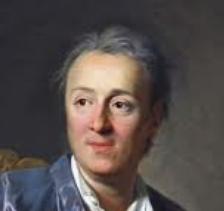
As for our celebrated lawgivers, who have cast us in our present awkward mold, you may be sure that they have acted to serve their interests and not ours. Witness all our political, civil, and religious institutions — examine them thoroughly: unless I am very much mistaken, you will see how, through the ages, the human race has been broken to the halter that a handful of rascals were itching to impose. Watch out for the fellow who talks about putting things in order! Putting things in order always means getting other people under your control.
▼
Source
"Supplement to Bougainville's Voyage" (1796) | Variant translation: | Never allow yourselves to forget that it is for their own sakes and not for yours that all those wise lawgivers have forced you into your present unnatural and rigid molds. And as evide
6 months 2 weeks ago
To see a man as beautiful – means to make him really beautiful. There is no cunning, no deceit; this happens every time, everyone knows that.
▼
Source
Book 2 part 3, ch. 10
6 months 2 weeks ago
I was looking at my furniture, not as the utilitarian who has to sit on chairs, to write at desks and tables, and not as the cameraman or scientific recorder, but as the pure aesthete whose concern is only with forms and their relationships within the field of vision or the picture space. But as I looked, this purely aesthetic, Cubist's-eye view gave place to what I can only describe as the sacramental vision of reality. I was back where I had been when I was looking at the flowers—back in a world where everything shone with the Inner Light, and was infinite in its significance.
▼
Source
describing his experiment with mescaline, p. 22
6 months 2 weeks ago
Prince, Prince-Elective on the modern plan, Fulfilling such a lot of People’s Wills, You take the Chiltern Hundreds while you can— A storm is coming on the Chiltern Hills.
▼
Source
A Ballade of the First Rain, envoi
6 months 2 weeks ago
The purpose of an encyclopedia is to collect knowledge disseminated around the globe; to set forth its general system to the men with whom we live, and transmit it to those who will come after us, so that the work of preceding centuries will not become useless to the centuries to come; and so that our offspring, becoming better instructed, will at the same time become more virtuous and happy, and that we should not die without having rendered a service to the human race in the future years to come
▼
Source
Encyclopédie (Diderot 1755 pp 365 - 48A)

6 months 2 weeks ago
At the end of the Middle Ages, leprosy disappeared from the Western world. In the margins of the community, at the gates of cities, there stretched wastelands which sickness had ceased to haunt but had left sterile and long uninhabitable. For centuries, these reaches would belong to the non-human. From the fourteenth to the seventeenth century, they would wait, soliciting with strange incantations a new incarnation of disease, another grimace of terror, renewed rites of purification and exclusion.
▼
Source
Part One: 1. Stultifera Navis

6 months 2 weeks ago
For the first time in my life, I took part in a real battle between men. The dead did not come to life again, the vanquished fled in disorder; every thrust of my lance helped save Carmona. That day, I would have died with a smile on my lips, certain of having contributed to a triumphant future for my city.
▼
Source
p. 73
6 months 2 weeks ago
The effectiveness of political and religious propaganda depends upon the methods employed, not upon the doctrines taught. These doctrines may be true or false, wholesome or pernicious—it makes little or no difference.
▼
Source
Chapter 7 (p. 63)
6 months 2 weeks ago
The thing that really is trying to tyrannize through government is Science. The thing that really does use the secular arm is Science. And the creed that really is levying tithes and capturing schools, the creed that really is enforced by fine and imprisonment, the creed that really is proclaimed not in sermons but in statutes, and spread not by pilgrims but by policemen – that creed is the great but disputed system of thought which began with Evolution and has ended in Eugenics. Materialism is really our established Church; for the Government will really help it to persecute its heretics.
▼
Source
Ch. VII: "The Established Church of Doubt" (pp. 76-77). [https://books.google.com/books?id=m2xaAAAAMAAJ&pg=PA76&dq=%22the+thing+that+really+is+trying+to+tyrannise+through+government+is+science%22&hl=en&sa=X&ved=0ahUKEwj9uKmM_6jMAhUHgj4KHZr3DW0Q6AEILzAD#v=
6 months 2 weeks ago
Jacques said that his master said that everything good or evil we encounter here below was written on high.
▼
Source
Prologue
6 months 2 weeks ago
There can be no doubt that the existence of public tortures and executions were connected with something quite other than this internal organization. Rusche and Kirchheimer are right to see it as the effect of a system of production in which labour power, and therefore the human body, has neither the utility nor the commercial value that are conferred on them in an economy of an industrial type. Moreover, this ‘contempt’ for the body is certainly related to a general attitude to death; and, in such an attitude, one can detect not only the values proper to Christianity, but a demographical, in a sense biological, situation: the ravages of disease and hunger, the periodic massacres of the epidemics, the formidable child mortality rate, the precariousness of the bio-economic balances – all this made death familiar and gave rise to rituals intended to integrate it, to make it acceptable and to give a meaning to its permanent aggression. But in analysing why the public executions survived for so long, one must also refer to the historical conjuncture; it must not be forgotten that the ordinance of 1670 that regulated criminal justice almost up to the Revolution had even increased in certain respects the rigour of the old edicts; Pussort, who, among the commissioners entrusted with the task of drawing up the documents, represented the intentions of the king, was responsible for this, despite the views of such magistrates as Lamoignon; the number of uprisings at the very height of the classical age, the rumbling close at hand of civil war, the king's desire to assert his power at the expense of the parlements go a long way to explain the survival of so severe a penal system.
▼
Source
pp. 51
6 months 2 weeks ago
It is old age, rather than death, that is to be contrasted with life. Old age is life's parody, whereas death transforms life into a destiny: in a way it preserves it by giving it the absolute dimension. Death does away with time.
▼
Source
Conclusion, p. 539
6 months 2 weeks ago
Moral issues are always terribly complex for someone without principles.
▼
Source
A popular internet misattribution, also attributed (without source) to Chesterton in several books.
6 months 2 weeks ago
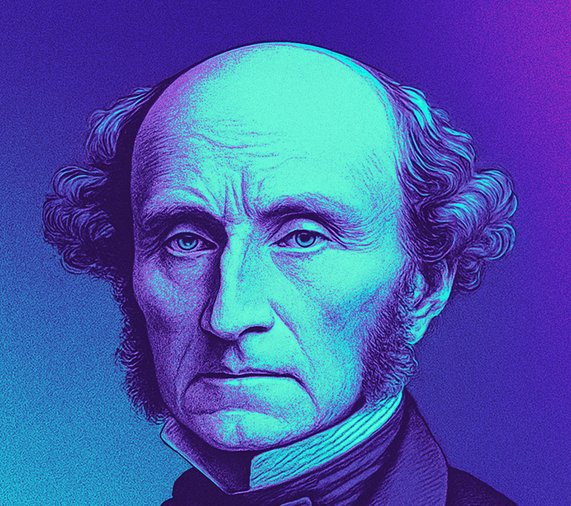
The great writers to whom the world owes what religious liberty it possesses, have mostly asserted freedom of conscience as an indefeasible right, and denied absolutely that a human being is accountable to others for his religious belief.
▼
Source
Ch. 1: Introductory
6 months 2 weeks ago
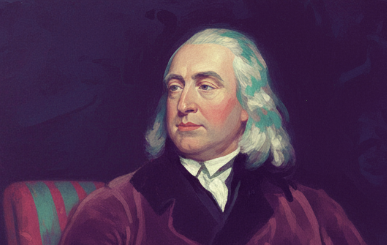
The community is a fictitious body, composed of the individual persons who are considered as constituting as it were its members. The interest of the community then is what? The sum of the interests of the several members who compose it.
▼
Source
Ch. 1: Of the Principle of Utility
6 months 2 weeks ago
Confession frees, but power reduces one to silence; truth does not belong to the order of power, but shares an original affinity with freedom: traditional themes in philosophy, which a political history of truth would have to overturn by showing that truth is not by nature free--nor error servile--but that its production is thoroughly imbued with relations of power. The confession is an example of this.
▼
Source
Vol. I, p. 60
6 months 2 weeks ago
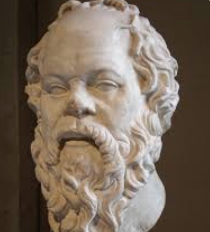
There is a virtue, Simmias, which is named courage. Is not that a special attribute of the philosopher? ...Again, there is temperance. Is not the calm, and control, and disdain of the passions which even the many call temperance, a quality belonging only to those who despise the body and live in philosophy?
▼
Source

6 months 2 weeks ago
If you look for an identity you find inequality. If you look for similarities you separate one truth from another.
▼
Source
Giannina Braschi, United States of Banana, 2011
6 months 2 weeks ago
Society should treat all equally well who have deserved equally well of it, that is, who have deserved equally well absolutely. This is the highest abstract standard of social and distributive justice; towards which all institutions, and the efforts of all virtuous citizens, should be made in the utmost degree to converge.
▼
Source
Ch. 5
6 months 2 weeks ago
Ion explains that in a democracy there are three categories of citizens: ...(1) citizens who have neither power nor wealth, and who hate all who are superior ...; (2) ...good Athenians ...capable of exercising power, but because they are wise ...keep silent ... and do not worry about ...political affairs ...(3) ...reputable men who are powerful, and use their discourse and reason to participate ...[T]he first group ...will hate him; the second ...will laugh at the young man who wishes to be regarded as one of the First Citizens of Athens; and the ...politicians, will be jealous ...and will try to get rid of him.
▼
Source
6 months 2 weeks ago
This was the method which I adopted: I first assumed some principle which I judged to be the strongest, and then I affirmed as true whatever seemed to agree with this, whether relating to the cause or to anything else; and that which disagreed I regarded as untrue. ...I want to show you the nature of that cause which has occupied my thoughts, and I shall have to go back to those familiar words which are in the mouth of everyone, and first of all assume that there is an absolute beauty and goodness and greatness, and the like; grant me this, and I hope to be able to show you the nature of the cause, and to prove the immortality of the soul.
▼
Source
6 months 2 weeks ago
It’s the end of the world. I was excited by the whole situation. Well, if everybody is going to die, die hard, shit, but what do I know? Is this an atomic bomb--the end of the world--the end of the millennium? No more fear of being fired--for typos or tardiness--digressions or recessions--and what a way of being fired--bursting into flames--without two weeks notice--and without six months of unemployment--and without sick leave, vacation, or comp time--without a word of what was to come--on a glorious morning--when nature ran indifferent to the course of man--there came a point when that sunny sky turned into a hellhole of a night—with papers, computers, windows, bricks, bodies falling, and people running and screaming. (On September 11th terrorist attacks.)
▼
Source
6 months 2 weeks ago
It is evident that this, among many other of the purposes of my father's scheme of education, could not have been accomplished if he had not carefully kept me from having any great amount of intercourse with other boys. He was earnestly bent upon my escaping not only the ordinary corrupting influence which boys exercise over boys, but the contagion of vulgar modes of thought and feeling; and for this he was willing that I should pay the price of inferiority in the accomplishments which schoolboys in all countries chiefly cultivate. The deficiencies in my education were principally in the things which boys learn from being turned out to shift for themselves, and from being brought together in large numbers.
▼
Source
([https://archive.org/details/autobiography01mill/page/35/mode/1up p. 35])
6 months 2 weeks ago
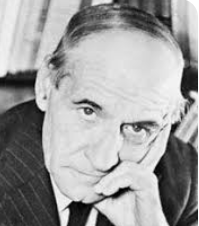
I know well that many of my readers do not think as I do. This also is most natural and confirms the theorem. For although my opinion turn out erroneous, there will always remain the fact that many of those dissentient readers have never given five minutes' thought to this complex matter. How are they going to think as I do? But by believing that they have a right to an opinion on the matter without previous effort to work one out for themselves, they prove patently that they belong to that absurd type of human being which I have called the "rebel mass." It is precisely what I mean by having one's soul obliterated, hermetically closed. Here it would be the special case of intellectual hermetism.
▼
Source
Chap. VIII: The Masses Intervene In Everything, And Why Their Intervention Is Solely By Violence

6 months 2 weeks ago
Though thou be destined to live three thousand years and as many myriads besides, yet remember that no man loseth other life than that which he liveth, nor liveth other than that which he loseth.
▼
Source
II, 14
6 months 2 weeks ago
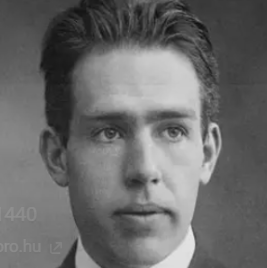
Never express yourself more clearly than you are able to think.
▼
Source
As quoted in Values of the Wise : Humanity's Highest Aspirations (2004) by Jason Merchey, p. 63
6 months 2 weeks ago
Ηe knew nothing except just the fact of his ignorance.
▼
Source
Alternate translation: I know nothing except the fact of my ignorance. | II.32. Original Greek: εἰδέναι μὲν μηδὲν πλὴν αὐτὸ τοῦτο [εἰδέναι].
6 months 2 weeks ago
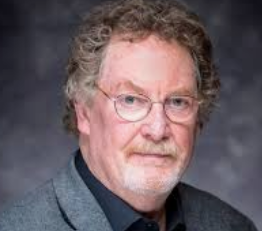
On the side of physics, there were a few key figures in Oxford who realized, in all probability unlike the majority of their colleagues in the physics department, that physics without interpretation is only part of the story, and that theories like quantum mechanics need careful foundational reflection.
▼
Source
Physics and Philosophy in Oxford: a prosperous example of interdisciplinarity, in
6 months 2 weeks ago
In this frame of mind it occurred to me to put the question directly to myself: "Suppose that all your objects in life were realized; that all the changes in institutions and opinions which you are looking forward to, could be completely effected at this very instant: would this be a great joy and happiness to you?" And an irrepressible self-consciousness distinctly answered, "No!" At this my heart sank within me: the whole foundation on which my life was constructed fell down. All my happiness was to have been found in the continual pursuit of this end. The end had ceased to charm, and how could there ever again be any interest in the means? I seemed to have nothing left to live for.
▼
Source
([https://archive.org/details/autobiography01mill/page/133/mode/1up pp. 133-134])
CivilSimian.com created by AxiomaticPanic, CivilSimian, Kalokagathia