


3 months 2 weeks ago
A public can only arrive at enlightenment slowly. Through revolution, the abandonment of personal despotism may be engendered and the end of profit-seeking and domineering oppression may occur, but never a true reform of the state of mind. Instead, new prejudices, just like the old ones, will serve as the guiding reins of the great, unthinking mass. All that is required for this enlightenment is freedom; and particularly the least harmful of all that may be called freedom, namely, the freedom for man to make public use of his reason in all matters. But I hear people clamor on all sides: Don't argue! The officer says: Don't argue, drill! The tax collector: Don't argue, pay! The pastor: Don't argue, believe!

2 months 1 week ago
If death is as horrible as is claimed, how is it that after the passage of a certain period of time we consider happy any being, friend or enemy, who has ceased to live?

3 months 1 week ago
The logical picture of the facts is the thought.
▼
Source
source
(3) Original German: Das logische Bild der Tatsachen ist der Gedanke.

1 month 2 weeks ago
Genuine religion is not about speculating about God or the soul or about what happened in the past or will happen in the future; it cares only about one thing-finding out exactly what should or should not be done in this lifetime.
▼
Source
source
p. 3
1 month 4 weeks ago
Someone has said that it requires less mental effort to condemn than to think. The widespread mental indolence, so prevalent in society, proves this to be only too true. Rather than to go to the bottom of any given idea, to examine into its origin and meaning, most people will either condemn it altogether, or rely on some superficial or prejudicial definition of non-essentials.
2 months 1 week ago
The theory of transparency was set up in reaction to the theory of mental images, of an inner tableu which the perception of an object would leave in us. In imagination our gaze always goes outward, but imagination modifies and neutralizes the gaze: the real world appears in it as it were between parenthesis or quote marks.
▼
Source
source
The Levinas reader by Levinas, Emmanuel p. 134
Just now
My idea of heaven is, eating pâté de foie gras to the sound of trumpets.
▼
Source
source
View ascribed by Smith to his friend Henry Luttrell; reported in Hesketh Pearson, The Smith of Smiths (London: Hamish Hamilton, 1934), p. 236

3 months 2 weeks ago
The greatest improvement in the productive powers of labour, and the greatest part of skill, dexterity, and judgment with which it is any where directed, or applied, seem to have been the effects of the division of labour.
▼
Source
source
Chapter I, p. 7
2 months 1 week ago
Whether or not there exists a solution to problems troubles only a minority; that the emotions have no outcome, lead to nothing, vanish into themselves - that is the great unconscious drama, the affective insolubility everyone suffers without even thinking about it.

4 months 2 weeks ago
It is love that leniently and mercifully says: I forgive you everything-if you are forgiven only little, then it is because you love only little. Justice severely sets the boundary and says: No further! This is the limit. For you there is no forgiveness, and there is nothing more to be said.
4 weeks ago
As human beings, we are endowed with this freedom of choice, and we cannot shuffle off our responsibility upon the shoulders of God or nature. We must shoulder it ourselves. It is up to us.
▼
Source
source
Ch. 3: Does History Repeat Itself?

3 months 2 weeks ago
If nature has been frugal in her gifts and endowments, there is the more need of art to supply her defects. If she has been generous and liberal, know that she still expects industry and application on our part, and revenges herself in proportion to our negligent ingratitude. The richest genius, like the most fertile soil, when uncultivated, shoots up into the rankest weeds; and instead of vines and olives for the pleasure and use of man, produces, to its slothful owner, the most abundant crop of poisons.
▼
Source
source
Part I, Essay 16: The Stoic

3 months 2 weeks ago
A ruddy drop of manly blood The surging sea outweighs, The world uncertain comes and goes; The lover rooted stays.
▼
Source
source
Friendship
3 months 2 weeks ago
Every man takes the limits of his own field of vision for the limits of the world.
▼
Source
source
"Psychological Observations"
3 months 2 weeks ago
The perception of the comic is a tie of sympathy with other men, a pledge of sanity, and protection from those perverse tendencies and gloomy insanities in which fine intellects sometimes lose themselves. A rogue alive to the ludicrous is still convertible.
▼
Source
source
The Comic


3 months 5 days ago
If any one hearken with understanding to these sayings of mine many a deed worthy of a good man shall he perform and many a foolish deed be spared.
3 months 2 weeks ago
I should as soon think of swimming across Charles River when I wish to go to Boston, as of reading all my books in originals when I have them rendered for me in my mother tongue.
▼
Source
source
Books

3 months 2 weeks ago
He chooses the most feared, most hated man in order to worship him as a god, feeling sure that he is alone in perceiving the god's secret virtues.
▼
Source
source
p. 165

3 months 2 weeks ago
I am almost inclined to set it up as a canon that a children's story which is enjoyed only by children is a bad children's story. The good ones last. A waltz which you can like only when you are waltzing is a bad waltz.
▼
Source
source
"On Three Ways of Writing for Children" (1952) - in Of Other Worlds: Essays and Stories (1967), p. 24

2 months 3 weeks ago
Power is the near neighbour of necessity.
▼
Source
source
As quoted in Aurea Carmina (8) by Hierocles of Alexandria, as translated in Dictionary of Quotations (1906) by Thomas Benfield Harbottle, p. 356

2 months 1 week ago
Who is my mother? and who are my brethren? And he stretched forth his hand toward his disciples, and said, Behold my mother and my brethren! For whosoever shall do the will of my Father which is in heaven, the same is my brother, and sister, and mother.
▼
Source
source
12:48-50 (KJV)
2 months 1 week ago
Enter by the narrow gate; for wide is the gate and broad is the way that leads to destruction, and there are many who go in by it. Because narrow is the gate and difficult is the way which leads to life, and there are few who find it.
▼
Source
source
Matthew 7:13-14 (NKJV) (Also Luke 13:24)

6 days ago
Luther's merit in literary history is of the greatest: his dialect became the language of all writing. They are not well written, these Four-and-twenty Quartos of his; written hastily, with quite other than literary objects. But in no Books have I found a more robust, genuine, I will say noble faculty of a man than in these. A rugged honesty, homeliness, simplicity; a rugged sterling sense and strength. He dashes out illumination from him; his smiting idiomatic phrases seem to cleave into the very secret of the matter. Good humor too, nay tender affection, nobleness and depth: this man could have been a Poet too! He had to work an Epic Poem, not write one.
2 months 1 week ago
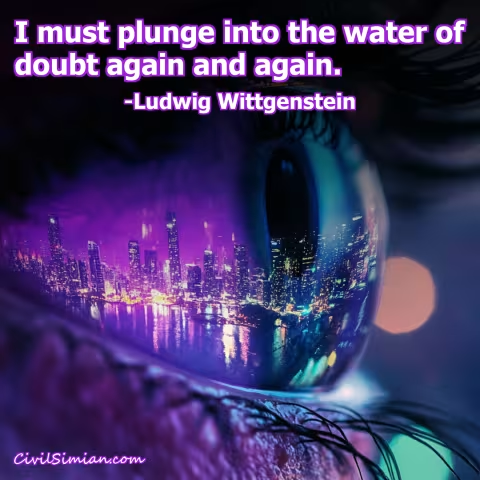
To devastate by language, to blow up the word and with it the world.
3 months 1 week ago
We must plow through the whole of language.
▼
Source
source
Ch. 7 : Remarks on Frazer's Golden Bough, p. 131

3 months 2 weeks ago
Whatever we know without inference is mental.
▼
Source
source
Human Knowledge: Its Scope and Limits (1948), p. 224
3 months 2 weeks ago
To be without some of the things you want is an indispensable part of happiness.
1 month 3 weeks ago
I believe that freedom is not a constant attribute that "we have" or "we don't have"; perhaps there is only one reality: the act of liberating ourselves in the process of using choices. Every step in life that heightens the maturity of man heightens his ability to choose the freeing alternative. I believe that "freedom of choice" is not always equal for all men at every moment. The man with an exclusively necrophilic orientation; who is narcissistic; or who is symbiotic-incestuous, can only make a regressive choice. The free man, freed from irrational ties, can no longer make a regressive choice.
4 months 3 days ago
How long will men dare to call anything expedient that is not right? Can odium and infamy be of service to any empire, which ought to be supported by glory and by the good-will of its allies? I was often at variance even with my friend Cato. He seemed to me to guard the treasury and the revenues too obstinately, to refuse everything to the farmers of the revenue, and many things to our allies; while we ought to be generous to our allies, and to deal with the farmers of the revenue as leniently as we individually do with our own tenants, especially as the union of orders to which such a course would conduce is for the well-being of the state.
▼
Source
source
Book III, Sect. 22, as translated by Andrew P. Peabody
3 months 1 week ago
There is no more light in a genius than in any other honest man-but he has a particular kind of lens to concentrate this light into a burning point.
▼
Source
source
p. 41e
4 months 1 day ago
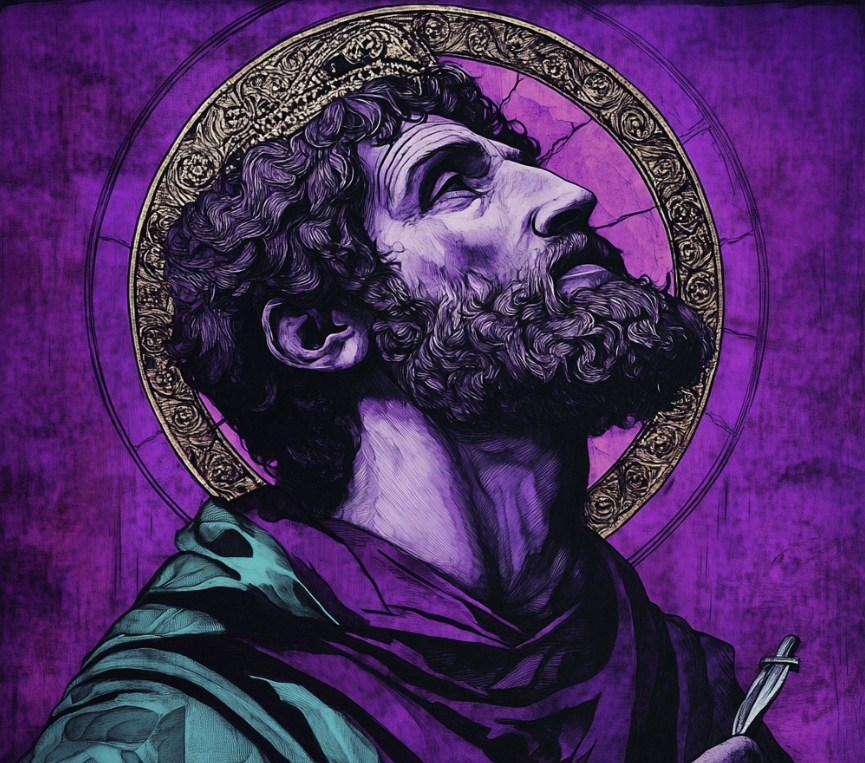
In this one man, the whole Church has been assumed by the Word.
▼
Source
source
p.434

Just now
Virtue runs no risk of becoming contemptible by being exposed to view, and it is better to be despised for simplicity than to be tormented by continual hypocrisy.

2 months 1 week ago
The deep critical thinker has become the misfit of the world. This is not a coincidence. To maintain order and control you must isolate the intellectual, the sage, the philosopher, the savant before their ideas awaken people.

2 months 1 day ago
There is a certain kind of morality which is even more alien to good and evil than amorality is.
▼
Source
source
"The responsibility of writers," p. 169
5 days ago
British rule in India is the most sordid and criminal exploitation of one nation by another in all recorded history. I propose to show that England has year by year been bleeding India to the point of death, and that self-government of India by the Hindus could not within any reasonable probability, have worse results than the present form of alien domination.
2 months 1 week ago
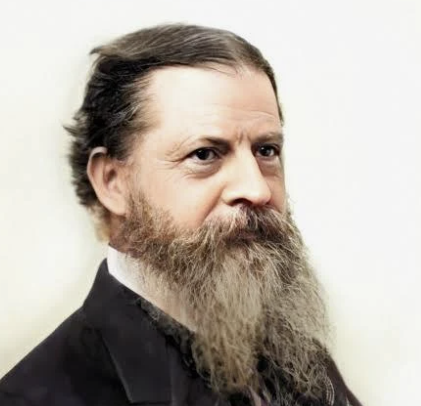
You are of all my friends the one who illustrates pragmatism in its most needful forms. You are a jewel of pragmatism.
▼
Source
source
Letter to William James (16 March 1903), published in The thought and character of William James, as revealed in unpublished correspondence and notes (1935) by Ralph Barton Perry, Vol. 2, p. 427

1 month 4 weeks ago
During his lifetime Gurdjieff did not publish any books on the techniques of his teaching, and his pupils were bound to secrecy on the subject. Since his death in Paris in 1949, however, many of his works have been published, and there has been a flood of memoirs by disciples and admirers. Gurdjieff was in almost ever respect the antithesis of Aleister Crowley. Whereas Crowley craved publicity, Gurdjieff shunned it. Crowley was forgotten for two decades after his death; Gurdjieff on the contrary, has become steadily better known, and his influence continues to grow. One of the main reasons for this is that there was so little of the charlatan about him. He is no cult figure with hordes of gullible disciples. What he has to teach makes an appeal to the intelligence, and can be fully understood only by those who are prepared to make a serious effort.
2 months ago
The consequences of a plethora of half-digested theoretical knowledge are deplorable.
2 months 1 week ago
There can be no revolution without widespread and passionate destruction, a destruction salutary and fruitful precisely because out of it, and by means of it alone, new worlds are born and arise.
3 months 2 weeks ago
All human knowledge begins with intuitions, proceeds from thence to concepts, and ends with ideas.
▼
Source
source
B 730; Variant translation: All our knowledge begins with the senses, proceeds then to the understanding, and ends with reason. There is nothing higher than reason.

4 months 1 week ago
The work of each individual contributes to a totality and so becomes an undying part of the totality. That totality of human lives - past and present and to come - forms a tapestry that has been in existence now for many thousands of years and has been growing more elaborate and, on the whole, more beautiful in all that time. Even the Spacers are an offshoot of the tapestry and they, too, add to the elaborateness and beauty of the pattern. An individual life is one thread in the tapestry and what is one thread compared to the whole?
3 months 2 weeks ago
I am as firmly convinced that religions do harm as I am that they are untrue.

1 week 4 days ago
Multitude is a class concept. ... Class is determined by class struggle. There are, of course, in infinite number of ways that humans can be grouped into classes - hair color, blood type, and so forth - but the classes that matter are those defined by the lines of collective struggle. Race is just as much a political concept as economic class is in this regard. ... Class is a political concept, in short, in that a class is and can only be a collectivity that struggles in common.
▼
Source
source
104
4 months 4 days ago
When the soul has descended into generation (from its first divine condition) she partakes of evil, and is carried a great way into a state the opposite of her first purity and integrity, to be entirely merged in which, is nothing more than to fall into a dark mire. ...The soul dies as much as it is possible for the soul to die: and the death to her is, while baptized or immersed in the present body, to descend into matter, and be wholly subjected by it; and after departing thence to lie there til it shall arise and turn its face away from the abhorrent filth. This is what is meant by falling asleep in Hades, of those who have come there.
3 weeks 4 days ago
The wise man should restrain his senses like the crane and accomplish his purpose with due knowledge of his place, time and ability.
1 month 2 weeks ago
You will die - and it will all be over. You will die and find out everything - or cease asking.
▼
Source
source
Bk. V, Ch. 1
3 months 1 week ago
A philosopher who is not taking part in discussions is like a boxer who never goes into the ring.
▼
Source
source
Conversation of 1930
1 day ago
It is a double-edged makeshift to entrust an individual or a group of individuals with the authority to resort to violence. The enticement implied is too tempting for a human being. The men who are to protect the community against violent aggression easily turn into the most dangerous aggressors. They transgress their mandate. They misuse their power for the oppression of those whom they were expected to defend against oppression. The main political problem is how to prevent the police power from becoming tyrannical. This is the meaning of all the struggles for liberty.
▼
Source
source
Chapter 5: On Some Popular Errors Concerning the Scope and Method of Economics, § 10 : The Concept of a Perfect System of Government

3 months 2 weeks ago
The man who comes back through the Door in the Wall will never be quite the same as the man who went out. He will be wiser but less sure, happier but less self-satisfied, humbler in acknowledging his ignorance yet better equipped to understand the relationship of words to things, of systematic reasoning to the unfathomable mystery which it tries, forever vainly, to comprehend.
CivilSimian.com created by AxiomaticPanic, CivilSimian, Kalokagathia